
The Spice with Power Is Ginger
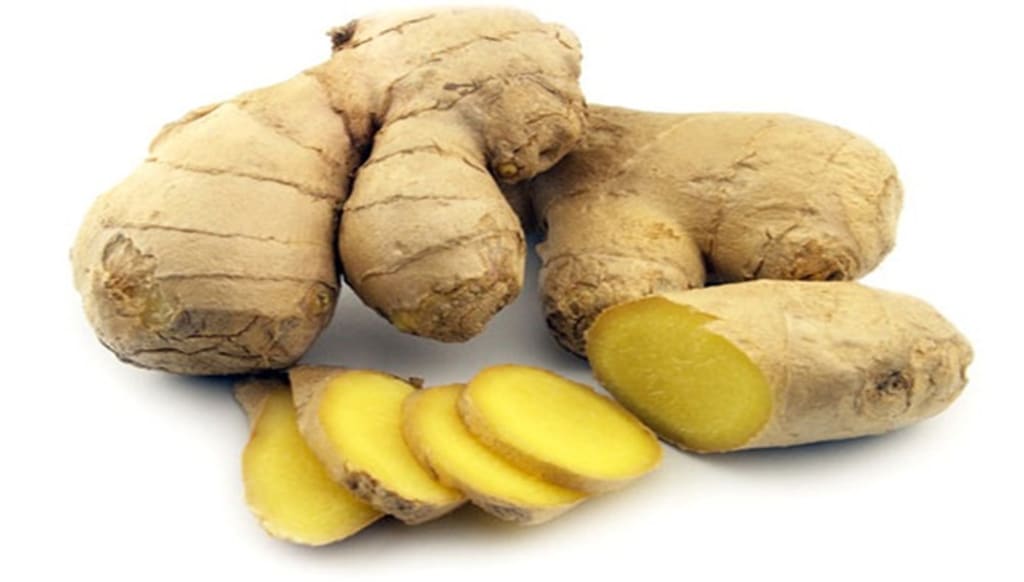
Ginger is a spice with health benefits

History of Ginger
As with most things, even ginger has a fascinating history that stretches back more than 5000 years. It was considered to be a tonic root that could take care of all kinds of ailments by the ancient Chinese and Indians. The origins of ginger can be found in Southeast Asia. India exported this spice to Ancient Rome. Once the Roman Empire came to an end the Arabs took over the spice trade from the east. Unfortunately during this time ginger became an expensive spice. It showed up in medieval times and was imported in a preserved form and used in the making of sweets.
Coming from the same family of spices as cardamom and turmeric, ginger (Zingiber officinale) is a warming spice. As the popularity of this spice spread it was brought to the Caribbean where it could be grown easily. Ginger plants were carried on ships not only to the Caribbean but to Africa as well in the 15th century. It has been documented that the first time gingerbread men appeared as a Christmas treat it was at the court of Queen Elizabeth I of England. Today ginger can be brought raw in root form and in many other different forms like powder at any supermarket for a normal price. However back in the 14th century, a pound of ginger had a value equal to that of a whole live sheep.
Essential Oils in Ginger
Today ginger can be grown in any sub-tropical climate and India has become the largest producer of this spice. This is a perennial that grows to around 4 feet in height and has clusters of pink and white flowers. It looks so lovely that in tropical homes it is used for landscaping. In India, this spice is grown in homes in pots and in bulk for commercial purposes. Altogether there are about 400 different cultivators in India and each of these producing plants has varying degrees of essential oils.
As ginger ages, the essential oils in it increase. If the spice is meant to be used fresh or preserved it gets harvested at around 5 months old when the plants haven’t matured yet. At this time the rhizomes (the underground part of the ginger plant) are still tender and not too pungent. When it comes to dried ginger the plants are harvested at 8 or 9 months and if essential oils are needed the plants are harvested after 9 months.
Traditionally ginger is harvested by hand but mechanical diggers are also used. To have dried ginger, the rhizomes are boiled, scraped and then dried. These dried rhizomes then become ground ginger. Ginger powder is simple to use but it is the fresh ginger that gets grated into different foods that smells the best and tastes the greatest. Ginger oil can get extracted from either fresh or dried rhizomes and the process used is steam distillation. Both essential oils and fresh ginger provide health benefits.
Health Benefits of Ginger
The part of ginger that has the most health benefits is that which grows underground. In the case of this spice, it often gets mistakenly referred to as “ginger root” but actually the underground part is the rhizome of this plant and it’s more of a subterranean stem than a root. When it comes to health benefits, fresh ginger is preferred. You can slice off pieces of the rhizome and store the remainder in the refrigerator where it can be kept for about 3 weeks as long as it’s not fully peeled. When using ginger you peel it thinly and the peel can be dried and used to add tang to teas of any kind. One of this spice’s best-known health benefits is its ameliorating effects on digestive ailments. It has the ability to relieve nausea and can be effective in treating both motion and morning sickness.
Ginger helps to reduce inflammation therefore it can be used in the treatment of diseases that are caused by inflammation like arthritis or ulcerative colitis. Since it is a warming herb, ginger can also help reduce a fever. It is effective in stimulating blood circulation, can help relax the muscles around blood vessels and helps in preventing the formation of blood clots. Its warming effects also make it a natural decongestant as well as an antihistamine which makes it a great remedy for colds.
In research studies, it has been shown that ginger might have the ability to lower LDL cholesterol because this spice can help in reducing the amount of cholesterol that is absorbed by the body. In animal studies, it has been noted that ginger can help slow or even prevent the growth of cancerous tumors. The oils found in ginger – gingerols and shogaols cause more digestive enzymes to be produced and this helps the whole digestion process and neutralizes the acids that can cause cramps, nausea and even diarrhea.
Ginger as Food
To start partaking in the health benefits make tea by steeping around 5 slices of ginger in hot water. As mentioned previously the dried peel of ginger can be seeped along with any kind of tea. The peels can also be seeped in boiled water to make a different kind of ginger tea. When it comes to food fresh ginger is great when added to different kinds of food and it combines well with garlic. It is often used in Chinese cuisine and in the West for making sweets and baking. It works well in salads, sauces, soups and stews. It is great when grated on fresh vegetables and then stir-fried. Young, fresh ginger can be pickled in sherry or vinegar and then used for snacks or cooking. In India, it is added to curries and in Japan, it is used on noodles.
About the Creator
Rasma Raisters
My passions are writing and creating poetry. I write for several sites online and have four themed blogs on Wordpress. Please follow me on Twitter.
Keep reading
More stories from Rasma Raisters and writers in Feast and other communities.
The Taste of the Dark Continent
Algeria Chakhchoukha is a flavorable stew prepared with torn pieces of a thin, round, flatbread known as rougag and marqua. Other ingredients in the stew are diced lamb, tomatoes, chickpeas, and onions. The stew is flavored with cumin, ras el hanout, caraway, galangal, lavender, and red chili peppers.
By Rasma Raisters3 years ago in Feast
My Tous les Jours Trip
As someone who lives in a rural area, I don't get the chance to visit fancy restaurants or bakeries that often. So, when a friend told me about a French-Asian bakery that's less than an hour away, I knew I had to check it out and grab some pictures for social media. Tous les Jours ended up providing an immersive experience that went above and beyond my expectations--although I did leave with a few reservations.
By Kaitlin Shanks23 days ago in Feast
Truffle Market Size and Forecast 2025
Introduction Once hidden beneath forest floors and harvested only by skilled foragers with trained animals, truffles have evolved from an elite culinary secret into a globally recognized luxury ingredient. Known for their earthy aroma, complex flavor, and remarkable scarcity, truffles now command attention not only from chefs and food connoisseurs, but also from investors, agricultural innovators, and global food brands.
By jaiklin Fanandish3 days ago in Feast
Wild Card Weekend Recap: What Happens Now?
I think I figured out why I love Wild Card Weekend so much. It's because it's the first playoff anything of the calendar year. The NFL season starts in the fall, and once upon a time, the champion was crowned either on or slightly before New Year's. The evolution of the NFL schedule has resulted in the playoffs starting just into the New Year, and currently, the final week of the season falls on the first weekend of the New Year, with Wild Card Weekend coming a week after that. So yes, chronologically, the NFL's Wild Card Weekend serves as the first playoff anything of the calendar year.
By Clyde E. Dawkins6 days ago in Unbalanced



Comments
There are no comments for this story
Be the first to respond and start the conversation.