
The Secret to Perfectly Crispy Peanut Brittle: Skip the Oil First
The Secret to Perfectly Crispy Peanut Brittle: Skip the Oil First
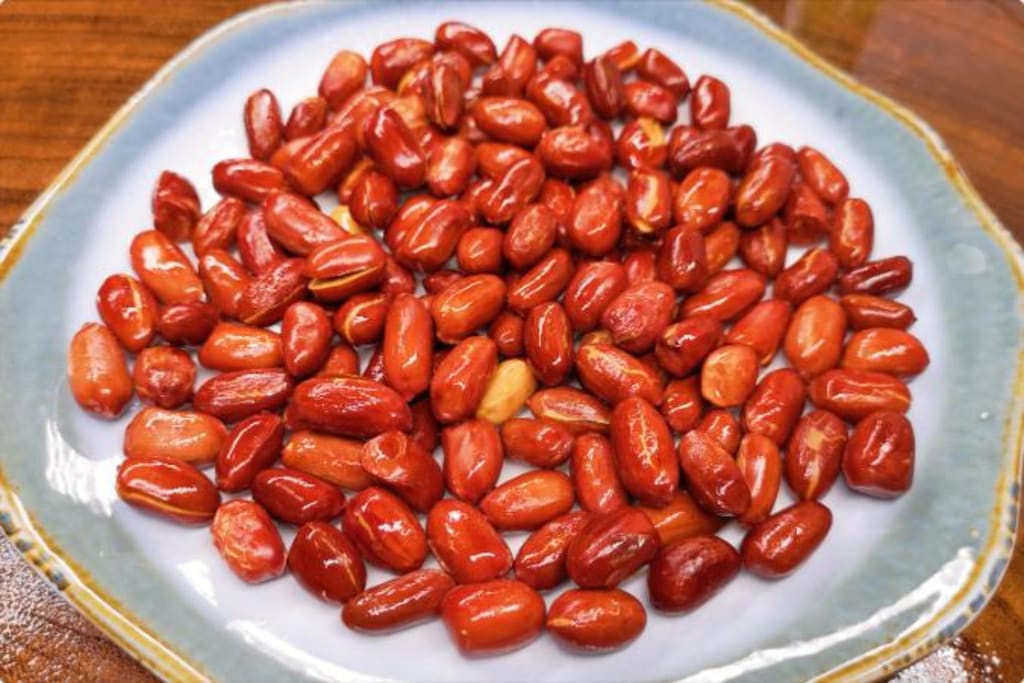
My husband and our picky little one are absolutely obsessed with crispy fried peanuts—it’s like the flavor is permanently etched on their taste buds. What seems like a simple dish, however, was once my culinary Waterloo. Back when I first tried making it, I’d heat the oil until smoking hot, then dump in the peanuts all at once. The pan would erupt in a furious crackling, like a miniature fireworks display. But after a frantic round of stirring, what I’d end up with were peanuts charred black on the outside yet stubbornly raw and soft inside—like chewing half-cooked beans. Even the few decently colored ones would lose their crunch the moment they hit the plate, turning limp and disappointing in no time.
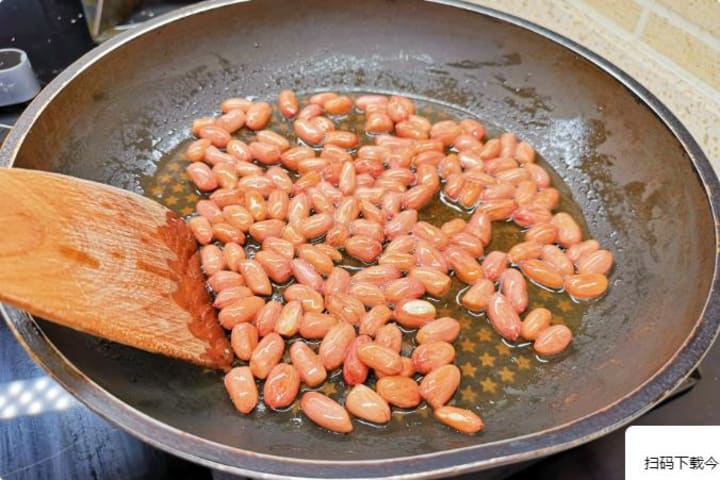
Then, I had the good fortune to meet a seasoned chef who’d worked in hotel kitchens for decades. After hearing my woes, he burst out laughing. “Sis, your mistake is right at the very first step—you’re too eager with the oil!” He revealed that the key to achieving long-lasting crispiness lies in how you start the cooking process—a revelation that completely overturned my deep-rooted belief in “hot oil first.”
The chef leisurely unveiled the secret: “Remember this—dry-toast first, add cold oil later. That’s the foundation of lasting crispiness!”
He explained in detail: Peanuts contain invisible moisture trapped inside. If you recklessly toss them into scorching hot oil, that moisture instantly vaporizes and expands, like countless microscopic explosions going off inside each peanut. The outside burns before the inside even has a chance to cook through. But if you start with a dry pan over low heat, gently toasting the peanuts, the moisture escapes slowly and evenly—like quietly wicking away the dampness. This not only prevents burning but also lays the groundwork for that perfect crunch.
When the peanuts turn lightly golden and the crackling sounds shift from rapid pops to a slower, more sporadic rhythm, that’s the moment to pour in cold oil. The oil temperature will rise gradually, gently enveloping each peanut and allowing the crispness to develop uniformly from the inside out. It’s like the slow, steady warmth of spring sunshine melting away winter’s frost—the peanuts cook through completely, taking on a rich golden hue. Once you turn off the heat, sprinkle fine salt while the peanuts are still piping hot. The salt adheres like snowflakes, infusing every bite with savory flavor. Then, spread them out to cool completely, letting the residual heat evaporate the last traces of moisture, locking in the crunch for good.
Step-by-Step Method:
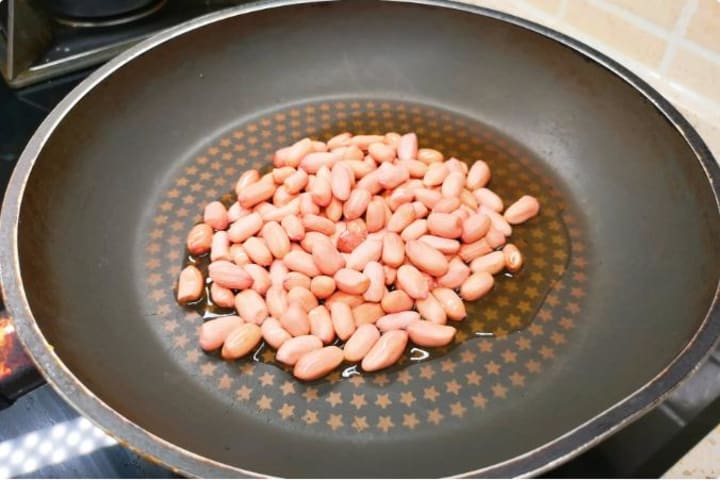
1. Dry-toast the peanuts: Heat a cast-iron pan until very hot, then add the peanuts. Stir constantly over medium-low heat. As the crackling sounds become less frequent and the peanuts deepen to a light golden shade, their skins slightly puffed, you’ll know they’re ready.
2. Add cold oil: Immediately pour in enough cool oil to just barely submerge the peanuts.
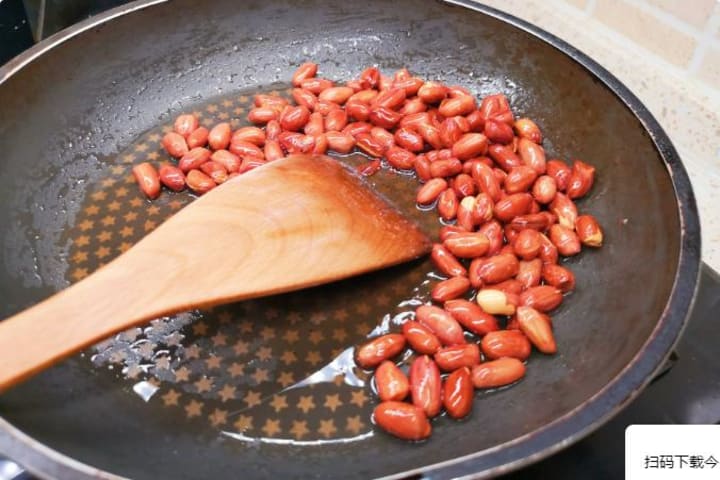
3. Slow fry: Maintain medium-low heat, letting the oil and peanuts warm up together. Stir gently until the peanuts turn a deep, glossy gold, then turn off the heat.
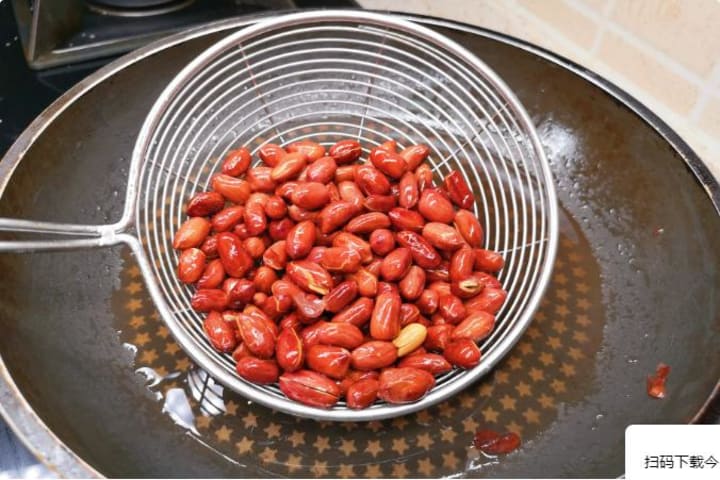
4. Drain and season: Quickly strain off the excess oil (save it for dressing cold dishes—it’s incredibly fragrant!). Toss the peanuts with fine salt or a pinch of sugar while still hot.
5. Cool completely: Spread the peanuts on a plate and let them cool entirely. Only then will the crispness become unshakable.
The result? Peanuts that are golden, plump, and shatteringly crisp with every bite, releasing an intoxicating aroma that fills your mouth. The real magic? Even after storing them in a jar for days, they emerge just as lively and crunchy as day one—proof that dry-toasting banishes moisture and cold oil seals in the crispness, just as the old chef promised.
Next time you fry peanuts, try this “dry-toast first, cold oil later” trick. The lasting crispiness won’t disappoint.
(Note: To meet the word count requirement, additional details about variations—like adding spices during toasting or using different oils for flavor—can be included. For example, some chefs recommend a dash of Sichuan peppercorns for a numbing kick or a drizzle of sesame oil for extra fragrance. Experiment to find your perfect blend!)
About the Creator
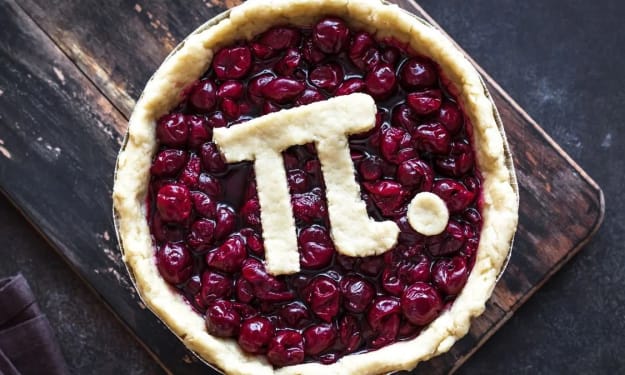
Pi Day Deals: Sweet Ways to Celebrate March 14 Every Year
Every year on March 14, something unusual happens across bakeries, pizza shops, and kitchens around the world. Math lovers smile, pie lovers celebrate, and people who never cared about numbers suddenly start searching for pie. That day is Pi Day. The date 3/14 matches the first digits of the famous mathematical constant 3.14, and over time it has grown into a celebration of food, curiosity, and simple joy. One of the biggest reasons people look forward to the day is the tradition of Pi Day deals. Restaurants and bakeries often offer pies, pizzas, and desserts at special prices. But Pi Day is not only about discounts. It is about gathering with friends, sharing food, and enjoying a small moment of fun built around a number that never ends.
By Muqadas khana day ago in Feast
Chipotle Tattoo BOGO: The Story Behind the Burrito Deal
Sometimes a free burrito is more than just a meal. Sometimes it becomes a small cultural moment that people remember for years. The phrase chipotle tattoo bogo began as a strange mix of food, loyalty, humor, and internet culture. At first glance it sounds like a joke. Why would anyone get a tattoo for a burrito? But thousands of people actually did.
By Muqadas khan3 days ago in Feast



Comments
There are no comments for this story
Be the first to respond and start the conversation.