
The Secret to Perfect Stir-Fried Eggplant: Skip the Oil First! Master This Trick for Non-Greasy, Tender, Flavor-Packed Eggplant
The Secret to Perfect Stir-Fried Eggplant: Skip the Oil First! Master This Trick for Non-Greasy, Tender, Flavor-Packed Eggplant
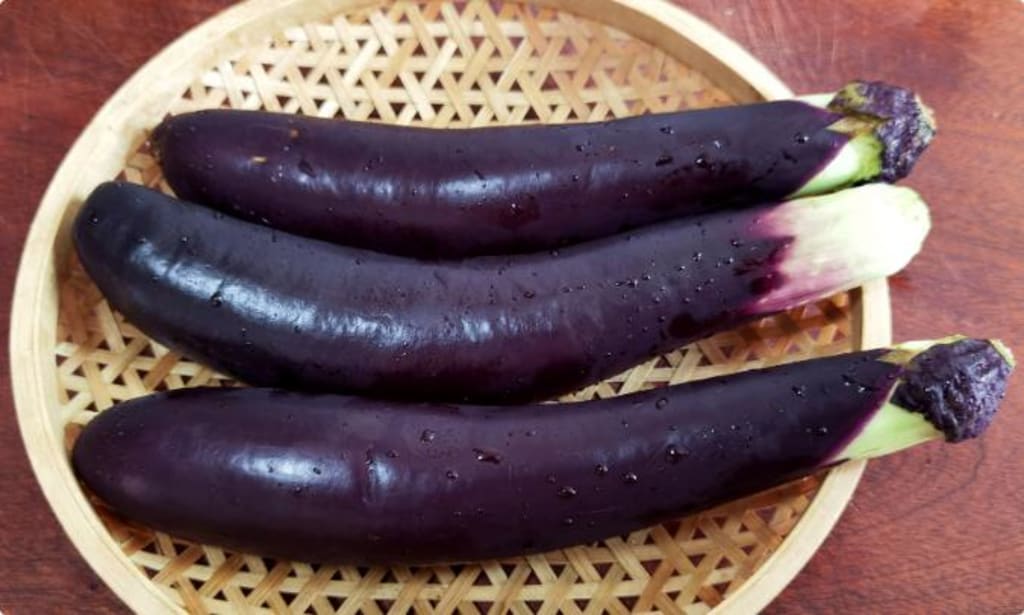
Eggplant, in its peak season, feels like a gift from the heavens—incredibly affordable, almost as if it’s being given away, and packed with undeniable nutritional goodness. Anthocyanins, vitamins, dietary fiber—it boasts an impressive resume. Yet, this nutritional powerhouse has a notorious alter ego: the moment it hits hot oil, it transforms into an insatiable "oil-guzzling monster." It greedily soaks up fat, emerging from the wok either swimming in grease, unpleasantly heavy, or sulking with an unappetizing, darkened complexion. It’s a vegetable that inspires both love and frustration.
Today, we unveil a game-changing technique to tame this oil fiend, making eggplant obedient and delightful: The Oil-Free Dry-Fry Method! Simple as lifting a veil, this method delivers immediate, spectacular results.
The Core Strategy: Eliminate Its Urge to Absorb Oil!
1. Preparing the Eggplant:
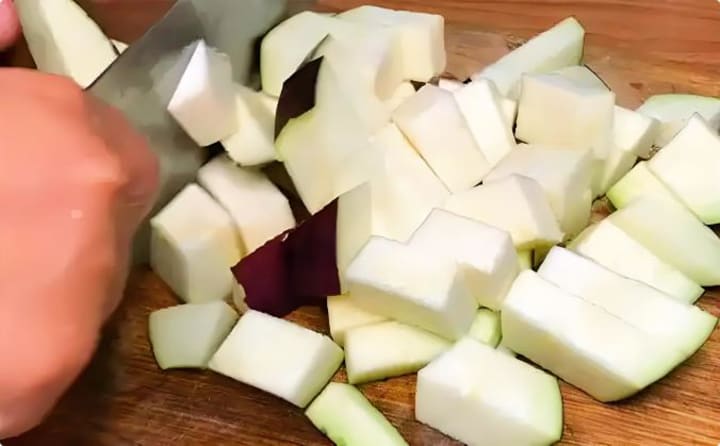
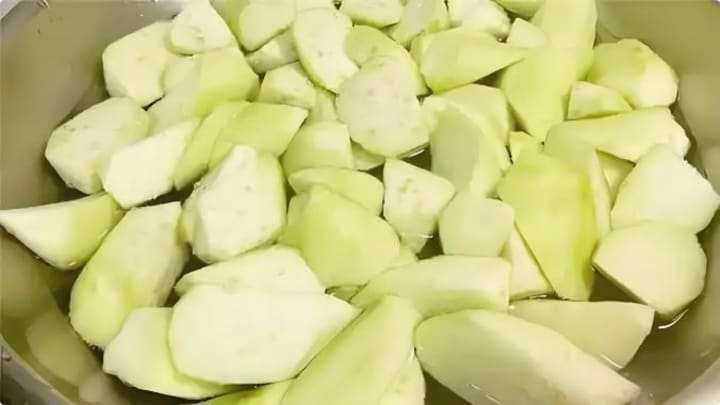
* Wash firm, purple-skinned eggplants. Cut them into bite-sized chunks using the roll-cut technique (cut at an angle, rolling the eggplant after each cut).
* Immediately submerge the cut pieces in a bowl of lightly salted water. Soak for about 10 minutes.
* Why Salt Water? The saline solution prevents rapid oxidation (which causes browning) and draws out some of the eggplant’s internal moisture. This crucial step significantly weakens its oil-absorbing capacity.
* After soaking, drain the eggplant pieces. Give them a gentle squeeze to remove excess surface water – avoid squeezing them bone dry; some residual moisture is fine.
2. The Key Step: The Oil-Free Dry-Fry!
* Take a clean wok or large skillet (a non-stick pan is ideal). Ensure it’s completely dry – no water, no oil.
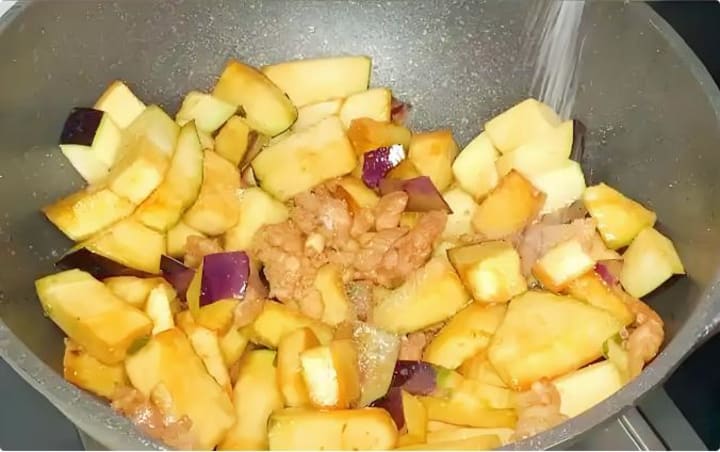
* Heat over medium heat. Add the squeezed eggplant pieces directly to the dry pan! Yes, not a single drop of oil!
* Stir constantly and press down on the eggplant pieces with your spatula. Continue this dry-frying process for 5-8 minutes.
* The Transformation: This intense dry heat forces the eggplant’s structure to collapse and tighten up. Its sponge-like cells, primed to suck up oil, are effectively broken down and deactivated. You’ll see the pieces shrink, soften, and become more compact.
3. Resting the Eggplant:
* Once the eggplant pieces are uniformly softened and look slightly shrunken, turn off the heat.
* Transfer them to a plate or bowl and let them cool slightly. This resting period further consolidates the changes, ensuring they remain relatively oil-free and pleasantly textured during the final stir-fry.
Recipe: Spicy Stir-Fried Eggplant with Pork
Ingredients:
• Prepared eggplant pieces (from above method)
• 150g Lean pork (minced or thinly sliced)
• 2-3 Green bell peppers (or long green peppers), cut into chunks
• 4-5 cloves Garlic, finely minced
• 1-2 Fresh red chilies or 1 tsp chili flakes (optional, for extra heat)
• 1.5 - 2 tbsp Light soy sauce (15-30ml)
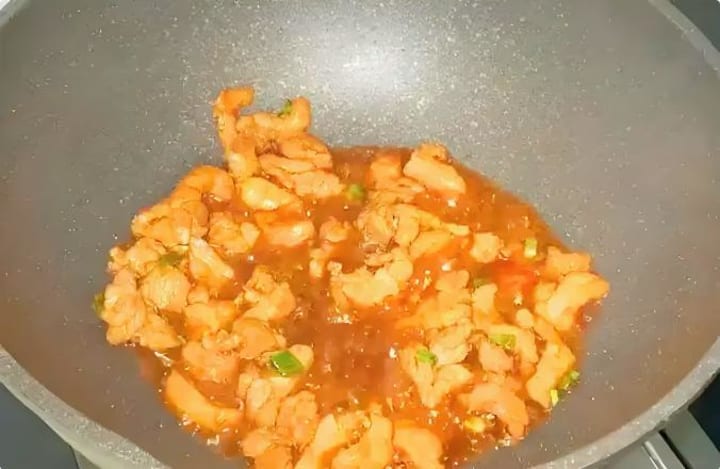
• 1 tbsp Oyster sauce (15ml)
• 1 tsp Sugar
• ¼ tsp White pepper powder
• Salt, to taste (use sparingly, soy and oyster sauce are salty)
• 1-2 tbsp Cooking oil (for the stir-fry)
• 1-2 Spring onions (scallions), finely sliced (for garnish)
Instructions:
1. Cook the Pork:
* Reheat your wok or skillet over medium-high heat until hot. Add the cooking oil and swirl to coat.
* Once the oil is shimmering, add the lean pork. Stir-fry rapidly, breaking up any clumps, until the meat is fully cooked, changes color, releases some of its fat, and the edges start to turn slightly golden and crispy. You should smell the rich, savory aroma of the cooked pork.
2. Build the Aromatics:
* Push the cooked pork to the side of the wok (or temporarily remove it to a plate).
* In the remaining oil in the center of the wok, add the minced garlic and fresh red chilies/chili flakes (if using). Stir-fry over medium-low heat for about 30 seconds to 1 minute, just until incredibly fragrant – be careful not to burn the garlic.
3. Sear the Peppers:
* Increase the heat back to medium-high. Add the green pepper chunks to the wok. Stir-fry vigorously for about 1 minute. The goal is to get some slight blistering or wrinkling on the pepper skins, intensifying their vibrant green color and releasing their fresh, slightly pungent aroma.
4. Combine Main Ingredients:
* Add the prepared, dry-fried eggplant pieces back into the wok. If you removed the pork earlier, add it back in now as well. Toss everything together thoroughly.
5. Season and Integrate Flavors:
* Pour the light soy sauce and oyster sauce evenly over the ingredients. Sprinkle in the sugar and white pepper powder.
* Toss everything together immediately and efficiently. Keep the heat at medium-high.
* Critical Step: Stir-fry rapidly and continuously for 2-3 minutes. This high-heat tossing allows the coveted wok hei (breath of the wok) to develop. The intense heat caramelizes the sauces, drives the flavors deep into every piece of eggplant and pepper, and melds the savory pork, pungent garlic, spicy chilies, and sweet peppers into a cohesive, aromatic masterpiece. Taste and only add a tiny pinch of salt if absolutely necessary, remembering the saltiness from the sauces.
6. Finish with Freshness:
* Once everything is piping hot, beautifully coated in sauce, and the flavors are perfectly integrated, scatter the sliced spring onions over the top.
* Give everything just one or two more quick tosses to barely wilt the onions and release their fresh aroma. Immediately remove the wok from the heat.
7. Serve and Savor:
* Transfer the stir-fry to a serving dish. Behold its glory: the eggplant glistens invitingly (not greasily!), retaining its vibrant purple hue without a trace of dullness or blackening.
* Take a bite: Savory umami from the soy and oyster sauce, a gentle warmth from the chilies, balanced by a subtle sweetness (from the sugar and the peppers themselves), all enhanced by the deep richness of the pork. The eggplant is incredibly tender, meltingly soft, yet retains a pleasant structure, saturated with the complex flavors of the dish without any oiliness. The green peppers add a crucial bright, crisp counterpoint. This dish is the true definition of a "rice assassin" – it leaves you craving more and more rice to accompany its addictive flavors!
The Science Behind the Magic: Taming the Oil Beast
The transformation of the humble eggplant from an oil sponge to a succulent, flavorful delight hinges on understanding its cellular structure. Eggplant flesh is composed of numerous tiny air pockets surrounded by cell walls. When raw, these pockets act like miniature sponges. Introducing them directly to hot oil is an invitation for the oil to rush in, displacing the air as the heat collapses the structure, leading to greasy results.
The Oil-Free Dry-Fry Method cleverly circumvents this:
1. Salt Water Osmosis: Soaking in salted water initiates osmosis. The higher salt concentration outside the eggplant cells draws water out from within. This reduces the internal moisture content slightly and begins to break down the cell walls, making them less rigid and less prone to acting like perfect oil vacuums later. The salt also inhibits polyphenol oxidase, the enzyme responsible for enzymatic browning, keeping the eggplant visually appealing.
2. Dry-Fry Deconstruction: Applying direct, dry heat is the masterstroke. The intense heat rapidly evaporates the surface moisture and the water drawn out during soaking. More importantly, it forcefully collapses the air pockets and breaks down the cell walls without any oil present. This process fundamentally alters the eggplant's texture:
• Collapse and Densification: The eggplant shrinks and becomes denser, significantly reducing the volume of empty spaces available to hold oil later.
• Cell Wall Breakdown: The heat weakens and ruptures the cell walls, making them less capable of forming effective oil-trapping compartments. The eggplant's inherent "sponginess" is physically dismantled.
• Pre-cooking: The eggplant becomes partially cooked, tenderizing it so it requires less time and less oil in the final stir-fry to reach perfect doneness.
3. Resting: Allowing the dry-fried eggplant to rest lets the changes in its structure settle. The cells relax slightly after the thermal shock, further helping them resist re-absorbing large quantities of oil when it's finally introduced in the stir-fry phase.
The Result: By the time the pre-treated eggplant hits the oil in the final stir-fry, its structure is already transformed. It’s denser, its cell walls are compromised, and its air pockets are largely eliminated. It readily absorbs the flavorful sauce but has lost its voracious capacity to soak up pure cooking oil. You achieve deep flavor penetration without the unpleasant greasiness, and the beautiful color is preserved thanks to the initial salt bath.
This method exemplifies culinary wisdom: conquering the eggplant's "oil-guzzling" nature doesn't require drowning it in fat, but rather understanding its biology and using smart techniques – harnessing the power of salt, water, and controlled dry heat – to coax out its best, most succulent, and flavorful self. It’s a triumph of technique over excess.
About the Creator
My Tous les Jours Trip
As someone who lives in a rural area, I don't get the chance to visit fancy restaurants or bakeries that often. So, when a friend told me about a French-Asian bakery that's less than an hour away, I knew I had to check it out and grab some pictures for social media. Tous les Jours ended up providing an immersive experience that went above and beyond my expectations--although I did leave with a few reservations.
By Kaitlin Shanks24 days ago in Feast
No-Recipe-Needed Dessert Tutorials
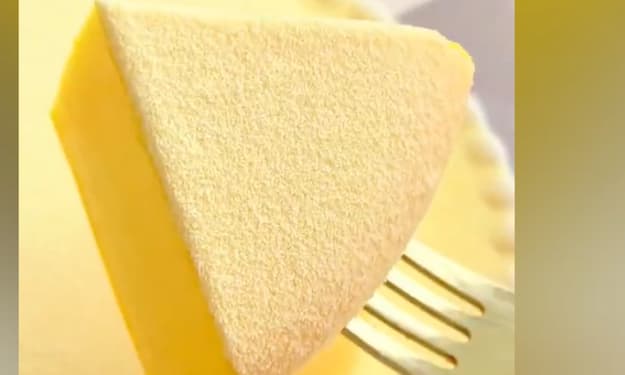
1. Basque Burnt Cheesecake Cream cheese, a few high-quality farm-fresh eggs, heavy cream, and sugar—just mix them together. Sift the mixture into a mold to remove air bubbles. Bake at 180°C (356°F), both top and bottom heat, for 40-50 minutes. Done! It must be completely chilled before slicing. One bite, and you'll be floating on cloud nine... This is so good! It has an incredibly rich, cheesy aroma and melts instantly in your mouth. The key is that this method is just too simple and unbeatable.
By yue . shui3 days ago in Feast


Comments
There are no comments for this story
Be the first to respond and start the conversation.