
The Role of Temperature in Baking
Oven Tips for Consistent Results

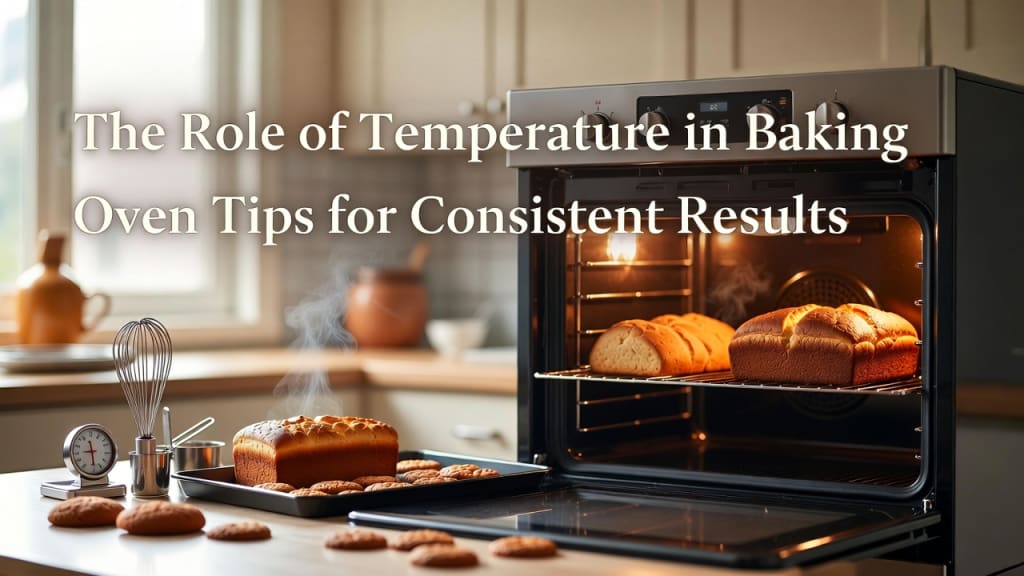
Every baker has experienced that one baking recipe that must have refused to cooperate. It could have been a cake that refused to rise and sank in the middle. Or cookies that spread into thin puddles instead of staying soft and thick. Or bread that looked perfect outside but stayed stubbornly raw inside. The quiet truth is that most of us learn the hard way. Baking failures often are not about ingredients. They are about temperature baking.
The oven is not just a hot box. It’s the engine driving every chemical reaction inside your batter. It controls structure, rise, moisture, color and texture. When the heat is off, everything else follows. This blog guide on temperature setting will help you understand the secret language that your oven was spelling all along.
Why temperature matters
When you place batter into the oven, you are just cooking it. You are triggering a series of chemical reactions that depend entirely on heat. This is the heart of baking science. Before caramelizing, sugar releases water content and dissolves in it. If you melt the butter, it will first become soft and then it will come to the melting point. A simple culinary task by its looks. But deep inside, melting butter is a physical change. It's a transitional phase from solid to liquid, which involves complex thermodynamics and chemical reactions. Temperature ranges control every transformational step involved in baking. Such as air bubbles expanding. Yeast releases gas. Proteins tighten. Starches set. Moisture turns into steam and helps create structure. Every single one of these steps happens at specific temperature ranges.
If the temperature setting is set too hot or too cold, in both scenarios, bakers get poor baking results. Let's understand it with examples. If bakers set the oven too hot, then everything cooks too quickly, which is not a good baking rule. The outside cooks in such a rush that the outside hardens before allowing the inside to rise. In such cases, cakes crack. Cookies burn underneath. Bread forms a thick crust too early and traps the dough. If it’s too cool, the opposite happens. Structure forms slowly. Baked goods collapse because they never had enough heat to set correctly. Colors stay pale. Texture turns dry or rubbery.
This is why baking time and temperature are always paired. Time alone can never fix poor heat. Heat alone cannot fix poor timing. They are just like rhythm and melody in time.
Preheating: Why it’s Essential and How Long it Truly Takes
Let's look at some honest facts here that almost everyone skips or shortens preheating an oven at some point. Many bakers don’t realize that the oven lies. It beeps long before it's actually ready. But here’s the problem that your oven might beep after 5 minutes, but that does not mean the internal air and walls are thoroughly heated. Most ovens signal “preheated” once the air reaches the target temperature. But the internal walls, racks and overall heat environment have not stabilized yet. That full, steady heat often takes 15–25 minutes.
When you don’t bother to preheat the oven correctly, you are placing your batter into a temperature zone that's not regulating the stable temperature required. In such an environment, the ingredients will not react and rise. They sit inside a warm environment, but not a hot one. This situation of poor temperature setting slows the butter melting process and cripples the structure cripples. When you place batter into an underheated oven:
- Cakes will not rise properly.
- Cookies melt before structure sets.
- Pastries lose layers.
- Baking consistency disappears.
Just imaging that bakers are trying to bake on a moving floor. Nothing sets properly. Preheating ensures:
- Immediate lift in cakes.
- Correct spread in cookies.
- Proper steam in pastries.
Mastering heat means mastering your results. And professional bakers never forget this step because it's the foundation for every baking consistency.
Oven calibration: How to check if an oven runs hot/cold and adjust
Another uncomfortable truth is that many ovens don’t bake at the temperature they claim. They can run hotter. Or colder. Or fluctuate constantly. And because baking science depends on exact heat, even slight inaccuracies change outcomes dramatically. A good oven thermometer is a good investment which all bakers should have. It is the best investment that any baker can ever make. Once you know your oven runs, say, 15 degrees hot, everything becomes easier. You stop blaming yourself and start adjusting wisely.
Baking becomes predictable instead of frustrating.
Oven Hot Spots: The Invisible Trouble Areas
Ever notice cookies browning on one side or cakes rising unevenly? Oven hot spots cause that. Hot spots happen because heat does not circulate evenly inside many ovens. Some areas get stronger bursts while others stay cooler. This uneven heat is a common reason for inconsistent baking results. This is extremely common in home ovens. The tricky part? You can never see the hot spots but only their effects:
- Uneven browning.
- Crooked cakes.
- Burnt edges.
- Half-done batches.
Even Baking Tips to Fix It
- Shift the pans sideways halfway.
- The trays should not touch the oven walls.
- Use centre racking for baking.
- Don’t rely on visual guesses and check multiple areas.
Tools That Help You Control Heat Like a Pro
Baking becomes less stressful when you stop guessing and start controlling. An oven thermometer tells the truth, your oven dial will not. It's your best friend for accurate oven temperature control. Baking stones help stabilize heat and reduce sudden drops. Timers ensure precision. Cooling racks prevent trapped steam from ruining texture. On the other hand, there is convection vs. conventional baking. A convection oven circulates heat evenly through the use of a fan. This technique ensures the perfect baking consistency, improves browning and quickens the baking process. But they also require lowering the temperature slightly. Ignoring that difference often leads to overbaked goods. The right tools don’t make you fancy. They make you consistent.
Common Temperature Mistakes Bakers Make (Without Realizing)
We have all done these at some point. Opening the oven door too early because you are curious. Crowding trays to save time. Adjusting temperatures randomly. Trusting the oven beep without verifying. Forgetting to let the oven recover between batches. Each one interrupts the temperature baking and throws off the baking time and temperature balance. Recipes are written based on baking science. Changing the temperature randomly changes the chemistry. Heat needs stability. And stability creates reliable results.
Bonus Tip for Bakery Owners
For professional bakers selling their goods, consistent baking is only half the story. Presentation matters too. Perfect baking means nothing if the presentation fails. Once your goods leave the oven, protect them in bakery boxes with custom logos so customers experience the same quality you worked hard to create because baking is emotional. And customers remember how your product felt, not just how it tasted. Beautiful presentation keeps products safe and builds brand trust.
Final Thoughts on Temperature Control
The role of temperature can be the main hero or villain in every baker's journey. Mastering the art of temperature setting is one of the keys to a successful baking business. When you respect the temperature in baking, everything changes. Cakes rise the way they should. Cookies bake evenly. Bread develops structure and color. Recipes will no longer be a mystery and will definitely cooperate in achieving the desired results.
About the Creator
Cristina Baker
I’m Cristina Baker, a business and market expert with 8+ years of experience helping brands and entrepreneurs grow. I share insights, strategies, and ideas that inspire growth, spark curiosity, and turn challenges into actionable results.
Keep reading
More stories from Cristina Baker and writers in Feast and other communities.
How to Grow Mushrooms
A Complete Beginner’s Guide to Indoor Mushroom Cultivation There’s something quietly thrilling about growing your own food from scratch. But while tomatoes bask proudly in the sun, mushrooms perform their magic in the dark. Starting your own indoor mushroom cultivation project feels less like gardening and more like unlocking a secret, delicious world. If you have ever wondered how to grow mushrooms but felt it was too complex, this guide is for you. We will walk through every step, demystify the process and show you that with a little know-how, you can harvest your own edible mushrooms right from a corner of your home. Let’s begin and help you in making your own home mushroom garden.
By Cristina Bakerabout a month ago in Feast
My Tous les Jours Trip
As someone who lives in a rural area, I don't get the chance to visit fancy restaurants or bakeries that often. So, when a friend told me about a French-Asian bakery that's less than an hour away, I knew I had to check it out and grab some pictures for social media. Tous les Jours ended up providing an immersive experience that went above and beyond my expectations--although I did leave with a few reservations.
By Kaitlin Shanks25 days ago in Feast
Searching for the Best Pizza in Doha: A Matter of Taste, Time, and Place
The idea of the “best pizza in Doha” is more complicated than it first appears. Doha is a city of contrasts—glass towers rising from the desert, quiet neighborhoods tucked behind busy roads, and people from every corner of the world bringing their own memories of what food should taste like. Pizza, a dish born far from Qatar, has found a surprising and comfortable home here. But defining the best version of it is less about rankings and more about moments.
By Harley Morris2 days ago in Feast



Comments
There are no comments for this story
Be the first to respond and start the conversation.