
How to Grow Mushrooms
Learn how the unboxing experience, thoughtful inserts and emotional story cards are the secret to building lasting brand loyalty and increasing repeat customers.


A Complete Beginner’s Guide to Indoor Mushroom Cultivation
There’s something quietly thrilling about growing your own food from scratch. But while tomatoes bask proudly in the sun, mushrooms perform their magic in the dark. Starting your own indoor mushroom cultivation project feels less like gardening and more like unlocking a secret, delicious world. If you have ever wondered how to grow mushrooms but felt it was too complex, this guide is for you. We will walk through every step, demystify the process and show you that with a little know-how, you can harvest your own edible mushrooms right from a corner of your home. Let’s begin and help you in making your own home mushroom garden.
Can You Grow Mushrooms at Home?
This is the first and most common doubt. The answer is a wholehearted yes. The idea might seem shrouded in laboratory-level precision, but for a home farming setup, it’s wonderfully accessible. Just imagine if you don’t use microscopic spores but from mushroom spawn think of it as the mushroom equivalent of starter dough. This live culture of mycelium is the fungal root network. It is already vigorous and ready to grow. The learning curve for easy to grow mushrooms like oysters is surprisingly gentle. It’s a practice of observation and simple care, not advanced science. Your success lies in managing a controlled environment, which is far simpler than it sounds.
What Do You Need to Grow Mushrooms
Starting mushroom farming at home requires a short, specific list. You don’t need a fancy lab, but you do need the right components for fungal growth.
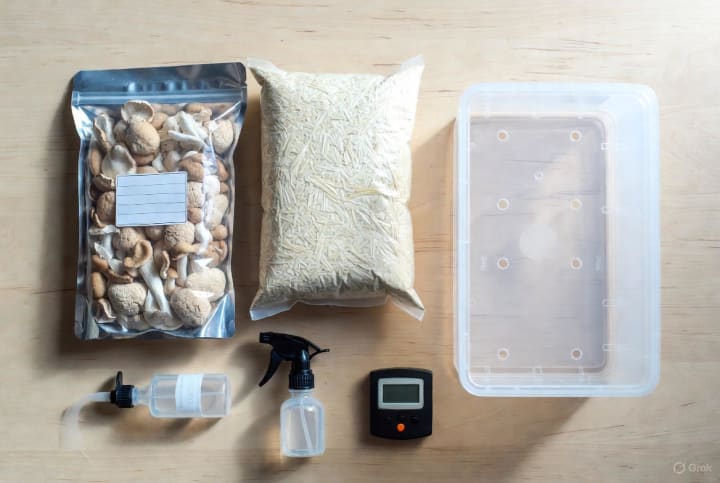
1. The Starter: Mushroom Spawn
This is your non-negotiable foundation. It’s mycelium grown onto a nutritious carrier like rye grain or sawdust. For beginners, buying high-quality spawn from a reputable supplier is the best way to ensure success.
2. The Food: Your Substrate (Straw, Sawdust, Compost)
This is the material your mushrooms will consume. Different mushrooms prefer different meals. Substrate preparation is key. Common choices include:
- Straw (for Oysters): Pasteurized by soaking in hot water.
- Hardwood Sawdust (for Shiitake, Lion’s Mane): Often needs to be supplemented with bran.
- Manure-Based Compost (for Button/Champignon Mushrooms): Requires more precise preparation.
- The Space: Your Indoor Growing Space
A clean, low-traffic area is perfect. This could be a basement shelf, a spare closet or simply a plastic storage tub which will be your grow box. The space needs to be easy to clean to aid in contamination prevention.
Your Indoor Growing Space (Room, Shelf, Grow Box)
A clean, low-traffic area is perfect. This could be a basement shelf, a spare closet or simply a plastic storage tub that's your grow box. The space needs to be easy to clean to aid in contamination prevention.
The Climate Control Tools (Humidity & Temperature Control & Ventilation)
This is where you create the ideal mushroom growing conditions.
1. For Humidity Control
A clean spray bottle for misting and, ideally, a small humidifier.
2. For Temperature Requirements
A basic thermometer because most mushrooms fruit in the 60-75°F range.
3. For Ventilation
Fresh air is a very important factor. Simply fanning the tub lid a few times a day can be your ventilation system.
Mushroom Growing Conditions
Mushrooms can never thrive on neglect. They need you to mimic their ideal natural habitat through moisture management, temperature and air.
1. Temperature
This varies by species. Oyster mushrooms like it warmer (70-75°F for fruiting), while others prefer cooler temps. Your spawn supplier will provide specifics.
2. Humidity
This is the most critical factor after contamination prevention. Humidity control must keep the air around your mushrooms at 80-95%. Dry air causes pins to abort. A humidifier or frequent, fine misting on the walls of your tub (not directly on the mushrooms) is essential.
3. Light
They don’t need sunlight, but they do need a light cue. A few hours of indirect ambient light from a window or a small LED lamp per day tells them which direction to grow and helps with cap development.
4. Fresh Air Exchange
As mushrooms grow, they exhale CO2. Too much CO2 leads to long, spindly stems and tiny caps. Introducing fresh air several times a day is crucial for robust, healthy formation.
Your Step-by-Step Mushroom Growing Guide
How to grow mushrooms indoors from bag to harvest can easily be understood by these three core processes:
1. Preparation
For preparation, clean your workplace completely. Then hydrate and pasteurize your chosen substrate by pouring boiling water over straw. Wait for it to drain and cool. Now take a clean tub or bag and evenly mix your spawn into the cooled substrate. The goal is to distribute those live mycelium development threads throughout the food source.
2. Colonization
Seal your container and place it in a warm, dark spot. Now over 2-3 weeks, you will notice white, web-like mycelium is developing. This will completely conquer the substrate, turning it into a solid, white block. Do not disturb it.
3. Fruiting
Once fully colonized, trigger pinning. Move the block to your fruiting area with indirect light. Cut slits or open the top of the bag and begin misting and fanning multiple times daily. The drop in CO2 and the introduction of humidity and light signals the mycelium to produce mushrooms. Tiny pins will form and rapidly expand.
4. Harvesting Your Bounty
Your mushroom harvest cycle culminates here. Harvest oyster mushrooms just as the caps begin to flatten but before they cup upwards. For button mushrooms, pick them while the veil is still intact. Use a sharp knife or twist gently at the base. After the first flush, re-soak your block and repeat the fruiting process for 2-3 more harvests.
Types of Easy-to-Grow Mushrooms
For beginners, selecting a forgiving species is key. Following, are the top common choices for easy to grow mushrooms:
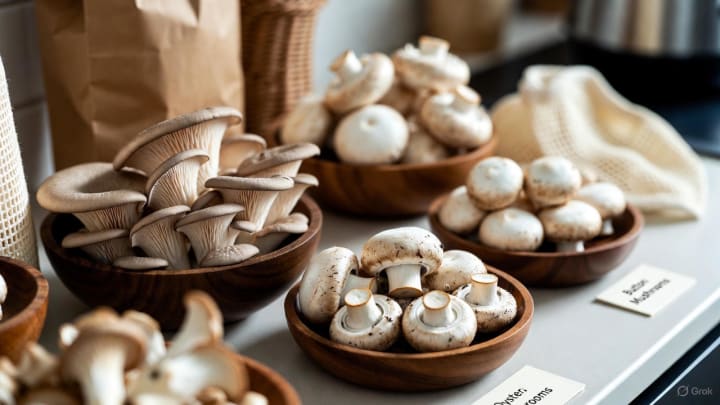
Button or champignon are also easy, growing in composted manure and commonly found.
2. Oyster
Oyster mushrooms are popular, edible fungi known for their fan-shaped caps, white gills and mild, savory flavor, growing in shelf-like clusters on dead wood or cultivated on various organic materials like straw.
An excellent answer to "where to plant mushrooms" outdoors. They thrive in wood chip garden beds, making them perfect for organic cultivation in your yard.
Indoor vs Garden Mushroom Growing
You might ask, “can you grow mushrooms in a garden?” Yes, but it’s a different, longer game. Outdoor log or bed cultivation is subject to weather, pests and seasons. Indoor mushroom cultivation provides a controlled environment that yields predictable, year-round results. It’s the best way for a beginner to understand the lifecycle and ensure success before experimenting with outdoor small-scale farming.
How to Start Mushroom Farming at Home
Harvest with clean hands or harvesting tools. Enjoy them fresh. The flavor is profoundly better than store-bought. For storage, use a paper bag in the fridge or for long-term preservation, dry them. After your block is spent, it becomes fantastic compost for your garden, closing the loop on sustainable food production. A pro tip is that once harvested, store your bounty in custom mushroom mylar bags. They block light and moisture, keeping your mushrooms fresh far longer than plastic.
Your Journey Begins Now
Starting your mushroom cultivation setup is an act of partnership with nature’s most efficient decomposers. It teaches patience, observation and the subtle art of climate control. Begin with a simple kit or a bucket of pasteurized straw and oyster spawn. Pay attention to humidity control and fresh air. Witnessing the rapid fungal growth from pin to dinner is a uniquely rewarding experience. This is more than a hobby. It's a step towards food sovereignty and a daily wonder. Your quiet, homegrown harvest is waiting. All you have to do is start.
About the Creator
Cristina Baker
I’m Cristina Baker, a business and market expert with 8+ years of experience helping brands and entrepreneurs grow. I share insights, strategies, and ideas that inspire growth, spark curiosity, and turn challenges into actionable results.
Keep reading
More stories from Cristina Baker and writers in Feast and other communities.
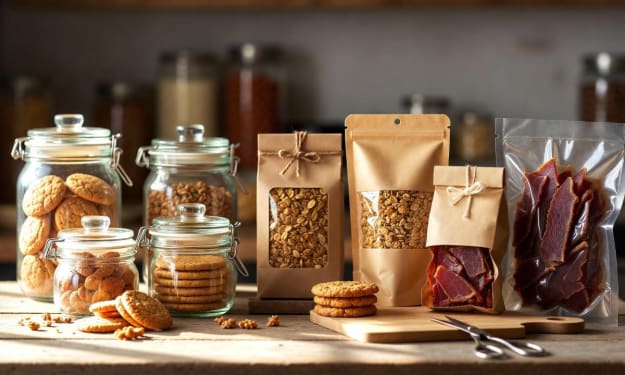
Creative Ways to Package Homemade Snacks for Freshness and Style
10 Creative Ways to Package Homemade Snacks for Maximum Shelf Life and Style Homemade snacks have become increasingly popular among food enthusiasts and home cooks. From cookies and granola to jerky and roasted nuts, these treats not only taste amazing but also offer a personal touch that store-bought snacks often lack. However, no matter how delicious your homemade creations are, their freshness and flavor can quickly deteriorate without proper packaging. Thoughtful snack packaging not only preserves the quality of your treats but also makes storage, gifting, and presentation much easier.
By Cristina Baker3 months ago in Feast
Ramadan's Digital Detox: Why It Matters
Ramadan's Digital Detox: Why It Matters The Beginning Our lives today are cantered on screens in a world that is so hyperconnected. Digital devices have become inseparable from our daily routines, from checking emails, watching videos, and responding to endless notifications to scrolling through social media feeds. Technology brings distraction, stress, and mental overload, in addition to offering convenience and connection.
By Farida Kabir3 days ago in Feast
Review of 'Man on the Run'
My wife and I saw Man on the Run, a nearly 2-hour documentary on Amazon Prime, about Wings, Paul McCartney's group that flew around the world from shortly after The Beatles broke up in early 1970 to shortly after John Lennon was murdered at the end of 1980, making a Beatles reunion forever impossible.
By Paul Levinsonabout 17 hours ago in Beat


Comments
There are no comments for this story
Be the first to respond and start the conversation.