
The Narcissism of Scent:
When Fragrance Becomes a Form of Dominance

After examining why smokers externalize their own discomfort into shared air, it made sense to analyze another invasive habit — over-fragrancing.
The Invisible Offense
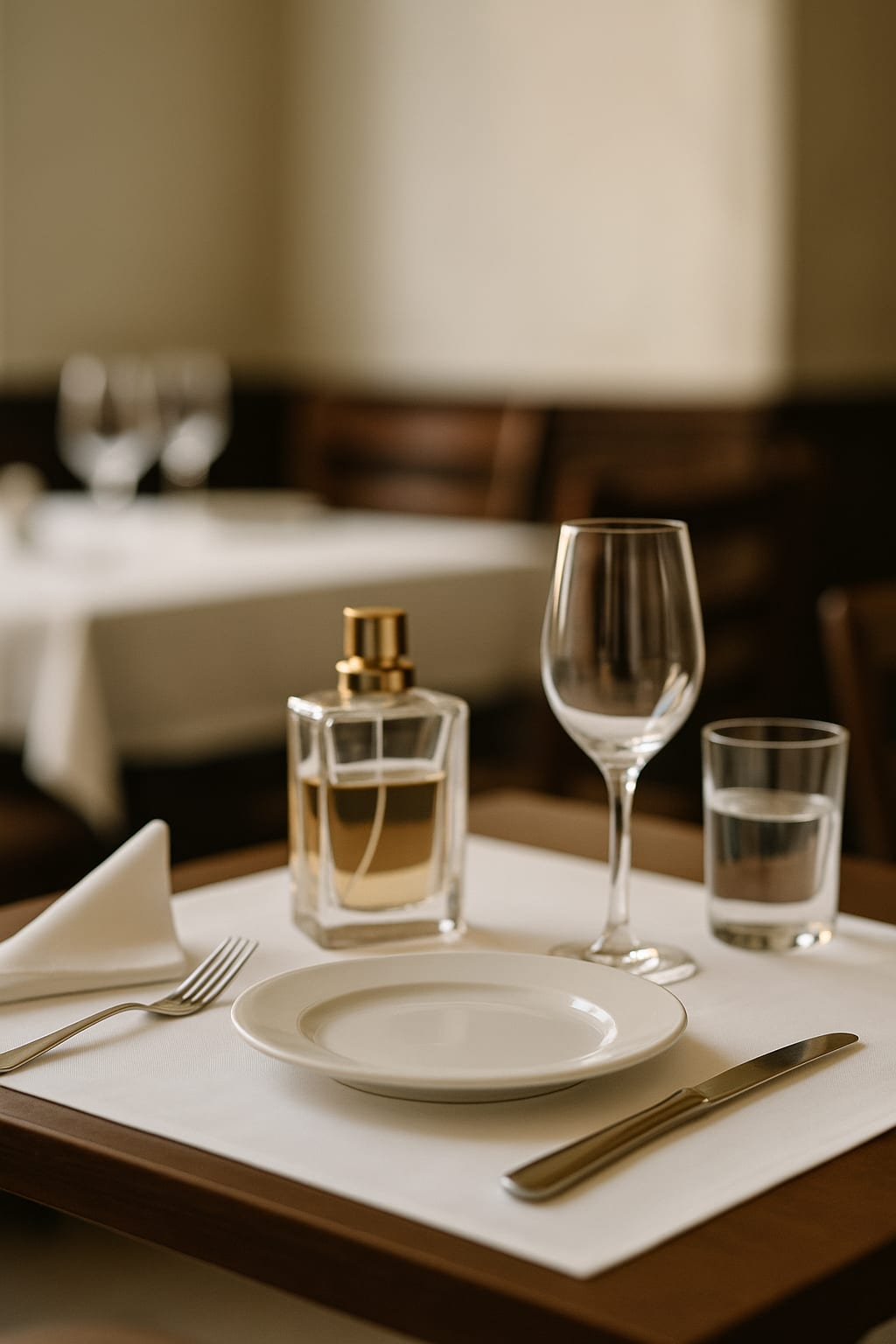
Few social experiences are as quietly infuriating as sitting down to eat and realizing you can’t taste your food because someone nearby is wearing a half bottle of perfume. The fragrance doesn’t just enter the room — it takes the room and everyone in it hostage. Every breath becomes a negotiation between your appetite and their vanity.
It may seem like a minor irritation, but to anyone with even a modest understanding of human behavior, this is more than poor manners. It’s a psychological tell.
When Scent Turns to Self-Projection
Over-fragrancing is rarely about smell. It’s about presence. Many who do it are attempting to control perception — to announce themselves before they speak. The cloud of perfume becomes a sensory extension of ego: notice me, remember me, inhale my importance.
In behavioral terms, this is olfactory dominance — the use of scent as a power display. It functions much like speaking too loudly in a quiet room or interrupting mid-sentence. The individual may not consciously mean harm, but the impact is the same: others are forced to adapt to their sensory volume.
Underneath that pattern often lies insecurity. Perfume, like luxury branding, offers a shortcut to significance. It’s armor for the anxious, camouflage for the self-doubtful, and validation for the approval-hungry. When someone drenches themselves before a public outing, what they’re really doing is regulating anxiety through sensory control.
The Science of Sensory Desensitization
Smell works like background noise: constant exposure dulls sensitivity. This is olfactory habituation, a neurobiological process that causes the brain to “tune out” familiar odors over time. People who over-spray their fragrance often can’t detect its strength anymore — the receptors in their olfactory epithelium stop firing with the same intensity.
So they keep applying more, convinced the scent fades too quickly. What’s really fading is their sensory accuracy. The result is a walking saturation event — a mobile diffuser of denial.
The Psychological Paradox of “Good Intentions”
Ask most heavy fragrance users why they wear so much, and you’ll hear variations of “I just want to smell nice.” The phrasing itself is revealing. It’s not I want to be clean or I don’t want to offend others. It’s I want to smell nice — a statement centered on self-presentation rather than shared experience.
This small linguistic difference reflects a deeper ethical gap: a lack of environmental empathy. Ethical maturity, in behavioral terms, means perceiving how one’s comfort interacts with another’s autonomy. Over-fragrancing breaks that boundary. It places personal identity above communal air.
Control, Compulsion, and the Sensory Ego
In forensic behavioral work, compulsion often hides behind culture. Perfume addiction is socially acceptable, even celebrated. Yet the same neurological circuitry that drives substance overuse — dopamine anticipation, reward reinforcement, and social validation — applies here. Each compliment becomes a micro-dose of worth.
Over time, that reward loop teaches the brain to equate visibility with value. The scent becomes part of the self-concept. Without it, the individual feels invisible, even unsafe. That’s why some people reapply perfume before short errands, or keep atomizers in their car console like security blankets. It’s not hygiene. It’s emotional regulation through chemical theater.
The Ethics of Shared Air
Just as cigarette smoke doesn’t stop at the smoker’s boundary, fragrance doesn’t stay confined to its wearer. Restaurants, theaters, airplanes, and offices are communal sensory environments.
Over-fragrancing violates that commons.
There’s also a biological factor: synthetic fragrance compounds — especially aldehydes, phthalates, and musks — can trigger migraines, respiratory distress, and allergic reactions. People rarely consider this because perfume marketing divorces scent from substance. But chemically, it’s still combustion in a bottle.
In law-enforcement training, situational awareness means reading an environment before acting. Social awareness should demand the same: before entering a restaurant, recognize that others came to taste food, not your eau de self-importance.
Behavioral Takeaway
Over-fragrancing is more than a sensory offense; it’s an ethical lapse disguised as elegance. It communicates unconscious entitlement — the belief that one’s preferred sensory experience deserves priority over another’s autonomy.
Truly confident people don’t need their presence to arrive before they do.
Sources That Don’t Suck
National Institute of Environmental Health Sciences, “Health Effects of Fragrance Chemicals”
American Psychological Association, Behavioral Cues of Insecurity and Overcompensation
National Library of Medicine, “Olfactory Habituation and Sensory Adaptation Mechanisms”
Journal of Environmental Psychology, “Scent and Social Space: Ethical Dimensions of Ambient Fragrance”
World Health Organization, “Indoor Air Quality: Fragrance and Volatile Organic Compounds”
About the Creator
Dr. Mozelle Martin
Behavioral analyst and investigative writer examining how people, institutions, and narratives behave under pressure—and what remains when systems fail.
Keep reading
More stories from Dr. Mozelle Martin and writers in Feast and other communities.
Feeding Families on Nothing:
Across neighborhood platforms like Nextdoor, people are quietly admitting they can’t afford groceries. Some are skipping meals so their children can eat. Others are stretching a single can of soup across two dinners. It’s heartbreaking—but it’s not new.
By Dr. Mozelle Martin4 months ago in Feast
Eat During Chinese New Year
The Chinese New Year feast is traditionally abundant with meat dishes, but these 15 vegetarian recipes prove that plant-based eating can be just as festive, flavorful, and meaningful. Each dish carries auspicious symbolism while delivering incredible taste that will have everyone reaching for seconds—even the meat lovers at your table. From crisp greens to creative vegetable transformations, these recipes are designed to impress.
By yue . shuiabout 21 hours ago in Feast



Comments