
The mysterious past of chopsticks
The enigmatic history of chopsticks


An essential utensil for eating Asian food is a pair of chopsticks.
While others find them difficult, some find them simple to learn.
Chopsticks originated in Asia, a fact that is well acknowledged, but do you know where and why?
These inexpensive substitutes for forks and knives have been around for ages, but how did they come to be a common tool in Asia?
Here, we'll look at the chopstick's unexpected and little-known past.

Chopsticks' earliest known use.
Originally employed as cooking implements, chopsticks were created in China more than 5,000 years ago.
Wooden chopsticks are said to have been the first type of chopstick used in China.
The first chopsticks may have been thin twigs used to take food out of a cooking pot, according to some theories.
Chopsticks' composition evolved, though, as inventive cooking techniques advanced and fried food gained further popularity.
The ruins of Yin, which were found in the Henan province, provided evidence that it was the location of the first metal chopsticks' invention as well as the finding of the first known examples of Chinese writing.
At the site, several copper chopstick sets were found in tombs.
The ability to reach deeply into boiling water and oil pots was a benefit of using cast metal chopsticks.

chopsticks are used.
People started using chopsticks for dining in the year 400 A.D.
Due to a population growth, China experienced a food and fuel crisis, forcing cooks to get inventive in the kitchen.
Chefs were obliged to alter their cooking methods due to a decrease in the supply of wood for fires. Chefs began to explore by chopping food into extremely little pieces.
They were aware that food would cook more quickly if it were cut up into smaller pieces.
This was a resourceful method of preserving food while using less firewood and other resources.
Knives gradually became unnecessary since bite-sized meals eliminated the need for them.
This is where the idea of using chopsticks as eating utensils was born.

The advancement of chopsticks
The chopsticks of many civilizations have different qualities.
According to popular belief, the rise of Confucius and his teachings coincided with the use of chopsticks in China.
Knives at the table were not permitted at the time per his teachings as they served as a reminder of bloodshed and violence.
It is believed that this is what led to the blunt design of Chinese chopsticks.
Chopsticks were adopted in other countries of Asia by the year 500 AD, including Korea, Japan, and Vietnam.
The basic chopstick design was modified in each nation.
For instance, in Japan, only religious events were allowed to utilize chopsticks.
They were constructed from a single piece of bamboo that had been split in half and was still attached at the top, making them resemble tweezers. Men's chopsticks also measured an inch longer than women's.
Alternative materials, including coral, brass, ivory, and jade, were tried by other nations.

Myths about chopsticks.
Silver chopsticks were employed to detect poison during the Chinese dynastic era.
Chopsticks would turn black, according to the notion, if your food had been tainted. This wasn't always a reliable approach, though.
Silver can react when exposed to the hydrogen sulfide present in garlic, onions, and rotten eggs, but it will not change color when in contact with cyanide or arsenic.
Chopsticks have been connected with a variety of different myths over the years.
Another illustration is the notion that using an uneven pair of chopsticks will cause you to miss a boat or an aircraft in various Asian societies.
Another example from Korean culture is that you will remain single for longer if you hold your chopsticks close to the tip.

Chopsticks were first produced by the Japanese.
Chopsticks still adhere to their historical origins while being used all over the world.
Each nation has evolved its own design and manufacturing process for chopsticks over time.
In Japan, Obama produces over 80% of the lacquered chopsticks that are made.
When we consider the appearance of chopsticks, the vibrant patterns are undoubtedly some of the most recognizable.
The most well-known are the exquisitely painted Wakasa Nuri-Bashi chopsticks.
About the Creator
Sonny Servaz
Father, writer, poet, and husband. Family, education, health & wealth, politics, relationships, speculative fiction & fact, humor, and writing are some of my favorite topics to blog about.
Keep reading
More stories from Sonny Servaz and writers in Feast and other communities.
My Tous les Jours Trip
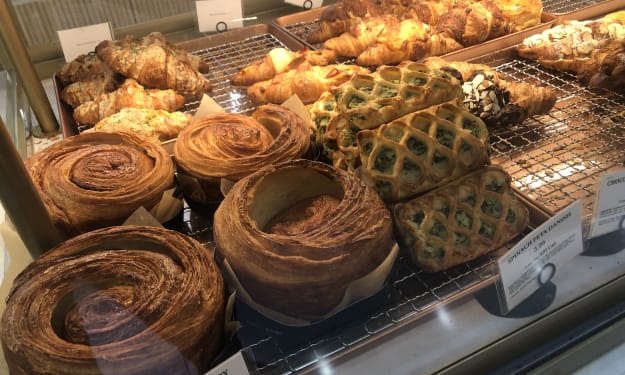
As someone who lives in a rural area, I don't get the chance to visit fancy restaurants or bakeries that often. So, when a friend told me about a French-Asian bakery that's less than an hour away, I knew I had to check it out and grab some pictures for social media. Tous les Jours ended up providing an immersive experience that went above and beyond my expectations--although I did leave with a few reservations.
By Kaitlin Shanks25 days ago in Feast
Artificial Sweetener Market Size and Forecast 2025–2033: Health Awareness, Sugar Reduction, and the Global Shift Toward Low-Calorie Living
Introduction: Sweetness Without Sugar Is No Longer Optional The global food and beverage industry is undergoing a major transformation as consumers increasingly question their sugar intake. Once viewed as a simple indulgence, sugar is now widely linked to obesity, diabetes, cardiovascular diseases, and metabolic disorders. This shift in perception has created a powerful opportunity for sugar alternatives, especially artificial sweeteners, which offer sweetness without the calorie burden.
By Sushant. Renub Researchabout 15 hours ago in Feast
Smart phones, Humans and Aliens.
WARNING. I will be tapping into one of your favorite creative tensions: The absurdity of humans worshipping their glowing rectangles as if they were tiny oracles. There’s something deliciously poetic about that contradiction, and it lends itself beautifully to an instructive proviso.
By Novel Allen5 days ago in Poets



Comments
There are no comments for this story
Be the first to respond and start the conversation.