
(Sugar-free) Red Velvet Cake
Discovering a classic American dessert and making it my own


A Foreign Concept
When you think about red velvet cake today, it's hard to imagine anyone not knowing what it is. But before red velvet surged in popularity and reached the global marketplace, most people outside the United States would never have heard of it. I was one of these people.
It was a thing of mystery. What was this "red velvet" I kept hearing about in pop culture? Red velvet cake, red velvet cupcakes. The name was enticing. Characters from shows I watched as a teenager like Gossip Girl and Sex in the City would make casual references to what sounded like the most amazing cake in existence, but what was it? I had to find out.
Try as I might, I couldn't find this mysterious dessert at any of the bakeries or restaurants I visited in Australia. I trawled through all the cookbooks in our house, and found nothing. Margaret Fulton's Encyclopedia of Food & Cookery (2006) had never let me down before. As a child, I thought every food that ever existed was in her book. But there was no mention of red velvet. No one I asked had any idea what it was. Finally, I asked my mother.
"Oh, it's just chocolate cake with food dye in it," she told me.
Well, that didn't sound like anything special, so I put it out of my mind.
Discovering Red Velvet
It wasn't until I was in my mid-twenties that I finally had the chance to try my first red velvet cupcake. I had been accepted into an internship in New York City, and was ten thousand miles from home.
After one bite, I knew I would be baking it for the rest of my life. Until then, I had adored carrot cake, but only because of the icing. I loved chocolate cake, but often found it too heavy. Red velvet was the best of both worlds. Smooth and chocolatey, fresh and creamy.
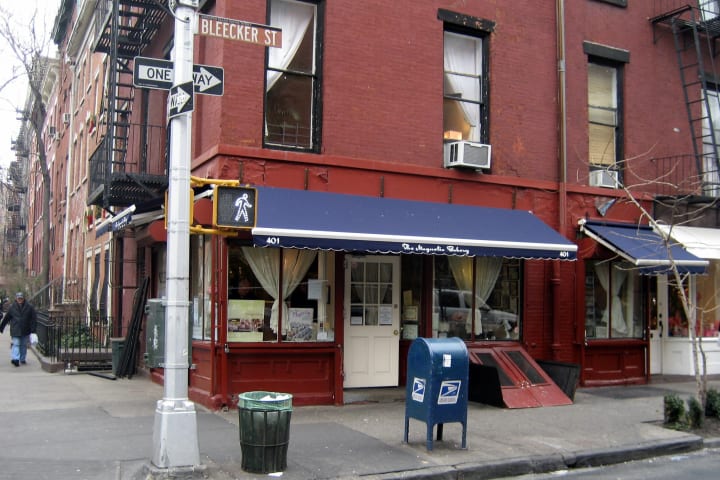
I had finally discovered what all the fuss was about. I tried as many red velvet cupcakes as I could find while I was in New York. I visited the famed Magnolia bakery, and every little bakery I happened to come across while exploring the city.
Recreating Red Velvet
When I got back to Australia, there was a lot of trial and error before I made anything even remotely resembling the red velvet cakes I had tasted in New York. The cake wasn't red enough, the texture was grainy, the icing was too thin. Eventually, I perfected my technique. And then I went keto.
No sugar, no flour. How could I possibly continue making my favourite dessert now? Here I share with you my version of a sugar-free (gluten-free, keto) red velvet cake.
The Recipe : Basic Sugar-free Red Velvet Cake
For the cake:
- 2 cups almond flour
- 2 tbsp cocoa powder
- 1 tsp baking soda
- 1 cup erythritol sweetener (see recommendations below)
- 3 eggs
- 100g butter
- 1 cup buttermilk
- 1 tsp white vinegar
- 2 tsp vanilla extract
- 2 tbsp red food coloring
For the icing:
- 500g cream cheese
- 100g softened butter
- 1 cup erythritol icing mix (see recommendations below)
Method:
- Preheat oven to 320F (160C).
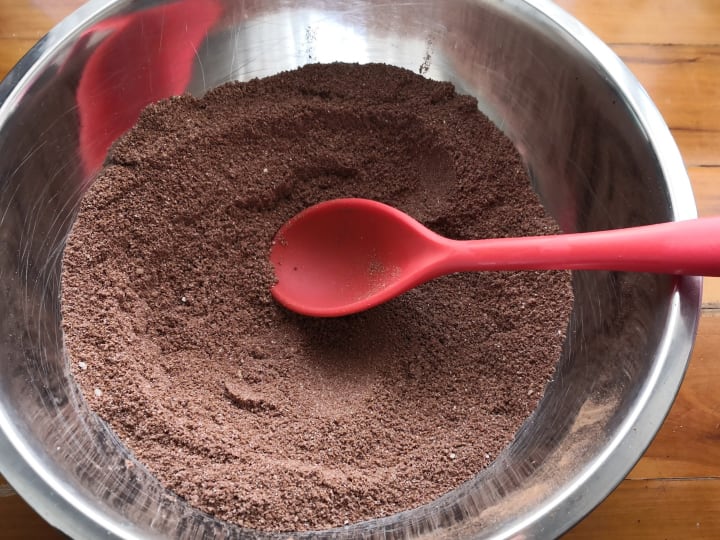
- Mix almond flour, cocoa powder and baking soda in one bowl and put aside.
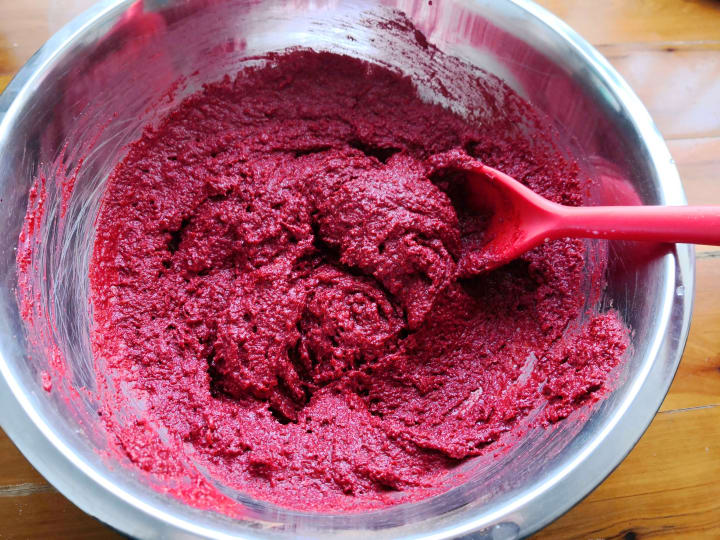
- In a separate bowl, mix eggs, sweetener, butter, buttermilk, vanilla and food coloring. Beat with an electric mixer for 2-3 minutes.
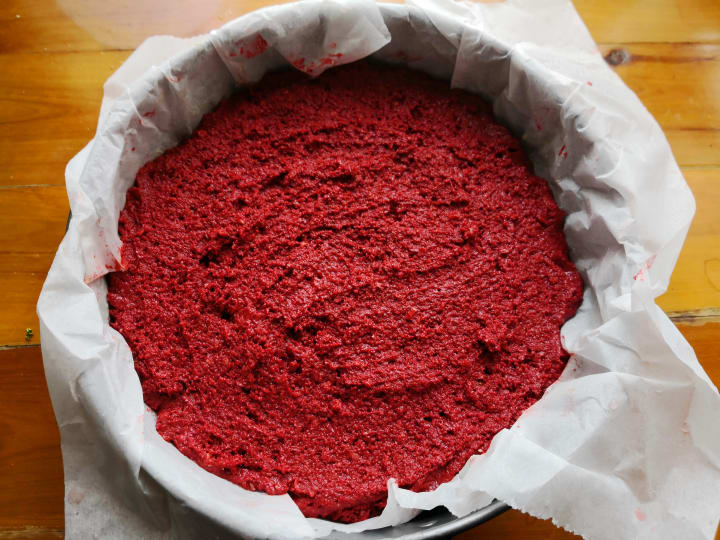
- Pour the egg mix into the flour mix and stir until just combined.
- Bake for 45 minutes for one large cake, or 30-35 minutes if making two layers.
- Combine icing ingredients, and spread over cooled cake.
Visual Guide:
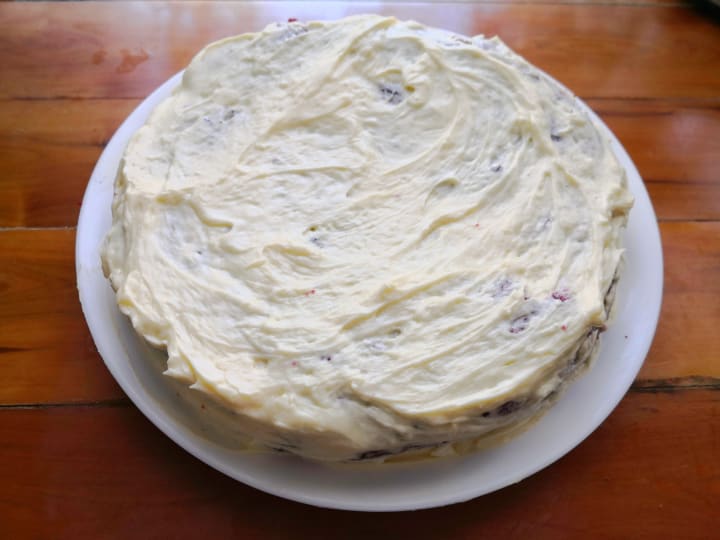
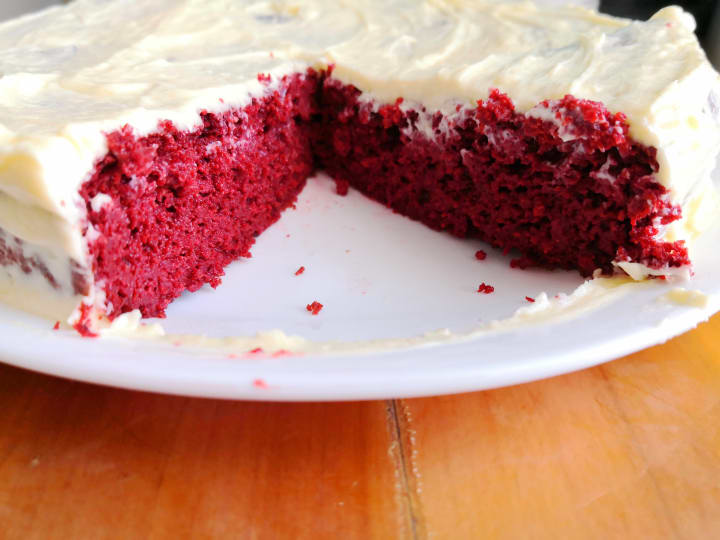
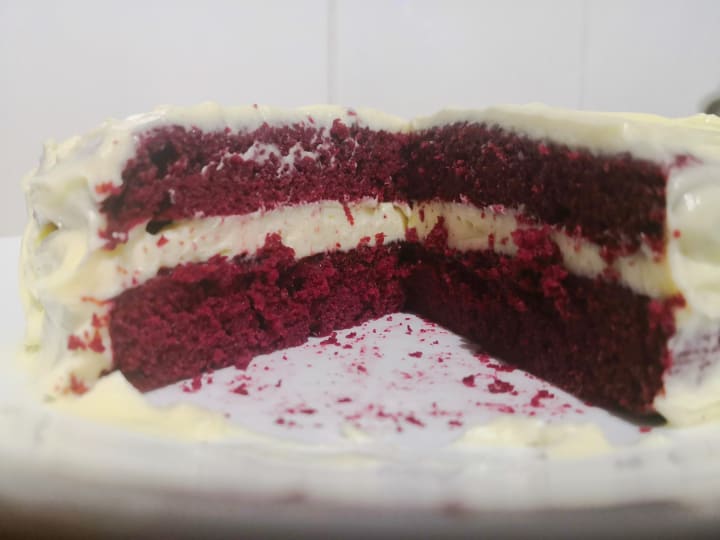
Recommended Products (available in Australia):
Origins and Meaning
Red Velvet cake is widely considered an American classic. But where did it actually come from? The answer is simple but unsatisfying: we may never know.
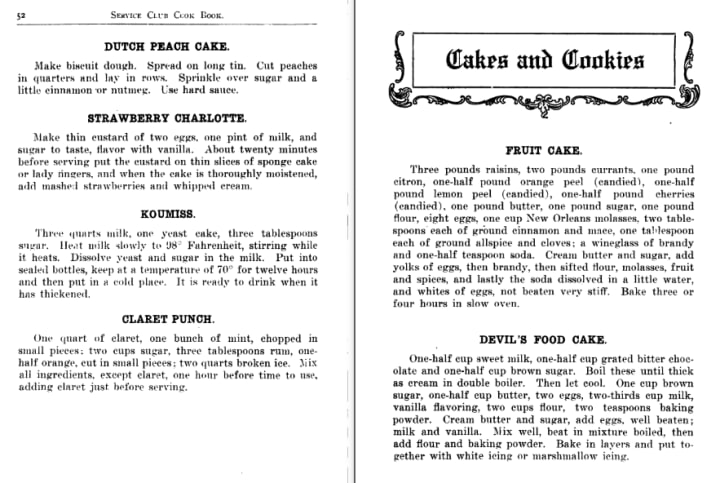
Here's what we do know. Red velvet cake likely originated as a variation of devil's food cake. An early example of devil's food cake is listed in Chicago’s Service Club Cook Book (1904, p. 53). This uses sweet (regular) milk, and thus would not have been red.
A later iteration is Hershey’s 1934 “Demon cake," using sour milk and baking soda (Gaspero, 1971). This is well on the way to modern-day red velvet cake.
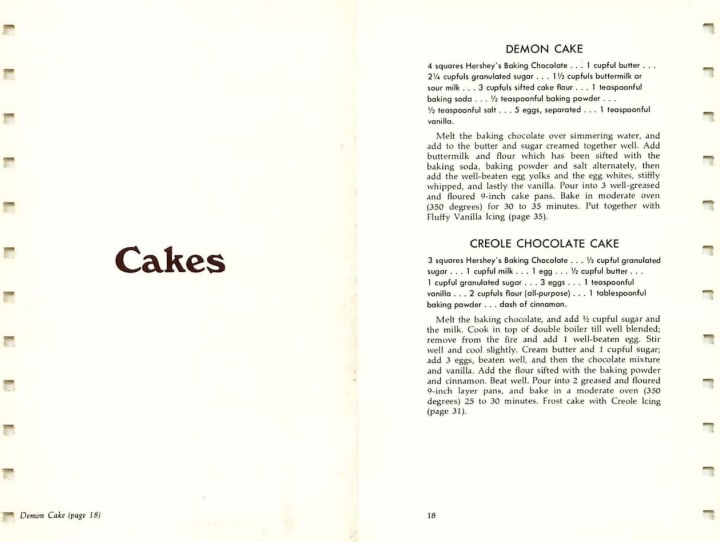
The first mention of a "red devil's food" cake in a commercial cookbook in the 1943 edition of Rombauer's The Joy of Cooking (p. 542).
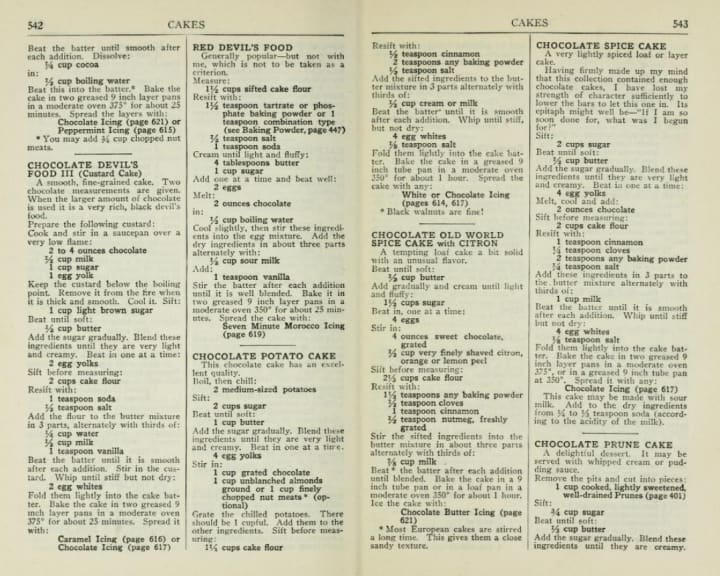
Early recipes like these did not use food dye. Rather, they relied on a chemical reaction between sour milk and baking soda to provide a reddish hue. Many modern recipes retain these ingredients, however red food coloring now provides the vibrant red color.
"Red Waldorf cake" is found in various early sources. Claims have been made that red velvet cake was created at the Waldorf Astoria Hotel in New York (Byrn, 2016, p.205; Severson, 2014). A further claim is that red velvet cake was an idea marketed by the Adams Extract Company in order to sell red food coloring after such colorings were regulated by the Food, Drug and Cosmetics Act passed in 1938 (Byrn, 2016, p.206; Severson, 2014).
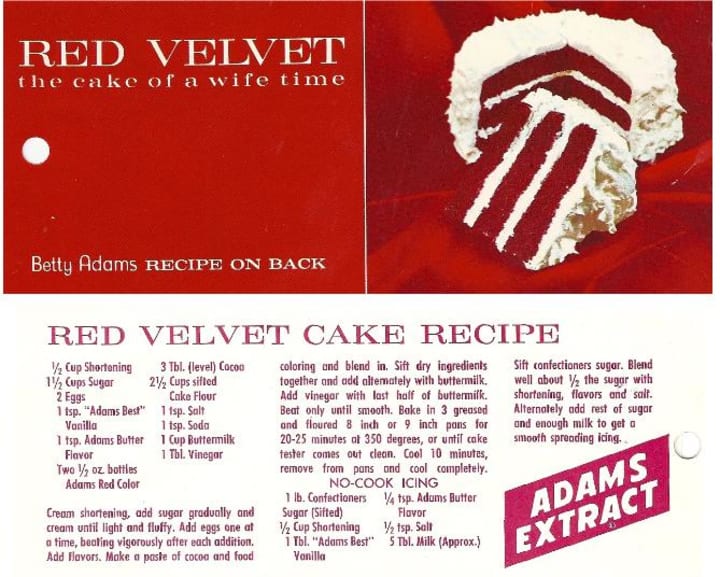
The connection between African-American food and red velvet must also be acknowledged. Red colored food and drinks have been used since the mid-19th century to celebrate Emancipation (Miller, 2013, pp.224-231). Red velvet cake is now a common sight at special occasions and Juneteenth celebrations (Galarza, 2021; Long, 2015, p.21). It is uncertain whether red colored cake in particular could have roots in African-American tradition, and is unlikely to be either proven or disproven due to lack of historical records.
Red velvet cake can be seen as a symbol of American capitalism and engenuity, as evidenced by the successes of Adams Extracts and the Waldorf Astoria, or as a reminder of blood spilled during the years of slavery. To some it is a tacky gimmick, to others a lifelong obsession.
Recipes for red velvet cake have changed considerably over the past century, which is partly why it is so difficult to trace the origins of this classic dessert, and are still changing today. For example, artificial colorings are becoming less popular, and many recipes are emerging using natural alternatives such as beet juice (Byrn, 2016, pp. 278, 303). Who knows what modifications may become popular next!
A Global Dessert
Today, red velvet is a standard flavour available in most bakeries and cake shops in Australia. Packet mixes are available in supermarkets. It's not as popular as it is in the United States, but it is no longer a totally foreign concept. Most people will have at least heard of red velvet cake. I am yet to find a commercially available sugar-free or keto version, although I have come across a couple of gluten-free ones.
In creating a sugar-free version of this old classic, I wouldn't say I have honored the culture behind red velvet cake so much as appropriated it for my own benefit. This seems to be a running theme in this cake’s history. It may not be very traditional, but my sugar-free red velvet cake will continue to be a favourite in our family for years to come.
References
Byrn, Anne. (2016). American Cake: From Colonial Gingerbread to Classic Layer, the Stories and Recipes Behind More Than 125 of Our Best-Loved Cakes. Rodale Books.
Galarza, G. Daniela. (2021, June 12). Red velvet cake is ‘the color of joy’ Here’s how it rose into America’s dessert canon. The Washington Post. https://www.washingtonpost.com/food/2021/06/11/red-velvet-cake-history/
Gaspero, Josh. (Ed.). (1971). Hershey’s 1934 Cookbook. Hershey Foods Co. https://issuu.com/98517886/docs/hershey_s_1934_cookbook_1971_vintage
Fulton, Margaret. (2006). Margaret Fulton's Encyclopedia Of Food & Cookery: The Complete Kitchen Companion From A To Z. Hardie Grant.
Long, Lucy M. (Ed.). (2015). Ethnic American Food Today: A Cultural Encyclopedia. Rowman & Littlefield.
Miller, Adrian. (2013). Soul Food: The Surprising Story of an American Cuisine, One Plate at a Time. University of North Carolina Press.
Rombauer, Irma S. (1943). The Joy of Cooking: A Compilation of Reliable Recipes with an Occasional Culinary Chat. Bobbs-Merrill Co. https://archive.org/details/joyofcookingcomp00romb/
Severson, Kim. (2014, May 12). Red Velvet Cake: A Classic, Not a Gimmick. The New York Times. https://www.nytimes.com/2014/05/14/dining/red-velvet-cake-from-gimmick-to-american-classic.html
The Service Club Cook Book. (1904). Chicago Cop. https://hdl.handle.net/2027/nyp.33433082243720
About the Creator
My Tous les Jours Trip
As someone who lives in a rural area, I don't get the chance to visit fancy restaurants or bakeries that often. So, when a friend told me about a French-Asian bakery that's less than an hour away, I knew I had to check it out and grab some pictures for social media. Tous les Jours ended up providing an immersive experience that went above and beyond my expectations--although I did leave with a few reservations.
By Kaitlin Shanks25 days ago in Feast
Searching for the Best Pizza in Doha: A Matter of Taste, Time, and Place
The idea of the “best pizza in Doha” is more complicated than it first appears. Doha is a city of contrasts—glass towers rising from the desert, quiet neighborhoods tucked behind busy roads, and people from every corner of the world bringing their own memories of what food should taste like. Pizza, a dish born far from Qatar, has found a surprising and comfortable home here. But defining the best version of it is less about rankings and more about moments.
By Harley Morrisa day ago in Feast




Comments
There are no comments for this story
Be the first to respond and start the conversation.