
Stomach Ulcer - Causes, Symptoms, Diagnosis and Treatment
Stomach ulcer. Symptoms. Diagnostics. What to do when a stomach ulcer is diagnosed. Conservative treatment and operations.

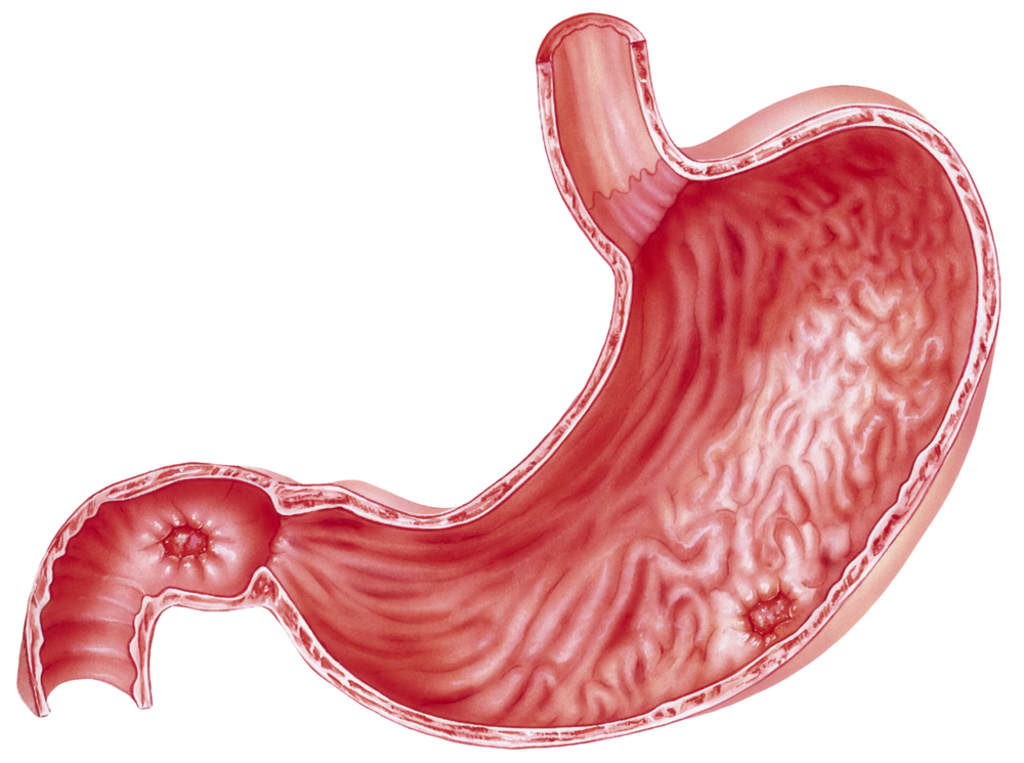
Stomach ulcer is a disease of the stomach of a chronic recurrent nature, accompanied by the formation of a defect in the gastric mucosa and the tissues located under it. The main symptom is pain in the epigastrium on an empty stomach or after eating, often giving in the back and chest. Vomiting, belching, heartburn, nausea are often noted. The most dangerous complications are bleeding, perforation of the stomach wall, pyloric stenosis, malignant degeneration of the ulcer. It is diagnosed according to gastroscopy and stomach radiography, tests for helicobacter infection. Uncomplicated stomach ulcer is treated conservatively, in complicated cases, surgical aid is resorted to.
General information
Gastric ulcer is a chronic disease of a long-term recurrent nature, expressed in ulceration (the occurrence of an ulcer defect) of the gastric mucosa. It is necessary to distinguish from peptic ulcer symptomatic stomach ulcers (arising as a consequence of other ulcer-provoking factors), which, as a rule, are acute in nature and are safely cured after removal of the trigger that caused them.
Factors causing symptomatic stomach ulcers: stress (stress ulcer), taking gastrotoxic medications (iatrogenic ulcer), diseases of the endocrine glands, metabolic disorders (endocrine ulcer), other diseases of internal organs and systems (secondary ulcer), increased secretion as a consequence of the development of gastrin-producing tumor - gastrinoma (Solinger-Ellison syndrome). The main factor in the development of gastric ulcer is infection with the bacterium Helicobacter Pylori.
Causes of stomach ulcers
Stress ulcers
Stress ulcers occur after severe injuries, the transfer of acute diseases of various organs, severe operations, the transfer of terminal conditions (shock, collapse), acute renal or hepatic insufficiency, severe tissue hypoxia. When exposed to several stressful factors, the likelihood of a stressful stomach ulcer increases markedly. The mechanism of development is a violation of the balance in the effects of factors that damage the mucosa and factors that protect it.
In a situation when all organs and systems are operating in an emergency mode, there is a significant release of corticosteroids and catecholamines into the blood, which increase the secretory activity of the glands of the mucosa and, at the same time, reduce its protective properties. The trophism of the stomach tissues is also disturbed, hemorrhages of the wall are formed, which in turn contributes to ulceration of the mucous membrane. Stress ulcers are localized mainly in the walls of the body and the bottom of the stomach. Very rarely they are formed in the duodenum.
Types of stress ulcers:
1 In case of severe damage to the body by burns and the development of burn disease, the resulting stress ulcer is called a Curling ulcer;
2 Cushing's ulcer occurs as a consequence of severe damage to the central nervous system (traumatic brain injury, brain surgery, strokes);
3. Ulcers after myocardial infarction and traumatic ulcers are also distinguished.
Damage to the gastric mucosa by the type of erosions and ulcers occurs in half of the cases of these conditions, but in most patients, a stress ulcer is not diagnosed, since after the improvement of the condition and the cure of the underlying pathology that served as a stress factor, the ulcer heals on its own. However, with prolonged exposure to a damaging situation, ulceration of the mucous membrane can be deep and lead to perforation of the stomach wall with the development of peritonitis.
Medical ulcers
Drug or drug ulcers occur as a consequence of taking drugs with a gastrotoxic side effect. Ulcerogenic (ulcer-causing) effect has most anti-inflammatory drugs (corticosteroid hormones, nonsteroidal anti-inflammatory drugs), sulfonamides, potassium chloride, caffeine, glucocorticoids, digitalis preparations, anticoagulants, nitrofurans.
The mechanism of mucosal damage in different drugs also differs, it can be a direct damaging effect (potassium chloride) and indirect: a decrease in the protective properties of the mucosa when suppressing the production of gastroprotective prostaglandins (non-selective anti-inflammatory drugs of hormonal and non-hormonal series), increased secretion of gastric juice (glucocorticosteroids, reserpine, caffeine), suppression of normal gastric wall trophic. Most drugs combine direct mucosal damage with an indirect effect.
As a rule, after discontinuation of drug therapy with ulcerogenic drugs, ulceration and erosion of the mucosa heal safely. However, the danger of ulcers is that they can be complicated by bleeding and perforation of the stomach wall.
With gastritis and peptic ulcer of the stomach or duodenum, the appointment of ulcerogenic drugs can provoke the development of an exacerbation of the disease, therefore, medicines with a gastrotoxic side effect are prescribed to such patients only if absolutely necessary and with caution, accompanying therapy with the use of gastroprotective agents.
Ulcers in hyperparathyroidism
Excessive production of parathyroid hormone by the parathyroid glands is called hyperparathyroidism. These hormones are responsible for regulating calcium metabolism in the body, but one of the effects of parathyroid hormone is to increase the production of hydrochloric acid by the glands of the gastric mucosa. Excess calcium ions in the blood also stimulates the secretion of acid and gastrin. With hyperparathyroidism, ulcers often occur on the mucous membrane of the duodenum. They are characterized by antral localization in the stomach.
The course of hyperparathyroid ulcers is quite severe, with frequent pain, poorly amenable to conservative treatment, prone to relapses and is often complicated by bleeding and perforation of the stomach wall. Often, ulceration of the gastric mucosa can complicate the disease of the digestive system: cirrhosis of the liver, pancreatitis. Ulcers can also occur as a consequence of chronic diseases of the respiratory and excretory systems, with diabetes mellitus.
Gastric ulcer has the same mechanisms of development as duodenal ulcer and is also classified.
Symptoms of stomach ulcers
Unlike duodenal ulcers, stomach ulcers are characterized by pain that occurs and intensifies immediately after eating. Vomiting with stomach ulcers brings relief. A common symptom is heartburn, as well as heaviness in the stomach (associated with a violation of its emptying), flatulence. Appetite, as a rule, is reduced. However, sometimes an ulcer localized in the antral parts of the stomach can manifest itself with hunger and night pains.
Just like a duodenal ulcer, a stomach ulcer is dangerous with complications such as bleeding, perforation of the stomach. When the ulcer is localized in the area of the pylorus, the development of pyloroduodenal stenosis is possible. Ulcers localized in the stomach also have a high risk of malignancy, unlike ulcers of the duodenum.
Diagnostics
The basic information for the accurate diagnosis of gastric ulcers is provided by gastroscopy - endoscopic examination of the stomach. Also, pronounced ulceration can be detected with contrast radiography of the stomach. When examining the gastric contents, bacposev is performed to detect helicobacteria. For the same purpose, a respiratory test is used, the detection of helicobacter by PCR and ELISA. A general and biochemical blood test can show signs of anemia if there is bleeding from an ulcerated wall, specific signs of ulcers cannot be detected in laboratory tests. Feces can also be examined for latent bleeding (fecal analysis for latent blood).
Treatment of stomach ulcers
In the treatment of gastric ulcer, strict adherence to a diet is of great importance – the rejection of products that irritate the stomach wall and contribute to increased production of gastric juice. Patients suffering from stomach ulcers should be excluded from the diet of spicy, salty, sour, fried and smoked foods, foods rich in coarse fiber. It is recommended to eat boiled or steamed food. Drug therapy includes:
- proton pump inhibitors (omeprazole, rebeprazole, esomeprazole and analogues) or H2-histamine receptor blockers to suppress gastric secretion (ranitidine group drugs);
- gastroprotective (bismuth, sucralfate) and antacid agents;
- antibacterial drugs for the suppression of helicobacter infection (metronidazole). Drug therapy aimed at H. Pylori eradication is usually carried out for 10-14 days, after which maintenance therapy with acid-lowering drugs is continued.
Uncomplicated stomach ulcer does not require surgical treatment. Surgical removal of a part of the stomach (resection) is prescribed only in case of severe complications: perforation, obstruction, malignancy of the ulcer with the development of stomach cancer. Rarely, surgical treatment is resorted to with a persistent, often recurrent disease that does not respond to conservative therapy.
Treatment of symptomatic stomach ulcers requires, first of all, the removal of the factor that provoked the ulcer. As a rule, this is enough for a positive effect. As an additional therapy, agents that reduce the secretion of hydrochloric acid (proton pump inhibitors, H2-gastroprotectors) are used. Reduction of secretory activity in gastric ulcer can be achieved surgically - by vagotomy.
Prognosis and prevention
Prevention of gastric ulcer, as well as peptic ulcer of the duodenum, is the timely detection and treatment of helicobacter infection of the gastrointestinal tract, avoidance of stressful situations, uncontrolled medication intake and regular balanced nutrition. Uncomplicated stomach ulcers with timely detection and adequate therapy are successfully cured. Unfavorable prognosis with the development of complications.
About the Creator
Artur Kh.
Writer, doctor and businessman. I blog about self-development, personal growth, health and new ways of making money.
The food business is undergoing a transformation thanks to gene-edited fungus, which is being considered as a beef substitute.
Compared to the strain now in use, a gene-edited fungus has created meat-like protein that grows more quickly and uses a lot less sugar. These improvements bring one of the earliest meat alternatives in the world closer to competing with animals in terms of scale and efficiency.
By Francis Dami5 days ago in Feast
I Discovered A Better Way To Cook Cabbage
I recently posted this question on Facebook: I was surprised by some of the answers, especially about cabbage. Chicken: 40% Cabbage: 30% Salmon: 20% Others: 10% (including steak, crab cakes, fish, chili dogs, chicken salad, mac and cheese, cold cuts, potatoes, and ham)
By Margaret Minnicksabout 2 hours ago in Feast



Comments
There are no comments for this story
Be the first to respond and start the conversation.