
Skim milk, what makes it more noble than whole milk?
Either full-fat or skimmed, skimmed can still be skimmed half of?


With the growing problem of global obesity, we can see skim milk on the market, a large "zero fat" label in the most prominent position of the commodity packaging, which seems to be developed specifically for people with fitness needs.
At first thought, the fat in ordinary milk is removed, and the process must be more complex, look at the price, certain well-known domestic milk brands of skim milk products do sell more expensive than ordinary pure milk.
Initially, you may be curious to buy and taste, only to find that the milk with less fat is as light as water, and the aroma belonging to the milk has been greatly reduced, and most likely will not be interested in it, labeling it expensive and unpleasant in your mind.
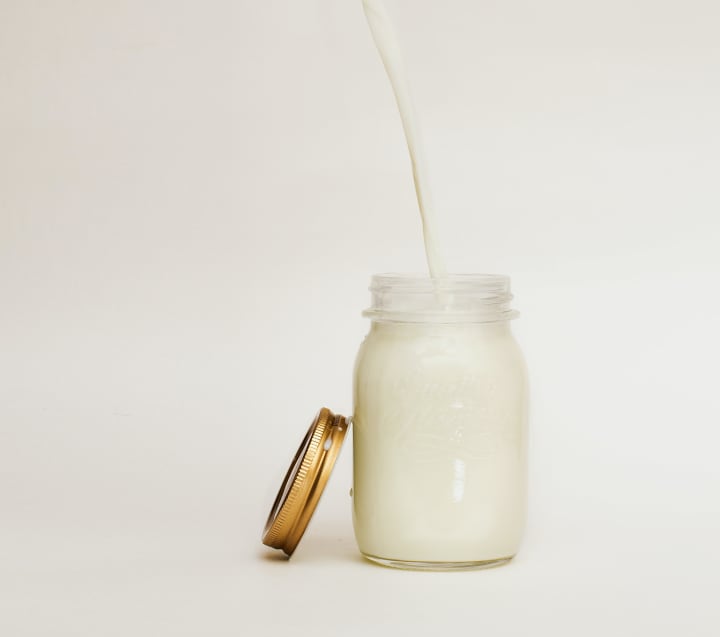
Skimmed Milk is skimmed milk
There are many dimensions to evaluating the flavor of milk, which is also related to the extremely complex composition of milk. The sweetness of milk is related to the lactose content, the saltiness is related to the salt content, the acidity is related to the citric and phosphoric acid content, and substances such as magnesium and calcium contribute to the bitterness.
As for the most crucial flavor of milk, the milk flavor we remember, the biggest contributor should be the free short-chain fatty acids in milk, in addition to a variety of organic compounds that contribute to the flavor of milk, many of which are fat-soluble substances.
In this way, the reason why skim milk is as light as water becomes clearer. When the fat is removed, a lot of flavors are taken away with it, so the milk becomes bland.
Since whole milk is high in calories and skim milk is as light as water, is there a product that can do both? Of course, there is, and low-fat milk (also known as partially skimmed milk) is the product of such a compromise.
Generally speaking, regular plain milk has a fat content of 3% or more, skimmed plain milk has a fat content of 0.5% or less, and low-fat milk is somewhere in between, usually in the 1-1.5% range.
If you have a bit of a drill, you may have some questions about the production of low-fat milk, either whole or skim and skimmed in half.
It is certainly not practical to precisely skim the specified amount of fat from milk, and that half of the fat is added back in. The first step is usually a filtration process to remove impurities, such as small amounts of grass or dust, that are mixed with the milk.
Next, the raw milk is centrifuged, which physically separates the larger components of the milk, including fat.
Centrifugal separation equipment in a milk plant
Note that in larger, more advanced milk plants, all raw cow's milk goes through this process to separate the fat, regardless of whether the final output of the line is whole, low-fat, or skim milk. The fat is separated out and then added back into the milk according to product standards to make whole, low-fat, or skim milk of different sizes.
So why the "extra" step of separating the fat and adding it back in? The key is standardization.
When you walk into a supermarket, you want the quality to be uniform and you don't want the difference between what you bought today and what you bought yesterday.
Milk is not an easy commodity to standardize. For a large dairy company, there are many sources of milk and many farms that supply raw milk, and the quality of the milk varies due to differences in farming levels or climate.
Seasonal variations in the nutritional composition of raw milk
In addition, cows are not "relentless milk-producing machines" and their health conditions can change with environmental or temperature changes. In the case of the most common Holstein cows, the quality of milk produced in winter is significantly higher than in summer, mainly in the milk fat content, which can reach a difference of 1g/100g, or 27%.
Therefore, to produce milk of consistent quality all year round, the plant must blend the main nutrients in the milk, and milk fat, as a component with the most fluctuating content, and one that can be easily separated by physical means, naturally becomes the focus of standardization.
The separated milk fat is added back to the milk according to commercial standards and needs to be homogenized. Because oil and water are not close, milk fat is dispersed in the milk in the form of fat globules, usually around 2 microns in diameter, which tend to collect and float with each other due to Brownian motion.
The homogenization process is to break up the fat globules by physical means so that the diameter of the fat globules is less than 0.8 microns, and the problem of fat floating will be increased and alleviated. Otherwise, the milk will be left for some time and the fat will adhere to the inner surface of the package, at which time what you drink with a straw is a kind of skimmed milk.
Photo of milk before and after the homogenization process (1000x magnification)
In conclusion, the processing of fat in the modern milk production process is relatively complex. Skim milk, on the other hand, is actually not much different from whole milk in terms of processing and even rather has fewer steps to re-add fat.
The fact that originally belongs to skim milk is used as an ingredient in ice cream or other dairy products, making it a higher value-added product. Theoretically, skim milk should be cheaper than whole milk.
This is true, as you can check the skim milk products of some international brands and they are often cheaper than the whole milk products of the same series, or at least the same price.
Milk on the shelves of German supermarkets, skim or low-fat is less expensive than full-fat
In China, some big brands of skim milk are more expensive than whole milk, and can even be more than a dozen dollars a carton. This part of the premium is mainly brought about by marketing, supply and demand, and consumer psychology.
Skim milk is certainly nothing new, in the western regions with the habit of consuming dairy products, butter is an essential food in life, and skim milk is the leftover byproduct of the butter production process, due to the great loss of flavor, and is not popular with consumers.
In earlier times, this bad-tasting skim milk could only be sold to farms and used as feed for fattening pigs, which, according to some ancient flavor literature, was quite effective in fattening. It is amazing that once it was considered to fatten and today it is considered to help with weight loss.
Rationally speaking, skim milk does have a lot fewer calories than whole milk, because fat is the main source of calories in milk, and skim milk has only a little more than half the calories of whole milk.
But everything also depends on the amount, for the national people who are still struggling for "a pound of milk a day", the amount of fat intake from milk is still very small. If you drink 500 ml of milk a day, choosing skim milk can reduce your fat intake by about 15 g, which is about 135 kcal, which is not high compared to the daily calorie requirement of about 2000 kcal for adults.
A study of 1,782 men found that men who consumed more high-fat dairy products were healthier than those who consumed moderate amounts and that the former had a 48% greater risk of abdominal obesity (considered the most dangerous type of obesity) than the latter.
Another study of 20,000 women showed that women who maintained a daily whole milk habit were 15% less likely to gain weight over nine years than women who drank no milk or only low-fat milk.
It is also believed that whole milk brings more satiety, which reduces the probability of people eating extra.
While these studies don't necessarily show that drinking whole milk is necessarily better, they at least refute the idea that whole milk causes weight gain.
Once the dominant view was that fat was the culprit of cardiovascular disease, and with the release of dietary guidelines recommending a low-fat diet, the market for skim and low-fat milk expanded before it became a more established milk category.
However, there is growing evidence that in the early years the sugar industry indirectly concealed the health damage caused by sugar by manipulating research through funding to point the finger at fat for cardiovascular disease.
A growing body of research now concludes that fats are not a beast and that some fats are even beneficial to cardiovascular health. The milk fat in milk is considered to be a good fat for health.
First, milk fat contains lecithin, ceruloplasmin, and nerve sphingomyelin, and carries a variety of fat-soluble vitamins such as vitamin A, vitamin D, vitamin E, and vitamin K, which promote the absorption of calcium in milk.
Secondly, whole milk contains tens of times more omega-3 fatty acids than skim milk, a high-quality fatty acid thought to improve heart and brain health.
The nutrition contained in one cup (237ml) of milk
In addition, milk fat brings a fascinating flavor to milk, and in a world where young people are saying "cheese is power", how many people would say no to the rich, creamy flavor?
Lastly and most importantly, this article is not meant to disparage skim milk as a product. There is a market demand for it, and if you simply want to get a lot of protein through the milk and drink a lot of it every day, skim milk makes sense for reducing calorie intake. Of course, there can be no reason to choose a commodity.
The problem is that some businesses, taking advantage of young people's quest for a good body and the consumer's lack of understanding of the food industry, package skims milk in a niche "premium" way to squeeze more consumer surplus.
Fat content is both the most variable indicator in milk and an important indicator of milk quality and is even an important factor in determining the price of milk and dairy products. While many brands are using high milk fat content as a selling point to impact the high-end dairy market, certain brands have managed to go the other way and sell skim milk at an admirable price.
For the average person without special needs, drinking milk is only for the sake of taste and health, so whole milk is more in line with demand, and high-quality whole milk is more likely to make people love to drink milk. Choose a brand with a good reputation near the milk source, and be sure to buy refrigerated pasteurized fresh milk if you can, and you will understand how naive you were when you used to hate milk because you were forced to drink room-temperature milk by your parents.
About the Creator
Fester Hammer
We soon believe what we desire.
Keep reading
More stories from Fester Hammer and writers in Feast and other communities.
My Tous les Jours Trip
As someone who lives in a rural area, I don't get the chance to visit fancy restaurants or bakeries that often. So, when a friend told me about a French-Asian bakery that's less than an hour away, I knew I had to check it out and grab some pictures for social media. Tous les Jours ended up providing an immersive experience that went above and beyond my expectations--although I did leave with a few reservations.
By Kaitlin Shanks22 days ago in Feast
Gluten-Free Food Market Outlook: Growth, Innovation, and the Future of Clean Eating
Introduction: A Market That Has Moved Beyond Niche What was once a narrow category aimed at people with celiac disease has rapidly evolved into one of the most dynamic segments of the global food industry. Gluten-free foods are no longer limited to medical shelves or specialty stores—they now occupy prominent space in supermarkets, cafés, online platforms, and even fine dining menus.
By Marthan Sir5 days ago in Feast



Comments
There are no comments for this story
Be the first to respond and start the conversation.
This comment has been deleted