
“Put Food on the Table” Is An Idiom That Means More Than Eating
“Put food on the table” means earning enough money to provide the necessities for you and your family.

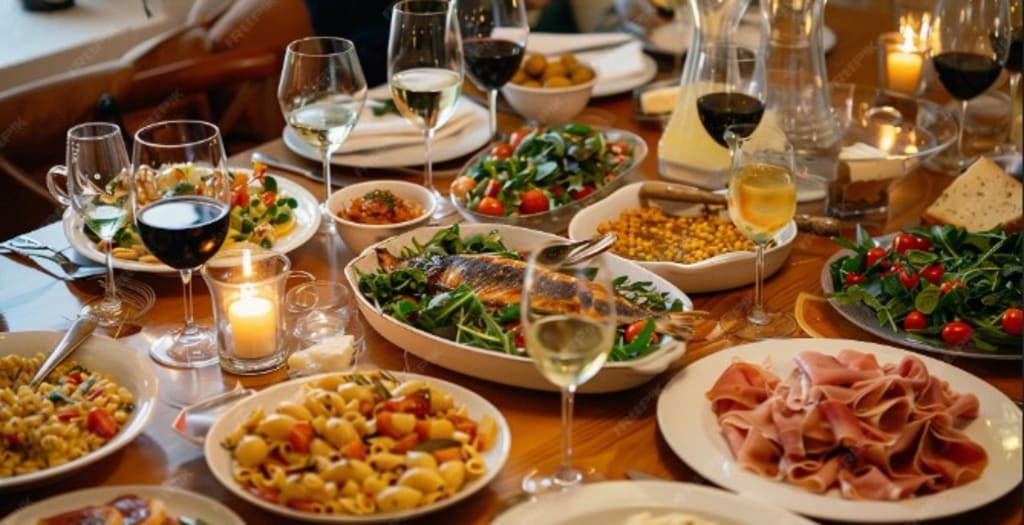
Politicians often say in their speeches that they want you to “put food on the table.” That is an idiom that means more than having something to eat. It means earning enough money to provide the necessities for you and your family.
The idiom originated from a time when income was closely tied to daily survival. In everyday and political language, it has expanded to mean:
- Earning a living
- Providing necessities, not just food but housing, utilities, clothing, and healthcare
- Economic security and stability
- The ability to support a family with dignity
When someone says, “This job puts food on the table,” it usually means that the job enables a person to meet basic responsibilities.
Why Politicians Love Using This Phrase
- It's universal: Everyone understands hunger and the need for provisions.
- It's emotionally grounded: The expression evokes family, responsibility, and survival.
- It's class-bridging: The phrase resonates with working-class voters without sounding technical.
- Morally charged: Failing to “put food on the table” implies injustice or neglect.
When a politician says, “We need policies that help families put food on the table,” they’re usually talking about jobs, wages, inflation, taxes, or social safety nets, not just access to groceries.
The phrase often carries unspoken assumptions:
- Work should meet basic needs.
- People who can’t put food on the table are being failed by the system.
- Economic issues are not abstract—they’re personal and domestic.
Related Expressions With Similar Meanings
- “Make ends meet”
- “Keep the lights on”
- “Put a roof over our heads”
All of these frame economics in terms of household survival rather than means to accumulate wealth.
Why Politicians Regularly Use This Phrase
What gives the phrase its staying power is its emotional gravity. Food is universal, immediate, and non-negotiable. People can delay vacations, new clothes, or home repairs—but not meals. Hunger is one of the most primal human anxieties.
People relate to the phrases because they compress a huge economic argument into something human and concrete. You don’t need a policy background to feel what it means.
“Put Food on the Table” is a phrase that carries power, and politicians know that. Not many other expressions are as emotionally loaded as this one. It appears in campaign speeches, policy debates, labor discussions, and everyday conversations about work. Culturally, socially, and politically, this idiom means far more than making sure dinner is served.
The phrase no longer refers only to buying groceries. Today, “put food on the table” refers to the entire bundle of necessities required for a stable life: rent or mortgage payments, utilities, transportation, healthcare, and childcare. Food remains the symbol, but the meaning has broadened. To “put food on the table” is to fulfill one’s role as a provider.
Why the Phrase is Here to Stay
From a language perspective, overuse happens when an expression becomes predictable. Overuse of this phrase does not diminish its effectiveness.

The idiom is always appropriate because it taps into something elemental. Food is universal. The image of an empty table—especially a family table—carries emotional weight across cultures and generations. Politicians keep using it because it resonates with families.

The next time you hear politicians or anyone else saying, “Put food on the table,” you will know that it means so much more than just groceries. You will hear it again and again because the phrase is here to stay.
About the Creator
Margaret Minnicks
Margaret Minnicks has a bachelor's degree in English. She is an ordained minister with two master's degrees in theology and Christian education. She has been an online writer for over 15 years. Thanks for reading and sending TIPS her way.
Keep reading
More stories from Margaret Minnicks and writers in Feast and other communities.
Fun Facts About Popcorn
There are over 50 fun facts about popcorn, the popular snack loved by children and adults. All the popcorn trivia is interesting, but my favorite fun fact is that the popcorn sold in theaters around the world today was once banned in movie theaters.
By Margaret Minnicks26 days ago in Feast
Taco Bell and Chef Lorena Garcia team together to create Cantina Bell menu
Some time ago taco Bell had teamed up with venezuelan Miami based gourmet Chef that is lorena Garcia and they produced the the Fantastic Cantina Bell menu and that was the first last and only time that anything remotely Gourmet had ever appeared on the menu of Taco Bell at all. It was delicious it had beautifully made guacamole and cilantro and all kinds of beautiful spices that make Latin food so beautiful and vibrant period there was a Cantina Bell Burrito comma a Cantina Bell Because among other things and quite frankly the collaboration of chef Lorena Garcia and taco Bell was fantastic and Taco Bell is one of those restaurants that likes to bring thingsBack to their menu from time to time and I feel like so many others out thereThat the Cantina BellMen you should be brought backPeriod in a way I think it had been brought back but just notWithAnything to do with sheff Lorena Garcia not that they had a falling out or anything it's just that they had a one-time collaborationThat worked out and now they can all move on with their lives and stuff in all different ways but there there it isAnd quite frankly it was a culinaryMasterpiece as well as a great culinary success for bothParties and individuals involvedPeriodI can say it's true because i ordered from it while it lasted and quite frankly I'm glad I did because it was fantastic and it was like one of those times if not one of the first times I ever got to experience truly delicious gourmet and healthy food at a place like Taco Bell and never forgotten that period when I had seen taco Bell and chef Lorena Garcia had been teaming up I thought that'd be fantastic and so from then on after seeing it every time I went toTaco Bell I would order from the menuI loved it it came with meatless ones chicken ones meat ones. AndChef LorGarciaReally is a master with guacamole and stuff she really knowsHow to make the stuff it's great.
By Revista Miko:XCI by Rikki La Rougea day ago in Feast




Comments
There are no comments for this story
Be the first to respond and start the conversation.