
Nuclear vs Joint Family: Freedom or Belonging Subtitle: Exploring the dynamics, benefits, and challenges of nuclear and joint families in today’s world.
“Exploring the trade-off between personal freedom and a sense of belonging in modern family life.”

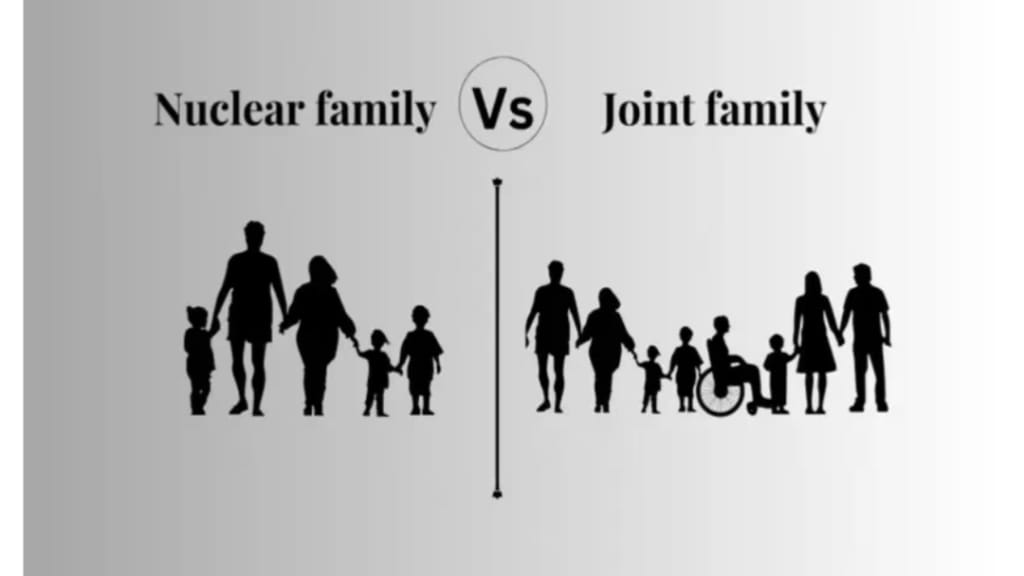
Family is often described as the cornerstone of society, shaping values, behaviors, and emotional well-being. Yet, the concept of family varies greatly, especially in cultures where both nuclear and joint family systems coexist. While some people cherish the independence and privacy of a nuclear family, others find support and a sense of belonging in a joint family. Understanding these two structures offers insight into how family shapes modern life and influences personal choices.
What is a Nuclear Family?
A nuclear family typically consists of parents and their children living independently, separate from extended relatives. This model is common in urban areas and industrialized societies, where mobility and career opportunities often dictate living arrangements.
The nuclear family is celebrated for the freedom and autonomy it provides. Parents can make decisions about finances, lifestyle, and education without the interference of elders. Children often enjoy more privacy and a closer relationship with their immediate caregivers.
However, this freedom comes with challenges. Nuclear families may face emotional and logistical pressures, especially when both parents work. Responsibilities such as child-rearing, household chores, and financial planning fall solely on the immediate family members, which can be overwhelming without extended support.
The Joint Family System
In contrast, a joint family brings together multiple generations under one roof, including grandparents, uncles, aunts, and cousins. This structure, historically prevalent in countries like India, emphasizes collective living and shared responsibilities.
Joint families offer emotional support, shared resources, and a strong sense of belonging. Children grow up surrounded by elders who provide guidance, and adults share household duties and financial burdens. Socialization, cultural transmission, and familial bonding are often richer in such environments.
Yet, living in a joint family may limit personal freedom. Decisions regarding finances, lifestyle, and child-rearing often involve the collective opinion, sometimes leading to conflict or a feeling of restriction. Privacy can be minimal, and generational differences may create tension over values and priorities.
Freedom vs Belonging: A Personal Dilemma
The debate between nuclear and joint families often centers on the trade-off between freedom and belonging. A nuclear family offers independence and self-determination but may lack the extensive support network that a joint family provides. Conversely, a joint family ensures companionship and shared responsibility but can constrain personal choice and autonomy.
Psychologists note that both family structures have unique impacts on mental and emotional well-being. Nuclear families may foster self-reliance, critical thinking, and adaptability. Joint families, on the other hand, encourage empathy, patience, and strong social bonds.
Modern Trends and Hybrid Models
Societal changes, urbanization, and globalization have influenced family structures. Nuclear families are becoming more common in cities due to work-related mobility and the rising cost of living. Meanwhile, some families adopt hybrid models, maintaining close ties with extended relatives while living separately, blending freedom with support.
Technology also plays a role. Video calls, social media, and messaging apps allow nuclear families to maintain connections with extended relatives, while joint families can enjoy greater personal space within large homes or separate wings.
Economic Considerations
Economic factors significantly influence family choices. Nuclear families may have higher individual financial burdens, as all costs—from housing to education—fall on a single household. Joint families can pool resources, share expenses, and create financial stability, which is particularly advantageous during crises.
However, joint families may also face conflicts over resource distribution, inheritance, and responsibilities, requiring strong communication and negotiation skills to maintain harmony.
Cultural and Emotional Dimensions
Culture plays a crucial role in shaping family preferences. In many Eastern societies, joint families are valued for preserving traditions, maintaining social networks, and fostering intergenerational care. In Western contexts, nuclear families are often preferred for the independence they offer and the emphasis on personal growth.
Emotionally, both systems offer different kinds of fulfillment. Nuclear families allow members to forge their unique identity, while joint families provide a sense of rootedness and shared history. The choice between the two often reflects personal priorities, societal expectations, and lifestyle considerations.
Finding Balance
Ultimately, the debate between nuclear and joint families is not about one being superior to the other. It’s about aligning family structure with individual needs and values. Some people thrive in the independence of a nuclear setup, while others flourish in the support network of a joint family.
Hybrid approaches, flexible living arrangements, and strong communication can help reconcile the tension between freedom and belonging. Families can retain the benefits of shared support while respecting personal space and autonomy.
Conclusion
The choice between nuclear and joint family systems is deeply personal, shaped by cultural context, economic realities, and emotional needs. Nuclear families emphasize freedom, self-reliance, and privacy, whereas joint families prioritize belonging, support, and intergenerational bonds.
In the modern world, understanding the advantages and challenges of both systems allows individuals to make informed choices that align with their values and lifestyle. Whether one seeks independence or connection, the essence of family remains the same: providing love, support, and a foundation for life’s journey.
About the Creator
Keep reading
More stories from Salaar Jamali and writers in Feast and other communities.
Auto Sales Jump 76% as Financing Gets Cheaper in Car-Buying Boom Subtitle: Falling interest rates and flexible financing options spark unprecedented growth in the automotive market.
The automotive industry is experiencing a remarkable surge as car sales jump by 76%, signaling a major shift in consumer behavior and market dynamics. This growth is primarily driven by more affordable financing options, declining interest rates, and renewed consumer confidence. For many buyers, these changes have made car ownership more attainable, fueling a boom that is reshaping the automotive landscape.
By Salaar Jamali3 days ago in The Swamp
Global Beef Market Trends & Summary: A Protein-Driven Industry on the Rise
Global Beef Market Outlook 2025–2033 The global beef market is entering a phase of steady yet resilient growth as changing diets, rising incomes, and evolving consumer expectations reshape the world’s meat industry. According to Renub Research, the global beef market is expected to reach US$ 749.90 billion by 2033, up from US$ 520.53 billion in 2024, expanding at a compound annual growth rate (CAGR) of 4.14% from 2025 to 2033.
By Marthan Sir7 days ago in Feast
Global Crab Market Size and Forecast 2025–2033: Rising Seafood Demand and Expanding Aquaculture Drive Sustainable Growth
Global Crab Market Overview The Global Crab Market is entering a phase of consistent and sustainable expansion as consumers worldwide increasingly turn to seafood for its nutritional value and premium appeal. According to Renub Research, the global crab market was valued at USD 11.37 billion in 2024 and is projected to reach USD 19.3 billion by 2033, growing at a CAGR of 6.05% from 2025 to 2033.
By Sushant. Renub Research6 days ago in Feast


Comments
There are no comments for this story
Be the first to respond and start the conversation.