


1.LIVE IN THE MOVEMENT

Anxiety and stress have become more commonplace today than ever before and there is a need to manage this more conscientiously. This is where mindfulness or living in the moment comes in.
Reasons to practice mindfulness
Mindfulness and meditation can help you feel less stressed, be compassionate, and handle situations calmly. These will help you be focused, be productive, and resilient. Here are some ways to practice mindfulness.
1. Focus on your breath
If you start to feel stressed, take a minute to focus on your breathing. Notice how your breath is moving in and out of your body. This is a breathing exercise that can calm your mind instantly. You can also use guided meditation apps to help focus on your breath.
A simple yet powerful mindfulness technique! Focusing on your breath can help calm your mind, reduce stress, and increase self-awareness. Here's a step-by-step guide to get you started:
Steps to Focus on Your Breath
1. *Find a quiet space*: Identify a quiet, comfortable spot where you can sit and focus on your breath without distractions.
2. *Sit comfortably*: Choose a sitting position that feels relaxed and supportive, such as cross-legged on a cushion, on a chair, or on a meditation bench.
3. *Close your eyes*: Gently close your eyes and begin to focus your attention inward.
4. *Bring attention to your breath*: Focus on the sensation of the breath moving in and out of your body. Try to concentrate on the sensation of the breath in your nostrils, throat, or chest.
5. *When your mind wanders*: Gently acknowledge the thought and let it go, returning your focus to your breath. Don't try to control your breathing or change it in any way; simply observe it.
6. *Start with short sessions*: Begin with short periods, like 5-10 minutes, and gradually increase as you become more comfortable with the practice.
Benefits of Focusing on Your Breath
1. *Reduces stress and anxiety*: Focusing on your breath can calm your mind and body.
2. *Improves concentration*: Regular practice can improve attention and focus.
3. *Enhances self-awareness*: By observing your breath, you can develop greater awareness of your thoughts, emotions, and physical sensations.
4. *Supports emotional regulation*: Focusing on your breath can help you manage emotions and respond to challenging situations more mindfully.
Tips and Variations
1. *Use a guided meditation*: Listen to a guided meditation recording to help you get started.
2. *Try different breathing techniques*: Experiment with various breathing patterns, such as alternate nostril breathing or box breathing.
3. *Incorporate physical relaxation*: Release physical tension by relaxing your muscles, starting from your toes and moving up to your head.
4. *Make it a habit*: Incorporate breath focus into your daily routine, such as right after waking up or before bed.
2. TAKE BREAK
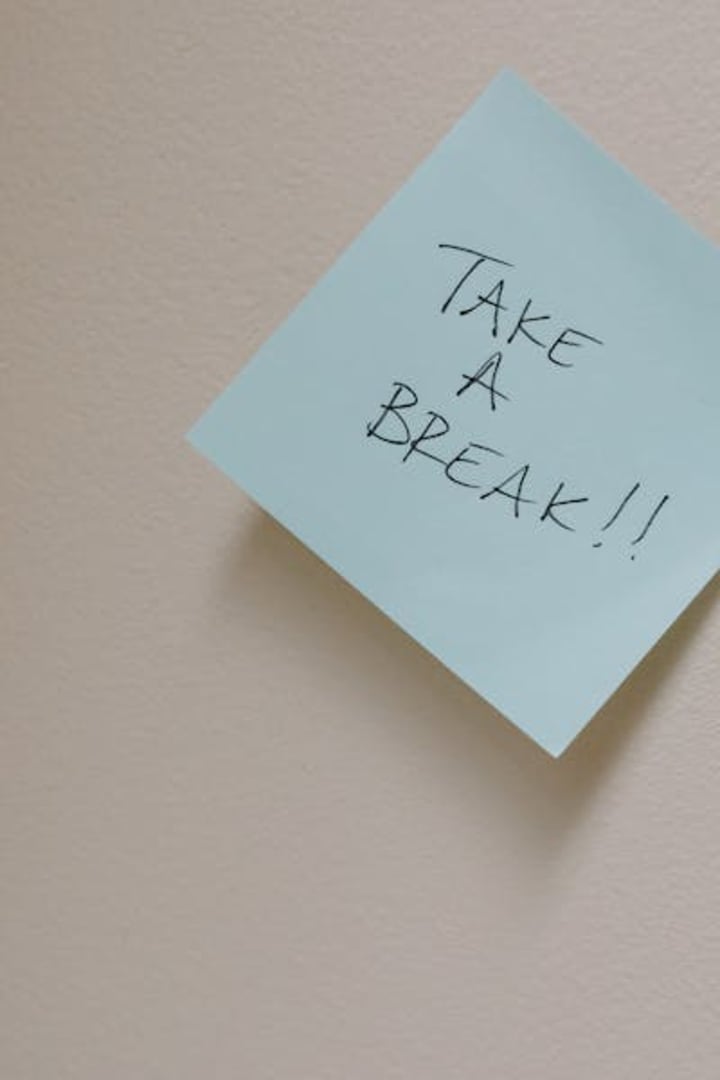
Try setting a timer to take short breaks. Research shows micro-breaks improve productivity. These breaks help to break the monotony of your day or job and refresh your mind. They also help you avoid feeling overwhelmed. You can schedule these breaks every hour on your phone. You can also de- stress by journalling.
Taking breaks is essential for productivity, creativity, and overall well-being. Here are some reasons why taking breaks is important and some tips on how to make the most of your breaks:
Benefits of Taking Breaks
1. *Improves focus and concentration*: Taking breaks can help you recharge and come back to your task with renewed energy and focus.
2. *Boosts creativity*: Stepping away from a task can help you clear your mind and come back with fresh ideas and perspectives.
3. *Reduces stress and burnout*: Taking breaks can help you manage stress and prevent burnout by giving you time to relax and recharge.
4. *Improves productivity*: Taking regular breaks can help you stay focused and productive throughout the day.
Tips for Taking Effective Breaks
1. *Take short breaks*: Take breaks every 60-90 minutes to stretch, move around, and rest your eyes.
2. *Do something enjoyable*: Use your breaks to do something you enjoy, such as reading, listening to music, or taking a walk.
3. *Get moving*: Incorporate physical activity into your breaks, such as stretching, jumping jacks, or a short walk.
4. *Practice relaxation techniques*: Use your breaks to practice relaxation techniques, such as deep breathing, meditation, or yoga.
5. *Set boundaries*: Establish clear boundaries between your work and break time to help you fully disconnect and recharge.
Ideas for Break Activities
1. *Take a walk*: Get outside and take a short walk around the block or office.
2. *Stretch or do yoga*: Incorporate some physical activity into your break to help you relax and recharge.
3. *Read a book*: Take a break and get lost in a good book.
4. *Listen to music*: Put on your favorite playlist and take a break.
5. *Chat with a friend*: Catch up with a friend or colleague during your break.
3. DON'T BE A SLAVE TO YOUR EMAIL

If possible, disable push notifications and set aside time for email review, focusing on what is important and avoiding the noise. Check your mail during office hours and respond at that time. You will need to take a stance to avoid mail post office hours
Managing email effectively is crucial for productivity and work-life balance. Here are some tips to help you avoid being a slave to your email:
Benefits of Managing Email Effectively
1. *Reduced stress*: Constantly checking email can be stressful and overwhelming.
2. *Increased productivity*: By limiting email checks, you can focus on tasks and projects.
3. *Improved work-life balance*: Avoiding email outside work hours helps maintain a healthy balance.
Tips to Manage Email Effectively
1. *Set specific email check times*: Designate specific times to check email, e.g., morning and afternoon.
2. *Use email filters and labels*: Organize emails using filters and labels to prioritize and categorize messages.
3. *Implement the 2-minute rule*: If an email requires a response or action that takes less than 2 minutes, do it immediately.
4. *Avoid email notifications*: Turn off email notifications on your phone, computer, or tablet to minimize distractions.
5. *Use email automation tools*: Utilize tools like email schedulers, autoresponders, or email management software to streamline your email workflow.
6. *Establish email-free zones*: Designate areas or times as email-free, such as during meetings, family time, or exercise.
7. *Prioritize emails*: Focus on important and urgent emails first, and then address less pressing messages.
8. *Keep emails concise*: Keep your emails brief and to the point to avoid lengthy email chains.
Additional Strategies
1. *Use the Pomodoro Technique*: Work in focused 25-minute increments, followed by a 5-minute break.
2. *Schedule email-free days*: Designate one day a week or month as an email-free day.
3. *Set boundaries with colleagues and clients*: Communicate your email management strategy and boundaries with others.
4. ACTIVELY LISTEN

Try being fully present and actively listen to others instead of waiting for your turn to talk. This will quiet your internal monologue, creating space and openness to strengthen your work relationships. Paying attention also means you have a sense of empathy.
A valuable skill for building strong relationships and effective communication! Active listening involves fully concentrating on and comprehending the message being conveyed. Here are some tips to help you become a better active listener:
Benefits of Active Listening
1. *Improves relationships*: Active listening shows that you value and respect the other person.
2. *Prevents misunderstandings*: By fully understanding the message, you can avoid misinterpretations.
3. *Resolves conflicts*: Active listening can help resolve conflicts by allowing both parties to feel heard.
4. *Builds trust*: When you actively listen, you demonstrate that you're reliable and trustworthy.
Tips for Active Listening
1. *Give the speaker your undivided attention*: Make eye contact, put away distractions, and face the speaker.
2. *Use verbal and nonverbal cues*: Nod your head, use phrases like "uh-huh," and ask open-ended questions.
3. *Paraphrase and summarize*: Repeat back what you've heard in your own words to ensure understanding.
4. *Ask clarifying questions*: Seek additional information to clarify any points you're unsure about.
5. *Avoid interrupting*: Let the speaker finish their thoughts before responding.
6. *Practice mindfulness*: Be present in the moment and focus on the conversation.
7. *Set aside biases and assumptions*: Listen without judgment and try to understand the speaker's perspective.
Additional Strategies
1. *Use the "3 Rs" of active listening*: Repeat, Reflect, and Respond.
2. *Practice active listening in everyday conversations*: Make active listening a habit by incorporating it into your daily interactions.
3. *Be aware of cultural differences*: Be sensitive to cultural differences in communication styles.
5. PRACTICE GRATITUDE

Everyone has bad days, use these as an opportunity for mindfulness and try a gratitude meditation to focus on the positive Gratitude menns that you can be happy and content and this is what will help you be mindful
A powerful practice for cultivating positivity and well-being! Practicing gratitude involves intentionally focusing on and appreciating the good things in your life. Here are some ways to incorporate gratitude into your daily routine:
Benefits of Practicing Gratitude
1. *Increases positivity*: Focusing on what you're grateful for shifts your attention to the good things in life.
2. *Improves mental health*: Gratitude has been linked to lower stress levels, anxiety, and depression.
3. *Strengthens relationships*: Expressing gratitude towards others can deepen connections and build stronger relationships.
4. *Enhances resilience*: Practicing gratitude can help you bounce back from challenges and setbacks.
Ways to Practice Gratitude
1. *Gratitude journal*: Write down three things you're grateful for each day before bed.
2. *Share gratitude with others*: Express your appreciation to someone you're grateful for, whether it's a kind word, text, or small gift.
3. *Gratitude meditation*: Take a few minutes each day to reflect on the things you're grateful for.
4. *Create a gratitude ritual*: Develop a daily or weekly ritual, such as sharing gratitude at dinner time or writing in your journal at the same time each day.
5. *Make gratitude a habit*: Incorporate gratitude into your daily routine, such as right after waking up or before bed.
Additional Tips
1. *Be specific*: Instead of just listing general things you're grateful for, try to be specific about why you're grateful for them.
2. *Focus on the present moment*: Practice gratitude for things that are happening in the present moment, rather than dwelling on the past or worrying about the future.
3. *Find gratitude in challenges*: Try to find the silver lining in difficult situations and express gratitude for the lessons or opportunities they bring.
6. MINDFULLY UNWINDING

At the end of your workday, turn off distractions for a few minutes and simply be-noticing things around you and focusing on your breath.
A wonderful way to calm your mind and body! Mindfully unwinding involves intentionally letting go of tension and stress, and cultivating relaxation and calmness. Here are some tips to help you mindfully unwind:
Benefits of Mindful Unwinding
1. *Reduces stress and anxiety*: Mindful unwinding can help calm your nervous system and reduce feelings of stress and anxiety.
2. *Improves sleep*: Practicing mindful unwinding before bed can help improve sleep quality and duration.
3. *Increases self-awareness*: Mindful unwinding can help you tune into your thoughts, emotions, and physical sensations, increasing self-awareness.
4. *Enhances relaxation and calmness*: Mindful unwinding can help you cultivate a sense of relaxation and calmness, even in the midst of chaos.
Tips for Mindful Unwinding
1. *Practice deep breathing*: Focus on slow, deep breaths, inhaling through your nose and exhaling through your mouth.
2. *Progressive muscle relaxation*: Tense and then relax different muscle groups in your body, starting with your toes and moving up to your head.
3. *Mindful movement*: Engage in gentle, slow movements, such as yoga or tai chi, to help release tension and cultivate relaxation.
4. *Sensory exploration*: Focus on your senses, noticing the sights, sounds, smells, tastes, and textures around you.
5. *Guided meditation*: Listen to a guided meditation recording to help you cultivate relaxation and calmness.
6. *Take a warm bath*: Soak in a warm bath with Epsom salts or essential oils to help relax your muscles and calm your mind.
Additional Tips
1. *Schedule downtime*: Make time for mindful unwinding in your daily or weekly schedule.
2. *Create a relaxing environment*: Set up a peaceful and calming space, free from distractions and noise.
3. *Be gentle with yourself*: Remember that it's okay to take time for yourself and prioritize relaxation and self-care.
4. *Experiment with different techniques*: Try different mindful unwinding techniques to find what works best for you.
7. LET IT GO....
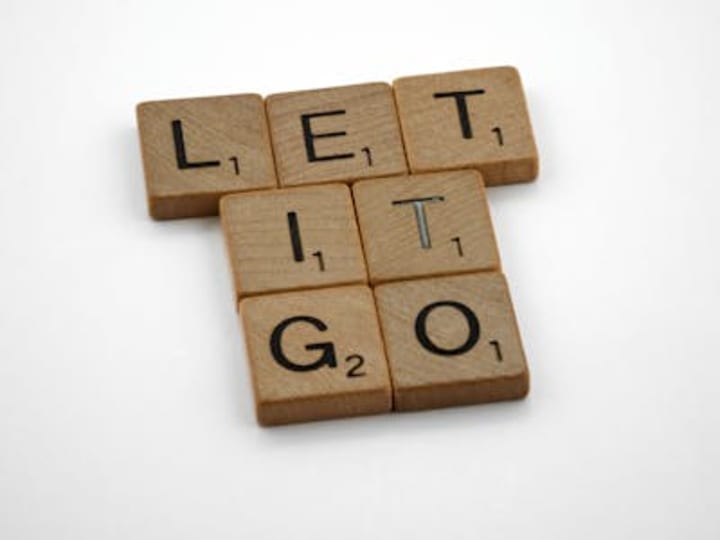
If you can, switch off your phone or keep it on silent mode. Read a book or listen to your favourite song. Avoid watching the screen before you sleep. If stress arises, simply acknowledge it, and let it go
Wise words! Letting go can be incredibly liberating, allowing you to release emotional baggage, reduce stress, and move forward with greater ease. Here are some tips to help you let go:
Benefits of Letting Go
1. _Reduces stress and anxiety_: Holding onto emotions, thoughts, or situations can weigh heavily on your mental health. Letting go can bring relief and calmness.
2. _Frees up emotional energy_: Letting go of negative emotions or attachments can free up energy for more positive and fulfilling experiences.
3. _Allows for growth and renewal_: Letting go of the past or what's holding you back can create space for new experiences, relationships, and personal growth.
4. _Improves relationships_: Letting go of grudges, resentments, or unrealistic expectations can help you cultivate healthier, more authentic relationships.
Tips for Letting Go
1. _Acknowledge your emotions_: Recognize how you're feeling and give yourself permission to process those emotions.
2. _Identify what's holding you back_: Reflect on what's causing you distress or discomfort, and consider whether it's time to let go.
3. _Practice self-compassion_: Treat yourself with kindness and understanding as you navigate the process of letting go.
4. _Create a ritual_: Develop a personal ritual, such as writing a letter (even if you don't send it), doing a ceremony, or creating art, to mark the process of letting go.
5. _Focus on the present_: Instead of dwelling on the past or worrying about the future, bring your attention to the present moment.
6. _Seek support_: Reach out to trusted friends, family, or a therapist for guidance and support as you work through the process of letting go.
Additional Tips
1. _Be patient_: Letting go can be a gradual process. Be gentle with yourself and allow yourself time to work through your emotions.
2. _Practice mindfulness_: Mindfulness practices, such as meditation or deep breathing, can help you stay present and focused as you navigate the process of letting go.
3. _Cultivate gratitude_: Reflect on the things you're grateful for, which can help shift your focus away from what's holding you back.
4. _Create a new narrative_: As you let go of the past, create a new story for yourself, one that's empowering and positive.
About the Creator
mukesh jaiswar
you are tite then you can try your future bright
Keep reading
More stories from mukesh jaiswar and writers in Feast and other communities.
my medieval feast
I watched a commercial for one of these medieval feast locations the different night, and through golly, I favor to go. For those of you who do not stay in a large metropolitan area, with a glut of enjoyment options, you possibly don't even be aware of what a medieval feast region IS. This is essentially a fun-filled night for which you pay an all-inclusive admission price to sit down in an auditorium, eat meat with your hands, and watch guys on horseback attempt to spear each different in a mock jousting match. Occasionally, there is the bizarre hand-to-hand skirmish and maces and balls and chains are known as for, but generally it is just skewering. Picture your self tearing apart an unmanageable slab of cheap, underdone cow meat (heaven is aware of from what section of the cow), as you watch chain mail clad horsemen attempt to impale every other with massive pool cues. If that is not enough excitement, their galloping horses fling giant gobs of mud and saliva up into your food as they race by. You have a front row seat for all the feudal carnage and savagery you can stomach. Relive the exact old days for one, very reasonable, all-inclusive admission charge. Fun per dollar, I don't understand how you can do higher than this.
By mukesh jaiswar3 years ago in Feast
Eat During Chinese New Year
The Chinese New Year feast is traditionally abundant with meat dishes, but these 15 vegetarian recipes prove that plant-based eating can be just as festive, flavorful, and meaningful. Each dish carries auspicious symbolism while delivering incredible taste that will have everyone reaching for seconds—even the meat lovers at your table. From crisp greens to creative vegetable transformations, these recipes are designed to impress.
By yue . shui3 days ago in Feast
Astragalus: An Ornamental, Supportive, and Culinary Herb
Astragalus Root/Milkvetch Astragalus is a popular remedy for various ailments today. Commonly found in health food stores and herbal shops in the form of tinctures, grounded encapsulated powders, or as part of an herbal infusion, or sometimes added to teas, astragalus usually makes the list for its purported immune-system and energy-supporting benefits.
By J. Chauncey2 days ago in Feast




Comments
There are no comments for this story
Be the first to respond and start the conversation.