
Mexico Coffee Market Size & Forecast 2025–2033: Growing Culture, Rising Consumption, and the Future of Specialty Coffee in Mexico
How Mexico’s coffee industry is evolving with specialty demand, café culture expansion, climate challenges, and retail innovation


Introduction
Mexico’s coffee sector is undergoing a dynamic transformation driven by a shift in consumer tastes, the rise of specialty cafés, and a renewed focus on quality and sustainability. According to Renub Research, the Mexico Coffee Market is expected to grow from US$ 2.36 billion in 2024 to US$ 3.38 billion by 2033, expanding at a CAGR of 4.08% during the forecast period (2025–2033).
This growth is fueled by rising domestic consumption, the expanding presence of global and regional coffee chains, increasing demand for certified and single-origin beans, and the proliferation of convenient coffee products suited to Mexico’s busy urban lifestyle.
As both an agricultural powerhouse and a consumer-driven market, Mexico stands at a unique intersection where traditional cultivation meets contemporary café culture. The following in-depth analysis explores the forces shaping this evolving market.
Coffee remains one of the world’s most consumed beverages, loved for its aroma, flavor, and energizing caffeine content. In Mexico, coffee occupies a special place — it’s cultural, social, and economic.
The country is recognized globally for producing high-quality Arabica beans, particularly from regions such as Chiapas, Veracruz, and Oaxaca. For many rural communities, coffee cultivation is a major economic lifeline. Meanwhile, urban centers like Mexico City, Guadalajara, and Monterrey have embraced modern coffee trends through specialty roasters, boutique cafés, and international food chains.
Consumers today are increasingly concerned with the story behind their coffee — its origin, sustainability methods, and flavor profile. As a result, premiumization is accelerating, and Mexico is slowly but steadily transitioning from a primarily instant-coffee market to one enriched by gourmet options.
Coffee is more than a beverage in Mexico: it’s household comfort, a workplace necessity, and a social connector. From traditional morning brews to Instagram-worthy café experiences, coffee consumption continues to deepen and diversify.
Growth Drivers in the Mexico Coffee Market
1. Rising Specialty & Organic Coffee Consumption
One of the most influential trends shaping the market is the rising demand for specialty, organic, and sustainably-sourced coffee.
Mexican Millennials and Gen Z consumers, especially in urban hubs, have developed sophisticated palates and stronger buying power. They prefer:
Single-origin beans
Micro-lot and artisanal roasts
Organic and shade-grown coffee
Fair-trade and direct-trade products
This shift is supported by small roasters, cafés, and cooperatives who ensure transparency from farm to cup.
A notable development occurred in February 2023, when Cofincaf, a Chiapas-based brand with Rainforest Alliance-certified farms, saw its specialty roasted coffee gain shelf presence in major supermarket chains. This reflects rising mainstream acceptance of premium coffee.
2. Expansion of Café Culture & Coffee Chains
Coffee culture in Mexico has exploded over the past decade.
Domestic brands such as Caffenio and Cielito Querido compete actively with international giants like Starbucks, creating a vibrant café landscape. Investments in new store formats, digital loyalty programs, and improved customer experiences continue to expand the market.
Corporations such as Alsea, which operates Starbucks in Mexico, play a key role in scaling café accessibility nationwide.
A strong sign of market confidence came in March 2025, when a Danish coffee chain announced plans to open 100 new stores over 10 years in partnership with Grupo Allux-Dinar.
This rising density of coffee shops increases exposure, influences consumer preferences toward specialty beverages, and pushes overall consumption upward.
3. Growth of Convenient Formats & Product Innovations
Convenience is redefining the market as consumers look for quick, indulgent, and portable options. Mexican households increasingly rely on:
Instant iced coffee
Ready-to-drink cold brew
Single-serve capsules
Coffee pods
Premium soluble blends
Brands like Nescafé Ice Roast and Dolce Gusto Frappé are capitalizing on this demand, especially among young professionals and on-the-go consumers.
In July 2024, Starbucks Mexico refreshed its packaging for Single-Origin Chiapas whole beans — featuring local imagery, jaguars, and waterfalls — reinforcing the appeal of regional identity and storytelling in modern packaging.
Challenges in the Mexico Coffee Market
1. Climate Risks & Agricultural Vulnerability
Mexico’s coffee production faces severe climate threats:
Heat stress
Irregular rainfall
Prolonged drought
Fungal diseases (e.g., coffee leaf rust)
Pest infestations (e.g., coffee berry borer)
Events like the 2012 rust outbreak significantly reduced harvests and economic stability.
As climate patterns become more unpredictable, production volumes and bean quality remain at risk — threatening both domestic supply and specialty exports.
2. Smallholder Farmer Constraints
In Mexico, coffee cultivation is dominated by small-scale farmers, many of whom struggle with:
Limited financing options
Insufficient government support
Low bargaining power
Middlemen who purchase beans at near-cost price
Unstable incomes
These limitations reduce the ability to invest in quality improvements, new technologies, or sustainability certifications. Consequently, the specialty coffee supply chain suffers, and rural poverty persists.
Addressing these structural challenges is critical for long-term market resilience.
Mexico Coffee Market by Product Type
1. Instant Coffee
Instant coffee dominates with around 60% of household consumption due to its affordability, convenience, and long shelf life.
Recent innovations — especially iced instant varieties — are appealing to younger and rural consumers seeking budget-friendly yet flavorful options.
2. Ground Coffee
Ground coffee is gaining traction among enthusiasts who value flavor but want convenience. Supermarkets now carry everything from traditional blends to premium specialty selections.
3. Whole Beans
Whole beans cater to coffee purists who prefer fresh grinding at home. This segment is growing in sync with rising specialty café culture.
4. Other Formats
This includes capsules, pods, flavored mixes, and artisanal blends — many of which have seen increased shelf space in retail.
Mexico Coffee Market by Distribution Channel
1. Supermarkets & Hypermarkets
These retailers dominate due to their wide product selection ranging from mass-market brands to gourmet options.
2. Convenience Stores
Convenience shops like OXXO play a massive role in impulse coffee purchases, single-serve beverages, and RTD products.
Caffenio’s strategic placement in OXXO outlets shows the power of convenience-driven expansion.
3. Online Platforms
E-commerce is rapidly reshaping how Mexicans discover and buy specialty coffee.
Subscription services, artisan roaster marketplaces, and direct producer-to-consumer sales are expanding nationwide.
4. Other Channels
These include cafés, gourmet stores, and specialty distributors catering to niche customer bases.
Mexico Coffee Market by Region
1. Northern Mexico
Northern states — influenced by U.S. consumption trends — are witnessing rising demand for espresso-based beverages and premium RTD coffee. Drive-through chains are especially popular.
2. Central Mexico
Home to Mexico City, this region is the heart of café culture. It has the highest concentration of specialty roasters, international chains, and affluent consumers willing to invest in premium coffee.
3. Southern Mexico
Southern states like Chiapas, Veracruz, and Oaxaca are key producers. While local consumption is growing, climate and economic pressures heavily impact production. Specialty single-origin beans from these regions are highly sought after both domestically and abroad.
4. Other Regions
Secondary regions with emerging café ecosystems and growing urbanization also contribute to market expansion.
Key Companies in the Mexico Coffee Market
Each company is analyzed through the lens of overview, key persons, recent developments, SWOT, and revenue (per Renub Research structure):
Starbucks
Nescafé (Nestlé)
The Kraft Heinz Company
Lunchin Coffee
J.M. Smucker
Coca-Cola (Costa Coffee / beverages portfolio)
Dutch Bros
Keurig Dr Pepper
JDE Peet’s N.V.
These players collectively shape the competitive landscape through brand loyalty, aggressive retail expansion, RTD innovations, and sustainable sourcing initiatives.
Final Thoughts
Mexico’s coffee market is standing at an exciting crossroad: deeply rooted in agricultural heritage yet rapidly transforming through café culture, premiumization, and digital retail. With consumption increasing year after year — and specialty coffee becoming a mainstream preference — Mexico is poised to remain both a major producer and a growing consumer market.
However, long-term success depends on tackling climate risks, strengthening support for small farmers, and continuing to invest in high-quality, sustainable production methods. As global and domestic players expand their presence, the Mexican coffee industry will likely see new innovations, greater export potential, and a stronger connection between local growers and global consumers.
From instant favorites to single-origin artisanal brews, Mexico’s coffee journey is evolving — and the coming decade promises even more exciting developments.
About the Creator
Renub Research
Renub Research is a Market Research and Consulting Company. We have more than 15 years of experience especially in international Business-to-Business Researches, Surveys and Consulting. Call Us : +1-478-202-3244
Keep reading
More stories from Renub Research and writers in Feast and other communities.
Europe Tea Market Set to Reach US$ 33.71 Billion by 2033 as Health, Premiumization & E-Commerce Drive Demand
The Europe Tea Market is entering a dynamic new phase marked by stronger consumer focus on health, sustainability, premium blends, and digital retail experiences. According to Renub Research, the Europe Tea Market is anticipated to grow from US$ 20 billion in 2024 to US$ 33.71 billion by 2033, expanding at a CAGR of 5.97% between 2025 and 2033.
By Renub Researchabout a month ago in Feast
My Tous les Jours Trip
As someone who lives in a rural area, I don't get the chance to visit fancy restaurants or bakeries that often. So, when a friend told me about a French-Asian bakery that's less than an hour away, I knew I had to check it out and grab some pictures for social media. Tous les Jours ended up providing an immersive experience that went above and beyond my expectations--although I did leave with a few reservations.
By Kaitlin Shanks24 days ago in Feast
Mexico Palm Oil Market Size & Forecast 2025–2033
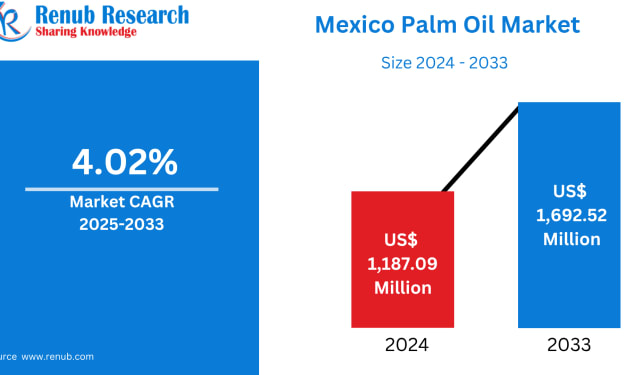
Mexico Palm Oil Market Outlook The Mexico Palm Oil Market is entering a phase of steady expansion, supported by rising consumption across food processing, personal care, animal feed, and renewable energy sectors. According to Renub Research, the market is anticipated to reach US$ 1,692.52 million by 2033, expanding from US$ 1,187.09 million in 2024, at a CAGR of 4.02% during 2025–2033.
By Aaina Oberoia day ago in Feast
Miss Persephone's Manual to a Seemingly Ordinary Life
Miss Persephone was found at the dining table, her blue eyes swollen, her tears arriving and retreating like the tides of the ocean. Earlier that day, her family had visited her in the retirement home where she had lived for eight years. It was her eightieth birthday.
By Imola Tóth5 days ago in Fiction



Comments
There are no comments for this story
Be the first to respond and start the conversation.