
Making Kimchi in the Misty Mountains of Korea
Making Your Own Kimchi in Pyeongchang

Your Dream Korean Vacation
The noise and bustle of Seoul, South Korea’s exciting, vibrant capital, is behind you. You’re heading east, toward the coast. Korea is a mountainous, forested country; your rented car, which smells like new leather, winds through narrow roads, switch-backs, tunnels.
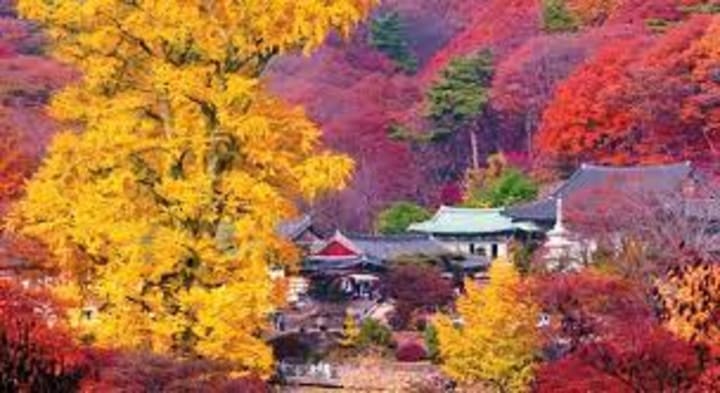
You and your travel companion stop at a scenic overlook about halfway toward your destination. Korea has four distinct seasons, and right now it’s October. As far as the eye can see, the leaves are changing color. There’s a stiff chill to the air. You breathe in deeply. The humidity brings notes of pine needle, maple leaf, mountain stream. You’re getting hungry; it’s almost eleven. It’s another half hour to your destination, Pyeongchang County. An alumnus host of the Olympics (2018), Pyeongchang is nestled in the Taebaek mountains.
In these mountains by the sea, the locals eat a lot of seafood, a lot of rice, a lot of potatoes. And, as with all Koreans, a lot of kimchi.
An essential side-dish (or banchan) in Korean cuisine, kimchi is made of fermented vegetables. There are innumerable varieties, but the most common include napa cabbage and/or daikon radish, flavored with gochugaru (Korean red chili pepper), garlic, salt, and fish sauce.
Kimchi, in all its varieties, is bursting with flavor. Spicy or mild, alone or as a topping, raw or cooked into a dish, you can eat it with practically any dish, Korean or not.
Ingredients
You pull into town, and, after a little trial and error with the car’s GPS, you get to your rented hanok, traditional Korean house.
As hungry as you and your travel partner are, you start gathering your ingredients for Baechu-kimchi (the spicy variety).
Ingredients:
1 napa cabbage
1/4 cup grated garlic
1/4 cup grated ginger
2 tbsp grated white onion
4 stalks sliced green onion
1/3 cup fish sauce
4 tbsp soy sauce
1/3 cup gochugaru (Korean red pepper flakes)
Coarse grain salt
1 mixing bowl
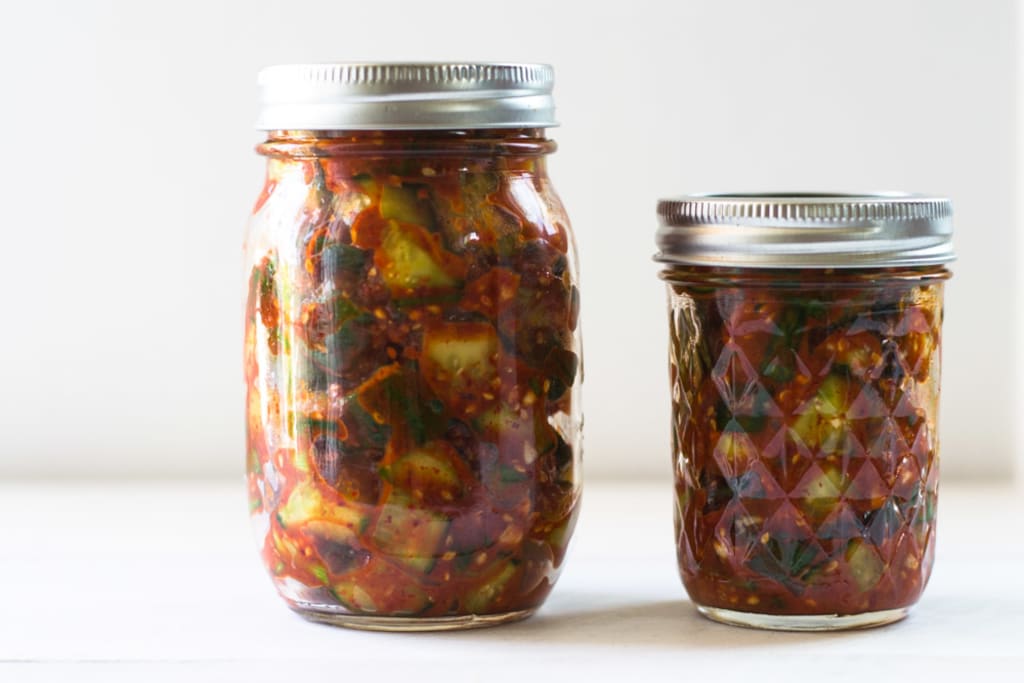
1 large jar (or two small jars).
RECIPE
Bright sunlight streams through the kitchen window. Even though it’s chilly, you crack the window open a bit and breathe in the clear mountain air. You arrange the ingredients on the beautiful oak counter-top.
STEP ONE - salt the cabbage (2 hours)
Clean the napa cabbage thoroughly. Make sure no speck of dirt remains. Break off the leaves of the napa cabbage and spread them all onto paper towels. Salt liberally. Don’t miss any leaves.
Let it sit for two hours. Sit outside, watch the sun climb across the sky. Or go for a walk in the village and try out your Korean. Make sure to say “kamsahamnida” (thank you) when the locals are patient with your attempts!
STEP TWO - prepare the paste (>5 minutes)
First, pour ⅓ cup fish sauce and 4 tbsp soy sauce into a mixing bowl. Next, grate ¼ cup of garlic, ¼ cup ginger, and 2 tbsp white onion into the liquid. Slice four stalks of green onion. You can make the slices whatever length you’d like. Put them in the bowl. Finally, sprinkle ⅓ of the korean red pepper flakes into the bowl.
Mix it all together. If you have sensitive skin, it might be a good idea to wear kitchen-appropriate gloves. You should end up with a viscous paste. If it’s too runny, sprinkle some more red pepper flakes. If it’s too dry, add more fish sauce and soy sauce in equal parts.
STEP THREE - coat the cabbage (10 minutes)
The napa cabbage leaves should be dehydrated from their salt-soak. Rinse the salt off each leaf. Squeeze out the water from this quick rinse. Dab the leaves with a paper towel if you need to. You want the leaves to be dry.
Next, rub the paste onto each cabbage leaf. Make sure that the whole leaf has some paste on it, although it doesn’t have to be too thickly coated.
Once each leaf is coated, press it to the bottom of your one large jar. Fold the leaf over on itself so that it will fit. It doesn’t matter if you break the stem. Continue until you’ve filled the jar to the top. Then press down hard to create more space. You don’t want any pockets of air in the jar. When you can’t get any more in, seal the jar.
If there is any napa left, start a new jar. You don’t have to fill it up all the way. Here’s a trick: for a jar only half full, fill a plastic bag of water and set it on the top of the cabbage. This will create a seal. Then close up the jar as normal.
STEP FOUR - store (at least three days, up to a month)
This stage is important. Set your jar(s) of kimchi in a cool, dark place for 24-48 hours. It may be wise to air on the side of 24 if this is your first batch of kimchi.
After this first stage has passed, check for bubbles. You may see some bubbling up at the sides of the jar already. If not, try opening the jar. If you hear a ‘hiss,’ and see a few bubbles, that’s good. If not, just leave it for another twelve hours and check again.
Once you see these bubbles, it’s time to put your kimchi in the fridge. Make sure your fridge isn’t set to too cold of a temperature; you don’t want your kimchi to get frostbite!
STEP FIVE - eat!
The longer you let your kimchi sit in the fridge, the more sour it will get. But you can eat it as soon as three days after jarring it.
So you’re three days into your Korean vacation, and you’re starting to get comfortable in Pyeongchang. You and your travel partner are having a great time, and brilliant meals.
It’s lunchtime on the fourth day, and time to give your kimchi a taste.
You make a simple dish of rice, veggies, and pear-juice marinated beef. You take our your jar of homemade kimchi from the fridge. Before you eat it, you hold it up to the light, to admire its beautiful, brilliant red color, dappled with striking green from the tips of the napa cabbage leaves.
With your Korean chopsticks, which glitter in the sunlight, you pull out a heap from the top of the jar and place it in your travel companion’s kimchi bowl. Then you do so for yourself. Tentatively, you take a bite.
It’s your first-ever batch of homemade kimchi, and it may not be quite as good as the amazing kimchi you’ve been tasting ever since you landed in Seoul… but hey! You made this yourself. And it taste pretty good. By the end of your stay, it should have just the right balance of spiciness and tang.
Delicious.
Korea, what a beautiful place!
About the Creator
Eric Dovigi
I am a writer and musician living in Arizona. I write about weird specific emotions I feel. I didn't like high school. I eat out too much. I stand 5'11" in basketball shoes.
Twitter: @DovigiEric
Keep reading
More stories from Eric Dovigi and writers in Feast and other communities.
My Tous les Jours Trip
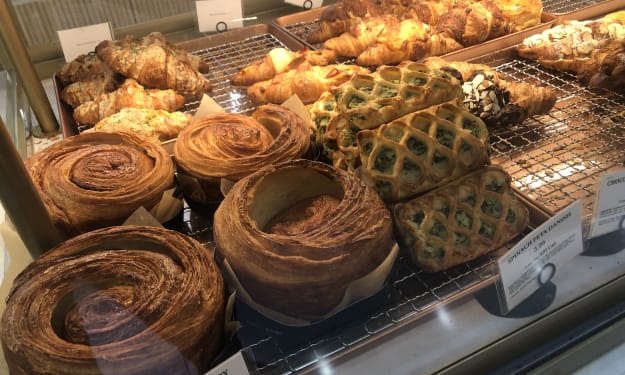
As someone who lives in a rural area, I don't get the chance to visit fancy restaurants or bakeries that often. So, when a friend told me about a French-Asian bakery that's less than an hour away, I knew I had to check it out and grab some pictures for social media. Tous les Jours ended up providing an immersive experience that went above and beyond my expectations--although I did leave with a few reservations.
By Kaitlin Shanks22 days ago in Feast
Your Guide to Adagio Tea's Sister Sites
Adagio doesn't just sell tea--they also maintain five sister sites that contain recipes, reviews, forums and other resources for tea lovers. The layouts are a little outdated, and web traffic isn't exactly booming, but these sites still get occasional updates that make them worth checking out. Plus, you'll get access to over a decade's worth of information.
By Kaitlin Shanks7 days ago in Feast


Comments
There are no comments for this story
Be the first to respond and start the conversation.