
I Hit a Wall: My 3-Month Weight Loss Nightmare (And How I Finally Beat It)
A Raw Look at Setbacks, Self-Doubt, and the Unexpected Shift That Turned Everything Around.

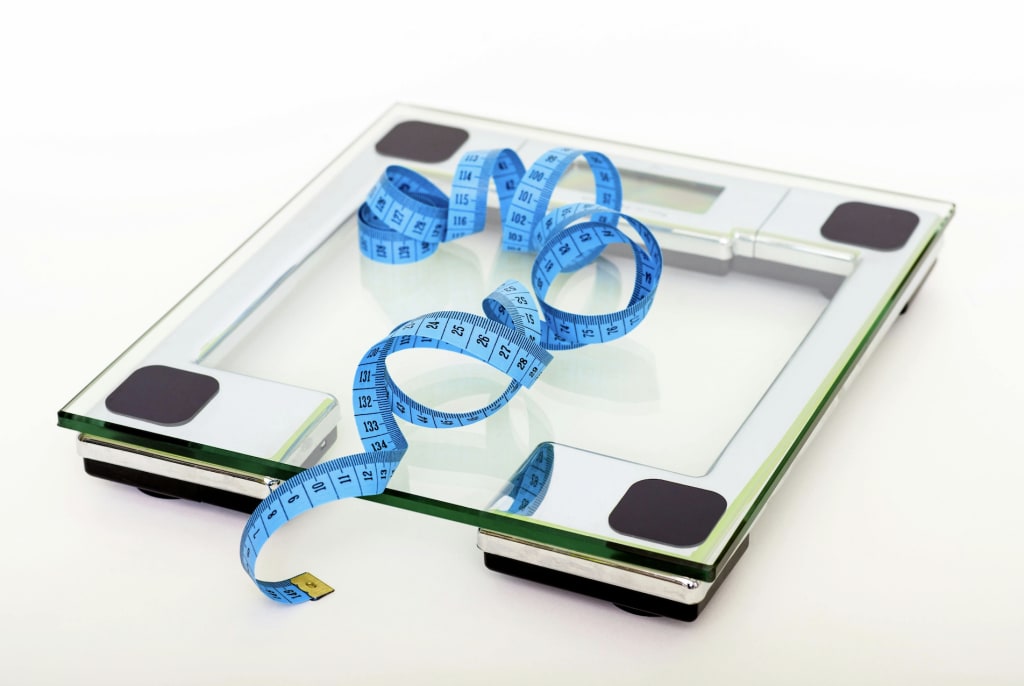
Back in January, I felt like I was finally getting the hang of this whole weight loss thing. I’d lost 22 pounds over four months, and it honestly felt amazing. People at work were starting to notice and ask me what I was doing.My mom started sending me random texts like “Just made your healthy chili recipe for Dad he loved it!” and even my usually silent group chats were lighting up with friends asking for tips. I wasn’t trying to be a guru or anything, but suddenly people were treating me like I had cracked some secret code. Honestly, it was the first time in a while I felt really proud of myself.
Then March hit me like a freight train.
The scale just stopped. Dead stop. For three weeks straight, that thing wouldn't budge past 167 pounds no matter what I did.
I genuinely thought my scale was broken. Bought a new digital one from Target. Same damn number. Tried my friend's scale. Yep, still 167. At that point I was ready to throw every scale in a five-mile radius into the nearest dumpster.
The Meltdown Phase
Week four of being stuck at 167, I had what I can only describe as a full-blown tantrum. Called my sister crying because "nothing was working anymore" and I was "obviously doing everything wrong." She listened to me sob for twenty minutes before saying, "Didn't you tell me last month that this exact thing happened to your friend Jessica?"
She was right. Jessica had warned me about plateaus, but I figured I was different. I was tracking everything, working out six days a week, meal prepping like it was my religion. Plateaus happened to other people – people who weren't as dedicated as me.
Turns out I'm not special. Who knew?
After my sister's reality check, I did what any reasonable person does at 11 PM on a Tuesday – I fell down a Google rabbit hole about weight loss plateaus.
Here's what I learned: those first few weeks when the weight was melting off? That wasn't all fat. A ton of it was water weight from burning through something called glycogen. Think of glycogen as your body's backup fuel tank – it's stored carbs that live in your muscles and liver, and it holds onto water like crazy.
When you first start eating less, your body burns through this glycogen for energy, releasing all that water in the process. It's like deflating a water balloon. Super satisfying at first, but definitely not sustainable.
The real kicker? As I lost weight, I was also losing muscle. And muscle burns calories just by existing – it's like having a little furnace running 24/7. Less muscle meant my body needed fewer calories to function, which meant my 1,400-calorie diet that worked great at 189 pounds wasn't creating enough of a deficit at 167.
My body had basically gotten more efficient at being smaller. Thanks for nothing, evolution.
My Detective Work
Once I accepted that I wasn't magically broken, I started investigating my own habits like I was solving a crime.
First stop: my food diary. I use this app called Cronometer (way better than MyFitnessPal, fight me), and going back through three months of entries was... enlightening. And by enlightening, I mean embarrassing.
Remember how I said I was being super careful? Yeah, well, apparently "careful" had slowly morphed into "pretty loose with the measuring." That quarter cup of almonds had somehow become "a generous handful." My 4-ounce chicken breast was looking more like 6 ounces. Those weekend "cheat meals" had expanded into full weekend free-for-alls where I'd convince myself that pizza and wine were "part of a balanced lifestyle."
The worst part was my workout routine. I'd been doing the exact same 35-minute elliptical session for three months straight. Same speed, same resistance, same Netflix show playing on my phone. My body was probably bored out of its mind.
Operation Plateau Destruction
Alright, so I had two choices: accept that 167 was my new home forever, or actually do something about it. Being the stubborn person I am, I chose chaos.
Step 1: Portion Control Boot Camp
I went back to weighing literally everything. And I mean everything – the oil I cooked with, the creamer in my coffee, even the gum I chewed (okay, maybe not the gum, but you get the idea).
This was honestly the hardest part because I'd gotten comfortable with eyeballing portions. Going back to measuring felt like admitting defeat. But you know what? It worked. I was eating about 200 more calories per day than I thought, which explains a lot.
Step 2: Calorie Archaeology
I dropped my daily target from 1,400 to 1,250 calories. Those missing 150 calories had to come from somewhere, and it meant getting really strategic about my food choices.
Bye-bye, daily handful of trail mix. See you later, generous pour of olive oil. I started bulking up my meals with vegetables and being more careful about calorie-dense foods. Not eliminating them – I'm not a monster – just being more intentional.
One thing I absolutely refused to do was go below 1,200 calories. I tried that once in college and spent a week being a hangry nightmare before binging on an entire sleeve of Oreos. Never again.
Step 3: Workout Overhaul
This is where things got interesting. I ditched my beloved elliptical routine (okay, I kept it twice a week because I genuinely enjoyed it) and added weight training three times a week.
Let me tell you, the first time I walked into the weight section of my gym, I felt like I was trespassing. All these intimidating people throwing around heavy things while I tried to figure out how to adjust the bench press. I started with YouTube videos and the lightest dumbbells available, feeling completely ridiculous.
But holy crap, did it make a difference. Not immediately – the scale actually went up for two weeks because I was retaining water from the new muscle stress. But then things started changing in ways I could see and feel even when the scale was being stubborn.
I also started doing these 20-minute HIIT workouts twice a week. Basically, I'd run as hard as I could for 30 seconds, then walk for 90 seconds, repeating that cycle until I wanted to die. Way more effective than my leisurely elliptical sessions, and it took half the time.
The Little Things That Weren't So Little
Here's something nobody talks about: all the tiny movements throughout the day add up more than you'd think. I started taking the stairs instead of the elevator at work (revolutionary, I know). I parked at the far end of parking lots. I did jumping jacks during commercial breaks while watching The Bachelor.
My favorite trick was setting an alarm for every hour during the workday to get up and move for two minutes. Sometimes I'd do wall push-ups in my office, sometimes I'd walk to the water fountain the long way. My coworkers probably thought I had a bladder problem, but whatever.
These little changes probably only burned an extra 100-150 calories per day, but when you're trying to break through a plateau, every calorie counts.
The Breakthrough (Finally!)
About five weeks into my plateau-busting mission, something shifted. I woke up one Thursday morning, stepped on the scale, and saw 165.8. I literally squeaked out loud and did a little dance in my bathroom.
The weight didn't come off the same way it had in the beginning. Instead of those satisfying 2-pound weekly drops, it was more like a slow trickle. Some weeks I'd lose a pound, some weeks nothing, then suddenly I'd be down two pounds overnight. My body was keeping me guessing, which was frustrating but also kind of exciting.
Over the next two months, I lost another 12 pounds, bringing me down to 155. The process was slower, required more attention to detail, and involved way more patience than the first phase of my weight loss. But it worked.
When Good Enough Actually Is Good Enough
Here's where my story takes a turn. At 155 pounds, I hit another plateau. But this time, instead of immediately going into crisis mode, I stopped to think about where I was.
I felt strong. My clothes fit great. I had energy for days. My annual physical showed improvements in every health marker my doctor cared about. Was I exactly at my original goal weight of 145? No. But was I in a good place? Absolutely.
I talked to my doctor about it during my check-up, and she basically told me what I needed to hear: sometimes our goal weights are based more on wishful thinking than reality. The weight I'd lost had already made a huge difference in my health, and trying to lose those last 10 pounds might not be worth the mental and physical effort it would require.
That was six months ago, and I've been maintaining around 155 ever since. Some days I'm 154, some days I'm 157, but I've stopped obsessing over every fluctuation.
What I Wish Someone Had Told Me
If you're stuck in plateau hell right now, here's what I want you to know:
It's not personal. Your body isn't punishing you or being spiteful. It's just doing what bodies do – adapting to changes and trying to maintain stability. It's actually pretty amazing when you think about it, even if it's frustrating as hell when you're living it.
Don't throw in the towel. I've watched too many friends get discouraged by a plateau and give up entirely, only to gain back everything they'd lost plus extra. The habits you've built are still working, even if the scale isn't moving. Keep doing the things that got you this far.
The scale is a liar sometimes. During my plateau, I was actually losing inches and gaining muscle definition, but the number on the scale didn't reflect that. Take progress photos, measure yourself with a tape measure, pay attention to how your clothes fit. There are so many ways to track progress beyond that one stupid number.
The Real Talk
Maintaining weight loss is harder than losing weight. There, I said it. When you're actively losing, you have this momentum and excitement that carries you through the tough days. Maintenance is like... well, it's like doing laundry. It's not exciting, but it has to be done consistently or everything falls apart.
I still track my food most days. I still weigh myself regularly (though not obsessively). I still prioritize exercise, though my routine has evolved. The difference is that now I see these things as part of my lifestyle rather than temporary measures to reach a goal.
My plateau taught me that weight loss isn't a straight line, bodies are stubborn and complex, and sometimes you have to get creative to see results. It also taught me that I'm tougher than I thought and that I can problem-solve my way through challenges that initially seemed impossible.
If you're stuck right now, don't give up. Reassess what you're doing, make some adjustments, and remember that every person's journey looks different. What worked for me might not work exactly the same for you, but the basic principles are solid: be honest about your habits, create a reasonable calorie deficit, challenge your body in new ways, and be patient with the process.
Your plateau isn't permanent, it's just your body's way of testing how badly you want this. Show it you're not going anywhere.
Thanks for taking the time to read! 💛 If you enjoyed it, I’d love to hear your thoughts. Drop a comment, hit the heart, and please subscribe (it’s free!).
About the Creator
Fathima Haniffa
I share my passion for healthy living through keto recipes, practical food tips, real-life experiences, and original poetry inspired by personal research.
Discover my Rumble channel: https://rumble.com/c/c-7705609
Keep reading
More stories from Fathima Haniffa and writers in Feast and other communities.
The Complete 15-Day Ketogenic Diet Guide: What I Learned From My Research
My Journey Into the Ketogenic Diet: Everything I Wish Someone Had Told Me I'll be honest - when my cousin mentioned she'd lost 30 pounds on something called the "keto diet," I rolled my eyes. Another diet trend, I thought. But when she explained that she was eating steak and cheese and still losing weight, I got curious. That was six months ago, and after digging into the research (and trying it myself for a few weeks), I've learnt some pretty fascinating stuff about how this whole thing actually works.
By Fathima Haniffa8 months ago in Feast
My Tous les Jours Trip
As someone who lives in a rural area, I don't get the chance to visit fancy restaurants or bakeries that often. So, when a friend told me about a French-Asian bakery that's less than an hour away, I knew I had to check it out and grab some pictures for social media. Tous les Jours ended up providing an immersive experience that went above and beyond my expectations--although I did leave with a few reservations.
By Kaitlin Shanks23 days ago in Feast
Guide to Choosing the Best Essential Kitchen Knives
Have you ever stood at the counter, staring at a pile of vegetables, wondering which knife would actually make the job easier? Many people assume they need a massive knife block filled with matching blades to cook well, but that’s rarely true.
By Chris Jones6 days ago in Feast




Comments (2)
I can relate to hitting a weight loss plateau. It's so frustrating when the scale won't budge. I had a similar experience. I was doing everything right, tracking my food and working out regularly, but then I hit a wall. Like you, I thought I was different. But it turns out plateaus are common. Did you find any of the tips you learned from Google helpful? How did you eventually break through your plateau?
I can relate to hitting a weight loss plateau. It's so frustrating when the scale won't budge. I had a similar experience. I was doing everything right, tracking my food and working out regularly, but then I hit a wall. Like you, I thought I was different. But it turns out plateaus are common. Did you find any of the tips you learned from Google helpful in breaking through yours?