
How to Use a Meal Planning Chart for Diabetes Management
Meal Planning Chart for Diabetes
How to Use a Meal Planning Chart for Diabetes Management
Managing diabetes can feel like a balancing act between enjoying food and maintaining health. One effective strategy that many find invaluable is meal planning. By using a meal planning chart, individuals with diabetes can take control of their meals, make informed choices, and ultimately manage their blood sugar levels more effectively. In this article, we’ll explore the significance of meal planning, how to create a meal planning chart, tips for effective planning, and practical examples that cater specifically to diabetes management.
## 1. Understanding Diabetes and Nutrition
### 1.1 What is Diabetes?
Diabetes is a chronic condition that affects how your body processes glucose, a type of sugar that serves as a primary energy source. There are several types of diabetes, the most common being Type 1 and Type 2.
- **Type 1 Diabetes** is often diagnosed in children and young adults, where the body does not produce insulin, a hormone necessary for glucose regulation.
- **Type 2 Diabetes** typically develops in adults, often due to lifestyle factors like diet and physical inactivity. In this case, the body becomes resistant to insulin or doesn’t produce enough of it.
Understanding these distinctions is crucial for effectively managing the condition, particularly through diet.
### 1.2 The Role of Nutrition in Diabetes Management
Nutrition plays a critical role in managing diabetes. Foods you consume directly impact blood sugar levels, which is why it’s essential to focus on balanced meals that include carbohydrates, proteins, and healthy fats.
- **Carbohydrates:** They have the most significant effect on blood sugar. It’s important to choose complex carbs, like whole grains, fruits, and vegetables, rather than simple sugars found in candies and sugary drinks.
- **Proteins:** Including lean proteins in your meals can help stabilize blood sugar levels and keep you feeling full.
- **Fats:** Healthy fats, like those from avocados, nuts, and olive oil, can improve heart health—a vital consideration for those with diabetes.
By understanding these components, you can better plan meals that help maintain stable blood sugar levels.
## 2. Benefits of Meal Planning
### 2.1 Reducing Stress and Saving Time
One of the most significant benefits of meal planning is that it reduces stress during the week. When you have a set plan, there’s no need to scramble for dinner ideas after a long day at work. A meal planning chart provides structure and saves time by allowing you to prepare meals in advance.
- **Weekly Preparation:** Designating a specific day for meal prep can streamline your week. Chop vegetables, marinate proteins, or cook grains ahead of time to make weekday cooking faster and easier.
### 2.2 Promoting Healthy Choices
Meal planning encourages you to make healthier food choices. When you plan meals, you’re more likely to include a variety of fruits, vegetables, and whole grains instead of defaulting to fast food or convenience meals that may be high in sugar and unhealthy fats.
- **Nutritional Variety:** A meal planning chart can help ensure you’re getting a wide range of nutrients by prompting you to think about different foods you can incorporate each week.
### 2.3 Managing Portion Sizes
Portion control is vital for blood sugar management. A meal planning chart can help you plan and portion out meals in advance, making it easier to stick to recommended serving sizes.
- **Visual Aids:** Using visual cues, like portion sizes represented on your chart, can guide you in maintaining appropriate quantities of food, which is crucial for controlling blood sugar.
## 3. Creating Your Meal Planning Chart
### 3.1 Choosing the Right Format
When it comes to meal planning, the format of your chart can make a difference. Decide whether you prefer a digital approach or a physical one.
- **Digital Meal Planners:** Apps and online tools can provide templates, reminders, and even nutritional insights. This can be particularly helpful for tracking carb counts and nutritional values.
- **Paper Charts:** A simple handwritten chart can be just as effective. Consider using a whiteboard in your kitchen to jot down meals for the week.
### 3.2 Essential Components of the Chart
Your meal planning chart should include the following components:
- **Days of the Week:** Clearly mark each day so you can plan breakfasts, lunches, dinners, and snacks.
- **Meal Ideas:** List specific meals and ingredients you plan to use for each meal.
- **Grocery List:** Create a grocery list based on your meal plan to streamline shopping and reduce impulse buys.
### 3.3 Incorporating Variety
Sticking to the same meals week after week can lead to boredom. Make it a point to incorporate variety into your meal planning.
- **Seasonal Ingredients:** Use seasonal fruits and vegetables to keep your meals fresh and exciting. This not only enhances flavor but can also be more cost-effective.
- **Cuisine Exploration:** Don’t hesitate to try new recipes from different cuisines. This can introduce new flavors and cooking techniques while keeping your meals interesting.
## 4. Tips for Effective Meal Planning
### 4.1 Start with Your Goals
Before diving into meal planning, take a moment to set your goals. What do you hope to achieve with your meal plan?
- **Health Goals:** Are you aiming to lower your blood sugar levels, lose weight, or simply eat healthier? Defining your objectives can help guide your meal choices and portion sizes.
### 4.2 Consider Your Schedule
Your meal planning should take your schedule into account.
- **Busy Days:** On days when you know you’ll have less time to cook, plan for simpler meals or leftovers.
- **Special Occasions:** Don’t forget to plan for special occasions or outings where you might be tempted to stray from your meal plan.
### 4.3 Involve Family or Friends
Make meal planning a collaborative effort. Involving family or friends can keep you motivated and encourage healthy eating habits among everyone involved.
- **Family Participation:** Encourage family members to contribute meal ideas or help with meal prep. This can create a sense of teamwork and make meal planning more enjoyable.
## 5. Sample Meal Planning Chart for a Week
### 5.1 Example of a Balanced Meal Plan
Creating a balanced meal plan can be as simple as following a template. Here’s a sample week of meals designed specifically for diabetes management:
| Day | Breakfast | Lunch | Dinner | Snacks |
|-----------|------------------------------------|-----------------------------------|----------------------------------|-------------------------|
| Monday | Oatmeal with berries and nuts | Grilled chicken salad | Quinoa with roasted vegetables | Greek yogurt |
| Tuesday | Scrambled eggs with spinach | Turkey and avocado wrap | Baked salmon with asparagus | Carrot sticks with hummus |
| Wednesday | Smoothie with spinach and protein | Lentil soup with whole-grain bread| Stir-fried tofu with broccoli | Apple slices with almond butter |
| Thursday | Whole-grain toast with peanut butter| Quinoa salad with chickpeas | Grilled shrimp with mixed veggies | Celery sticks with peanut butter |
| Friday | Chia pudding with almond milk | Brown rice bowl with beans | Stuffed bell peppers | Trail mix |
| Saturday | Cottage cheese with fruit | Spinach and feta stuffed chicken | Vegetable curry with brown rice | Dark chocolate square |
| Sunday | Omelet with peppers and onions | Vegetable sushi | Roast chicken with sweet potatoes | Mixed berries |
### 5.2 Nutritional Considerations
When planning your meals, it’s crucial to keep an eye on nutritional values.
- **Carbohydrate Counts:** Aim for balanced meals that distribute carbohydrates evenly throughout the day.
- **Fiber Intake:** Include high-fiber foods like fruits, vegetables, and whole grains to help regulate blood sugar.
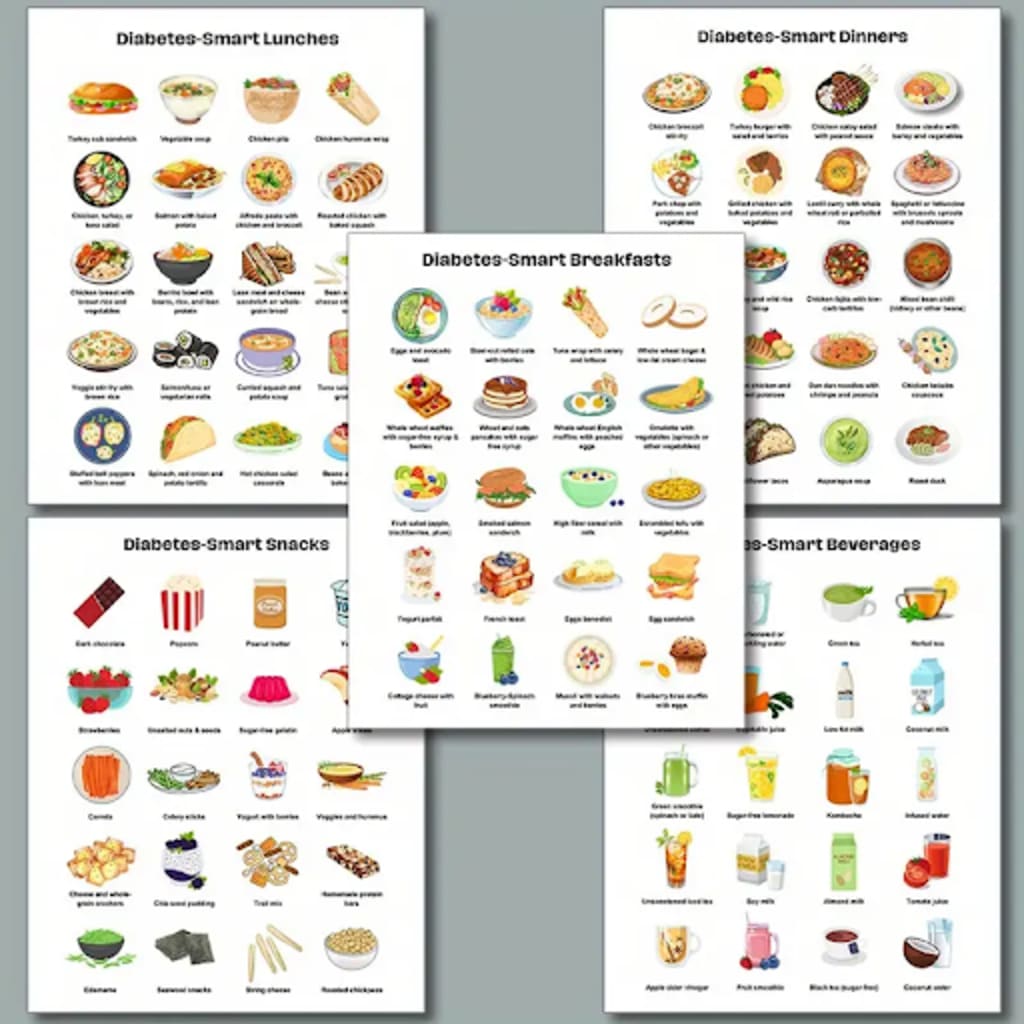
**Additionally, consider using the 5-Piece Diabetes Diet Food List for a visual and practical resource. This Meal Ideas & Grocery Planner is designed as Healthy Eating Wall Art for your kitchen. Measuring 20.32x25.4 cm, these Paper Flip Charts serve as an Educational Nutrition Guide for Diabetics, providing you with quick meal ideas while keeping your kitchen stylish.**
## 6. Adjusting Your Meal Plan as Needed
### 6.1 Monitoring Blood Sugar Levels
An essential part of diabetes management is regularly monitoring your blood sugar levels.
- **Feedback Loop:** Use your blood sugar readings to adjust your meal plan as necessary. If you notice a spike after certain meals, it may be time to reevaluate those choices.
### 6.2 Flexibility in Meal Planning
Life is unpredictable, and meal planning should allow for flexibility.
- **Adaptability:** If unexpected events arise, have backup meals or ingredients on hand. For instance, keep healthy frozen meals available for days when cooking from scratch isn’t an option.
## 7. Conclusion
### 7.1 Recap of Key Takeaways
Using a meal planning chart is a practical approach for managing diabetes. By understanding the importance of nutrition, creating a structured plan, and staying flexible, you can significantly improve your health.
### 7.2 Encouragement to Start Planning Today
There’s no better time than now to start your meal planning journey. Grab a pen, paper, or your favorite app, and take control of your meals. With a little effort, you can enjoy delicious, balanced meals that support your health and well-being.
In conclusion, using a meal planning chart can simplify the often complex task of managing diabetes, making it easier to eat well and maintain a healthy lifestyle. By following the guidelines and examples provided in this article, you’ll be well on your way to mastering the art of meal planning for diabetes
Management.
About the Creator
Keep reading
More stories from writers in Feast and other communities.
Australia Fast Food & Quick Service Restaurant Market 2026: Dining Habits, Menu Innovation & Digital Ordering
Australia Fast Food & Quick Service Restaurant Market Overview The Australia fast food and quick service restaurant (QSR) market continues to evolve as consumers seek convenient, affordable and quickly prepared meals that fit into increasingly busy lifestyles. QSRs include branded fast food chains, limited-service restaurants and takeaway outlets that focus on speed of service and standardized menu offerings. These establishments serve a wide range of food categories such as burgers, pizza, fried chicken, sandwiches, coffee, desserts and Asian-inspired meals. The Australia fast food and quick service restaurant market growth reached USD 5.5 Billion in 2025. Looking forward, the market is expected to reach USD 7.7 Billion by 2034, exhibiting a growth rate (CAGR) of 3.72% during 2026-2034. This growth reflects steady consumer demand, menu diversification and ongoing digital transformation across the sector.
By Amyra Singhabout 11 hours ago in Feast
Time to change your life.
Is it even possible for you to change your life? A lot of people, more than there should be, are unhappy with their lives. But what are they doing about it? Usually nothing. People talk about how shitty their lives are and want change, but are they not taking the actions to change?
By Jen Phillips4 days ago in Humans
Not Just For Clean Up: A History Of The MCU's Department of Damage Control
Initially an organisation that seemed to exist to help the heroes of the Marvel Cinematic Universe, from Phase Four onwards, the Department of Damage Control has shifted into a more antagonistic role. Most recently seen in the Wonder Man series, the current incarnation of Damage Control seems to target superpowered individuals, regardless of whether that person poses an active or intentional threat.
By Kristy Anderson3 days ago in Geeks



Comments
There are no comments for this story
Be the first to respond and start the conversation.