
Global Potato Starch Market Trends & Summary
How Clean-Label Eating, Gluten-Free Demand, and Industrial Innovation Are Shaping a US$ 6.99 Billion Market by 2033


The global potato starch market is undergoing a major transformation and continues to gain traction as consumers worldwide shift toward clean-label, gluten-free, and plant-based products. According to Renub Research, the market is projected to grow from US$ 4.71 billion in 2024 to US$ 6.99 billion by 2033, reflecting a healthy CAGR of 4.47% during 2025–2033. This growth comes at a time when the food processing industry is expanding rapidly, industrial applications of starch are widening, and consumers are becoming increasingly attentive to the ingredients behind the products they consume.
Potato starch’s unique qualities—ranging from high viscosity to excellent binding and stabilizing capabilities—have positioned it as a crucial ingredient in countless sectors including food & beverage, pharmaceuticals, paper, textiles, and chemicals. As demand rises across both developed and emerging markets, the industry is entering a new era of innovation, sustainability, and global expansion.
Potato Starch Industry Overview
The potato starch industry has seen significant growth in recent years thanks to shifting consumer preferences and industrial advancements. Extracted from potatoes, this starch is widely valued in the food sector as a texturizer, thickener, stabilizer, and binding agent. It is commonly found in soups, sauces, confectionery, baked products, ready-to-eat meals, and an increasing variety of vegan and gluten-free offerings.
The rising popularity of processed and packaged foods—driven by urbanization, busy lifestyles, and rapid growth in convenience food categories—has directly elevated the demand for potato starch. At the same time, gluten-free diets are becoming mainstream, supported by the surge in health awareness and the rising incidence of gluten intolerance and celiac disease. Since potato starch is naturally gluten-free, it has become a preferred ingredient in gluten-free flour blends, bakery mixes, and snack foods.
Beyond food, potato starch plays a pivotal role in paper manufacturing, where it enhances paper strength and printability. In textiles, it acts as a sizing and finishing agent, while in pharmaceuticals, it serves as a reliable excipient for tablet formation. Its versatility also extends to cosmetics and biodegradable materials, aligning well with the increasing demand for eco-friendly, plant-derived alternatives.
Strategic partnerships are also shaping the market landscape. In June 2023, Brenntag Specialties entered a strategic alliance with Royal Avebe, a leading potato starch producer. This collaboration combines Avebe’s manufacturing expertise with Brenntag’s global distribution network, marking a key milestone in strengthening supply chains and accelerating product innovation in the global nutrition industry.
Key Growth Drivers for the Global Potato Starch Market
1. Rise in Vegan and Vegetarian Diets
One of the most influential forces shaping today’s food ingredient markets is the global shift toward plant-based eating. Vegan and vegetarian lifestyles are growing rapidly across North America, Europe, and parts of Asia, driven by health awareness, ethical concerns, and sustainability motivations.
Potato starch fits seamlessly into this movement.
It is a plant-derived, natural ingredient widely used in:
Vegan meat analogues (as a binder and texture enhancer)
Dairy-free alternatives such as vegan cheese and yogurts
Egg-free bakery products
Plant-based sauces, dips, and spreads
Its ability to improve texture, moisture retention, and stability makes it an ideal solution for food manufacturers catering to the booming plant-based market. As vegan and flexitarian diets continue their upward trajectory, the potato starch market is poised for sustained momentum.
2. Growth of the Food Processing Industry
The global food processing industry is experiencing unprecedented growth, driven by rapid urbanization, increased disposable income, and evolving consumer lifestyles. More people are relying on ready-to-eat, ready-to-cook, and packaged foods, especially in emerging economies.
Food manufacturers rely heavily on potato starch because of its:
Superior thickening power
Neutral taste
High clarity in sauces and soups
Ability to enhance texture in snacks and confectionery
Excellent freeze-thaw stability, ideal for frozen meals
From chips and instant soups to bakery fillings and extruded snacks, potato starch remains an essential ingredient.
As global demand for processed foods continues to soar, the potato starch market is expected to expand rapidly—particularly in Asia-Pacific and Latin America, where consumption of packaged foods is rising fastest.
3. Increasing Demand for Gluten-Free and Clean-Label Products
Consumers today prioritize transparency and simplicity in the products they buy. As clean-label eating becomes a powerful global trend, ingredients like potato starch—minimally processed and derived from familiar sources—are gaining importance.
Its biggest advantages include:
Naturally gluten-free
Non-GMO and plant-based
Minimal processing
Free from allergens
The gluten-free food market is booming not only among people with medical needs but also among consumers who perceive gluten-free diets as healthier. Potato starch is a staple ingredient in gluten-free bakery mixes, bread, pastries, and snacks, giving manufacturers an accessible and highly functional substitute for wheat-based ingredients.
This ongoing shift toward clean-label, allergen-free, and transparent ingredient lists will continue to elevate potato starch demand worldwide.
Challenges Affecting the Potato Starch Market
1. Volatility in Raw Material Supply
Potato cultivation is highly vulnerable to:
Climate change
Droughts and flooding
Temperature extremes
Pests and crop diseases (like late blight or potato nematodes)
These disruptions can significantly affect crop yield and quality. A poor harvest leads to raw material shortages, price hikes, and supply chain instability—directly impacting potato starch production costs.
Manufacturers are increasingly looking to:
Diversify sourcing regions
Invest in climate-resilient agriculture
Build stronger partnerships with farmers
Use technology to enhance yield and extraction efficiency
Without stable potato supply, the industry faces long-term uncertainty—making supply chain innovation crucial.
2. Competition from Alternative Starches
Potato starch competes with widely available alternatives such as:
Corn starch
Wheat starch
Tapioca starch
Corn starch, in particular, remains the dominant competitor due to its lower cost and abundant supply. Many industrial applications, especially in food and paper sectors, still rely heavily on corn due to its versatility and competitive pricing.
To stay ahead, potato starch manufacturers are increasingly focusing on:
Superior product quality
Clean-label positioning
Better performance in gluten-free and premium applications
Specialized modified starches with enhanced functionality
Innovation and differentiation will be essential for potato starch to maintain its share in the global starch market.
Potato Starch Market Overview by Regions
Renub Research segments the market across major regions including the United States, Canada, France, Germany, Italy, Spain, the United Kingdom, Belgium, Netherlands, Turkey, China, Japan, India, Australia, South Korea, Thailand, Malaysia, Indonesia, New Zealand, Brazil, Mexico, Argentina, South Africa, Saudi Arabia, and the UAE.
Below is a concise regional snapshot.
United States
The U.S. potato starch market is witnessing steady demand, driven mainly by:
Growth in processed and packaged food consumption
Expanding gluten-free food segment
Industrial uses in paper, textiles, cosmetics, and pharmaceuticals
Advances in extraction technologies have improved manufacturing efficiency, but challenges include raw material price fluctuations and strong competition from cheaper alternative starches.
United Kingdom
In the UK, the market is propelled by:
Rising demand for convenience foods
Increasing consumer preference for gluten-free and natural ingredients
Growing use in dairy substitutes and bakery applications
Industrial use in textiles, pharmaceuticals, and papermaking also contributes significantly. However, supply chain uncertainty and price competition remain major concerns for manufacturers.
India
India is emerging as one of the fastest-growing markets, supported by:
Rapid expansion of the processed food industry
Increasing adoption of gluten-free diets
Growing industrial applications (paper, textiles, pharmaceuticals)
However, inconsistent potato supply, price volatility, and competition from corn and tapioca starch pose challenges. Despite this, technological improvements and rising consumption of packaged foods keep the market on a growth trajectory.
United Arab Emirates
The UAE's potato starch market is expanding due to:
High demand for processed and convenience foods
Rising health consciousness and preference for gluten-free products
Heavy reliance on food imports and strong foodservice sector growth
Industrial use in pharmaceuticals, textiles, and paper manufacturing further supports market growth. Still, price volatility and competition from alternative starches remain key challenges.
Final Thoughts
The global Potato Starch Market is entering a dynamic phase, shaped by powerful trends in food consumption, sustainability, and industrial innovation. With a projected value of US$ 6.99 billion by 2033, the market is well-positioned to benefit from:
The surging popularity of gluten-free and plant-based diets
Rapid expansion of the food processing industry
Increasing focus on clean-label and natural ingredients
New opportunities across pharmaceuticals, paper, textiles, and biodegradable materials
While challenges such as supply volatility and competition from alternative starches persist, the industry’s shift toward strategic partnerships, technological innovation, and sustainable sourcing practices is paving the way for long-term growth.
As consumers continue demanding healthier, more transparent, and environmentally conscious products, potato starch is set to remain a vital ingredient in the global marketplace—one that bridges the gap between natural food trends and industrial performance.
About the Creator
Keep reading
More stories from Aaina Oberoi and writers in Feast and other communities.
Europe Coffee Machine Market Size and Forecast (2025–2033): How Specialty Coffee, Smart Brewing, and Sustainability Are Reshaping the Industry
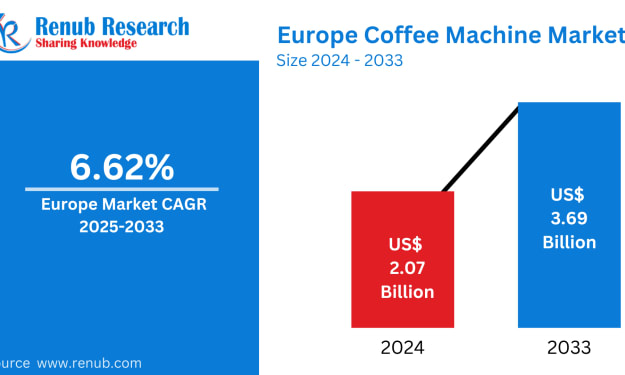
The Europe coffee machine market is entering a dynamic era, shaped by rising consumer expectations, rapid technological innovation, and an expanding café culture. As per Renub Research, the market is projected to grow from US$ 2.07 billion in 2024 to US$ 3.69 billion by 2033, registering a CAGR of 6.62% during the forecast period. This strong expansion reflects Europe’s deep, evolving relationship with coffee—both as a cultural staple and a business driver.
By Aaina Oberoiabout a month ago in Feast
My Tous les Jours Trip
As someone who lives in a rural area, I don't get the chance to visit fancy restaurants or bakeries that often. So, when a friend told me about a French-Asian bakery that's less than an hour away, I knew I had to check it out and grab some pictures for social media. Tous les Jours ended up providing an immersive experience that went above and beyond my expectations--although I did leave with a few reservations.
By Kaitlin Shanks16 days ago in Feast
Standing While Falling
Quotation from Friedrich Nietzsche "He who wrestles long with monsters should beware lest he himself become a monster. And if you gaze long into an abyss, the abyss also gazes into you. Man is not destroyed by suffering, but by the meaning he makes of it."
By LUCCIAN LAYTH5 days ago in Critique



Comments
There are no comments for this story
Be the first to respond and start the conversation.