
GCC Foodservice Market Trends & Summary
A Region Reshaping Dining Culture Through Tourism, Technology, and Diverse Culinary Demand

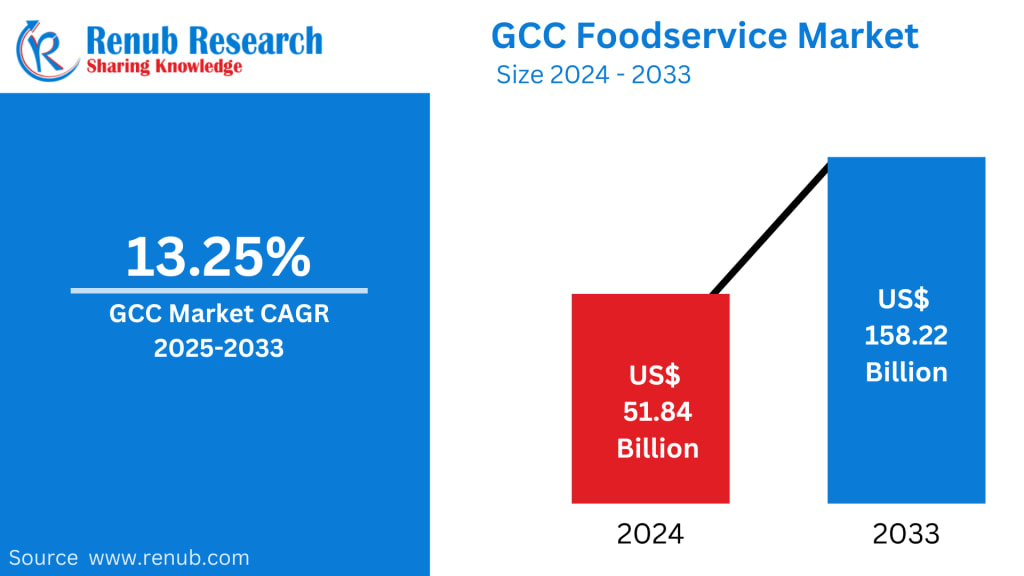
The GCC Foodservice Market is undergoing one of its most transformative phases in recent decades, driven by dynamic shifts in consumer behavior, rapid urbanization, expanding tourism, and accelerated digitalization across foodservice platforms. According to Renub Research, the market, valued at US$ 51.84 billion in 2024, is projected to reach a remarkable US$ 158.22 billion by 2033, growing at a CAGR of 13.25% from 2025 to 2033.
From quick-service restaurants (QSRs) and full-service dining to cloud kitchens, cafés, and specialty outlets, the foodservice ecosystem in the GCC continues to evolve as consumer expectations shift toward convenience, quality, sustainability, and global culinary diversity.
This comprehensive overview explores the forces shaping the GCC foodservice market, the challenges operators must navigate, and the future landscape of foodservice across major GCC nations including the UAE, Saudi Arabia, Kuwait, Bahrain, Oman, and Qatar.
GCC Foodservice Industry Overview
Few regions in the world have experienced such strong growth in foodservice demand as the Gulf Cooperation Council (GCC). The combination of a youthful demographic, a large expatriate population, increasing disposable incomes, and a fast-paced urban lifestyle has created the perfect environment for a booming foodservice industry.
What stands out in the GCC is the diversity of culinary demand. While traditional Middle Eastern cuisine retains its cultural importance, consumers increasingly seek cross-cultural and international experiences. This is evident in the expansion of multinational chains, innovative fine-dining concepts, and a surge in Asian, European, Latin American, North American, and fusion restaurants.
Digitalization Redefining Consumption
Technology is reshaping the industry on every level:
Food delivery apps
Digital ordering and kiosk systems
AI-driven recommendations
Automated kitchens
Cloud (ghost) kitchens that allow brands to operate delivery-only outlets
The popularity of cloud kitchens in urban hubs like Dubai, Riyadh, and Kuwait City signifies a structural shift toward convenience-driven dining.
Growing Demand for Healthy and Sustainable Options
The region is witnessing increasing interest in:
Low-calorie meals
Organic foods
Plant-based alternatives
Sustainable packaging
Transparency in sourcing
Younger consumers—who dominate the GCC’s demographic—are leading this change.
Meat Consumption & Hybrid Menus
The GCC consumed 0.45 million metric tons of meat in 2022, demonstrating strong demand for both local favorites and global meat-based cuisines. Restaurants are increasingly offering hybrid menus that blend regional spices with international cooking techniques, fueling creativity in the gourmet and casual dining spaces.
Rise of Coffee Culture
Coffee and café culture is booming, especially in the UAE, where over six million cups of coffee are consumed daily and more than US$ 630 million is spent annually on coffee.
Dubai alone hosts 13,000+ restaurants and cafés, reflecting a densely competitive and trend-driven market.
Key Growth Drivers for the GCC Foodservice Market
1. Population Growth & Urbanization
The GCC population is expanding rapidly, especially in major cities like Dubai, Riyadh, Jeddah, Doha, and Kuwait City. High urban density translates into increased demand for:
QSRs
Fast casual outlets
Full-service dining
Cafés
Mall-based and entertainment-based food courts
With millions of expatriates influencing local tastes, the region’s foodservice offerings continue to diversify.
2. Rising Disposable Incomes
Higher incomes have shifted food consumption patterns dramatically. Dining out is no longer occasional—it's a lifestyle.
Consumers increasingly prefer:
Premium casual restaurants
Upscale eateries
International chains
Specialty coffeehouses
Gourmet bakeries
On-demand meal delivery
Spending on convenience and experience is rising, encouraging new players to enter the market.
3. Tourism Boom
Tourism remains a powerful catalyst. Landmark events such as:
Expo 2020 Dubai
FIFA World Cup Qatar 2022
Ongoing concerts, sports tournaments, and global exhibitions
...continue to generate robust demand for foodservice establishments across hotels, malls, airports, and entertainment districts.
Saudi Arabia’s Vision 2030, which aims to welcome 100 million tourists annually, will further propel foodservice expansion.
Major Challenges in the GCC Foodservice Market
1. Sustainability and Waste Management
Growing concern over environmental impact is forcing foodservice operators to address:
Excessive plastic use
Food waste
Energy-intensive operations
Transitioning to eco-friendly packaging, implementing food waste reduction systems, and sourcing sustainable ingredients require investment—but businesses that lead in sustainability are gaining brand loyalty and regulatory advantages.
2. Fluctuating Food Prices
With the GCC relying heavily on imports for 80–90% of its food, global disruptions—logistical delays, price hikes, geopolitical instability—directly impact the region’s foodservice margins.
Operators are increasingly adopting strategies like:
Local sourcing partnerships
Bulk procurement
Menu engineering
Multi-supplier contracting
Still, volatility remains a long-term challenge.
GCC Foodservice Market by Region
United Arab Emirates (UAE)
The UAE remains the most dynamic foodservice hub in the region.
Key factors driving its growth:
Cosmopolitan population
Global tourism gateway
High disposable income
Adoption of new foodservice technologies
Home to thousands of international restaurant brands
Dubai and Abu Dhabi are magnets for culinary innovation—from Michelin-starred restaurants to new-age cloud kitchens.
Health-centric dining and sustainability are shaping menus, with consumers demanding transparency and nutritional balance.
Saudi Arabia
Saudi Arabia is the fastest-growing foodservice market in the GCC.
Growth catalysts include:
Large youthful population
Expanding middle class
Urban development projects (NEOM, Qiddiya, The Red Sea Project)
Vision 2030 goals for tourism and entertainment
Rising demand for QSRs, FSRs, coffee shops, and fast-casual dining
International brands continue to expand aggressively in Riyadh, Jeddah, and Mecca, while local brands are also scaling rapidly.
Bahrain
Though smaller in scale, Bahrain has a thriving foodservice market fueled by:
A diverse expatriate population
Steady tourism inflow
Growing café and bakery culture
Increasing consumer spending on dining and delivery
Rising health and sustainability awareness
Events like the Bahrain Grand Prix significantly boost hospitality and dining sectors annually.
Kuwait
Kuwait’s foodservice market is driven by:
One of the highest per-capita incomes globally
Young urban consumers
Strong preference for international cuisines
High demand for QSRs and delivery services
Rapid expansion of specialty coffee and dessert shops
Preference for organic, low-calorie, and healthier meal options is reshaping Kuwait’s dining scene.
GCC Foodservice Market Segmentation
Foodservice Type
Cafes & Bars
Cafes
Juice/Smoothie/Dessert Bars
Specialist Coffee & Tea Shops
Cloud Kitchens
Full Service Restaurants (FSR)
Asian
European
Latin American
Middle Eastern
North American
Other FSR cuisines
Quick Service Restaurants (QSR)
Bakeries
Burgers
Ice Cream
Meat-based cuisines
Pizza
Other QSR categories
Outlet Type
Chained Outlets
Independent Outlets
Location
Leisure
Lodging
Retail
Standalone
Travel
Countries Covered
Bahrain
Kuwait
Oman
Qatar
Saudi Arabia
United Arab Emirates
Rest of GCC
Key Companies in the GCC Foodservice Market
Major players shaping regional foodservice growth include:
Al Tazaj Fakeih
Alamar Foods Company
ALBAIK Food Systems Company SA
Galadari Ice Cream Co. Ltd LLC
Herfy Food Service Company
Kudu Company for Food and Catering
LuLu Group International
Riyadh International Catering Corporation
Shahia Food Limited Company
These companies continue to invest in expansion, menu diversification, and technology adoption to strengthen their market positions in the GCC.
Final Thoughts
The GCC Foodservice Market is on an accelerated growth path—one shaped by cultural diversity, economic modernization, urbanization, and digital transformation. As the region continues to globalize while maintaining strong cultural roots, its foodservice landscape will only become more vibrant and competitive.
With the market projected to hit US$ 158.22 billion by 2033, opportunities abound for investors, restaurateurs, technology providers, and food innovators.
Success in this evolving market will depend on:
Embracing sustainability
Leveraging digital solutions
Meeting health-focused consumer needs
Offering culturally inclusive menus
Navigating supply chain volatility
The future of GCC foodservice is not only promising—it is redefining culinary excellence across the Middle East.
About the Creator
Janine Root
Janine Root is a skilled content writer with a passion for creating engaging, informative, and SEO-optimized content. She excels in crafting compelling narratives that resonate with audiences and drive results.
Keep reading
More stories from Janine Root and writers in Feast and other communities.
Natural Food Colors Market Trends & Summary
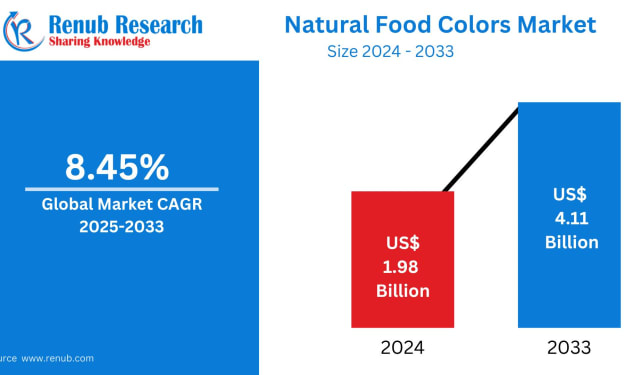
The global Natural Food Colors Market is undergoing a profound transformation, fueled by a sweeping shift in consumer behavior and industry innovation. According to Renub Research, the global market is projected to grow from US$ 1.98 billion in 2024 to US$ 4.11 billion by 2033, registering an impressive CAGR of 8.45% between 2025 and 2033. This rapid rise reflects an unmistakable trend: consumers today expect food that is not only flavorful but also clean-label, plant-based, minimally processed, and environmentally sustainable.
By Janine Root about a month ago in Feast
My Tous les Jours Trip
As someone who lives in a rural area, I don't get the chance to visit fancy restaurants or bakeries that often. So, when a friend told me about a French-Asian bakery that's less than an hour away, I knew I had to check it out and grab some pictures for social media. Tous les Jours ended up providing an immersive experience that went above and beyond my expectations--although I did leave with a few reservations.
By Kaitlin Shanks17 days ago in Feast
Fair Exchange, No Robberies
Dark Memoirs - Index There are at least two kinds of people in the world: those who write this half-arsed kind of intro to a story that looks to separate the rare and the norm, and those who realise it's an overused framing device and don't.
By Paul Stewart7 days ago in Chapters


Comments
There are no comments for this story
Be the first to respond and start the conversation.