
Fueling the Future: The Science of Healthy Eating
How Smart Food Choices Shape Strong Bodies and Sharp Minds

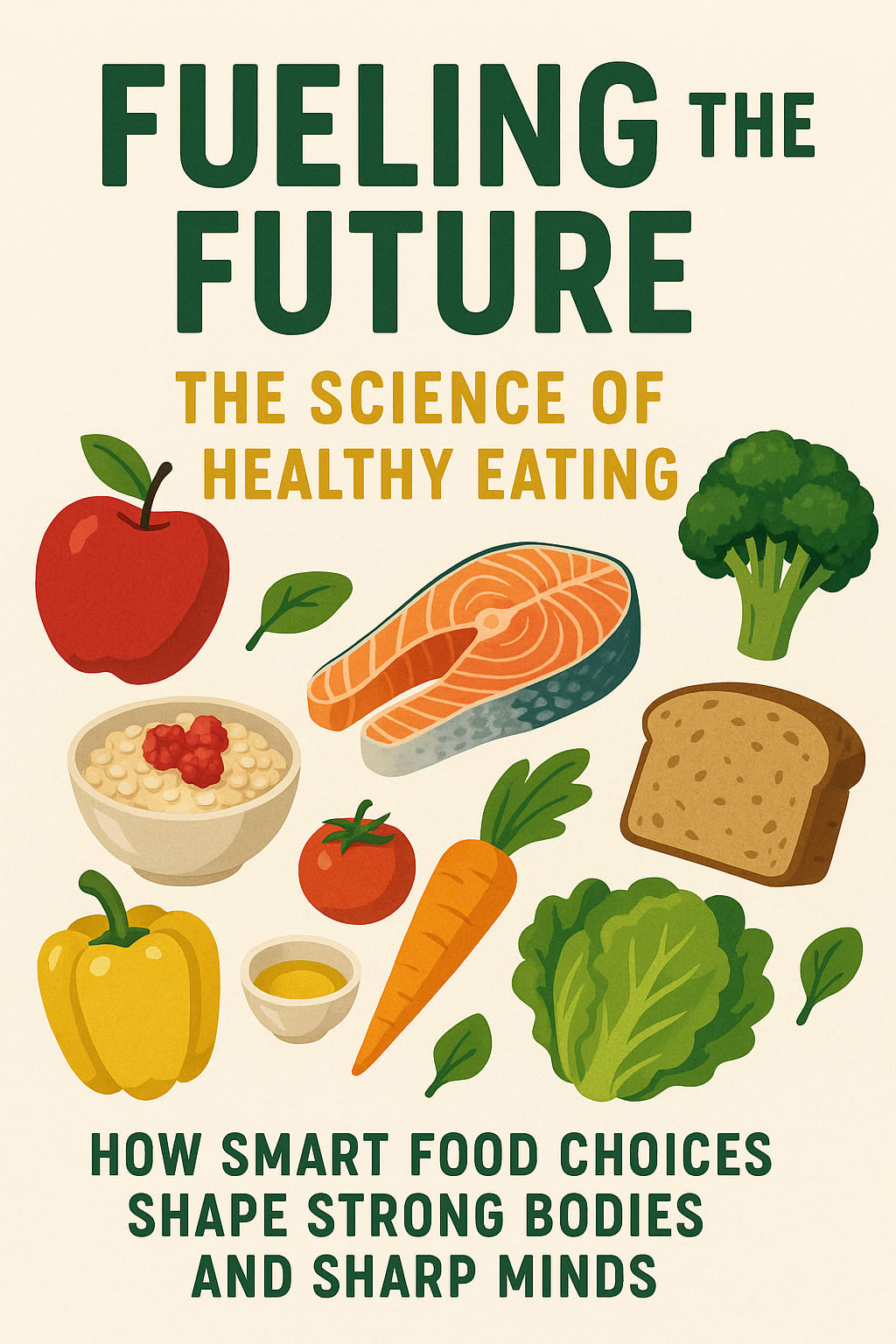
In a bustling city called Nutraville, students at Bright Future Academy weren’t just learning about math and science—they were also learning how food could change their lives. The school had recently launched a new program called “Fueling the Future,” and at the center of it all was a curious and clever 12-year-old named Zoya.
Zoya loved science. Her room was filled with posters of the human body, planets, and DNA strands. But she had never thought much about what she ate. Most days, her lunch included a pack of chips, a sugary drink, and maybe a chocolate bar if she had saved her allowance.
That all changed when Mr. Farid, the new science teacher, brought a colorful box to class.
“Today,” he said with a smile, “we’re going to explore the fuel that powers our minds and bodies—food!”
The box was filled with real fruits, vegetables, grains, and even labels from packaged foods. He handed each student a food item and challenged them: “Find out how your item affects the body.”
Zoya got a shiny red apple. At first, she shrugged. “It’s just fruit.” But as she researched, she discovered that apples contain something called fiber, which helps with digestion. They also have natural sugars and vitamin C, which helps boost the immune system. Even more amazing, eating apples regularly could help lower the risk of heart disease!
She began to wonder: what was her usual lunch doing to her body?
That evening, she asked her mom about what they usually ate. Her mom was surprised—and impressed. “We mostly cook fresh meals, but you’re right, we could make better choices for snacks.”
They visited a nearby farmer’s market. Zoya tried sweet carrots, crunchy cucumbers, and juicy berries. She was amazed at how tasty healthy food could be. It wasn’t about dieting—it was about fueling her body the right way.
Back at school, Mr. Farid divided the class into teams for a month-long project: design a meal plan for kids that would boost energy, focus, and growth.
Zoya’s group included her best friend Sami, who loved sports but hated vegetables, and Noor, who had food allergies. Together, they had to create a plan that was nutritious, tasty, and safe for everyone.
They called their project “Brain Boost Bites.”
First, they replaced sugary drinks with fruit-infused water and fresh juices. They added whole grains like brown rice and oats, which released energy slowly, helping with focus in class. For snacks, they chose nuts, yogurt, and air-popped popcorn instead of chips and candy.
They even created a “rainbow plate” rule: every meal had to include at least three different colors from fruits and vegetables. “The more colors, the more nutrients!” Zoya explained during their presentation.
The class was amazed. Mr. Farid nodded proudly. “Excellent work. You’re not just learning—you’re leading.”
Soon, their plan caught the attention of the school principal. It was featured in the school newsletter and even tested in the cafeteria. Students reported feeling more awake in class, and even teachers joined in.
Zoya noticed the changes in herself too. She had more energy, could concentrate better during lessons, and even her skin looked clearer. Sami, once a veggie-hater, admitted he liked baked sweet potato fries. Noor felt safe knowing there were tasty options for her too.
One day, a local news team came to the school. “We’re doing a story on young health heroes,” the reporter said. “We heard Nutraville has some.”
Zoya’s team was interviewed, and their message was clear: “Healthy food isn’t boring. It’s powerful. It helps us grow, learn, and dream bigger.”
By the end of the year, “Fueling the Future” became a permanent part of the school’s curriculum. Zoya had not only learned about food—she had learned how choices made each day could shape a better tomorrow.
As she walked home, biting into a crisp apple, she smiled. “One bite at a time,” she thought, “we’re building the future.”
About the Creator
Raza Ullah
Raza Ullah writes heartfelt stories about family, education, history, and human values. His work reflects real-life struggles, love, and culture—aiming to inspire, teach, and connect people through meaningful storytelling.
Keep reading
More stories from Raza Ullah and writers in Feast and other communities.
Thrive: A Journey to Vibrant Health
Lila woke to the familiar ache in her joints, the weight of exhaustion pressing against her chest. At 34, she felt decades older, her days blurring into a cycle of work, processed meals, and restless nights. Her doctor’s warnings about high cholesterol and pre-diabetes echoed faintly, but change seemed like a mountain too steep to climb.
By Raza Ullah7 months ago in Feast
My Tous les Jours Trip
As someone who lives in a rural area, I don't get the chance to visit fancy restaurants or bakeries that often. So, when a friend told me about a French-Asian bakery that's less than an hour away, I knew I had to check it out and grab some pictures for social media. Tous les Jours ended up providing an immersive experience that went above and beyond my expectations--although I did leave with a few reservations.
By Kaitlin Shanks22 days ago in Feast
Edible Offal Market Size and Forecast 2025: A Global Shift Toward Sustainable, Affordable Protein
Edible Offal Market Size and Forecast 2025 The Edible Offal Market is projected to reach US$ 59.60 billion by 2033, rising from US$ 39.66 billion in 2024, registering a CAGR of 4.63% from 2025 to 2033, according to Renub Research. This steady expansion reflects a powerful global shift toward affordable, nutrient-dense protein sources, culturally rooted culinary practices, rising meat consumption, sustainable meat processing, and increasing awareness of food waste reduction. Particularly in developing regions and ethnic cuisine markets, offal is no longer seen as a by-product—it is emerging as both a nutritional asset and a sustainability solution.
By Aaina Oberoia day ago in Feast




Comments (1)
Best food good future.