
Food, the Language of a Culture
A Taste of Colombia

According to a meme I saw on Facebook recently, Noam Chomsky once said: “A language is not just words. It’s a culture, a tradition, a unification of a community, a whole history that creates what a community is. All embodied in a language.”
Now, not to criticise the great linguist and philosopher, but what he blatantly forgot to mention is that the same is true for food. Perhaps he and I have different priorities.
Food is not just ingredients. It is identity. It is home. It is memory.
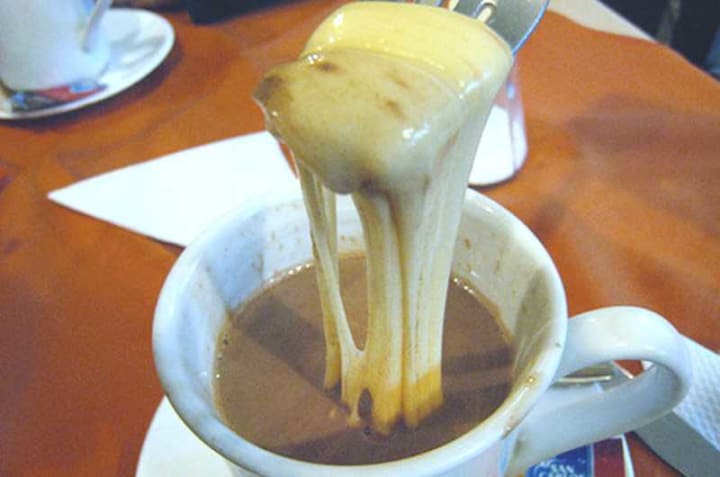
Yet, for many, Colombian cuisine is not even on their radar. Perhaps this is rightly so, given that Colombians put cheese in their hot chocolates so that it melts and becomes stringy — Sorry to any Colombians reading this; I love you, but that is just not right! — Yet, Colombia may just be the hidden treasure of comfort food you’ve been searching for all your life.
What makes this more intriguing is that it is not just Colombian food that is shrouded in mystery, but the country itself. For decades now, Colombia has had a less-than-desirable reputation of drugs and violence. So much so, that people are often unsure how to even imagine its many landscapes. Fortunately, the times are changing! So, sit back, relax, and enjoy a brief introduction to Colombian food and culture based on the experiences of this Australian mona (fair-haired lady — literal translation: “monkey”).
¿Estás ready?
Having lived in Bogota for the greater part of my 20s, Colombian food is what still ties me to the culture, its people and language. It is a way to re-live the fondest memories of a those years —hiking in the Amazon rainforest, exploring the Valle de Cocora with its gigantic palm trees over 80 metres tall, swimming in the river of five colours in Caño Cristales, bathing in the tropical paradise that is Tayrona National Park. Colombia truly is the wonderland you didn’t know you were missing.
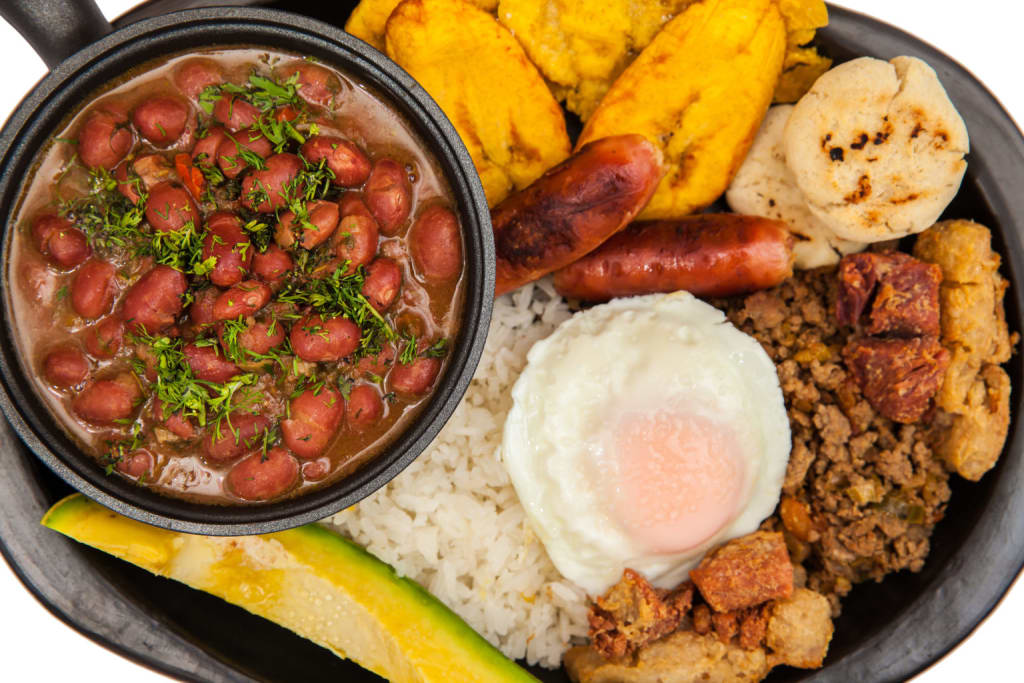
Now, as far as traditional foods go, those that come out of Colombia reflect the humbleness of much of the population. So, expect hearty, nutritious, substantial meals. Though, Colombia is also home to a wide variety of tropical fruits and vegetables, which, unfortunately, are mostly unavailable abroad — at least here in Australia. Now, if you’re anything like me, this fact alone will ignite your stomach-based passion for travel. Sadly, this fact also limits what we are able to cook. So, the dish that this article will focus on is one whose ingredients are more readily available. It is the dish that started my love affair with this country. The dish that got me cooking with beans. The meal that constitutes the family Sunday lunch. It is the dish that welcomes you into the Colombian tradition and community. It is, of course, La Bandeja Paisa.
La Bandeja Paisa (read it: ban-de-ha pie-sah)
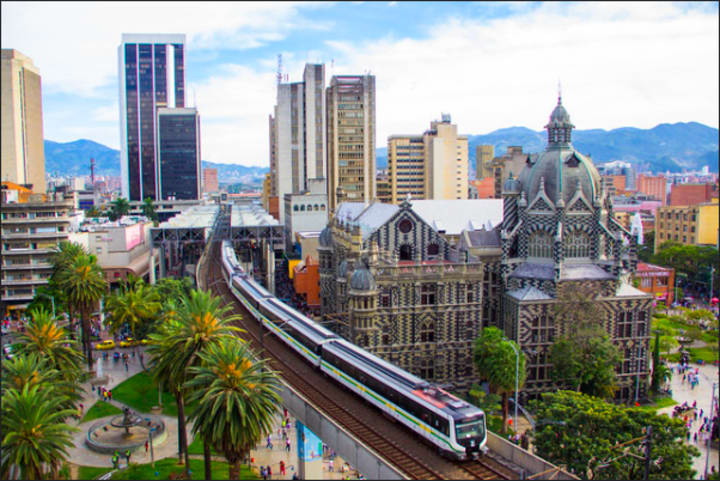
A bandeja is a platter. The word paisa comes from paisano, meaning countryman. Though, in Colombia, this generally refers to a person from the city of Medellin, which is the region this dish is from.
For those who don’t know it, Medellin is one of Colombia’s vibrant metropolitan cities. Known as the city of eternal spring or the city of flowers, Medellin also happens to be the gastronomic and cultural capital of Colombia. This city is full of history, which can be appreciated from its street art, where muralism is often used to inspire social movements and activism, to the countless museums, festivals, gardens and buzzing nightlife.
Bueno amigo, it’s time to get down to the nitty gritty — How to make La Bandeja Paisa:
Frijoles (Beans)
This recipe calls for kidney beans, which are the centrepiece of your dish. Remember, you will need to soak these in water overnight before cooking them. Drain the beans and fill up a pot with new water, until the beans are covered. Add about half the hogao (recipe below) and salt to taste. Let the pot simmer for 3 to 4 hours, until the beans are soft. If you are not using a pressure cooker, you will need to add more water as this evaporates and/or is absorbed.
Arroz (Rice)
Rice is your first accompaniment to the beans. This is typically cooked with the absorption method. I recommend adding minced garlic, shallots (whole), salt and a tablespoon of vegetable oil to the rice and water before cooking for taste. This also gives you a good opportunity to practice rolling your Rs as you say ‘arroz’ over and over.
Plátano verde = Patacones (Unripened Plantain = Savoury Slices)
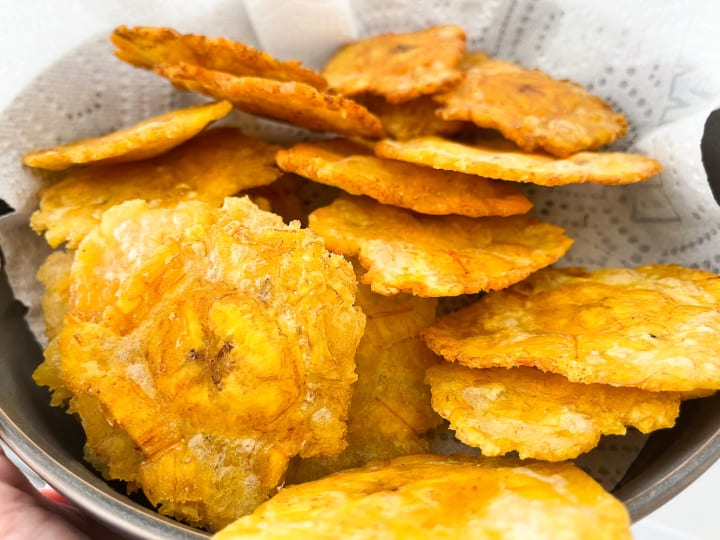
If you have managed to get your hands on a green plantain, then these are perfect for making patacones, which are twice-fried banana slices. Cut the plantain into large slices, at least 3-4 centimetres thick. You will then fry these in vegetable oil until they soften. Next, take a plate or chopping board and flatten the banana until it is about half a centimetre thick. Return these to your frypan and cook until crispy and golden. Sprinkle with salt to serve.
Plátano maduro = Asado con Queso y Bocadillo (Ripened Plantain = Roasted with Cheese and Guava Paste)
If the plantain is very ripe, then you want to roast this and take advantage of its sweetness. This step might take some trust, but it’s a particular combination that truly opened my mind to new flavours — beans, banana, jam and cheese — it just works! Make a long vertical incision, then stuff the plantain with a soft farmer’s cheese (mozzarella) and guava paste, which you can often find in Latin supermercados (bocadillo de guayaba). Cook this, wrapped in foil, until the banana is lightly caramelised.

Chicharrón (Pork Belly)
Warning: I am vegetarian — this is just what I assume happens.
First, you want to generously coat the pork belly with salt. Cut the meat into strips about 2 cm wide. Next, you want to cut horizontally through the layers of fat to give the meat some flexibility as it cooks and the fat reduces. Fry these until they are golden and crispy.

Hogao (Criollo Sauce)
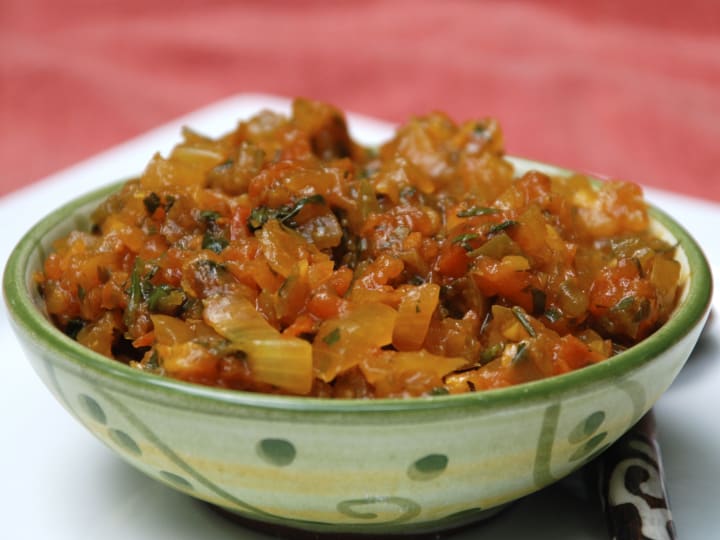
This sauce is made with finely chopped tomato and shallots, with about a 1:1 ratio. Remember that you want to add half of this mixture to your frijoles, so you want to make quite a bit. The remainder is for serving and can be added to the beans for taste or eaten with the patacones. Simply cook the tomato and shallots together with some vegetable oil and salt until the mixture reduces to a salsa.
Salsa de Ají (Chilli Salsa)
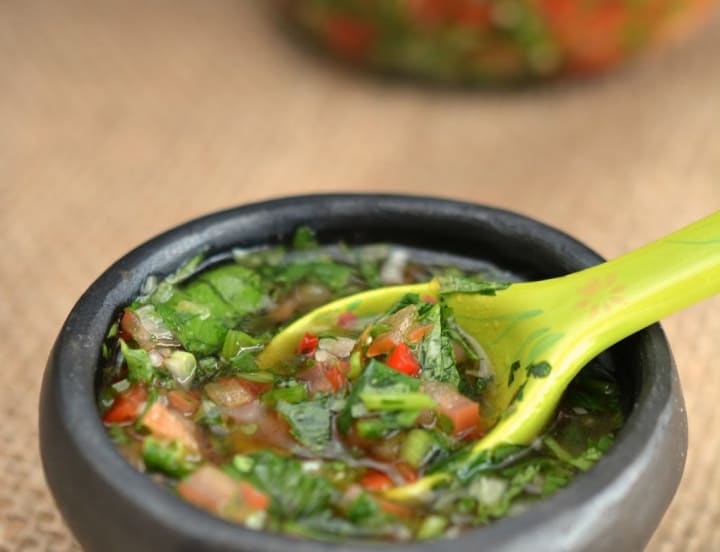
This salsa is also for serving. Finely chop about 3 shallots, 1 white onion, 3 tomatoes, a handful of coriander and a chilli. You can modify the amount of chilli depending on how spicy you would like the dish, though Colombian food is traditionally quite mild. To this, add 1 part olive oil to 1 part white vinegar.
Aguacate (Avocado)
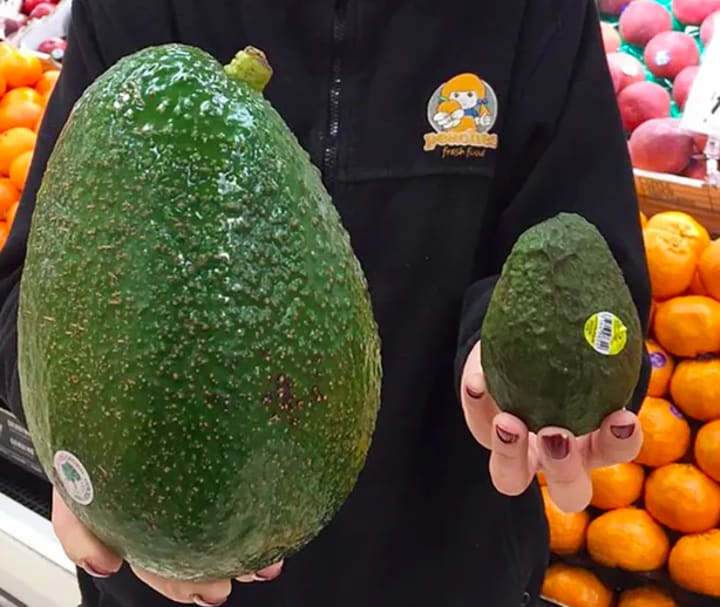
Finally, your platter needs a slice of avocado. And I mean a SLICE! Varieties of avocado in Latin America grow to the size of a football — So, fulfil your avocado fantasies!
On a side note, if you’re looking for a conversation starter for your Colombian feast, I might suggest the etymology of the word avocado. This word was actually taken from the word ahuacatl of the indigenous language Nahuatl (also called Aztec) and means testicle. Enjoy that fact while you eat your lunch. You’re welcome!
Note: In case that is not enough food, La Bandeja Paisa is often also served with a side of mince, a blood sausage, a fried egg, and an arepa (a soft maize flour patty). These can be added as desired.
Now, this meal takes time to prepare; so, I encourage you to partake in the spirit of the family Sunday lunch and cook for all those you love. If you want to do it my way, then you’re going to need some música (Colombian artists include Shakira, Bomba Estéreo, J Balvin and Carlos Vives). You will also need a few polas (beers).
You are now ready to enjoy your Colombian feast — ¿Puedes believe it? (It was only 4 hours of cooking after all!)
So, ¡buen provecho, parcero! — Enjoy your meal, mate!
About the Creator
Keep reading
More stories from Tristan Mayhew and writers in Feast and other communities.
The Recruitment
“Open their minds,” Walters repeated to himself. Assigned with one task: a re-birthing, his words were to inspire action — a renewed idealism that would resonate within each and every person. He felt the enormous responsibility of the task at hand, wholly believing it was in the conscience of government duty to build up individual and social power. And he had inexhaustible reserves to do so. After all, a government must not lose sight of the economic interest at hand.
By Tristan Mayhew5 years ago in Fiction
My Tous les Jours Trip
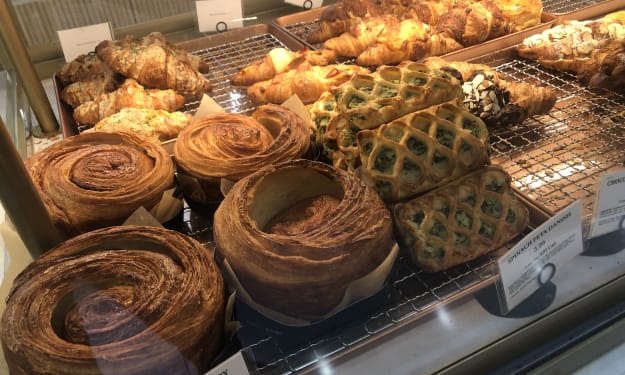
As someone who lives in a rural area, I don't get the chance to visit fancy restaurants or bakeries that often. So, when a friend told me about a French-Asian bakery that's less than an hour away, I knew I had to check it out and grab some pictures for social media. Tous les Jours ended up providing an immersive experience that went above and beyond my expectations--although I did leave with a few reservations.
By Kaitlin Shanks24 days ago in Feast



Comments
There are no comments for this story
Be the first to respond and start the conversation.