
Food delivery apps in today’s famished world- Decoding its significance
Food delivery software and apps have become an indispensable part of our life

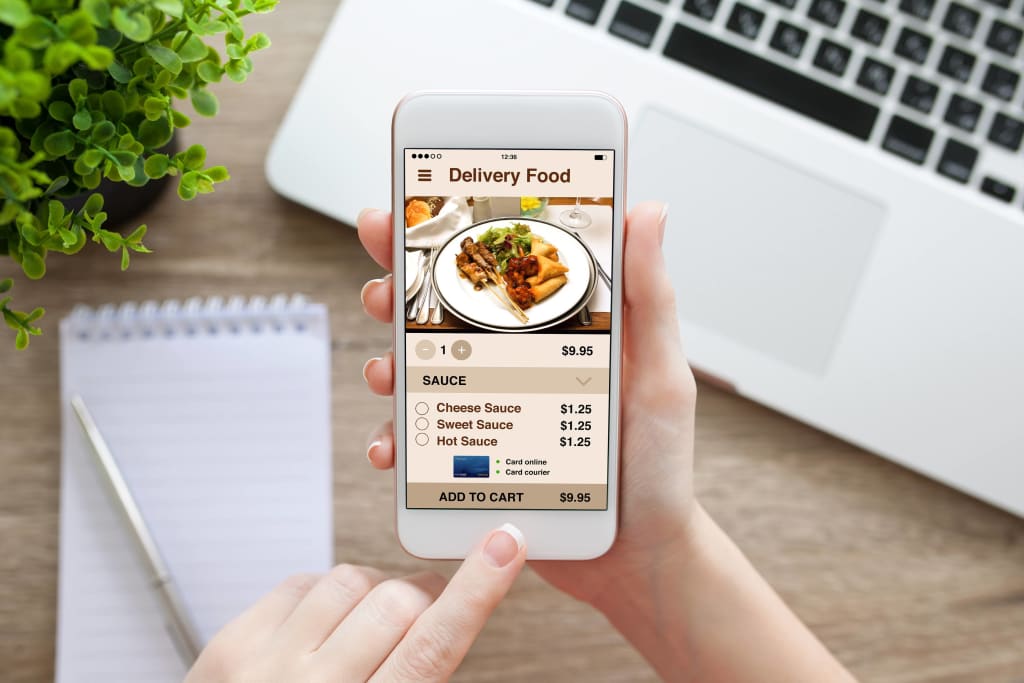
“Today’s consumers are just apparently famished for some obvious reasons. If not really, at least, the food delivery apps make them feel so. Isn’t it? Yes! Regardless of how good a chef you are, everyday humdrum cooking, after all, is not a forte “
Introduction
If we take a look into the growth of the food industry, it has doubtlessly gone through a significant revolution over the recent past. Where on one hand, people used to spend hours cooking food at home to have a delectable cuisine on their dining tables, the same people have now shifted to more food delivery apps to make that possible. Yes! Courtesy to efficient and automated food delivery software and apps that customers can now easily order food online and have it delivered to their homes at an unbelievably quick pace.
But in the backdrop of all this understanding, one question that continuously hits the conscious minds of today is- were we ever this famished and food deprived? Or is it mere craving for hanging around, chilling about and enjoying the luxury and convenience that comes along with food deliveries? In the midst of just about a myriad number of such associated reasons, we see that food deliveries have skyrocketed.
The impact of food delivery software and apps is one to be talked about. They have been so meddling in our daily lives, that it appears the more food we order and eat, increasingly famished we tend to get, resulting in craving for more food ordering and deliveries. This has led to a substantial increase in food ordering and delivery.
In fact, the growth rate for online food ordering and restaurant delivery has been roughly over 20% over the last five years. Although the estimates differ across locations, online food delivery rates are expected to grow to more than $220 billion by 2025. This quite interestingly translates to about 40% of the total restaurant sales.
Familiarizing with the changes in consumers’ tastes and preferences
How often have you witnessed people around you either ordering some food online or if not that, at least, talking about doing so? You are bound to get astonishing numbers if you think about it. Much to the understanding of people who are not aware about the flight taken by online food deliveries and little to the surprise of people who know the substantial growth of it lately, consumers are just at the helm of every change-however miniscule or monumental, that is happening around.
Yes! For all the obvious reasons, this should go without saying that changing consumer preferences have significantly contributed to the growth of online food ordering and delivery. Following the rise of a digital age and easy smartphone adoption, customers are more than happy doing everything online, including ordering their food.
The use of food delivery software and apps to make online orders has just somehow struck the right chord with the contemporary customers. They are slowly becoming a norm among the customers craving for a delicious and quick meal. Customers of today are no longer interested to go and get food from a restaurant, especially in certain extreme weather conditions- rainy season, summers or winters or on festive occasions when the markets, restaurants and food outlets are overcrowded.
Moreover, the online food delivery market is comprised of a diner demographic that is pressed for time due to their fast-paced schedules. The major segments include the millennials and high-income households. In fact, a study reveals that more than 70% of online orders and at-home delivery services comprise of customers who fall between 21 and 36 years of age.
Given that customer acquisition and retention is an important factor in the success of a food business, restaurants and culinary outlets and storefronts are adapting to the changing consumer preference to stay in business. And guess, how?
Growing craze for food deliveries, changing consumer choices and modern-day restaurants
Futuristic and discreet restaurateurs and culinary businesses of today have just about got the hang of the food delivery industry. They are knowing the customers like the back of their hand and their growing appetite for sumptuous food. This realization of the changing customer preferences has forced restaurants and food outlets to respond and take the necessary actions to meet the changing demand.
About 37% of restaurants in the world have started to offer online ordering services, while 32% are now accepting mobile payments. The growth of food delivery software and platforms can be attributed to the fact that they have the ability to deliver food quickly and more conveniently for both customers and restaurants. Having easy access to food delivery apps and websites, an increasing number of customers are nowadays persuaded to try the order and delivery option.
Moreover, in line with changing customer preferences, food businesses are changing their business models in multiple ways. Restaurants that lack in-house delivery capabilities are relying on third-party partners to bridge the gap. Such restaurateurs and food businesses are curiously hunting for established third party partners aka efficient food delivery software and apps.
The third-party businesses are leveraging packaging technology to assure food quality and portability. This has also led to an increase in the off-premise dining experience and rise of virtual restaurants. As more of these restaurants emerge, customers are finding it extremely easy to order food using restaurant apps and get it delivered to their doorstep.
Another silver lining in the food delivery space is that of cloud kitchens. Several food businesses have reserved a separate space for operating cloud kitchens. In fact, cloud kitchens have been on an abundant rise as more and more people accept their business model. They just prepare meals and ensure timely deliveries so as to enhance off-premise dining experience.
All such factors have compelled consumers of today to use more and more food delivery apps- ones that are efficient, robust and quick. Below given is a list of some countries/regions using food delivery apps that gives us insights into how the food delivery industry has picked up trend over the previous few years and how it is shaping itself for the future.
Food App Users in China
- 650 million in 2020
- 550 million in 2019
- 400 million in 2018
- 250 million in 2017
Food App Users in the US
- 111 million in 2020
- 95 million in 2019
- 88 million in 2018
- 81 million in 2017
Food App Users in the UK
- 24.8 million in 2020
- 19.9 million in 2019
- 17.6 million in 2018
- 15.5 million in 2017
Food App Users in Europe
- 150 million in 2020
- 121 million in 2019
- 109 million in 2018
- 98 million in 2017
Future of food delivery
With all the transformations that have occurred in the food ordering and delivery sectors till now, restaurants and culinary businesses need to stay abreast of what is happening in the market and keep pace with all such changes. It is advised to prudent businesses of today to identify new opportunities in the market and invest in the right sector of the industry. One opportunity to talk of in the present context is the change in consumer behavior and their growing fondness for food delivery software and apps lately. This is one area that restaurateurs can work upon. Given the fact that demand for food delivery is already created and the future is seemingly promising, one just needs to pick up the right platform to gain visibility, generate sales and become prosperous.
The numbers do not lie as the growth in online ordering and delivery of foods has grown tremendously. In terms of percentage, about 42% of the overall food ordering market are now being placed online. Collectively, the annual growth rate of the food industry is about 3.7%, with the online ordering and food delivering growing at an annual rate of about 15-20%.
It shouldn’t be surprising that the food delivery apps are riding on soaring revenues. In 2021, Gorillas, GoPuff, and Getir saw their revenues tripled to $220 million, $1 billion, and $1 billion, respectively. Such statistics instill hope and positivity in aspiring restaurateurs and culinary entrepreneurs which makes the future look pleasantly bright.
Moreover, as more and more urbanization picks up pace and food deliveries gain momentum and ingression into our daily lives, restaurants- all large, medium and small are going to adopt to the food delivery culture, failing which they would have a tough time surviving. Consumers on the other hand- of almost all economic backgrounds and cohorts are definitely going to order one thing or the other- let us say a spaghetti bolognaise or a temptingly fresh grilled focaccia sandwich, may be for the first time online, someday soon.
Wrapping up
With the increasing popularity of food delivery software and apps, the food delivery industry is bound to witness an influx of new businesses coming up in the space, thereby making the industry even more competitive. If you take a keen look into the way food deliveries have progressed and associated companies have ascended, the industry indeed looks to be an attractive option and the one worth investing into.
Not to forget that strategically placed cloud kitchens and restaurants dealing in online food deliveries are highly efficient in terms of managing the inventory. And what else would a business want if not efficiency?
The upcoming years appear prosperous for the intelligent and risk-taking food delivery players. With new start-ups driving in, you must spare a thought to figure out as to where does your business objective and culinary passion stand amidst all the hope and growth that lies ahead in the food delivery space.
About the Creator
Dr. Shamael Zaheer Khan
Dr. S.Z. Khan is a revered academic. He brings a unique blend of theory and practice to his position as Vice President (Marketing & Strategy) at a leading SaaS firm. He is also an expert contributor to several platforms of repute.
Keep reading
More stories from Dr. Shamael Zaheer Khan and writers in Feast and other communities.
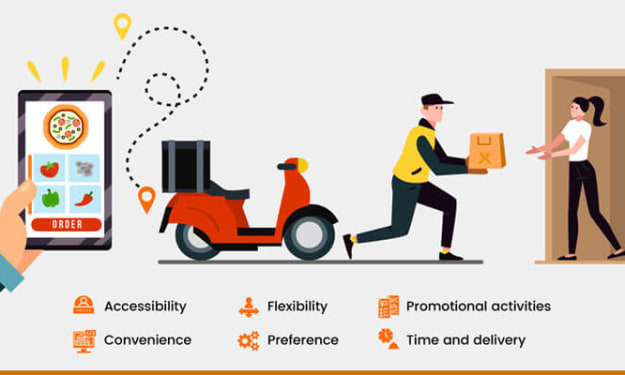
How a tech-enabled food delivery software or app excites modern day restaurateurs and users?
“Of all the blessings that technology has bestowed the world with, food delivery software and apps are one of the uniquely regarded ones and are truly worth relishing.”
By Dr. Shamael Zaheer Khan3 years ago in Feast
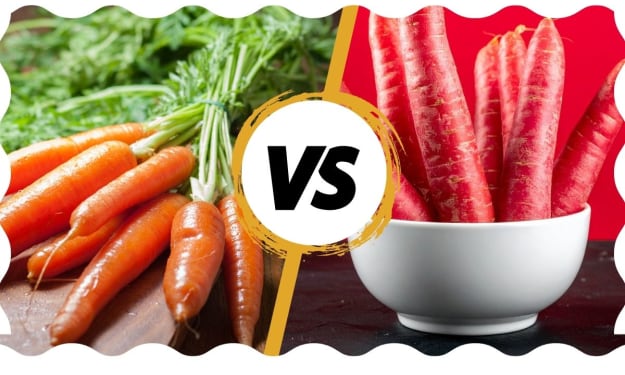
Orange vs Red Carrots
Carrots are among the most popular root vegetables around the world. They are widely appreciated for their natural sweetness, crunchy texture, and impressive nutritional value. While most people are familiar with orange carrots, many regions—especially in South Asia—also consume red carrots, particularly during winter. This often raises a common question: which carrot is better for health—orange or red?
By Stories Today5 days ago in Feast
Decaf Tea, The Ordinary Cup With Real Benefits
Decaf Tea, The Ordinary Cup With Real Benefits Many people think a cup of decaf tea is somehow weaker or pointless. That idea is not really true. The facts about decaffeinated tea show that it can be a very good choice, especially for people who want the comfort of tea without the strong effect of caffeine.
By George’s Girl 2026 a day ago in Feast


Comments
There are no comments for this story
Be the first to respond and start the conversation.