
Flexible Packaging Market Size & Forecast 2025–2033
How Sustainability, Innovation, and Global Consumer Shifts Are Reshaping the Future of Packaging


The global flexible packaging market, valued at USD 142.30 billion in 2024, stands at a transformative crossroads as industries and consumers push for more sustainable, efficient, and convenient packaging solutions. According to Renub Research, the market is expected to surge to USD 201.66 billion by 2033, expanding at a CAGR of 3.95% during the forecast period of 2025–2033. This steady growth is propelled by rising environmental consciousness, significant industry innovations, and widespread adoption across food, pharmaceutical, personal care, household, and industrial sectors.
Flexible packaging's remarkable blend of lightweight structure, durability, customizability, and resource efficiency positions it as a preferred option for brands seeking both performance and sustainability. Whether it's a resealable snack pouch, a pharmaceutical blister pack, or a high-barrier film for industrial use, flexible packaging is reshaping how products are preserved, transported, and consumed.
Flexible Packaging Market Overview
Flexible packaging refers to any packaging made from flexible or easily yielding materials such as:
Plastic
Paper
Aluminum foil
PET or specialty films
The core advantage lies in its ability to mold, bend, or conform to the product, enabling not only protection but also cost efficiency and design flexibility.
Why It's Growing So Quickly
Lightweight Advantage:
Flexible packaging uses significantly less material than rigid packaging formats, reducing shipping costs and environmental footprints.
Product Preservation:
High-barrier films extend shelf life for food and pharmaceuticals by protecting them from oxygen, moisture, and contamination.
Convenience and Portability:
Consumers prefer resealable, single-serve, and easy-to-carry options—making flexible packaging ideal for busy lifestyles.
Brand Customization:
Digital printing and new finishing technologies allow companies to experiment with vibrant, customizable, low-batch designs.
From snack foods and ready-to-eat meals to personal care, pharmaceuticals, household goods, and industrial applications, flexible packaging has become indispensable to today's supply chain.
Growth Drivers in the Flexible Packaging Market
1. Global Sustainability Push
Sustainability is no longer optional—it's a global mandate. Flexible packaging fits neatly into this narrative due to:
Reduced material usage
Lightweight transport
Lower carbon emissions
Less energy consumption during production
Manufacturers are now accelerating the shift to mono-material films, which enhance recyclability, and investing heavily in biodegradable and compostable packaging materials to comply with stringent environmental regulations.
Industry Example:
In November 2024, Mondi unveiled FlexStudios, a 2,300 m² innovation hub in Steinfeld, Germany. The facility enables customers to co-create sustainable packaging solutions using state-of-the-art technology. This initiative demonstrates how sustainability and innovation are now intertwined in market growth.
2. Expansion of the Food & Beverage Industry
The food and beverage sector is by far the largest consumer of flexible packaging. Its rapid expansion is driven by:
Rising demand for ready-to-eat meals
Growth of urban populations
Increasing popularity of snack foods
Boom in e-commerce grocery deliveries
Consumer preference for resealable and portion-controlled packaging
Flexible packaging offers critical advantages like freshness preservation and reduced spoilage—essential in a world that demands hygiene, convenience, and efficiency.
New Development:
In September 2024, Pakka introduced a line of compostable flexible packaging for the FMCG sector, emphasizing the growing demand for green alternatives.
3. Technological Advancements in Materials and Printing
Technology is revolutionizing how flexible packaging is made, used, and recycled.
Key innovations include:
Digital printing for hyper-customization
Smart packaging using QR codes and freshness indicators
High-barrier films that extend product life
Improved heat resistance and moisture protection
Lightweight laminates replacing traditional rigid packaging
These advancements meet rising expectations from healthcare, electronics, FMCG, and industrial customers who prioritize both functionality and sustainability.
Key Challenges in the Flexible Packaging Market
1. Raw Material Price Volatility
Flexible packaging relies heavily on materials like:
Plastics
Aluminum
Paper
Prices fluctuate due to:
Geopolitical tensions
Changing oil prices
Supply chain disruptions
Currency fluctuations
Shifting to renewable alternatives such as bioplastics is promising but often comes with high production costs. This leads to a constant balancing act between innovation, sustainability, and affordability.
2. Environmental Regulations and Recycling Barriers
Governments worldwide have implemented:
Single-use plastic bans
Extended Producer Responsibility (EPR)
Strict recycling mandates
While the industry is moving toward recyclable mono-material formats, challenges persist:
Lack of recycling infrastructure
Difficulty recycling multi-layer packaging
High production costs for biodegradable materials
Addressing these issues requires strong collaboration among governments, manufacturers, and waste management companies.
Segment-Specific Insights
Pharmaceutical Flexible Packaging Market
This segment is expanding rapidly due to:
Growth in global pharmaceutical production
Need for sterile, tamper-evident packaging
Rising demand for lightweight medical packaging
Increased healthcare infrastructure in Asia-Pacific and Latin America
Pouches, blisters, sachets, and high-barrier films dominate the market because they prevent contamination and maintain drug stability.
Paperboard Flexible Packaging Market
Paperboard is gaining traction due to:
High recyclability
Low environmental footprint
Consumer preference for paper-based alternatives
Government bans on non-recyclable plastics
Innovations include water-resistant coatings, advanced printability, and reinforced fiber materials. While paperboard may lack some barrier properties compared to plastic, its eco-friendly appeal continues to boost adoption.
Regional Market Insights
United States Flexible Packaging Market
The U.S. remains one of the largest markets, driven by:
Strong FMCG and pharmaceutical industries
Technological innovation in digital printing
High demand for sustainable packaging
Expanding e-commerce infrastructure
Example:
In April 2023, Cheer Pack North America introduced a new flexible spouted pouch for ScottsMiracle-Gro—marking a major shift in lawn-care packaging.
Germany Flexible Packaging Market
Germany leads Europe due to:
Rigorous environmental regulations
Strong manufacturing base
Government support for circular economy practices
Recent Development:
In September 2024, ProAmpac showcased new sustainable packaging innovations at FACHPACK, reinforcing Germany’s leadership in eco-friendly materials.
China Flexible Packaging Market
China remains a powerhouse due to:
Large consumer base
Expanding online retail
Strong food and beverage industry
Government push for green packaging
Recent example:
In December 2023, Mars China launched a mono-material Snickers packaging, a milestone in sustainable flexible packaging.
Brazil Flexible Packaging Market
Growth in Brazil is driven by:
Expanding food and agriculture economy
Urbanization
Rising demand for packaged goods
Example:
In March 2023, Heineken and Valgroup partnered to develop shrink films with 30% recycled resin—a major boost for sustainable packaging in beverages.
UAE Flexible Packaging Market
The UAE is rapidly emerging as a strong market, driven by:
Growing retail and food service sectors
Investments in sustainability
Rising consumer awareness
May 2024:
Huhtamaki consolidated its UAE operations, expanding its Ras Al Khaimah facility to scale flexible packaging production.
Market Segmentation
By Application
Food & Beverage
Personal Care
Pharmaceutical
Household Care
Industrial
Others
By Packaging Type
Stand-up Pouch
Films
Bag-in-Box
Others
By Material
Paperboard
Plastic
Aluminum Foil
PET Film
Others
Regional Coverage
North America: United States, Canada
Europe: Germany, France, UK, Italy, Spain, Belgium, Netherlands, Turkey
Asia-Pacific: China, India, Japan, Australia, South Korea, ASEAN markets
Latin America: Brazil, Mexico, Argentina
Middle East & Africa: UAE, Saudi Arabia, South Africa
Key Companies Covered
Amcor plc
Berry Global Group, Inc
Sealed Air
DS Smith Plc
Huhtamaki
Graphic Packaging Holding
(Each analyzed via: Overview, Key Persons, Recent Developments, Product Portfolio, Financial Insights)
Final Thoughts
The flexible packaging market is at an exciting turning point. As the world moves toward sustainable consumption patterns, brands are under increasing pressure to innovate responsibly. Flexible packaging—lighter, smarter, and more efficient—offers a compelling solution for nearly every industry.
With continuous advancements in recyclable materials, digital printing, and smart labeling, the future looks promising. By 2033, flexible packaging will not only dominate shelf space globally but also play a major role in shaping a circular economy.
If sustainability, convenience, and performance define the next era of packaging, flexible packaging is clearly the future.
About the Creator
Ben Tom
Ben Tom is a seasoned content writer with 12+ years of experience creating SEO-friendly blogs, web copy, and marketing content that boosts visibility, engages audiences, and drives results.
My Tous les Jours Trip
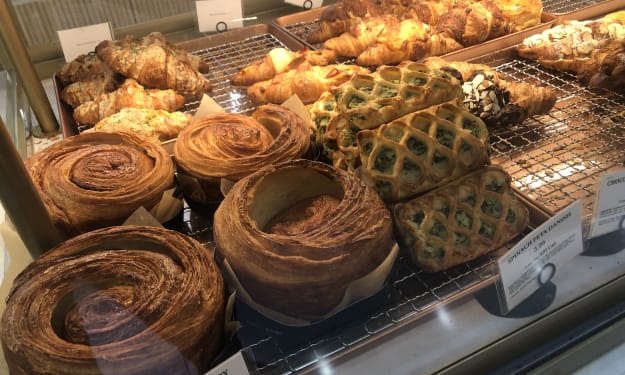
As someone who lives in a rural area, I don't get the chance to visit fancy restaurants or bakeries that often. So, when a friend told me about a French-Asian bakery that's less than an hour away, I knew I had to check it out and grab some pictures for social media. Tous les Jours ended up providing an immersive experience that went above and beyond my expectations--although I did leave with a few reservations.
By Kaitlin Shanks17 days ago in Feast
Organic Baby Food Market Companies Analysis (2025–2033)
Introduction: A New Standard for Infant Nutrition The global Organic Baby Food Market is undergoing a transformative shift as modern parents increasingly demand clean, transparent, and sustainable nutrition for their children. Organic baby food—made without synthetic fertilizers, artificial preservatives, genetically modified organisms (GMOs), or chemical pesticides—has moved from a niche category to a mainstream necessity. Rising awareness of food safety, health outcomes, and environmental sustainability is reshaping consumer behavior worldwide.
By Aaina Oberoia day ago in Feast


Comments
There are no comments for this story
Be the first to respond and start the conversation.