
First recorded ancient cheesecake (includes recipes)
Cheesecake Day: 30 July

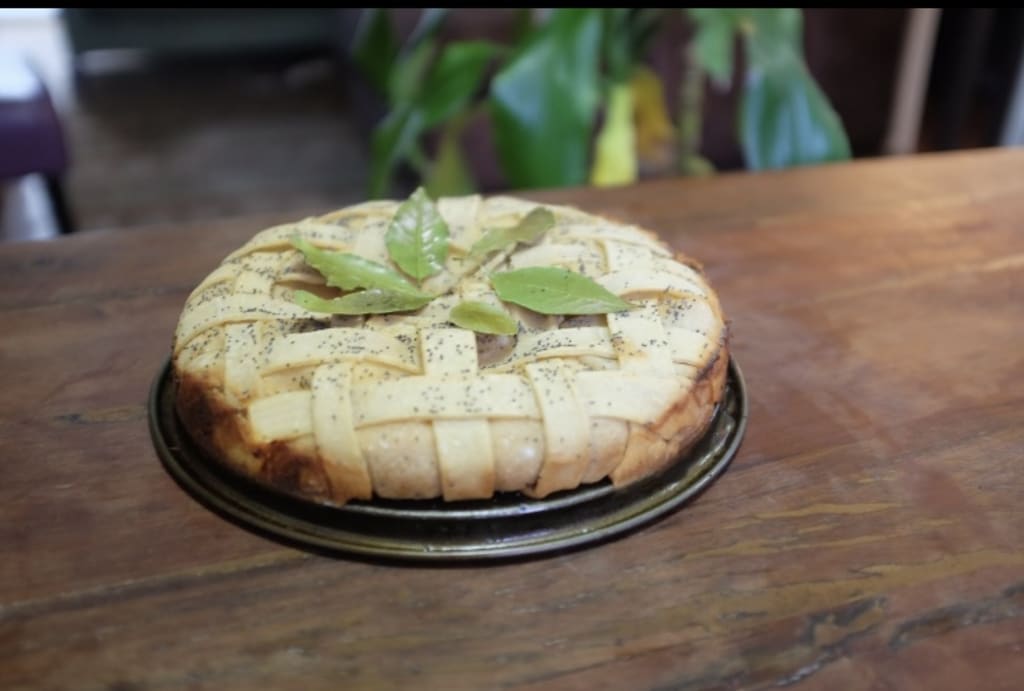
I love cakes. I love all sorts of cheesecakes, too, including ancient cheesecakes. When I learned about Cheesecake Day early this month, I experienced one of those happy moments that almost makes sense of everything else. All my worries and problems took a second place because now there was Cheesecake Day to brighten up my days. Thirty days of cheesecake. Thirty days of sweet thoughts. To celebrate Cheesecake Day on 30 July, I wrote a poem composed by two Senryūs, which you can read here below, in case you’ve missed it:
Now, only five days into Cheesecake Month — oh, you didn’t know? I just declared July Cheesecake Month, because why celebrate Cheesecake Day when you can have a whole month of cheesecake? I am sure you will agree.
Where was I? Yes, so five days into Cheesecake Month I was sitting enjoying my cup of Piccadilly Blend tea (I’ll tell you more about this tea later) when I suddenly wished I had a slice of strawberry cheesecake. Almost immediately I wondered who invented cheesecake and when.
Despite cheesecake being wrongly attributed to the Americans, perhaps due to the fame of the now classic New York cheesecake, I was certain that cheesecake was not an American invention.
First recorded cheesecake
The first recorded cheesecake dates all the way back to ancient Greece, around the 5th century BCE, over 2,500 years ago. Greek physician Aegimus even authored a manual on cheesecake-making (the plakountopoiikon), making it the earliest known written recipe of the delicious invention. On the island of Samos, archaelogical evidence in the form of cheese molds dating to around 2000 BCE and a simple cheese-honey-flour cake was reportedly baked on an earthen griddle. These cakes, known as plakous, were basic but hearty: made by pounding fresh cheese smooth, mixing in wheat flour and honey, baking until firm, and slicing once cooled.
Ancient Greek Cheesecake (simplified recipe)
I thought you might want to try to make this very special cheesecake to impress your friends and family when you celebrate Cheesecake Day any day of this Cheesecake Month. Here is a simplified recipe, easy enough to make any time.
Ingredients (approximate, for 1 small cake. You can double the amounts if you wish):
- 200 grams of fresh cheese (ricotta or farmer’s cheese)
- 50 grams wheat flour (or all-purpose)
- 50 grams of honey (adjust to taste)
- Optional: olive oil for greasing (it’s a Greek recipe, after all!)
Instructions:
1. Grease a small earthenware or oven-safe pan with olive oil
2. Mix the cheese, flour, and honey until you get a smooth batter
3. Spread evenly in the pan, cover (traditionally with a lid or clay), and bake at about 180 °C (350 °F) until set, that will be 30 to 40 minutes depending on your oven
4. Let cool fully, slice, enjoy with a cup of tea or coffee.
Pretty easy, right? Right. This ancient version of cheesecake is obviously less sweet and denser than modern cheesecakes, more akin to a sweet cheese bread or plakous. Healthier, without a doubt.
Evolution of cheesecake across time and space, or only time, for now:
Of course, Romans adopted the Greeks’ recipe and created their own version by adding eggs, and sometimes baked it under hot bricks. Recipes like libum, savillum, and placenta from Cato the Elder (2nd c. BCE) are the earliest surviving written records.
Libum: the Roman version of a Greek ancient cheesecake
Libum is an ancient Roman honey-cheese cake or bread, more like a sacrificial bun than our modern cheesecake. It was traditionally offered to household golds and enjoyed by everyday Romans, too. This is a simple, historical recipe, easy to replicate with basic ingredients. Use ricotta for convenience or or firmer cheese for authenticity. Cover whilst baking to simulate the testum effect which helps reain moisture.
Placenta: Ancient Roman honey cheesecake, ancient dessert (Historical Italian Cooking)
This ancient Roman placenta is a layered version of the cheesecake made by Cato the Elder with dough, cheese and honey, dough, stacked and backed, perhaps under a clay lid. Here is the recipe by Historical Italian Cooking following Cato’s ancient recipe:
Savillum: ancient Roman cheesecake
Savillum is an ancient Roman cheesecake, or more accurately, a dense, honey-sweetened cheese flan, originating from Cato the Elder’s De Agri Cultura (circa 160 BCE).
It’s a rustic dessert made from just a few simple ingredients: cheese (fresh sheep or goat cheese for the classical version, or blended ricotta for a modern substitute), flour, egg, honey, and topped with poppy seeds. Savillum is one of the earliest recorded cheesecake-style dishes; Cato listed it alongside others like Libum and Placenta. Savillum was often served at feasts or as sacred offerings, sometimes part of religius rituals.
Savillum is best eaten warm or lukewarm, straight from the baking dish with a spoon, just like the Romans did.
Here below is the recipe of Savillum following Cato’s ancient recipe. This video follows the ancient cooking method but you can bake this in the oven: 175ºC or 350ºF, baking between 45 to 60 minutes until set).
Invention of cream cheese and New York-style cheesecake
Medieval Europe saw cheesecakes evolve further, with pastry crusts, eggs instead of yeast, and richer flavourings first appearing in the 1390 cookbook Forme of Cury.
By the 18th century, cheesecakes became more dessert-like, spreading to America with settlers. It was then when in 1872, William Lawrence invented the cream cheese in New York, leading to the birth of the classic New York-style cheesecake.
Interesting, right? To end this historical take on cheesecake, let’s also try a modern version of a famous cheesecake.
New York-style cheesecake recipe

Ingredients (9-inch springform pan)
Crust
• 2 cups graham‑cracker crumbs
• ⅓ cup granulated sugar
• ½ cup (115 g) unsalted butter, melted
Filling
• 900 g (about 2 lb) full‑fat cream cheese, room temperature
• 300 g granulated sugar (approx 1½ cups)
• 3 Tbsp cornstarch or 2 Tbsp flour
• 4 large eggs + 1 egg yolk, room temperature
• 2 tsp vanilla extract + 2 tsp lemon juice
• 1 cup sour cream or ½ cup + ½ cup heavy cream (optional)
Method
1. Prep & Crust
• Preheat oven to 175 °C (350 °F).
• Mix crumbs, sugar, and melted butter; press into springform pan. Bake 10 min, then reduce temp to 160 °C (325 °F).
• Line the pan’s bottom and sides in foil to prepare for a water bath.
2. Filling
• Beat cream cheese on low until smooth; add sugar and cornstarch/flour.
• On low speed, mix in eggs (one at a time), vanilla, lemon juice, and sour cream/heavy cream.
• Avoid overmixing to prevent cracks
3. Bake
• Place cheesecake in a larger roast pan. Carefully pour boiling water halfway up the sides.
• Bake for ~1 hr 15 min or until edges are set and center jiggles slightly.
• Turn off oven, crack door, and cool in oven for an hour. Then cool to room temp before refrigerating overnight.
Tips for Perfection
• Always use room‑temp full‑fat cream cheese (Philadelphia recommended).
• Mix slowly, low speed, to avoid air bubbles.
• A water bath + slow cooling prevents cracking.
• If cracks appear, hide them with toppings like fruit compote, sour‑cream glaze, or fresh berries.
Optional Toppings
• Homemade strawberry sauce
• Sour cream sweetened with powdered sugar
• Whipped cream + fresh berries
• Warm salted caramel or hot fudge
Double crust New York-style cheesecake
Happy Cheesecake Day/Month!
About the Creator
Susan Fourtané
Susan Fourtané is a Science and Technology Journalist, a professional writer with over 18 years experience writing for global media and industry publications. She's a member of the ABSW, WFSJ, Society of Authors, and London Press Club.
Keep reading
More stories from Susan Fourtané and writers in Feast and other communities.
Tuna and pineapple wrap
Last summer, or was it two summers ago? Never mind. It was a summer when I decided I wanted to try and make up my own easy cooking recipes. I don’t have much time for cooking and I have even less patience for spending a few hours cooking something that will disappear from my plate in ten minutes or less.
By Susan Fourtané 10 months ago in Feast
My Tous les Jours Trip
As someone who lives in a rural area, I don't get the chance to visit fancy restaurants or bakeries that often. So, when a friend told me about a French-Asian bakery that's less than an hour away, I knew I had to check it out and grab some pictures for social media. Tous les Jours ended up providing an immersive experience that went above and beyond my expectations--although I did leave with a few reservations.
By Kaitlin Shanks16 days ago in Feast
15 Foods You Can Cook In An Air Fryer
Almost every household has an air fryer. They might not all be the same make, model, or size because there are so many available that fit every need. Just because almost every household has one doesn't mean that everyone is getting all the benefits from their air fryers.
By Margaret Minnicks7 days ago in Feast


Comments (8)
Oh God! Now I'm hungry. Sweet, sweet piece, Susan. 🍰
Very interesting. Not the biggest fan of cheese cake but never say never 😊❤️
Help, why is it called placenta? 🤣🤣🤣🤣🤣🤣 I wonder if they knew what placenta is hahahahahaha. I wish I could eat cheesecake now
Yum! Interesting too.
This was very interesting and now I am hungry
Wow cheesecake has been around so long! The New York style cheesecake recipe sounds delicious!
Never realized cheesecake was such an ancient dish!
Such an interesting history that I wasn't aware of.