
Discover the Vibrant Flavors of Nigerian Cuisine
Cultural experience explored through food

Discover the Vibrant Flavors of Nigerian Cuisine
Nigeria, the most populous country in Africa, has a rich and diverse food scene. It has drawn food lovers from all over. The mix of aromatic spices and cultural influences makes Nigerian food a unique adventure.
Food is deeply valued in Nigerian culture. It's seen as a way to connect and celebrate. Each area in Nigeria has its own food traditions. These are shaped by local ingredients, climate, and community customs.
Exploring Nigerian cuisine is exciting. You'll find a mix of tastes and textures that will amaze you. The stews, rich with palm oil, and the hearty rice dishes are highlights. They showcase Nigeria's rich cultural heritage.
Key Takeaways
Nigerian cuisine is a rich and diverse culinary landscape, offering a unique blend of flavors and cultural influences.
Each region of Nigeria has its own distinct culinary traditions, shaped by local ingredients and customs.
Nigerian food culture is deeply rooted in respect for the land and the social significance of shared meals.
Traditional Nigerian dishes are renowned for their aromatic spices, creamy stews, and hearty rice preparations.
Exploring Nigerian cuisine is a journey of discovery, where you'll uncover a world of vibrant and unforgettable flavors.
Introduction to Nigerian Food Culture and Heritage
Nigeria's food culture is rich and varied. It spans from the northern savannas to the southern coasts. Each region brings its own flavors and traditions to the table.
Regional Influences on Nigerian Cooking
Nigerian food is shaped by its regions. The north is influenced by Middle Eastern and Central Asian flavors. You'll find spices like cumin and chili peppers in many dishes.
The south, near the coast, loves seafood and tropical fruits. These ingredients add a unique taste to their meals.
In the east, the Igbo people use palm oil and local ingredients like yams. The west, home to the Yoruba, is famous for jollof rice and efo riro, a leafy stew.
The Social Significance of Nigerian Meals
Food is more than just sustenance in Nigeria. It brings people together. Meals are shared, with everyone enjoying a variety of dishes.
This communal dining strengthens family bonds. It shows the importance of sharing food and togetherness in Nigerian culture.
Region Culinary Influences Signature Dishes
Northern Nigeria Middle Eastern, Central Asian Suya (grilled skewered meat), miya kuka (a soup made with baobab leaves)
Southern Nigeria Coastal, tropical Eba (cassava grit) with egusi (melon seed) stew, jollof rice
Eastern Nigeria Palm oil-based, indigenous ingredients Ofe owerri (a vegetable soup), ukwa (a dish made from bread fruit)
Western Nigeria Yoruba culinary tradition Efo riro (a leafy vegetable stew), amala (a yam-based dish)
Nigerian food culture is a blend of history, diversity, and community. It showcases the country's varied flavors and traditions. From north to south, Nigerian cuisine is a journey of discovery and unity.
Essential Ingredients in Nigerian Cuisine
Nigerian cuisine is known for its bold flavors and wide range of ingredients. Each ingredient adds to the unique taste of traditional dishes. At the core of this culinary world are the staple crops that have fed the Nigerian people for ages.
Yam, a starchy tuber, is a key part of Nigerian food. It can be boiled, fried, or mashed. It's a main ingredient in dishes like pounded yam and yam porridge. Cassava, another staple, is used to make garri, a semolina-like product. It's enjoyed on its own or in many recipes.
Plantains are also vital in Nigerian cooking. They can be fried, boiled, or roasted. Plantains add a sweet and fulfilling taste to many meals. Palm oil, from the oil palm tree, is used for frying, sautéing, and adding flavor to dishes.
Yam: A versatile tuber used in dishes like pounded yam and yam porridge
Cassava: The source of the beloved garri, a semolina-like staple
Plantains: Contribute a sweet and satisfying element to traditional meals
Palm oil: A versatile ingredient used for frying, sautéing, and adding flavor
Traditional Nigerian Soups and Stews
Nigerian cuisine is known for its wide range of soups and stews. Each dish offers a unique taste experience. From the rich egusi soup to the spicy okra soup, these dishes are a big part of Nigeria's culture.
Popular Soup Varieties
Some of the most loved Nigerian soups are:
Egusi Soup - A hearty soup with ground melon seeds, leafy greens, and proteins.
Okra Soup - A tangy soup with okra, tomatoes, and meats or fish.
Pepper Soup - A spicy soup with meat, fish, or offal in a broth.
Traditional Stew Preparations
Nigeria's stew traditions are just as impressive as its soups. Some famous stews include:
Jollof Rice - A rice dish in a tomato-based stew with chicken or seafood.
Ewa Agoyin - A silky bean stew with onions, peppers, and smoked fish.
Efo Riro - A leafy green stew with spinach, palm oil, and proteins.
Serving Customs and Accompaniments
Nigerian soups and stews come with carbs like eba, fufu, or ogi. These foods balance the flavors and make the meal filling. The way these dishes are presented and served is also a big part of Nigerian culture.
Soup Variety Key Ingredients Typical Accompaniments
Egusi Soup Ground melon seeds, leafy greens, protein Eba, Fufu, Ogi
Okra Soup Fresh okra, tomatoes, protein Eba, Fufu, Ogi
Pepper Soup Spices, meat or fish Eba, Fufu, Ogi
"Nigerian soups and stews are not just a meal, but a celebration of our rich cultural heritage and the diverse flavors that make our cuisine so unique."
Rice Dishes and Main Course Specialties
Nigerian cuisine is known for its rich rice dishes. These dishes, like Jollof rice and fried rice, are not just tasty. They also hold a special place in Nigerian culture.
Jollof rice is a favorite in Nigeria. It's a mix of rice, tomatoes, onions, and spices. This dish is loved at family gatherings and celebrations.
Fried rice is another hit. It's made with stir-fried rice, veggies, and sometimes chicken or shrimp. The secret to great fried rice is in the flavors and how the ingredients are cooked.
Nigeria also has other main dishes like pounded yam and fufu. These are served with soups and stews. Together, they show the beauty of Nigerian food.
"The art of Nigerian cuisine lies in the perfect blending of spices, the slow simmering of ingredients, and the reverence for traditional cooking methods."
Nigerian Street Food Favorites
Nigeria is famous for its lively street food. It offers a taste of the country's rich food culture. You'll love the smell of suya, the crunch of akara, and the softness of puff puff.
Popular Street Snacks
Discover the variety of Nigerian street food:
Suya: Grilled, spicy meat skewers, often with roasted groundnuts.
Akara: Deep-fried fritters from black-eyed peas, with onions, chili, and spices.
Puff Puff: Crispy, golden doughnuts, hot and sweet.
Plantain Chips: Sweet, crunchy plantain slices, fried to perfection.
Chin Chin: Crunchy, fried dough squares, savory or sweet.
Where to Find the Best Street Food
Check out Nigeria's cities for amazing street food. Vendors are everywhere, from Lagos to Abuja and Kano. Dive into the flavors and culture of Nigeria.
Traditional Nigerian Spices and Seasonings
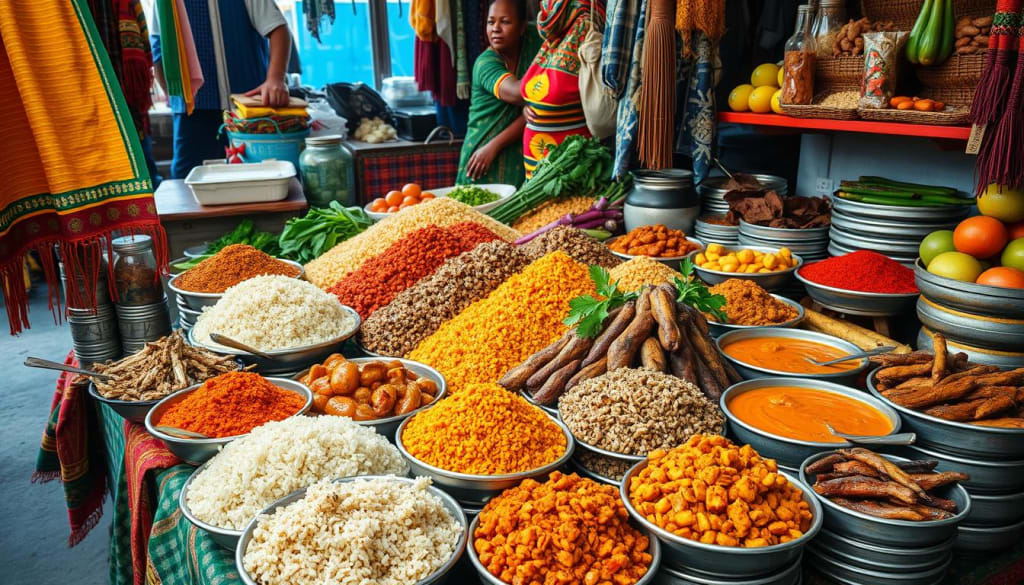
Nigerian food is known for its bold flavors. This is thanks to the many spices and seasonings used. From the hot scotch bonnet peppers to the rich locust beans, these ingredients add to the unique tastes and smells of Nigerian dishes.
The curry powder is a key Nigerian spice. It's a mix of spices that gives stews and rice a warm, complex taste. This seasoning is a must-have in many Nigerian homes, coming in both mild and hot versions.
Scotch Bonnet Peppers: Known for their fiery heat and fruity undertones, these peppers are a hallmark of Nigerian cuisine, adding a distinctive kick to soups, stews, and sauces.
Locust Beans: Also known as iru, these fermented seeds provide a savory, umami-rich flavor that is indispensable in many traditional Nigerian dishes.
Dried Crayfish: Dried and powdered, these crustaceans impart a delicate, seafood-like essence to various Nigerian stews and sauces.
Yoruba Spice Blends: Regional blends like iru and epa ata combine an array of spices, including chili peppers, ginger, and dried fish, to create complex flavor profiles.
Nigerian cooking also uses spices like ground cloves, nutmeg, and cinnamon. These add depth and warmth to both savory and sweet dishes. The way these spices work together makes Nigerian food so special and memorable.
Nigerian Spice Flavor Profile Common Uses
Scotch Bonnet Peppers Fiery, fruity Soups, stews, sauces
Locust Beans Savory, umami Stews, sauces
Curry Powder Warm, complex Stews, rice dishes
Dried Crayfish Seafood-like Stews, sauces
"The true essence of Nigerian cuisine lies in the harmonious blend of these vibrant spices and seasonings, which create a flavor experience that is both familiar and undeniably unique."
Nigerian Breakfast Traditions
Nigeria's food culture is vibrant and rich. It's celebrated in savory stews and rice dishes, and in its breakfast traditions. From bustling markets to cozy kitchens, breakfast is a cherished ritual. It shows the country's diverse influences and culinary heritage.
Morning Meal Customs
Breakfast in Nigeria is a time for families to come together. They share the day's first meal, reconnect, and discuss plans. They also enjoy the comforting flavors of traditional Nigerian dishes.
Popular Breakfast Dishes
Akara: These crispy fritters from black-eyed peas are a favorite. They're often served with pap, a porridge-like dish.
Pap: A thick porridge from fermented maize or millet, pap is enjoyed savory or sweet. It's a versatile breakfast option.
Tea Bread: Known as "agege bread," this soft, slightly sweet bread is a common breakfast item. It's often enjoyed with Nigerian morning tea.
These traditional dishes are deeply rooted in Nigerian history. They reflect the country's diverse regional specialties. From northern states' hearty pap and akara to southern regions' fragrant tea breads, each meal offers a unique glimpse into Nigerian food culture.
"The morning meal in Nigeria is not just about nourishment, but a cherished ritual. It brings families and communities together, celebrating flavors and traditions passed down for generations."
Celebratory Foods and Festival Dishes
Nigerian food is amazing every day, but it really comes alive during festivals. Christmas dishes are rich and savory, while Eid al-Fitr treats are sweet and fragrant. These foods show Nigeria's cultural heritage and festive spirit.
Jollof rice is a big hit at Nigerian events like weddings and Independence Day. It's made with tomatoes, peppers, and spices, giving it a vibrant color and flavor. Grilled chicken, fried plantains, and moin-moin (steamed bean cakes) often join it.
At Christmas, Nigerians enjoy rich dishes. _Peppersoup_, a spicy soup, is a favorite, often eaten with _eba_ (gari) or _fufu_. _Egusi_ soup, with ground melon seeds and greens, is another holiday favorite.
Eid al-Fitr brings sweet and savory treats. Moin-moin, steamed bean cakes, and _jollof rice_ are staples. _Chin-chin_ (fried pastries) and _puff-puff_ (doughnuts) add sweetness to the celebration.
Nigerian Festival Foods Christmas Dishes Eid al-Fitr Meals
Jollof rice Peppersoup Moin-moin
Grilled chicken Egusi soup Jollof rice
Fried plantains Eba (gari) Chin-chin
Moin-moin Fufu Puff-puff
These foods nourish both body and soul. They bring families and communities together, celebrating Nigeria's rich food heritage.
Nigerian Drinks and Beverages
Nigeria is known for its vibrant and diverse drinking culture. It has a range of traditional drinks, both non-alcoholic and alcoholic. These drinks, like zobo and palm wine, are not just tasty. They also hold deep cultural significance.
Traditional Non-Alcoholic Drinks
Zobo is a popular non-alcoholic drink in Nigeria. It's made from the dried calyces of the Roselle plant. Zobo tastes tart and slightly sweet, making it refreshing and possibly good for your health.
Chapman is another favorite. It's a fruity drink that mixes citrus, ginger, and aromatic bitters. It's vibrant and loved for its unique taste.
Local Alcoholic Beverages
Palm wine is the king of Nigerian alcoholic drinks. It's a lightly fermented sap from the raffia or oil palm tree. People love it for its taste, which can be sweet or tart, and for its role in social gatherings.
Drink Description Cultural Significance
Zobo A deep red, tart and slightly sweet non-alcoholic beverage made from dried Roselle calyces Often enjoyed as a refreshing thirst-quencher and for its potential health benefits
Chapman A vibrant and fruity non-alcoholic drink that combines the flavors of citrus, ginger, and aromatic bitters A popular and refreshing choice for social gatherings and events
Palm Wine A lightly fermented sap, tapped from the raffia or oil palm tree, with a range of flavors from slightly sweet to pleasantly tart A beloved traditional beverage that is often served at social gatherings and cultural events
These traditional Nigerian drinks are more than just tasty. They are key to the country's rich cultural heritage. From zobo to palm wine, these drinks are a big part of Nigerian life. They delight both locals and visitors.
Modern Interpretations of Nigerian Cuisine
Nigerian cuisine is changing fast. Contemporary chefs and the Nigerian diaspora are mixing traditional flavors with global tastes. This mix has led to new and exciting dishes that honor Nigerian heritage and modern tastes.
In places like Lagos, New York, and London, Nigerian fusion food is becoming popular. Nigerian chefs are updating old recipes, using new ingredients, and trying out different cooking methods. This has created a vibrant and varied food scene.
This change in food culture is more than just keeping old recipes alive. It's about celebrating Nigerian food's past while exploring new possibilities. The diaspora community, with its global views, is also key in shaping Nigerian food's future. They blend old traditions with new ideas.
FAQ
What are the key ingredients in Nigerian cuisine?
Nigerian food often includes yams, cassava, and plantains. It also features palm oil and a mix of spices and seasonings. These include scotch bonnet peppers, locust beans, and curry powder.
What are some of the most popular Nigerian soups and stews?
Nigerian soups like egusi, okra, and pepper soup are favorites. Traditional stews, such as Jollof rice and pounded yam, are also loved.
How important is the social aspect of meals in Nigerian culture?
Food is key in Nigerian social life and family. Sharing meals together is a big part of their culture.
What are some of the traditional Nigerian breakfast dishes?
Nigerian breakfasts often include akara (fried bean fritters), pap (a porridge), and tea bread. Each has its own way of being made.
Can you describe the evolution of Nigerian cuisine in modern times?
Nigerian food is always changing. Modern chefs and the diaspora community mix global tastes with traditional flavors. They keep the cultural essence alive.
What are some of the unique Nigerian street food favorites?
Nigerian street food is loved for suya (grilled meat), akara (fried bean fritters), and puff puff (fried dough). You can find these in lively markets and stalls.
How do Nigerian dishes and cooking techniques vary across different regions?
Nigeria's regions have their own food traditions. Ingredients, cooking methods, and tastes vary. This shows the cultural and environmental differences in each area.
What are some of the traditional spices and seasonings used in Nigerian cuisine?
Nigerian food uses many spices and seasonings. Scotch bonnet peppers, locust beans, and curry powder are key. They add flavor to traditional dishes.
What are some of the special dishes prepared for Nigerian festivals and celebrations?
Nigerian festivals have unique dishes. For example, special Christmas meals and Eid al-Fitr foods are made with traditional methods. These dishes are deeply meaningful.
What are some of the popular Nigerian alcoholic and non-alcoholic beverages?
Nigerian drinks include zobo (a hibiscus drink) and alcoholic options like palm wine. These drinks are important in Nigerian culture and enjoyed nationwide.
About the Creator
Keep reading
More stories from Maryam Musami and writers in Feast and other communities.
Master the Art of Radiant Skin: Enroll in Our Comprehensive Facial Skincare Course
Introduction In today’s fast-paced world, self-care has become more important than ever. People are constantly searching for ways to maintain healthy, glowing skin, making skincare a booming industry. Whether you’re an aspiring esthetician, a beauty enthusiast, or someone looking to enhance your skincare routine, our Facial Skincare Course is the perfect opportunity to learn the secrets to radiant skin.
By Maryam Musamiabout a year ago in Lifehack
My Tous les Jours Trip
As someone who lives in a rural area, I don't get the chance to visit fancy restaurants or bakeries that often. So, when a friend told me about a French-Asian bakery that's less than an hour away, I knew I had to check it out and grab some pictures for social media. Tous les Jours ended up providing an immersive experience that went above and beyond my expectations--although I did leave with a few reservations.
By Kaitlin Shanks23 days ago in Feast
Guide to Choosing the Best Essential Kitchen Knives
Have you ever stood at the counter, staring at a pile of vegetables, wondering which knife would actually make the job easier? Many people assume they need a massive knife block filled with matching blades to cook well, but that’s rarely true.
By Chris Jones5 days ago in Feast


Comments
There are no comments for this story
Be the first to respond and start the conversation.