
Australia Rice Market Size & Forecast 2025–2033
Rising Demand for Premium, Organic, and Multicultural Rice Varieties Shapes the Future of Australia’s Rice Industry

Australia Rice Market Overview
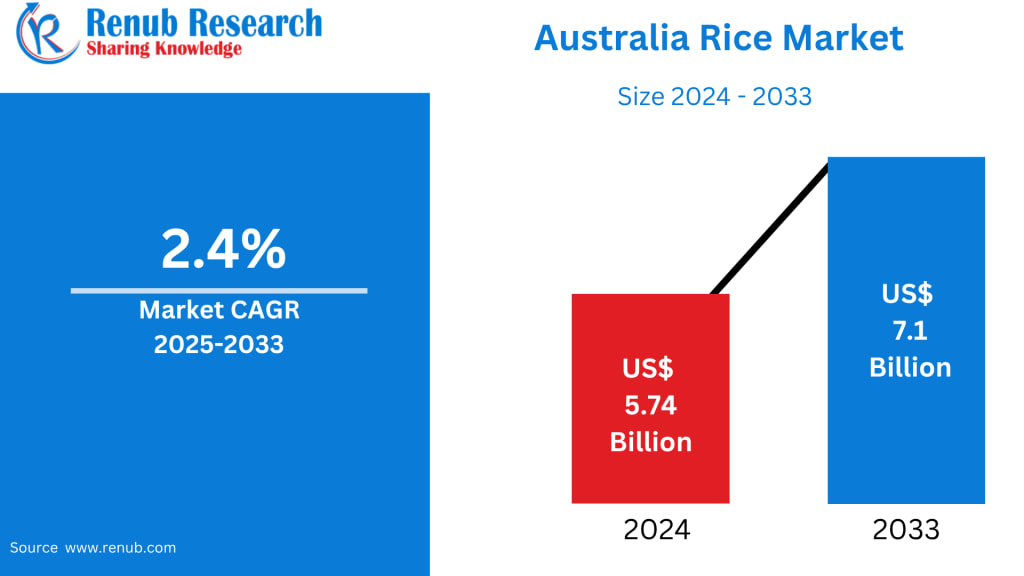
The Australia Rice Market is projected to grow from US$ 5.74 billion in 2024 to US$ 7.1 billion by 2033, expanding at a CAGR of 2.4% during the forecast period 2025–2033, according to Renub Research. This steady growth reflects evolving dietary habits, increasing multicultural influences, and rising demand for premium, organic, and specialty rice varieties across the country.
Rice has transformed from a supplementary grain into a mainstream staple within Australian households. Although Australia does not share the long-standing rice consumption traditions of Asia, demographic shifts, global food exposure, and changing consumer lifestyles have significantly altered domestic demand patterns. Rice now features prominently in home cooking, restaurants, foodservice outlets, and ready-to-eat meal formats nationwide.
Australia Rice Market Outlook
Rice consumption in Australia mirrors the country’s multicultural identity. Migration from Asia, the Middle East, and Africa has reshaped food preferences, making rice a core ingredient in daily meals. Popular global cuisines—Chinese stir-fries, Thai curries, Indian biryanis, Middle Eastern pilafs, and Japanese sushi—have embedded rice deeply into Australia’s food culture.
Domestic rice production is concentrated mainly in New South Wales’ Riverina region, particularly around Leeton and Deniliquin. Australian-grown rice supports both domestic consumption and export markets across Asia and the Pacific. Consumers have access to a wide portfolio of rice varieties, including:
Medium- and long-grain white rice
Aromatic jasmine and basmati
Nutritious brown and whole-grain rice
Specialty rice such as Arborio, sushi rice, and red cargo rice
As health awareness rises, Australian consumers increasingly prefer whole-grain, low-GI, organic, and sustainably produced rice. Its affordability, long shelf life, and versatility continue to make rice a pantry essential across income groups.
Key Growth Drivers of the Australia Rice Market
Growing Multicultural Population and Expanding Culinary Preferences
Australia’s multicultural population remains the strongest driver of rice demand. Communities from Asia, Africa, and the Middle East rely heavily on rice as a dietary staple, boosting consistent consumption across households and foodservice channels. This has increased demand not only for standard white rice but also for specialty varieties such as basmati, jasmine, Arborio, and sushi rice.
Supermarkets and specialty retailers have responded by expanding ethnic food aisles and introducing imported and premium rice options. In 2022, Rice Research Australia collaborated with AgriTech companies to deploy precision farming tools, helping growers monitor crop health, optimize water use, and improve yields while minimizing environmental impact.
Health and Wellness Trends Fueling Premium Rice Consumption
Health-conscious Australians are increasingly choosing brown, black, red, and organic rice varieties due to their higher fiber content, essential minerals, and lower glycemic index compared to refined white rice. These varieties are especially popular among athletes, diabetics, and consumers following clean-label, plant-based, vegan, or gluten-free diets.
Rice’s role as a naturally gluten-free carbohydrate has further strengthened its appeal. In 2023, SunRice launched a national marketing campaign highlighting the nutritional benefits and sustainability of Australian-grown rice, aiming to strengthen local consumption and brand trust.
Expansion of Retail and E-Commerce Distribution Channels
Australia’s advanced retail infrastructure has made rice widely accessible. Supermarkets, health food stores, ethnic grocers, and bulk retailers offer a diverse selection of domestic and imported rice. Meanwhile, e-commerce platforms enable easy price comparison, product discovery, and repeat purchases.
Retailers are investing in eco-friendly packaging, in-store promotions, and premium product placements to drive sales. In September 2023, Taj Foods Australia introduced new specialty jasmine and basmati rice variants, targeting consumers seeking authentic flavors and high-quality ingredients.
Australia Rice Market Challenges
Domestic Production Constraints and Climate Risks
Australian rice farming relies heavily on irrigation, making it vulnerable to droughts and water scarcity—particularly in New South Wales. Climate variability directly impacts crop yields, leading to supply fluctuations and price volatility. Reduced domestic output also increases reliance on imports, exposing the market to global price shifts and supply chain disruptions.
Intensifying Competition from Imported Rice
Imported rice from countries such as Thailand, India, and Vietnam presents strong competition due to lower production costs and wider specialty offerings. Imported brands often attract price-sensitive consumers and those loyal to traditional rice origins, limiting growth opportunities for local producers despite rising domestic demand.
Segment Analysis of the Australia Rice Market
Australia Regular Rice Market
Regular white rice remains a household staple due to its affordability, versatility, and familiarity. Despite competition from premium varieties, it maintains steady demand across households and foodservice establishments.
Australia Arborio Rice Market
Arborio rice is gaining popularity driven by the rise of gourmet cooking and European cuisines. Its creamy texture makes it ideal for risotto and fusion dishes, supported by cooking shows, food blogs, and restaurant demand.
Australia Brown Rice Market
Brown rice continues to see rising demand due to its perceived health benefits. Retailers increasingly position it alongside organic and whole-grain foods, strengthening its image as a nutritious daily staple.
Australia Long Grain Rice Market
Long grain rice, including basmati and jasmine, dominates multicultural cooking. Its consistent texture and adaptability make it a preferred choice for stir-fries, pilafs, and salads across home and commercial kitchens.
Australia Offline Rice Market
Offline channels—supermarkets, grocery stores, and specialty outlets—remain dominant. Major retailers like Woolworths, Coles, and IGA provide extensive rice assortments, while ethnic stores cater to niche preferences. In-store trust and promotional offers continue to drive offline sales.
Australia Rice Food Market
Value-added rice products such as ready-to-eat pouches, rice snacks, cakes, and breakfast foods are growing rapidly. Convenience, portion control, and health positioning attract busy urban consumers and gluten-free households.
Regional Insights
Victoria Rice Market
Victoria, particularly Melbourne, drives rice consumption through its diverse population and vibrant foodservice sector. Demand spans brown, organic, Arborio, and aromatic rice varieties.
Queensland Rice Market
Queensland’s growing population, tourism industry, and hospitality sector support strong demand for both standard and premium rice varieties.
Tasmania Rice Market
Although smaller in size, Tasmania emphasizes premium, organic, and sustainably sourced rice, aligning with its quality-focused food culture.
Market Segmentation Overview
By Product Type
Regular
Aromatic
By Type
Red Rice
Arborio Rice
Black Rice
Grain Fragrance Rice
Brown Rice
Rosematta Rice
Parboiled Rice
Sushi Rice
Others
By Grain Size
Long Grain
Medium Grain
Short Grain
By Distribution Channel
Online
Offline
By Application
Food
Feed
Others
By State
New South Wales
Victoria
Queensland
Western Australia
South Australia
Australian Capital Territory
Tasmania
Northern Territory
Key Players Analysis
The Australia rice market features a mix of global leaders and regional specialists. Each company is evaluated across five viewpoints: overview, key personnel, recent developments, SWOT analysis, and revenue performance.
KRBL Limited
LT Foods Ltd
Kohinoor Foods
Thai Wah
Archer Daniels Midland
Tate & Lyle
General Mills
MGP Limited
Final Thoughts
The Australia Rice Market is positioned for stable, long-term growth as consumer preferences evolve toward healthier, premium, and culturally diverse food options. While climate risks and import competition present ongoing challenges, innovation in farming, branding, and value-added rice products continues to strengthen market resilience.
With rising health awareness, expanding multicultural cuisine adoption, and strong retail penetration, rice will remain a vital component of Australia’s food economy through 2033 and beyond.
About the Creator
Marthan Sir
Educator with 30+ years of teaching experience | Passionate about sharing knowledge, life lessons & insights | Writing to inspire, inform, and empower readers.
Keep reading
More stories from Marthan Sir and writers in Feast and other communities.
Australia Vegan Ice Cream Market Size & Forecast 2025–2033
Australia Vegan Ice Cream Market Overview The Australia Vegan Ice Cream Market is undergoing a steady and meaningful transformation as plant-based eating habits gain traction across the country. According to Renub Research, the market is expected to grow from US$ 13.86 million in 2024 to US$ 20.3 million by 2033, expanding at a CAGR of 4.33% during 2025–2033.
By Marthan Sir17 days ago in Feast
My Tous les Jours Trip
As someone who lives in a rural area, I don't get the chance to visit fancy restaurants or bakeries that often. So, when a friend told me about a French-Asian bakery that's less than an hour away, I knew I had to check it out and grab some pictures for social media. Tous les Jours ended up providing an immersive experience that went above and beyond my expectations--although I did leave with a few reservations.
By Kaitlin Shanks16 days ago in Feast
New Ways to Save on the Grocery Budget
With rising grocery prices and stagnant wages, it is time for many people to return to some old tried and true ways of saving money on groceries. While shopping sales and clipping coupons are great choices, there are some other ways that can help you to stretch your grocery budget.
By Brandi Brown2 days ago in Feast




Comments
There are no comments for this story
Be the first to respond and start the conversation.