
Australia Pork Meat Market Size & Forecast 2025–2033: Rising Demand, Innovation, and Shifting Food Culture Drive Growth
How Australia’s Pork Industry Is Evolving Through Innovation, Multicultural Influence, and Changing Protein Preferences

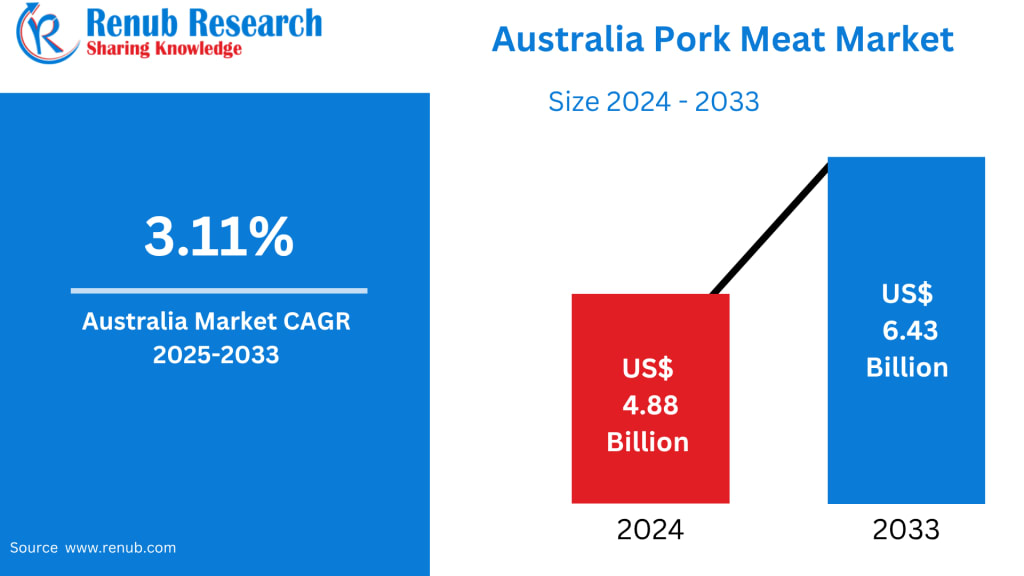
The Australia Pork Meat Market is entering a new phase of stable yet meaningful growth, driven by evolving consumer preferences and modern supply chain advancements. According to Renub Research, the market is projected to reach US$ 6.43 billion by 2033, rising from US$ 4.88 billion in 2024, with a CAGR of 3.11% between 2025 and 2033.
This momentum reflects shifting dietary habits, the rise of multicultural cuisines, and expanding availability of high-quality chilled and processed pork products across retail and foodservice channels.
As Australia continues integrating global food cultures into its mainstream eating habits, pork remains one of the most versatile and fastest-growing proteins in the national diet.
Australia Pork Meat Market Outlook
Pork is among the world’s most widely consumed meats, and Australia has embraced it with exceptional enthusiasm. Known for its rich taste, versatility, and nutritional value, pork serves as a foundational ingredient across everyday home cooking, restaurant menus, and multicultural food experiences.
Australian consumers typically choose pork cuts such as loin, shoulder, belly, leg, and an array of processed items including ham, bacon, sausages, and cured meats. Pork’s appeal is strengthened by its nutritional profile—it is high in protein, vitamin B1 (thiamine), zinc, and iron, making it a wholesome alternative to other red meats.
In a country where barbecues, roasts, stir-fries, and fusion cuisine form essential culinary traditions, pork fits seamlessly. Its popularity has further grown with Australia’s vibrant Asian and European migrant communities, who bring techniques and recipes that place pork at the center of their cooking.
Growing health awareness, increased culinary exploration, and strong food safety standards have all positioned domestically raised pork as both safe and desirable. Australian pork producers also maintain high animal welfare and transparency standards, enhancing consumer confidence.
Retailers, restaurants, and foodservice operators have expanded their offerings to include ready-to-cook marinated pork, premium cuts, and innovative processed products. As value-added offerings grow, pork remains an important part of Australia’s evolving food landscape.
Key Growth Drivers in the Australia Pork Meat Market
1. Rising Preference for High-Protein Diets
Australian consumers have become increasingly health-conscious, gravitating toward diets that emphasize lean protein, low fat, and essential nutrients. Pork fits the profile of a nutrient-packed protein source, making it a popular choice among fitness-focused individuals and families.
Government dietary recommendations encouraging protein diversity have also supported this trend, positioning pork as a balanced alternative to beef and poultry.
According to the USDA Foreign Agricultural Service, Australia’s pork consumption is projected to reach 660,000 metric tons (carcass weight equivalent) by 2025, rising from 649,000 MT in 2024—a record level that illustrates growing demand.
2. Expanding Multicultural Influences on Australian Cuisine
One of the most significant drivers of pork consumption in Australia is its deepening multicultural food identity. Asian, European, and Middle Eastern communities have introduced dishes where pork forms the culinary backbone.
From dumplings and bao buns to pork schnitzels, crackling roasts, and char siu, pork is now embedded in Australia’s dining culture.
A notable milestone in 2024 was the launch of Magic Valley’s lab-grown pork bao buns at a tasting event in Brunswick, reflecting Australia’s emerging focus on food technology and culinary innovation. These cultural and technological influences widen the perception and acceptance of pork across diverse consumer segments.
3. Innovation in Processed, Ready-to-Cook, and Value-Added Pork
Australian consumers value convenience, and the pork industry has responded with:
Ready-to-cook marinated products
Premium sausages and bacon ranges
Improved packaging technologies
Longer shelf-life chilled and frozen options
Innovation is also accelerating through the cultivated meat sector. In February 2025, Magic Valley received A$100,000 from the federal government’s Industry Growth Program to commercialize cultured pork and lamb production. This investment signals the future of sustainable protein options within Australia’s pork ecosystem.
Together, these innovations help stimulate demand across retail, online platforms, and foodservice.
Challenges Limiting Market Acceleration
1. Import Competition and Price Sensitivity
Despite strong domestic production, Australia faces competition from imported frozen pork, particularly from nations offering lower cost cuts. These imports pose challenges including:
Pressure on local producer margins
Price-sensitive consumers opting for cheaper alternatives
Feed cost inflation affecting domestic pricing stability
Such dynamics make it difficult for Australian pork to maintain premium price points in the face of global trade fluctuations.
2. Environmental and Animal Welfare Pressures
As Australian consumers become more eco-conscious, issues surrounding carbon footprint, ethical farming, and sustainable production practices come under scrutiny.
Retailers and consumers increasingly demand:
Higher welfare standards
Supply chain transparency
Lower-impact farming practices
While necessary, these demands increase production costs, complicating operational decisions for farmers and processors.
Product Category Insights
Chilled Pork Meat Market
Chilled pork dominates household and restaurant purchases due to its:
Freshness
High quality
Improved packaging
Strengthened cold-chain logistics
Supermarkets and butcher shops continue to expand chilled offerings, making it the preferred category for daily cooking.
Frozen Pork Meat Market
Frozen pork appeals to bulk buyers and consumers in regional areas. It offers:
Longer shelf life
Affordability
Versatility for processed food manufacturing
Improvements in freezing techniques have enhanced texture and flavor retention, boosting its acceptance nationwide.
Application Insights
Household Consumption
Australian households regularly use pork for:
Barbecues
Roasts
Stir-fries
Meal prep
Growing awareness of its nutritional value and versatility has strengthened its place in weekly meal planning. Media cooking shows and recipe content also contribute to rising home consumption.
Commercial Sector
Restaurants, cafes, quick-service chains, and catering services heavily rely on pork for multicultural and contemporary menus. Convenient processed and value-added pork products are particularly popular in foodservice due to ease of preparation and consistency.
Distribution Channel Analysis
Supermarkets & Hypermarkets (Largest Channel)
They dominate the market with wide product availability, competitive pricing, and strong cold-chain support.
Specialty Stores & Butchers
Catering to quality-focused consumers, they offer:
Premium cuts
Organic and ethically sourced pork
Custom carving services
Online Retail
The pandemic accelerated online meat shopping, and convenience keeps it growing. Subscription boxes and direct-from-farm delivery models are also gaining traction.
Others
Includes farmers’ markets, independent grocers, and gourmet retailers.
Regional Insights: Pork Consumption Across Australian States
New South Wales (NSW)
The largest consumer market due to:
High population
Diverse multicultural communities
Extensive retail and hospitality sectors
Victoria
A major producer and consumer, driven by:
Melbourne’s dynamic food culture
Strong supply chain infrastructure
Demand for ethically raised pork
South Australia
Home to a strong agri-business ecosystem, the state emphasizes:
Local production
High-quality meat
Regional retail and specialty markets
Tasmania
Known for boutique farming and clean agricultural practices, Tasmania’s consumers favor:
Traceable
Ethically raised
Premium-quality pork
Market Segmentation Overview
By Product
Chilled
Frozen
By Application
Household
Commercial
By Distribution Channel
Supermarkets & Hypermarkets
Specialty Stores
Online
Others
Top States
New South Wales
Victoria
Queensland
Western Australia
South Australia
Australian Capital Territory
Tasmania
Northern Territory
Key Companies Covered (with 5 Viewpoints Each)
JBS S.A.
Tyson Foods
Pilgrim’s Pride Corporation
Danish Crown Group
Vion Food Group
WH Group
Hormel Foods Corporation
Muyuan Foods
Final Thoughts: The Future of Australia’s Pork Meat Market
The Australia Pork Meat Market is poised for consistent growth through 2033, driven by:
Heightened demand for protein-rich diets
Expanding multicultural influence
Rise in value-added pork innovations
Advancements in both traditional and cultured meat technologies
While challenges such as import competition and sustainability pressures persist, Australia’s pork sector is adapting through transparency, quality enhancement, and product diversification.
With strong consumer demand, retail evolution, and government-backed innovation, pork will remain a vital protein in Australian households and foodservice, shaping the future of the country’s dynamic food economy.
About the Creator
Marthan Sir
Educator with 30+ years of teaching experience | Passionate about sharing knowledge, life lessons & insights | Writing to inspire, inform, and empower readers.
Keep reading
More stories from Marthan Sir and writers in Feast and other communities.
United States Natural Food Colors Market Size and Forecast 2025–2033
The United States Natural Food Colors Market is projected to reach US$ 2.45 billion by 2033, rising from US$ 1.24 billion in 2024, and growing at a CAGR of 7.87% from 2025 to 2033, according to Renub Research. This strong upward trend is fueled by the American food and beverage industry’s rapid transition toward plant-based, clean-label, and additive-free formulations, growing consumer distrust of artificial dyes, and stricter regulatory scrutiny.
By Marthan Sirabout a month ago in Feast
My Tous les Jours Trip
As someone who lives in a rural area, I don't get the chance to visit fancy restaurants or bakeries that often. So, when a friend told me about a French-Asian bakery that's less than an hour away, I knew I had to check it out and grab some pictures for social media. Tous les Jours ended up providing an immersive experience that went above and beyond my expectations--although I did leave with a few reservations.
By Kaitlin Shanks24 days ago in Feast
Global Lobster Market Size & Forecast 2025–2033
Introduction: From Coastal Delicacy to Global Commodity Once considered a regional delicacy enjoyed primarily along rugged coastlines, lobster has evolved into a symbol of premium dining across the globe. From high-end restaurants in Europe and North America to luxury hotel menus in Asia and the Middle East, lobster has secured its place as one of the most sought-after seafood products worldwide. What was once a niche culinary offering has become a dynamic global market shaped by changing consumer preferences, expanding international trade, and increasing attention to sustainability.
By Renub Research6 days ago in Feast




Comments
There are no comments for this story
Be the first to respond and start the conversation.