
Australia Pork Meat Market Size & Forecast 2025–2033
Protein preferences, processing innovation, and evolving retail channels reshape Australia’s pork industry

Australia Pork Meat Market Outlook
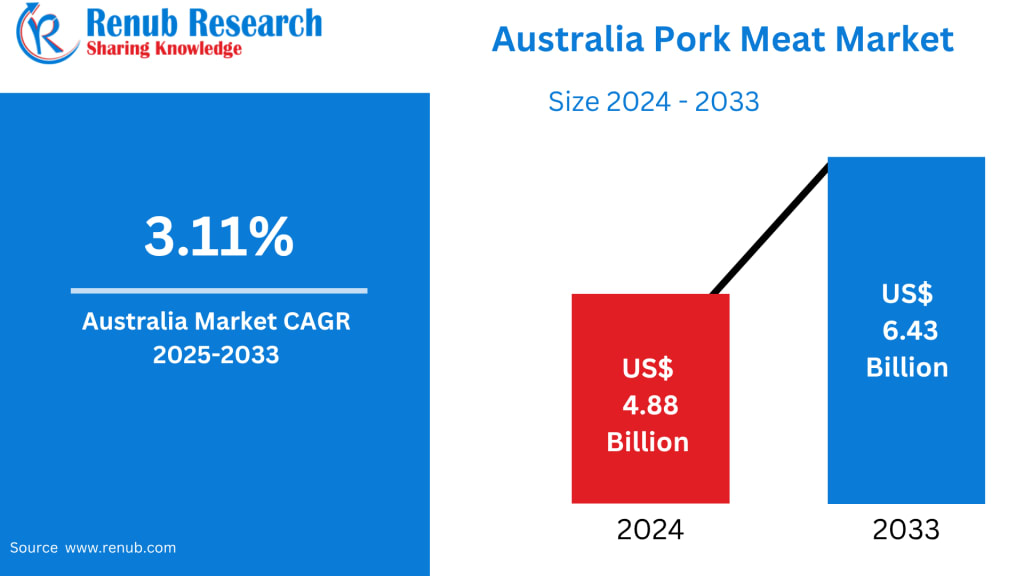
The Australia Pork Meat Market is projected to reach US$ 6.43 billion by 2033, rising from US$ 4.88 billion in 2024, expanding at a CAGR of 3.11% from 2025 to 2033. This steady growth reflects the increasing preference for protein-rich diets, ongoing innovations in meat processing and packaging, and the rising acceptance of pork across foodservice and retail channels in both urban and regional Australia.
Pork remains one of the most widely consumed meats globally, and its position in Australia’s food ecosystem continues to strengthen. Domesticated pig meat is valued for its versatility, affordability compared to some red meats, and suitability across cuisines. Pork is sold fresh and processed into popular products such as bacon, ham, sausages, and cured meats, while premium cuts like loin, shoulder, belly, and leg maintain strong household and restaurant demand.
In Australia, pork enjoys a favorable reputation due to strict food safety regulations, robust animal welfare standards, and high-quality domestic production systems. It is recognized as an excellent source of high-quality protein, vitamin B1 (thiamine), zinc, and iron. These nutritional benefits align well with changing dietary patterns, especially among health-conscious consumers seeking balanced protein intake.
Australia’s multicultural population has also played a pivotal role in shaping pork consumption trends. Asian and European cuisines—where pork is a staple—are widely embraced in Australian households and foodservice establishments. From stir-fries and dumplings to roasts and barbecues, pork fits seamlessly into everyday meals as well as premium dining experiences.
Retailers, supermarkets, butchers, and restaurants have responded to this growing appetite by expanding product variety, investing in value-added offerings, and improving cold-chain and e-commerce capabilities. As a result, pork continues to be an integral part of Australia’s evolving meat consumption landscape.
Growth Drivers in the Australia Pork Meat Market
Increasing Demand for High-Protein Diets
Australian consumers are increasingly prioritizing high-protein diets to support fitness, weight management, and overall wellness. Pork, often lean and nutrient-dense when consumed in appropriate cuts, is increasingly viewed as a healthy protein source alongside poultry, seafood, and beef.
Younger demographics and working professionals, in particular, are incorporating pork into meal plans due to its versatility and cooking convenience. Government-backed dietary guidance encouraging protein diversity has further strengthened pork’s position as an attractive alternative to traditional red meats.
According to international agricultural estimates, pork consumption in Australia is projected to reach approximately 660,000 metric tons (carcass weight equivalent) in 2025, up from an estimated 649,000 metric tons in 2024, underscoring sustained demand momentum.
Growing Influence of Multicultural Cuisine
Australia’s multicultural food culture is a major structural driver of pork demand. Asian cuisines such as Chinese, Vietnamese, Korean, and Filipino cooking rely heavily on pork, while European cuisines also feature pork prominently in cured and roasted forms.
As multicultural households and restaurants continue to grow, supermarkets and specialty stores have expanded their offerings of ethnic cuts, marinades, and ready-to-cook pork products. This diversification has broadened pork’s consumer base beyond traditional consumption patterns.
Innovation is also emerging at the intersection of food culture and technology. For instance, Australian food technology companies are exploring alternative protein formats, including cultured pork, reflecting long-term experimentation alongside conventional pork production.
Expansion of Processed and Value-Added Pork Products
Convenience remains a powerful demand driver in Australia’s food market. Ready-to-cook, pre-marinated, sliced, and portion-controlled pork products are gaining popularity among time-constrained consumers. These products reduce preparation time while delivering consistent taste and quality.
Advancements in meat processing, packaging technology, and cold-chain logistics have improved shelf life and product safety for both chilled and frozen pork. Attractive branding and clear labeling around origin, animal welfare, and nutrition have further enhanced consumer trust.
The chilled and frozen segments have both benefited from these developments, allowing pork to penetrate supermarkets, foodservice kitchens, and online platforms more effectively than ever before.
Challenges in the Australia Pork Meat Market
Import Competition and Price Sensitivity
Despite strong domestic production, Australian pork producers face competition from imported frozen pork, which is often priced lower. These imports appeal to cost-sensitive consumers and foodservice operators, particularly in bulk purchasing scenarios.
Fluctuations in feed prices, energy costs, and global trade dynamics add further pressure to domestic margins. While locally produced pork is often preferred for quality and safety, maintaining price competitiveness remains an ongoing challenge for Australian producers.
Environmental and Animal Welfare Concerns
Sustainability and animal welfare considerations are increasingly influencing consumer purchasing decisions. Pork producers face scrutiny regarding environmental impact, emissions, and large-scale farming practices.
Meeting higher welfare standards, reducing carbon intensity, and improving transparency require ongoing investment in infrastructure and compliance. While these efforts strengthen long-term trust, they also raise operational costs, particularly for small and mid-sized producers.
Product Insights
Australia Chilled Pork Meat Market
Chilled pork meat dominates retail shelves and butcher counters across Australia. Consumers favor chilled pork for its freshness, superior texture, and suitability for immediate cooking. Supermarkets and independent butchers offer a wide range of cuts tailored to everyday meals and special occasions.
Improved refrigeration, vacuum sealing, and modified atmosphere packaging have significantly enhanced quality retention, supporting chilled pork’s strong position in both retail and foodservice channels.
Australia Frozen Pork Meat Market
Frozen pork offers extended shelf life and logistical advantages, particularly for regional and remote markets. It is widely used in processed foods and by commercial kitchens that prioritize cost efficiency and storage flexibility.
Technological improvements in freezing and thawing methods have minimized texture and flavor loss, increasing consumer acceptance. Frozen pork also remains a key category for imported products, adding competitive pressure to domestic suppliers.
Application Insights
Australia Household Pork Meat Market
Pork is a staple protein in Australian households, used in roasts, stir-fries, barbecues, and slow-cooked dishes. Growing awareness of pork’s nutritional profile and versatility has driven household consumption.
Cooking shows, digital recipes, and social media food content have further inspired home cooks to experiment with pork-based meals, supporting steady demand at the household level.
Australia Commercial Pork Meat Market
The commercial segment—comprising restaurants, hotels, catering services, and food manufacturers—represents a significant share of pork consumption. From quick-service outlets to fine dining restaurants, pork features prominently on menus due to its adaptability and cost-effectiveness.
Distribution Channel Insights
Supermarkets & Hypermarkets
Large retail chains remain the primary distribution channel for pork in Australia. Their extensive reach, consistent supply, and competitive pricing make them the preferred choice for most consumers.
Specialty Stores
Independent butchers and gourmet meat shops cater to premium demand, offering customized cuts, organic pork, and ethically sourced products. These outlets benefit from strong customer relationships and a focus on quality and traceability.
Online Channels
Online meat retail has grown steadily, driven by convenience and improved cold-chain delivery. Consumers increasingly purchase fresh and frozen pork online, often through subscription models or bulk discounts. Transparent labeling and flexible delivery options have strengthened confidence in this channel.
State-Level Insights
New South Wales Pork Meat Market
New South Wales leads pork consumption due to its large population and multicultural food culture. Sydney’s dynamic hospitality sector and strong retail infrastructure drive demand for both fresh and processed pork products.
Victoria Pork Meat Market
Victoria plays a dual role as a major consumer and producer. Melbourne’s diverse food scene and emphasis on locally sourced products support innovation and premium pork demand.
South Australia Pork Meat Market
South Australia benefits from a strong agricultural base and consumer preference for locally produced meat. Pork enjoys consistent demand through retail, regional food festivals, and foodservice outlets.
Tasmania Pork Meat Market
Tasmania’s pork market is characterized by small-scale, high-quality production. The island’s “clean and green” image resonates with consumers seeking traceable and ethically produced pork, often sold through farmers’ markets and specialty retailers.
Market Segmentation
By Product:
Chilled
Frozen
By Application:
Household
Commercial
By Distribution Channel:
Supermarkets & Hypermarkets
Specialty Stores
Online
Others
By State:
New South Wales
Victoria
Queensland
Western Australia
South Australia
Australian Capital Territory
Tasmania
Northern Territory
Competitive Landscape and Key Players
The Australia pork meat market features a mix of global agribusiness leaders and integrated meat processors. Major companies are focusing on supply chain efficiency, product innovation, sustainability initiatives, and geographic expansion.
Key players analyzed with five viewpoints (Overview, Key Person, Recent Developments, SWOT Analysis, Revenue Analysis) include:
JBS S.A.
Tyson Foods
Pilgrim's Pride Corporation
Danish Crown Group
Vion Food Group
WH Group
Hormel Foods Corporation
Muyuan Foods
Final Thoughts
The Australia pork meat market is positioned for steady and sustainable growth through 2033. Rising protein consumption, multicultural culinary influence, and innovation in processing and retail formats continue to reinforce pork’s role in Australian diets. While challenges such as import competition and sustainability pressures persist, strong domestic standards, product innovation, and evolving consumer preferences provide a solid foundation for long-term expansion.
As producers, retailers, and policymakers align around quality, transparency, and efficiency, pork is set to remain a cornerstone of Australia’s meat industry—balancing tradition with modern consumption trends in a dynamic food landscape.
About the Creator
jaiklin Fanandish
Jaiklin Fanandish, a passionate storyteller with 10 years of experience, crafts engaging narratives that blend creativity, emotion, and imagination to inspire and connect with readers worldwide.
Keep reading
More stories from jaiklin Fanandish and writers in Feast and other communities.
Europe Beef Market Size and Forecast 2025–2033
Europe Beef Market Snapshot The Europe Beef Market is projected to grow from US$ 150.33 billion in 2024 to US$ 214.15 billion by 2033, registering a CAGR of 4.01% from 2025 to 2033, according to Renub Research. This steady expansion is being fueled by rising demand for premium protein, technological upgrades in meat processing, expanding export opportunities, and supportive government initiatives promoting sustainability, traceability, and animal welfare across the European Union.
By jaiklin Fanandish16 days ago in Feast
My Tous les Jours Trip
As someone who lives in a rural area, I don't get the chance to visit fancy restaurants or bakeries that often. So, when a friend told me about a French-Asian bakery that's less than an hour away, I knew I had to check it out and grab some pictures for social media. Tous les Jours ended up providing an immersive experience that went above and beyond my expectations--although I did leave with a few reservations.
By Kaitlin Shanks16 days ago in Feast
Food Processing Automation Market Size and Forecast, 2025–2033
Introduction The global food industry is undergoing a historic transformation as automation reshapes how food is processed, packaged, and distributed. Rising consumer demand for processed and ready-to-eat products, strict food safety regulations, labor shortages, and the push for operational efficiency are accelerating the adoption of automated technologies across the value chain.
By Marthan Sir5 days ago in Feast




Comments
There are no comments for this story
Be the first to respond and start the conversation.