
Astragalus Root (Milkvetch): An Ornamental, Supportive, and Culinary Herb
Learn more about this amazing, fruity-tasting herb.


Astragalus Root/Milkvetch
Astragalus is a popular remedy for various ailments today. Commonly found in health food stores and herbal shops in the form of tinctures, grounded encapsulated powders, or as part of an herbal infusion, or sometimes added to teas, astragalus usually makes the list for its purported immune-system and energy-supporting benefits.
Astragalus can be identified by its pinnate leaves, and compound. It is an annual and perennial herb. It has flowering leaves that look somewhat like a fern, although it is not a fern.
Herbalists call astragalus an adaptogen, or any herb that helps the body adapt to stress. This doesn’t necessarily include foods that one would consume when they are stressed, such as alcohol, junk food, and cigarettes. Those are not adaptogens.
The concept of “adaptogen” comes from two Russian doctors in the 1960s: Drs. Israel Brekhman and Nikolai Lazareve. When we use the word “adaptogen”, we’re usually talking about herbs that survive in conditions that are not usually suitable for the survival of plants. Therefore, it is theorized that likewise, adaptogens may help support the body’s response to stress when ingested. Other herbs thought of as adaptogens are ginseng and reishi mushroom. Astragalus is thought to have health benefits due to its phytochemicals and flavanoids. It has been reported to have side effects such as stomach upset.
Astragalus has a taste that can be described as sweet, slightly fruity, and somewhat starchy when used as a tincture. It has been largely studied by scientific researchers and has shown much potential in its benefits. However, much more research is needed to prove the benefits of astragalus in a clinical sense.
History of Astragalus in Herbalism
Astragalus is a species of plant that used to be more commonly called milkvetch, but also sometimes called astragalus. The latter is what most people call it today. Used for a long time in Traditional Chinese Medicine, astragalus is also used in the United States, since it grows here in the form of milkvetch. Its uses include both as a remedy and as a beverage, as an herbal infusion (or a ‘tea’ in layman’s terms).
It is important to note that astragalus root, or milkvetch, is not to be confused with astragalus verus — which is a plant that was commonly harvested in the Middle East. Nor, should it be confused with tragacanth, or astragalus gummifer (used in Asia). Although these plants share the same name, they are not the same as milkvetch. Milkvetch is the astragalus root that you would see in an herbal shop today
First of all, what is a vetch, anyway?
A vetch is a type of plant — one that is capable of producing its own nitrates. On that note, because it is considered a vetch that can produce its own nitrate, astragalus — or milkvetch — is actually a legume.
Milkvetch plants can be identified by their pinnate and compound leaves. However, it is the root that is most commonly ingested. The modern popularity of astragalus can be traced to traditional Chinese medicine. Milikvetch is considered to be an adaptogen.
Other Uses
The herb can be made into something called gum tragacanth, which is used as a food additive, and also as a sustainable material in leather working.
Astragalus has attractive leaves and has also been used for ornamental purposes. There are so many species of astragalus, that it would take a few pages to list. Today, most people simply refer to these species simply as “astragalus”, or “astragalus root”.
As a culinary herb, milkvetch can be added to recipies, or made into a tea.
This article is written for entertainment and educational purposes and is not considered to be taken as medical advice.
About the Creator
J. Chauncey
J. Chauncey is a freelance writer, copywriter, and feature journalist specializing in writing articles about marketing, design, health, food/beverage/culinary, sustainability, tech and retail history.
https://bio.site/chaunceybeacon
Keep reading
More stories from J. Chauncey and writers in Feast and other communities.
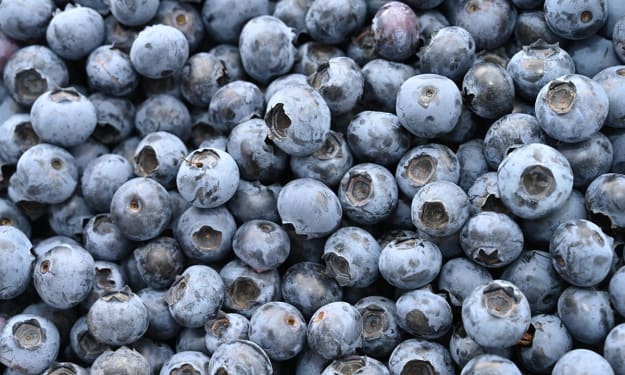
Frozen Blueberries Recalled: What Families Need to Know
You open your freezer to grab a handful of blueberries for a smoothie. It is part of your routine. Maybe you add them to oatmeal for your child before school. Maybe you bake them into weekend muffins. Frozen fruit feels safe. It feels simple. But then you see the headline: frozen blueberries recalled. Suddenly, that bag in your freezer does not feel harmless anymore. Questions rush in. Are they safe to eat? What brands are involved? What should you do next? Food recalls can be unsettling, especially when they involve everyday items. This article explains why frozen blueberries recalled announcements happen, what risks are involved, and how to protect yourself and your family without panic.
By Muqadas khanabout 15 hours ago in Feast
Rich People's Palates: Burgers That Cost More Than Rent
Who doesn’t love a good hamburger? It’s one of my favorite foods, whether I prepare one at home or hit up the nearest drive-thru. Now and again, I splurge and treat myself to one of the fancy $20 burgers from Five Guys, like I have Lil’ Wayne money and am not checking my balance before merging into the line.
By Criminal Mattersa day ago in Feast



Comments
There are no comments for this story
Be the first to respond and start the conversation.