
A Culinary Tapestry of History and Delight
Dumplings

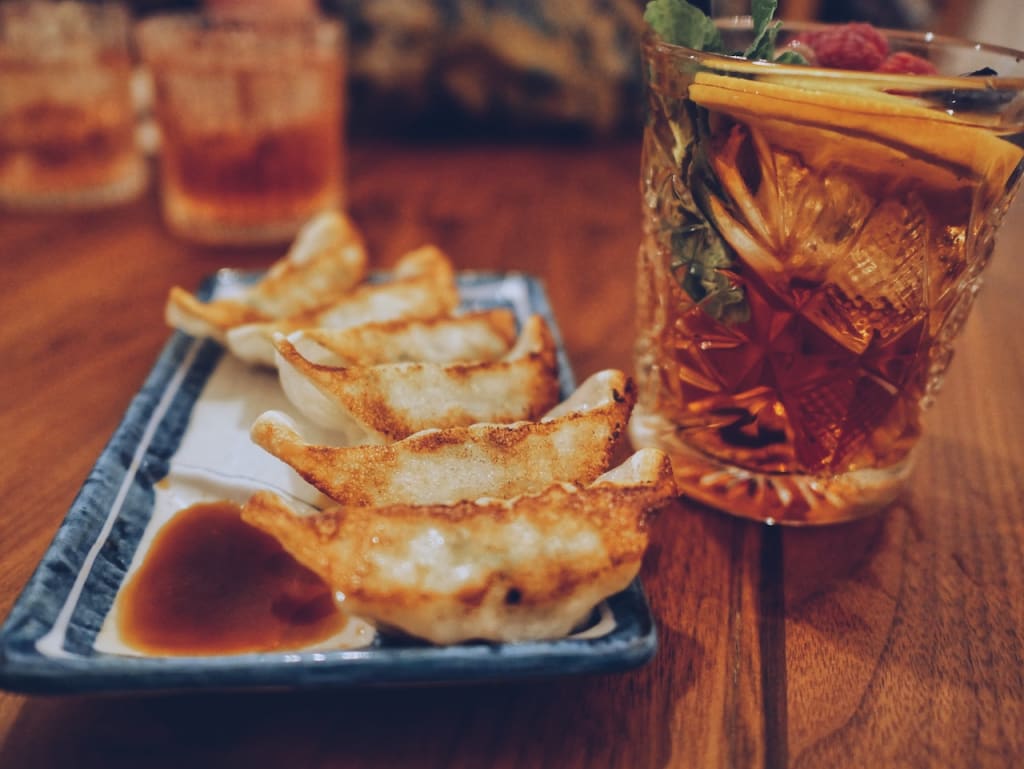
As archaeologists meticulously explored ancient tombs in Turfan, western China, they stumbled upon an astonishing discovery—remarkably well-preserved, crescent-shaped dumplings that had endured for over a millennium. The origins of dumplings, however, remain shrouded in mystery. Scholars speculate that nomadic Turkic peoples living in western China and Central Asia may have been the first to introduce dumplings to various parts of the ancient world. The word "manti," meaning "dumpling" or "steamed bun" in Turkic languages, appears to be the etymological root for the term "dumpling" in several other languages.
Ancient Turkic communities likely filled their dumplings with meat, but the exact origins and influences behind this practice remain uncertain. Nevertheless, it was in ancient China where dumplings truly gained traction. The first written record of dumplings dates back over 1,700 years in a tantalizing poem penned by scholar Shu Xi. In his verses, Shu describes cooking methods that seemingly came from distant lands. He mentions "mantou," a steamed wheat product, and pays homage to the preparation of dough balls known as "lao wan." These delicacies, filled with pork, mutton, and fragrant spices, were dipped in black meat sauce and devoured eagerly, leaving bystanders yearning and salivating.
Over the next millennium, dumplings flourished and diversified throughout China. Some communities deviated from the traditional meat filling and opted for vegetarian alternatives. New cooking techniques emerged, and regions with limited access to wheat began using rice, tapioca, and sweet potato to make dumplings. Tracing the connection between Chinese dumplings and those in other regions poses a challenge, but food historians have made educated conjectures based on available evidence.
The spread of Turkic tribes and the establishment of the Ottoman Empire around 1300 CE likely brought dumplings to the west. In present-day Turkey, Islamic dietary restrictions prompted a departure from pork fillings, leading to lamb-filled dumplings known as "manti." These were drizzled with garlic, yogurt, melted butter, and adorned with herbs and spices. Some scholars believe that the Mongol Empire also played a role in disseminating dumplings, potentially introducing them to parts of Eastern Europe. This could have given rise to Russian pelmeni, as well as the larger pierogi and vareniki in Poland and Ukraine, filled with ingredients like potato, cabbage, cheese, and cherries. The Mongols' dominion over Korea may have also introduced dumplings known as "mandu," often enjoyed with regional ingredients like kimchi.
As Chinese dumpling varieties reached more countries, they acquired the name "dumplings" in the English-speaking world. The term, meaning "little lumps," was first used in 16th-century England to describe dough balls dropped into liquid, similar to knödel and matzo balls, which lacked fillings. Despite its imprecision, the term stuck. During Japan's occupation of China in World War II, Chinese "jiaozi" made their way to Japan, where they became known as "gyoza" and were typically pan-fried.
The existence of diverse dumpling-like stuffed pasta in every region of Italy has sparked speculation. Some historians suggest that Arab conquerors introduced dumplings during their reign over Sicily between the 9th and 11th centuries, although the evidence remains inconclusive. It is unlikely that all dumpling-esque dishes share a common origin. In many cases, it may simply be that culinary innovators from different cultures independently realized the delight of encasing fillings in dough.
Regardless of their intricate origins, dumplings are cherished as plump pockets of perfection. They embody a rich tapestry of history, blending flavors and techniques from various cultures. As we relish the diverse and divine world of dumplings, we marvel at the intricate web of their mysterious past. This video was made possible with the support of Marriott Hotels, which celebrates the curiosity that drives us to explore. Discover the exciting collaboration between TED-Ed and Marriott, and embark on your next adventure with Marriott Hotels.
Henrik Leandro
About the Creator
Henrik Leandro Laukholm Solli
Free thinker, traveler and humanist <3
Keep reading
More stories from Henrik Leandro Laukholm Solli and writers in Feast and other communities.
The Versatility and Impact of Soybeans
In the 1930s, industrialist Henry Ford developed a profound obsession with soybeans. He utilized soybean oil for car enamel, crushed them into powder for plastic parts, and encouraged widespread cultivation of the crop among American farmers. Ford's fascination with soybeans even extended to the realm of food, as he hosted a soy-centric feast at the Chicago World's Fair, showcasing soy-based substitutes for dairy, meat, and wheat. Today, soy is a ubiquitous ingredient present in numerous food products, often consumed daily without awareness. However, it prompts questions about soybeans' adaptability and the consequences of our global preoccupation.
By Henrik Leandro Laukholm Solli3 years ago in Feast


Comments
There are no comments for this story
Be the first to respond and start the conversation.