
Unlucky
A journey of love, loss, and the desperate fight for freedom.
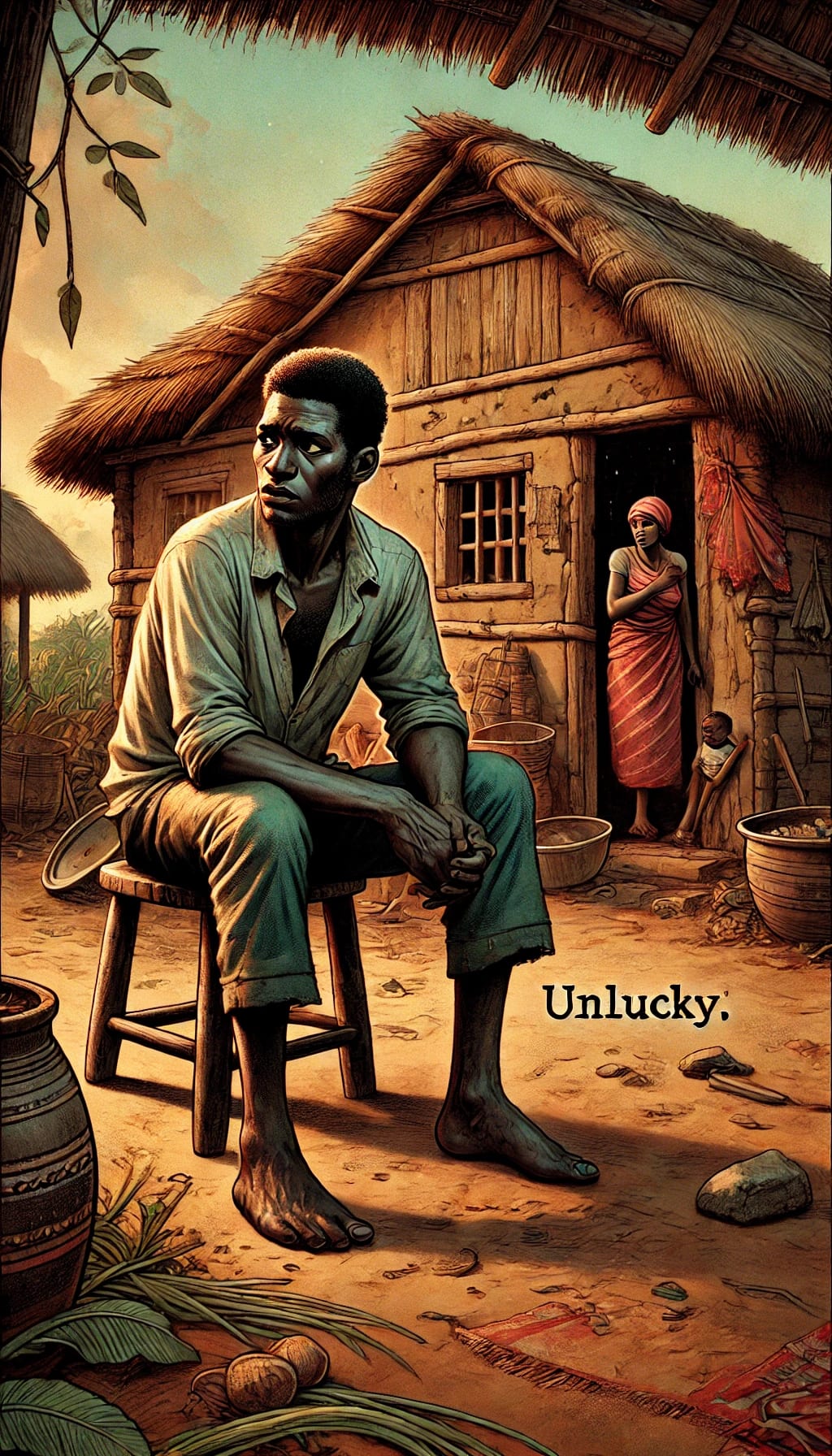
Kamau has been the sole provider for his family for as long as he can remember. His mother died two years after he was born, and no one really talks about her. His father had met her while traveling to the large market a hundred kilometers from home. She was selling arrowroots, and she was the most beautiful girl he had ever seen—her skin was lighter than anyone he had ever encountered.
Kamau’s father, Njoroge, loved her very much despite the constant backlash from neighbors and relatives who felt that he had brought in one of the mzungus they had heard were invading people’s lands, taking them, and turning the locals into slaves. One of Kamau’s most talkative aunties, Mama Kare, would tell him about his mother whenever she had drunk too many horn cups of muratina. Kamau, however, could never stand the taste of that bitter drink, which was a ritual to start partaking in after circumcision, marking the transition into manhood.
His mother was the friendliest person Mama Kare had ever met, and her laugh was infectious. She never minded what people said about her—she was kind to them all. She was the daughter of a white settler who never acknowledged her because her mother had been the housemaid. When the mzungu found out she was pregnant, she was quickly dismissed from her job, forcing her to go to Rware, the big market, to find work since she had no family. That was how she was raised—helping her mother sell whatever farm produce was fresh and in season.
Kamau did not inherit his mother’s light skin; he was as dark as his father. He was told that his late sister, who had died one month after she was born—when Kamau was two years old—was the most beautiful baby anyone had ever seen. She had their mother’s light skin but was born weak. Their mother bled excessively while giving birth to his sister, who was named Wambui, and she never even got to hold her daughter.
Kamau’s father married a second wife within that month so his children could have a woman to raise them. His new wife, Njoki, hated the white woman’s children and was very pleased when little Wambui died. Rumor had it that she might have neglected the child. Kamau could not refute this, as he had lost count of the number of times he had gone to bed hungry whenever his father left to take farm produce to Rware and had to spend the night there.
Njoroge was a medicine man, so most of the farm work was left to his wife. Njoki was a very lazy woman, and she put Kamau to work for both of them, threatening—and often following through on her threats—that he would sleep outside with no food. Of course, she took all the credit when Njoroge returned home from visiting sick villagers. Njoki’s two daughters and young son were as mean and lazy as their mother and never gave Kamau peace of mind.
All Kamau dreamed of, day and night, was how he could escape and where he would go. He was afraid because he had heard of boys and girls who had tried to escape through the forest that separated their village and Rware, only to never be found—or to have their mutilated bodies discovered, victims of wild animals.
The thing that motivated Kamau to escape was Mumbi—his love—and his dignity as a man, which Njoki was determined to destroy. Kamau knew that ever since Njoki comforted his father after his wife died, he had been too eager to listen to her and disregard everyone else. This happened often when his father found work undone—he was always accused of neglecting his part, even though he was the one doing all the work, and there was never enough time to finish alone. In his father’s eyes—thanks to Njoki—he was a lazy, unfocused, and naughty boy. He even got used to his father’s whip; it didn’t hurt anymore.
An old woman called Mami Ciiru had lost her husband and son while she was still young and had grown old alone, tilling her late husband’s land. According to custom, the land should go to a family member, but she had none nearby. It was then required that a young man and woman be brought to her in marriage, and their first son would belong to the old woman as the heir of her land. The young couple would remain on the land for the rest of their lives, bound to the woman by marriage, but they could never claim the land or their first son as their own. The child would belong to the old woman until her death, after which the land would automatically transfer to him. The couple and any other children they had would live on the land at the mercy of the firstborn son, who, according to tradition, would be raised primarily by the old woman, while the other children were considered secondary in their own family.
This terrible fate was what Njoki had planned for Kamau, conspiring with her sister, Nyawira, who was also raising a stepdaughter—Mumbi. This undignified fate was what Kamau wanted to escape, together with Mumbi. But they were both so overworked that they barely had time for each other. They only met briefly from time to time at the river when Kamau was on kitchen duty, which was rare since he was mostly sent to the shamba to till.
A childhood friend of his, Murage, came to visit. His family had moved to Rware, then to Nakuru. He had returned to bury his grandmother, who had recently died, and would leave afterward. During the funeral preparations, Murage wandered into the farms, met Kamau, and told him of his travels and of the railway that was being built, which had now reached Nakuru from Mombasa, the land of the big lake. He told him that the pay was good, the life was decent, and the job allowed one to see different parts of the country as the railway was built. Kamau explained his predicament to him, and Murage, being the kind man he had always been, offered to help him escape at night. Kamau, however, could not leave without Mumbi—if he did, they would find another unlucky young man, and her fate would remain the same.
So they came up with a plan. When the villagers lined up to greet and comfort the bereaved family, Mumbi would whisper the plan to Murage when she reached him, telling him the time and place of the escape, and they would hope she would show up.
During the ceremony, things went as planned. All they had to do was wait four days, as Murage had to ensure he had officially handed over his late father’s land to his uncles—he had no plans of ever returning to the village.
On the set day, it rained heavily, and most people stayed indoors, which worked to their advantage. When both Kamau and Mumbi heard the exaggerated birdsong, they made excuses to fetch more firewood, which their evil families allowed since they saw it as self-punishment to go out in the pouring rain. As soon as they were free, they dashed to the edge of the forest, only to find a little boy instead of Murage. The boy said that Murage had been speared to death while trying to prevent his uncles from fighting over a portion of land near the river where he was to be buried in two days.
The boy left, and Mumbi and Kamau were stranded. They felt the urge to go back and wait until after the burial of their friend. Yet, their freedom was so near, and they craved it more than ever. As they were discussing, they heard a shifting of bushes in the forest and quickly hid behind a large oak tree. Kamau peeped and felt a cold chill run down his spine. He immediately knew that escape was no longer an option—they had to run now before they fell into the hands of the forest bandits.
These men masqueraded as Mau Mau freedom fighters, but they were killers, thieves, and looters who went burning village after village. They dressed like the Mau Mau who were fighting for freedom from the colonizers, but they could be differentiated by the red clay they smeared in their dreadlocks.
Without hesitation, Kamau took Mumbi’s hand and gestured for her to remain silent. They ran until they reached the big road where the white man’s car passed. They walked until they reached a small village and slept under the shade of a tree. For one week, they kept walking, only asking for directions. Murage had told Kamau about some of the markets along the way, and Kamau used this knowledge to navigate. Eventually, they reached Nakuru.
About the Creator
Keep reading
More stories from writers in Families and other communities.
Wise~Guys
— Look Behind what's in Front of You ~ Make Good Choices — Hey, So how you Doin'..! Made~Men — Mobster Movies romanticise a distinctive, elegant appearance, impeccable attire style, along with the 'Families' expressive lingo. Making their 'Bones' gave them Panache — with vintage fedoras, tailored pin-striped suits, mirror-polished wing-tip shoes adorned with tassels; with their 'Gun Moll' gorgeous dates on their arms.
By Jay Kantor20 days ago in Families
Men who eat nuts tend to have better quality sperm
Peak Potency: How a Daily Nut Habit Elevates Male Sperm Quality Male fertility rates have dropped in recent years. Many couples struggle to conceive, and men often overlook their role in this challenge. Your diet can make a big difference here. Nuts stand out as a simple fix. They pack antioxidants and healthy fats that support better sperm quality. Think of them as fuel for your reproductive system. Studies show men who eat nuts regularly see real gains in sperm health. If you're planning a family or just want peak vitality, adding nuts could be your smart move.
By Story silver book 4 days ago in Families
Autonomy Is The Real Privilege
Good morning, freedom-seekers! Today we’re gonna be looking at autonomy. A strange word, I know; one many would probably look at blankly and run away from on sight. We’re gonna figure out what it actually means, consider how it’s achieved, and decipher just how deeply most of us are tangled up in dependence without realising it.
By That ‘Freedom’ Guyabout 22 hours ago in Humans



Comments
There are no comments for this story
Be the first to respond and start the conversation.