
My Mother’s Hands
A character study about the unspoken history written into a mother’s hands: the way they garden, fold laundry, slap the table when angry, cradle a child. Through this, the narrator unpacks generational trauma, tenderness, and resilience.

My Mother’s Hands
I don’t remember the exact moment I first noticed my mother’s hands, but they’ve been a constant backdrop to my life, like wallpaper you stop seeing until it peels.
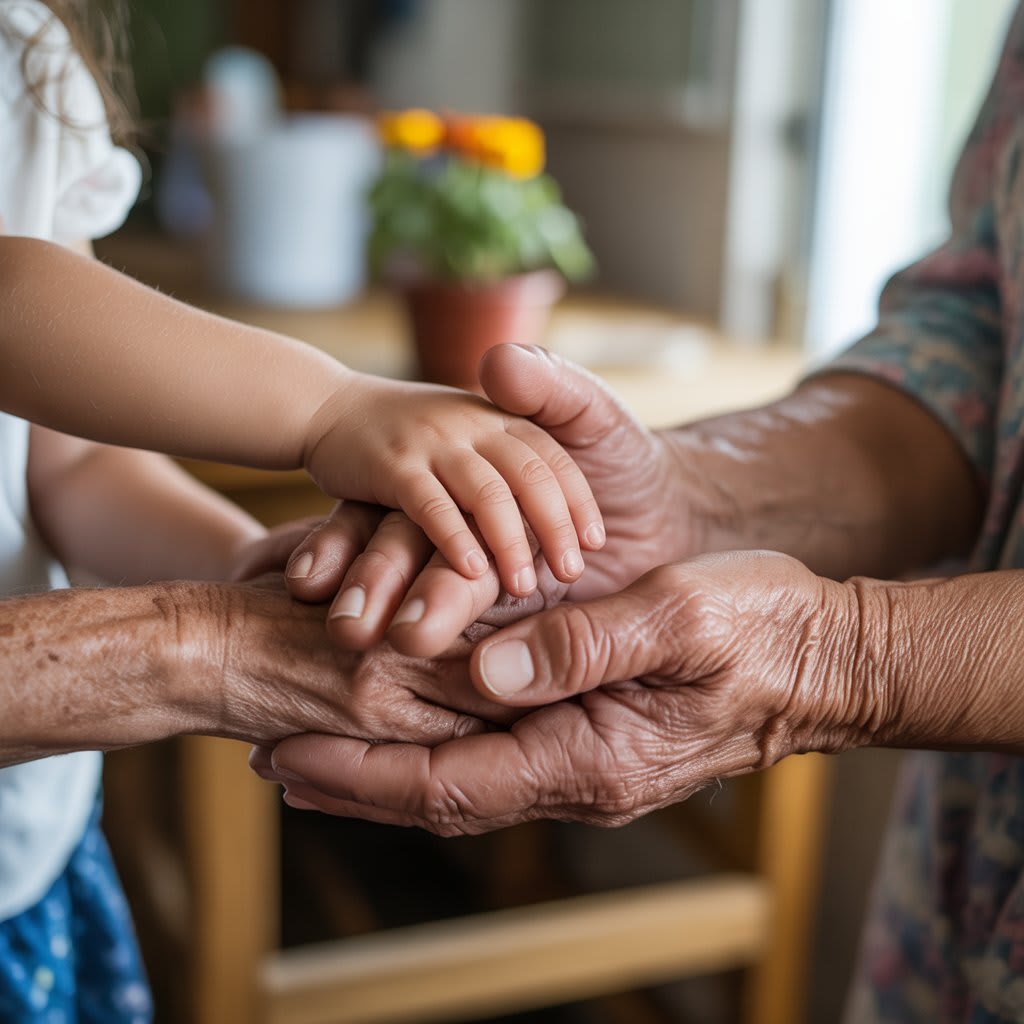
They are not delicate hands. They are not the manicured, jeweled hands of the women in glossy magazines or old movies. No, my mother’s hands are rough, work-worn, with knuckles like small stones and nails kept short out of habit. The lines on her palms are deep and purposeful, like rivers carved into dry earth.
When I was little, I thought her hands were magic.
I would watch them knead bread dough on the floured kitchen table, strong and steady, turning simple ingredients into warm, fragrant loaves. In the garden, her fingers coaxed stubborn green shoots from soil that seemed unwilling to give anything. Every spring, she’d plant marigolds around the porch, their bright orange heads bobbing like tiny suns, and I believed it was her touch alone that made them bloom.
But those same hands could be harsh.
When she was angry — and she often was, in those days — my mother would slap the table with a palm so loud the sound would echo through the house. She didn’t yell much. She didn’t need to. The sharp crack of her palm against wood was enough to stop my brother and me mid-argument, the air thick with unsaid things. Later, she would brush past me in the hallway, and her hand would land lightly on my head — a peace offering, an apology she didn’t know how to speak.
I didn’t understand it then, but those hands were shaped by more than age and work. They carried history.
My grandmother, who I barely remember, was a woman of few words and quick, efficient movements. I’ve seen a photograph of her as a young woman, standing in front of a farmhouse with her arms crossed, her hands gripping her elbows like she was holding herself together. I think my mother learned early that survival meant knowing when to clench your fists and when to offer an open hand.
There was a hardness to my mother, but beneath it, something else pulsed — tenderness she didn’t always know how to give. I remember the way she held my hand when I had a fever as a child. Her palm was cool and dry, her thumb tracing absent-minded circles on the back of my hand as if she could rub the sickness away.
When my father left, those hands built our world back up, piece by piece.
She painted the walls of our small apartment in cheerful colors. She packed lunches with little notes scribbled in the corners of napkins. She learned how to fix a leaky faucet from a neighbor and how to patch a torn backpack strap with fishing line. I didn’t see it then — how exhausted she was, how her hands cracked from the cleaning chemicals at her second job, how she rubbed lotion into them at night until the skin stopped burning.
As I got older, I resented those hands.
When they gestured for me to be quiet. When they pointed to the door, telling my teenage rebellion to leave if it didn’t like the rules. When they waved off my apologies with a tight-lipped smile. I wanted soft hands. I wanted a mother who held me when I cried, who brushed my hair and tucked me in and spoke gentle words in a voice like a lullaby.
But now — now, I understand.
Now, when I catch myself scrubbing a counter the way she did, or folding towels in neat, squared-off bundles, or pressing a hand to my own child’s forehead in the night — I feel her in me. I see the history written into my hands too.
My mother’s hands held grief and anger and survival. They held babies and broke bread and buried the dead. They built homes, even temporary ones, out of stubborn love and sheer will. They knew when to strike and when to soothe, when to hold on and when to let go.
And though she never said it aloud, those hands told me everything I needed to know: the world is not always kind, but you can be. Work hard, love fiercely, and carry on.
Someday, my daughter will look at my hands and see the same lines, the same calluses. She’ll wonder about the stories buried in my skin, the things I never said, the things I didn’t know how to show. And maybe she’ll write about it too.
Because hands carry history — and hers, and mine, and my mother’s — are stories still unfolding.
About the Creator
Kine Willimes
Dreamer of quiet truths and soft storms.
Writer of quiet truths, lost moments, and almosts.I explore love, memory, and the spaces in between. For anyone who’s ever wondered “what if” or carried a story they never told these words are for you
Keep reading
More stories from Kine Willimes and writers in Families and other communities.
Things I Learned From Strangers
Things I Learned From Strangers You don't realize it at the time. Not in the moment when your hands brush while passing a cup of coffee, or when a stranger on a park bench tells you something profound, unsolicited and unplanned. But if you live long enough — or pay close enough attention — you'll find that the people you never knew are sometimes the ones who shape you the most.
By Kine Willimes6 months ago in Families
Wise~Guys
— Look Behind what's in Front of You ~ Make Good Choices — Hey, So how you Doin'..! Made~Men — Mobster Movies romanticise a distinctive, elegant appearance, impeccable attire style, along with the 'Families' expressive lingo. Making their 'Bones' gave them Panache — with vintage fedoras, tailored pin-striped suits, mirror-polished wing-tip shoes adorned with tassels; with their 'Gun Moll' gorgeous dates on their arms.
By Jay Kantor16 days ago in Families
DEEP HEIGHTS
I Love How He Loves Me GRACELLA NOV 19, 2025 (Just a Devotional): I am left in a sweet place here and had a wonderful time with my Lord, as I always do. But this was different. Unspeakably different. It is not really something I can share, because it is just one of those things that belongs to you; if you know what I mean.
By Kadee Grace6 days ago in Families

Comments
There are no comments for this story
Be the first to respond and start the conversation.