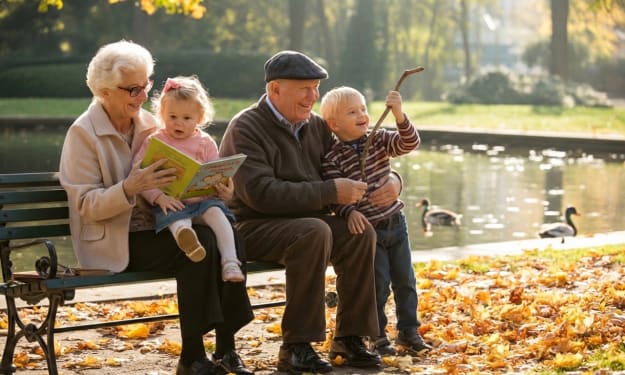
grandparents
Becoming a grandparent makes getting older something to look forward to - all the fun of parenting, without the hassle.
Love That Acts, Not Love That Speaks
When Love Became a Language Instead of a Practice In modern parenting culture, love is increasingly defined by what is said rather than what is done. Emotional affirmation, verbal reassurance, and constant validation are treated as the primary evidence of care, while less expressive forms of love are often overlooked or misunderstood. A parent who says “I love you” frequently and validates feelings consistently is assumed to be providing something essential, while a parent who demonstrates care through sacrifice, consistency, and enforcement may be perceived as distant or emotionally limited.
By Peter Thwing - Host of the FST Podcasta day ago in Families
How Much Does Memory Care Cost in the U.S.? Average Monthly Prices Explained
With the onset of memory loss in a loved one as a result of some conditions such as dementia or Alzheimer disease, families tend to start to seek specialized care services. The first question that one would want to have answered when undergoing this process is very basic, yet significant, and that is how much is the cost of memory care?
By Patrica Overton3 days ago in Families
My Favorite Slime Recipe
A few years ago, making your own slime was all the rage. People swapped recipes and even swapped slimes. Now, you can buy all the pre-made slime you want, in a variety of colors, textures, and themes. But there is something special about creating your own slime. This activity is great for keeping children busy on a rainy day, or helping them learn to follow step by step directions.
By Angel Mann4 days ago in Families
St. Patrick's Day
When I was a child, I really thought our family was Irish. We always celebrated St. Patrick's Day with a chocolate cake with green frosting, and it was pretty common to wear green and to have corned beef, cabbage, and boiled potatoes for dinner that day.
By Denise E Lindquist4 days ago in Families
A Grandparent Who Couldn’t See Their Grandchildren After Divorce
I still set the table for five every Christmas Eve. Force of habit, I suppose. My husband Malcolm tells me I do it without thinking, and he's probably right. Two years of quiet Christmases and my hands still reach for the small plates, the ones with the holly border that Lily and Sam used to eat their turkey from. Lily would separate everything on her plate so nothing touched. Sam would pile it all up like a mountain and eat from the top down. I could tell you what they'd say when they walked through the door. I could tell you exactly how the afternoon would go.
By Family Law Service4 days ago in Families
The reason we move more quickly when we're excited could be explained by dopamine.
People frequently walk a little faster without realising it when they are enthusiastic or eager. According to a recent study, the brain's reward system could be the source of this extra "pep." It seems that this mechanism modifies our level of activity based on whether positive events occur as anticipated or come as a pleasant surprise.
By Francis Dami5 days ago in Families
Senior Living Ashland Complete Guide for Families and Seniors
Deciding to place a parent in a nursing home can never be an easy task. It is usually accompanied by a concern, guilt, hope and uncertainty. When you are in the process of investigating an Ashland nursing home, you must probably be posing a key inquiry; How do I know this is the correct decision?
By Alice Outlaw9 days ago in Families
I Married the Love of My Life… But Somehow Ended Up Living With Her Mother Instead. AI-Generated.
When I got married, I thought I knew exactly what I was signing up for—love, partnership, shared dreams, and building a life together. What I didn’t expect was that my marriage would gradually start to feel like a three-person arrangement… and that I would be spending more time with my mother-in-law than with my own wife.
By Lukáš Hrdlička9 days ago in Families
What Makes Senior Care Services Truly Comfortable and Caring?
It tends to complete in the same silent manner, where a senior eventually gets to sleep correctly, wake up without any form of disturbances and feel safe in their own environment. Such a feeling of coziness is never incidental. It is very well constructed, step by step, with careful thoughtful choices of care. To learn more about what actually constitutes senior care services being comfortable and caring, it is better to start at the end and go in reverse.
By Laura Parton10 days ago in Families