
When My Father Died, Justice Became Personal
A daughter’s journey from grief to a deeper understanding of law, loss, and legacy.


I had studied justice in books long before I ever understood what it truly meant.
In lecture halls, I memorized legal maxims, recited constitutional clauses, and wrote essays on equality and fairness. I believed in the law—deeply. Passionately. Like a religion.
My father did, too.
He wasn’t a lawyer, but he was a man of principle. A schoolteacher who never once asked for a bribe, never once raised his voice in rage. He believed that fairness wasn’t just a word—it was a way of living. He raised me to speak truth even when it trembled in my throat. To believe that the law, for all its flaws, was a light worth defending.
But belief is easy when you’re not the one broken by the system.
My father passed away in a hospital that treated his illness like a delay in their coffee break. His body collapsed from neglect, but no one took responsibility. The reports were late. The oxygen was late. The response was late.
Justice? That never arrived at all.
Grief Changes the Way You See Systems
Before his death, I used to say things like, “The law is blind.”
After his death, I realized: the law is blind, yes—but also deaf and painfully slow.
I didn’t just lose a parent. I lost faith.
I filed complaints. I spoke to officials. I demanded accountability. But what I received was bureaucracy’s favorite language: silence. I was told to “stay patient,” to “trust the process,” to “let time heal.”
But when justice becomes a process instead of a principle, people bleed between the steps.
And when you’re on the receiving end of negligence, no amount of legal jargon can fill the space where your loved one used to breathe.
⸻
When Justice Ceases to Be Theoretical
In the months following my father’s death, I stopped attending weddings. I stopped laughing the way I used to. But more than anything—I stopped calling myself a lawyer out loud.
I didn’t want to be part of a system that offered more excuses than empathy.
I began to ask myself: What is the point of learning laws in ivory towers when the people who need justice most never reach the doors of those towers?
My grief became fuel. Not for revenge—but for clarity.
I began writing. Speaking. Telling my father’s story in classrooms, legal forums, and cafes full of law students who still thought justice was a neat concept in a textbook. I told them: justice isn’t what’s written in statutes. Justice is what remains after you’ve buried the one person who believed in the system more than you do.
Legacy Is a Kind of Protest
My father never held a protest sign. But his life was a silent protest against corruption, injustice, and moral decay.
He taught me that law should protect the weak, not shelter the powerful.
And when he died—his life became my protest.
Today, I advocate differently. I listen more. I fight smarter. I write cases with my father’s voice in my mind: steady, compassionate, uncompromising.
I remind myself that not every battle is won in court. Some are won in how we tell the story, how we remember the fallen, how we speak truth when it’s easier to be quiet.
⸻
A Message to Every Reader Who Believes in Justice
If you’ve never lost someone to systemic failure, you may never understand the rage that sits beneath the ribs of those who have.
But maybe that’s why stories matter.
Because stories, unlike systems, can’t be delayed.
They can’t be denied.
And they can’t be silenced.
To every law student, every advocate, every believer in justice who is reading this:
Don’t wait to make justice personal. Don’t wait until grief knocks the breath out of you. Use your privilege now. Speak now. Demand better now.
Because one day, when you least expect it, the scales of justice will tip into your life — and you’ll realize how deeply personal they always were.
And to my father, wherever you rest—
You taught me the law of honesty. The rule of courage. The evidence of kindness.
I couldn’t save you from the system.
But I can use what you gave me to challenge it.
And maybe, just maybe… that’s what justice really is.
About the Creator
Mian Suhaib Amin
Advocate by profession, writer by passion. I simplify legal concepts, share stories, and raise voices through meaningful words.
Keep reading
More stories from Mian Suhaib Amin and writers in Education and other communities.
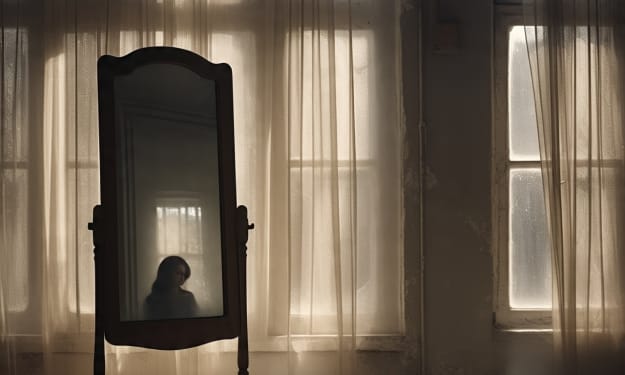
The Woman in the Mirror
I moved into Apartment 41 on a Tuesday afternoon. The kind of Tuesday that forgets it is midweek. There was a haze in the sky, and my shoes left tired marks on the stairs. I had no furniture, no friends in the city, no one who knew I was there.
By Mian Suhaib Amin8 months ago in Fiction
Interactive Learning Transforming Modern Education
Education has always evolved with time. From handwritten manuscripts to printed books and now digital platforms, the way people learn has continuously adapted to new technologies and changing societal needs. In the modern world, education is no longer limited to traditional classrooms or long lectures. Instead, learning has become more interactive, engaging, and accessible than ever before.
By Backlinks Cart4 days ago in Education
Using 3D Laser Scanning for Accurate Facility Upgrade and Renovation Planning
Facility upgrades and renovation projects require precise knowledge of existing building conditions. Many older facilities lack reliable documentation, and outdated drawings can lead to design conflicts, costly change orders, and construction delays.
By Matt Sharon35 minutes ago in Education



Comments (1)
This piece is not just writing—it’s witness. A raw, eloquent, and deeply human testimony of how justice stops being theoretical when grief enters the room. The shift from academic idealism to lived pain is portrayed with heartbreaking clarity. What makes it powerful is not just the anger or the critique of the system, but the unwavering moral compass inherited from a principled father—and how that legacy becomes a quiet, relentless form of resistance. Your words do more than mourn; they mobilize. They remind every law student, every official, and every citizen that justice isn’t paperwork—it’s personal. And when the system fails, storytelling becomes sacred work. This isn’t just a comment on justice. It is justice, in its truest form: truth spoken in the face of silence. Thank you for writing this. It matters.