
The Hidden Language of Trees: How Forests Secretly Communicate🌲🌳
Uncovering the secret networks and silent conversations that keep forests alive.
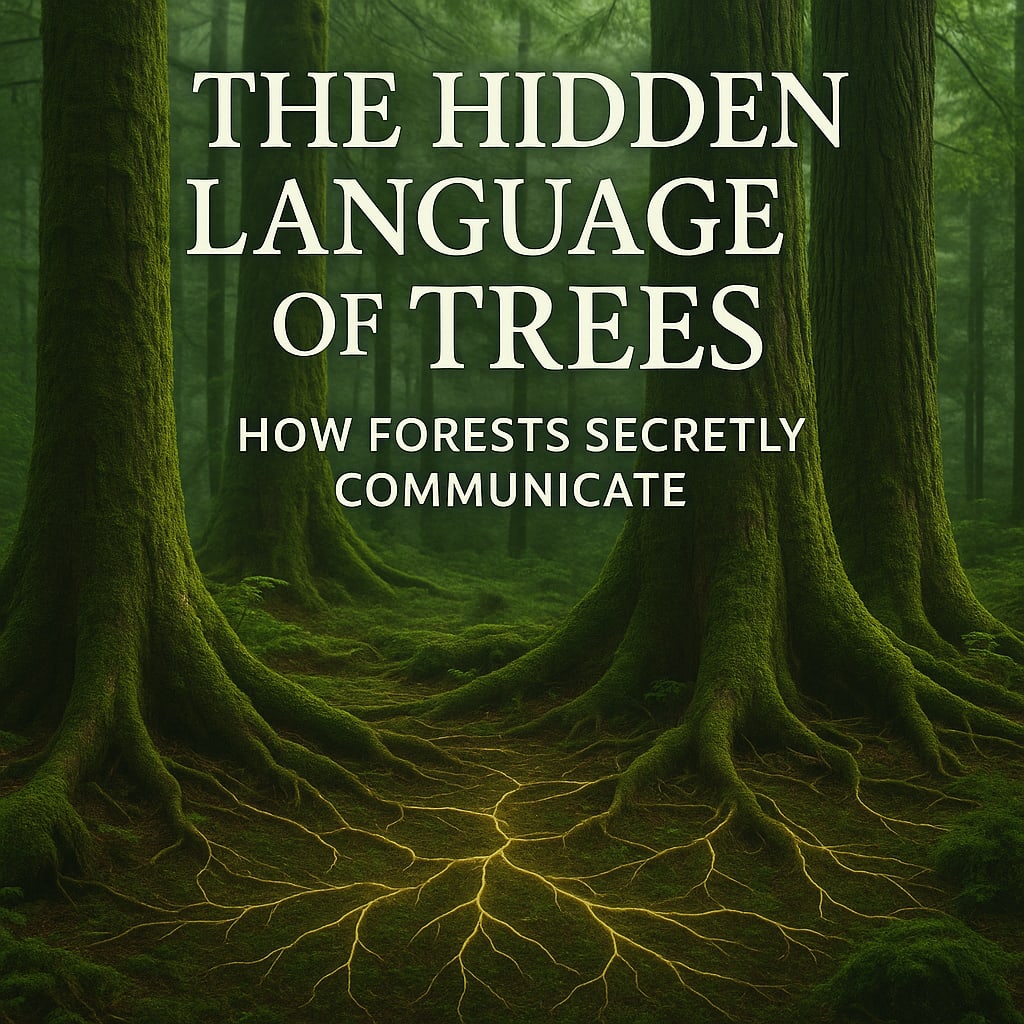
In the dense stillness of a forest, a secret world pulses with life and communication. Trees, often seen as silent sentinels of nature, are in fact active participants in a vast and intricate network of information exchange. Far from being isolated organisms, trees engage in a form of social cooperation that rivals the complexity of animal societies. This article explores the fascinating science behind how forests communicate, revealing a hidden language that has only recently begun to be understood.
The Mycorrhizal Network: Nature's Internet
At the heart of forest communication lies a symbiotic partnership between trees and fungi known as mycorrhizae. Mycorrhizal fungi colonize the roots of trees and extend their mycelium—thread-like structures—through the soil, connecting with other plants. This underground network has been aptly dubbed the "Wood Wide Web."
Through this fungal network, trees can exchange nutrients, water, and even chemical messages. When one tree experiences stress—due to drought, disease, or insect infestation—it can send warning signals through the mycorrhizal network to neighboring trees. In response, these trees may bolster their own chemical defenses or share resources with the distressed individual.
Mother Trees and Forest Families
Research led by ecologist Suzanne Simard has introduced the concept of "mother trees"—large, old trees that serve as central hubs in the forest communication network. These trees are highly connected, supporting seedlings and smaller trees by supplying them with nutrients and information. Simard's work has shown that trees of the same species, and even across species, can show a preference for helping their kin.
Mother trees not only distribute resources more effectively than their younger counterparts, but they also play a vital role in forest regeneration. When a mother tree is cut down, the survival chances of nearby seedlings drop significantly, highlighting the interdependence of forest life.
Chemical Signaling and Airborne Communication
Communication among trees isn’t limited to underground channels. Trees also emit volatile organic compounds (VOCs) through the air as a form of warning system. For instance, when a tree is attacked by herbivores, it may release VOCs that alert nearby trees to ramp up their own chemical defenses.
Some trees can distinguish between different kinds of threats and tailor their airborne signals accordingly. These sophisticated chemical languages help entire forest ecosystems remain resilient against pests and environmental changes.
Sound and Electromagnetic Signals
Emerging research suggests that trees might also use sound and electromagnetic signals to communicate. Some studies have found that roots emit clicking sounds, possibly to coordinate growth or detect neighboring roots. While this area of study is still in its infancy, it opens up exciting possibilities for understanding plant behavior on an even deeper level.
Implications for Conservation and Forestry
Recognizing the communicative capabilities of trees reshapes our understanding of forest ecosystems. Forests are not just collections of trees but complex communities where cooperation, mutual support, and shared knowledge are the norms.
This insight has profound implications for conservation and forestry practices. Traditional clear-cutting and monoculture plantations disrupt these natural networks, leading to poorer soil health, increased vulnerability to pests, and slower recovery from environmental stress. Sustainable forestry practices that preserve mother trees and maintain network integrity are crucial for the health of our forests.
A New Respect for Plant Intelligence
The hidden language of trees challenges long-standing assumptions about the passivity and simplicity of plant life. Trees exhibit behaviors that resemble memory, learning, and social interaction—traits once thought to be exclusive to animals.
As science continues to uncover the complex ways in which trees communicate and support each other, a new vision of the forest emerges: one of interconnected intelligence and subtle cooperation. In recognizing this, we not only gain a deeper appreciation for nature’s wonders but also a greater responsibility to protect the forests that silently sustain life on Earth.
In the whisper of leaves and the quiet reach of roots, the forest speaks. All we have to do is learn how to listen.
About the Creator
Riot
Storyteller. Truth-seeker. Professional overthinker. Let’s make words matter.
Keep reading
More stories from writers in Education and other communities.
Smart Storage & Grading for U.S. Coin Collections: a Checklist
Phase 1: First Aid for Your Collection (The 24-Hour Triage) Before buying any special supplies, you need to perform some emergency triage. Think of this as stopping the bleeding. The goal here is to prevent any active damage right now.
By Laura Bennettabout 11 hours ago in Education
How Neuroscience Is Changing the Way We Learn
In recent decades, advances in neuroscience have reshaped our understanding of human learning. Rather than viewing learning as merely memorizing facts, researchers now see it as a biological process that physically and functionally changes the brain. This shift in perspective — from teaching content to understanding how the brain learns — is transforming educational theory, classroom practice, and lifelong learning strategies across the globe.
By Games Mode Ona day ago in Education


Comments
There are no comments for this story
Be the first to respond and start the conversation.