degree
Degrees defined: PhD, Master, Bachelor, Associate–all about that expensive piece of paper called your degree.
Example of Amines and their Infrared Spectra
1-Examples of Amines 1.1-Infrared spectra of the diethyl amine: Similarly dimethyl amine is an example of the secondary amines. As we discussed above secondary amines shows only single absorption band because they contain only one C-H group. At 3280cm-1 frequency range it shows N-H stretching absorption band and at the range of 1140cm-1 C-H stretching bands are appeared.
By Fatima Jamil3 years ago in Education
Amazon Affiliate Marketing: A Profitable Pathway to Passive Income
In today's digital landscape, earning passive income has become an attractive goal for many individuals seeking financial independence and flexibility. One avenue that has gained significant popularity is Amazon affiliate marketing. This lucrative opportunity allows you to generate revenue by promoting Amazon products and earning commissions on successful referrals. In this article, we will delve into the world of Amazon affiliate marketing, exploring the strategies, tips, and insider secrets that can help you pave your way to a profitable passive income stream.
By OptimalEdge3 years ago in Education
N-H Stretching Vibrations of Amines
N-H stretching vibrations of the amines: Stretching vibrations of N-H region shows the absorption bands near the range of 3550 to 3300cm-1. In clear solutions samples the N-H shows feeble and acute bands than the observe O-H band which mostly appears in the same region.
By Fatima Jamil3 years ago in Education
Interpretation of Spectral Information
1-Interpretation of Spectral Information Infrared spectroscopy did not provide complete information about compound spectra. The information obtained from it, nevertheless often correct, is always indefinite and is used together with confirmations by chemical, physical and other means of spectroscopy. Absorption bands of complex compounds cannot interpret precisely.
By Fatima Jamil3 years ago in Education
Infrared mode of Absorption and its Stretching Vibrations
1.1-The infrared mode of absorption When molecules absorb radiations with specific energy they get excited and move from lower to higher energy state. Similarly, molecules absorb infrared radiations that are quantized. Radiations of selected frequencies of infrared radiations are absorbed by the molecules. This absorption leads to energy change on the order of 9 to 40KJ/mole. Electromagnetic radiations of that energy range correspond to the stretching and bending vibrational frequencies of different organic and inorganic molecules. In the infrared mode of absorption, frequencies of infrared radiations that are correctly matched with the natural vibrational frequencies of the covalent compounds are simply absorbed. This absorbed frequency lead to increase the vibrational amplitude of the moving bonds in the organic molecule. Only those compounds have a dipole moment that may change as a function of time has the ability to absorb infrared radiations.
By Fatima Jamil3 years ago in Education
Infrared Region
Interaction of electromagnetic radiations with the matter is termed as spectroscopy. All types of compounds organic and inorganic, containing covalent bonds must absorb frequencies in the range of Infrared of the electromagnetic radiations. This region has wavelength higher than the ultraviolet region and has shorter wavelength than the microwaves region. It ranges from 400cm-1 to 4000cm-1. We use the infrared spectrum for the identification of compounds much like the fingerprint that we use for human identification. We simply compare the infrared spectra of two compounds to confirm whether they are identical or not. If their spectra match peak for peak, they must be identical compounds. Infrared spectroscopy did not provide complete information about compound spectra. The information obtained from it, nevertheless often correct, is always indefinite and is used together with confirmations by chemical, physical and other means of spectroscopy. Amines can be derived from ammonia. In amines one of the hydrogen atoms of ammonia compound can be displace by hydrocarbon group like alkyls. These amines can be distinguished on the basis of their spectra in dilute solutions in infrared region. Primary amines depict two bands in the region of 3300 to 3000cm-1 due to their fundamental N-H stretching vibrations. Secondary amines show only single band in this region of 3300 to 3000cm-1 while, tertiary amines do not show any band at all. Stretching vibrations of N-H region shows absorption bands near the range of 3550 to 3300cm-1. In clear solution samples the N-H shows feeble and acute peaks than O-H band which mostly appears in same region. For primary amines spectra shows in plane strong N-H scissoring absorptions at the range of 1550 to 1650cm-1 along with out of plane wagging vibrations at the range of 650 to 900cm-1. These peaks are usually broad and are the characteristics of amines. Infrared spectra of secondary amines showed weak N-H bending absorptions that are visible in the infrared region of 1500 to 1600cm-1. An intense broad wagging absorption bands may appear in the range of 650 to 900cm-1. Tertiary amines showed broad bands in the infrared spectra aside from the N-H stretch and these compounds shown specific characteristics for their alkyl and aryl substituents.
By Fatima Jamil3 years ago in Education
Phosphoryl Group Transfer Potential
Introduction “High energy phosphate bond” is a misleading word as it was thought that the bond itself contains energy. But in actual term, the hydrolysis of this bond requires an input of energy. The change in energy during the hydrolysis of phosphate bond does not result in bond breakage but infects the energy that comes from the products that have low free energy content. Therefore, for convenience, we use the term high energy phosphate compounds for those compounds that contain phosphate groups. In living organisms, phosphate compounds can be divided into two parts on the basis of their free energy change; “low energy” compounds and “high energy” compounds. We noticed a change in energy in a series of reactions when a phosphorylated compound is formed by reacting to another phosphorylated compound that has a negative free energy of hydrolysis.
By Fatima Jamil3 years ago in Education
The Story Behind "Happy Pan"
Teflon was an accidental creation in 1983, by a young boy name Roy J. Plunkett, who took a new job in DuPont. It is a polymer with high versatility and offering various advantages. It can be dissolved by using certain metals or hot fluorine gas, which shows that it is highly resistant to corrosion. It is a slippery and smooth material. Due to these properties is mostly used for coating purposes to different machine parts which are most likely subjected to heat and friction. Laboratory equipment and cooking utensils are also coated with a plain layer of Teflon. Scientist considered this invention “An example of serendipity, a flash of genius, a lucky accident” or they consider it a mixture of all three. Whatever the situation is, one thing is confirm and to the point that PTFE modernized and revolutionized the plastic industry. It also gives birth to certain other timeless applications that are helpful for the mankind. It was consider that the production of Teflon may increase over passing years and make it beneficial for human use. It was said that the demand for “Happy Pan” in USA reach 1 million per month and Production of Teflon will surpass 240,000 tons by the year 2022.
By Fatima Jamil3 years ago in Education
"Memory Chronicles: Unveiling the Mysteries of Remembering"
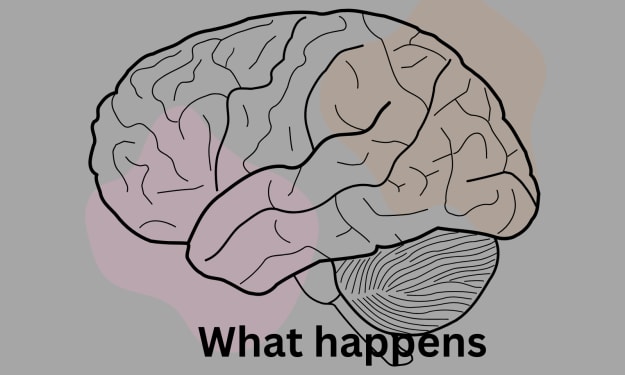
Imagine if our memory were like a computer's storage capacity. Is it limited, or is it unlimited? The truth is, our memory is far more intricate than a stack of glowing spheres in our brain, as portrayed in the film Inside Out. Instead, memories are scattered throughout various regions of our brain, with different cells working together to create a single memory. For example, remembering the taste of your grandmother's apple pie involves different brain cells recalling the appearance, scent, and flavor. Rather than being physical objects, memories are actually actions within our brain, forming a complex network of connected neurons.
By Kesa Rweya3 years ago in Education