book reviews
Book reviews for scholastic growth; read material from the world's top educators with our collection of novels, memoirs, biographies, philosophical texts and textbooks.
Studying Abroad: A Journey Beyond Borders
The dream of studying abroad is one shared by millions of students around the world. It’s more than just earning a degree from a foreign university—it’s about discovering new cultures, gaining independence, and broadening one’s view of the world. Every year, young learners pack their bags and step into a new chapter of life in a country far from home, driven by curiosity, ambition, and the desire to make a meaningful difference in their future. Studying abroad opens doors to countless opportunities. It allows students to learn from world-class educators, experience advanced research facilities, and become part of an international community. But beyond academics, it teaches lessons that no textbook can cover—resilience, adaptability, and cross-cultural understanding. Living in a new country requires adjusting to different customs, languages, and lifestyles, which helps students grow both personally and professionally. One of the most remarkable benefits of studying abroad is cultural exposure. Students learn to appreciate diversity, understand global perspectives, and develop empathy for people from different backgrounds. Sharing classrooms, meals, and experiences with students from all over the world encourages open-mindedness. For many, this experience helps dissolve stereotypes and fosters respect for other traditions and beliefs. In today’s interconnected world, such global awareness is more valuable than ever. Language learning is another key advantage. Being immersed in a new environment naturally improves communication skills. Whether it’s mastering English in the UK or USA, learning French in Paris, or picking up Japanese in Tokyo, language becomes more than just a subject—it turns into a living experience. The ability to communicate across cultures is not only enriching but also highly valued in the global job market. Beyond academics and language, studying abroad nurtures independence and confidence. Students learn to manage their finances, cook their own meals, and make important decisions—skills that shape them into mature, responsible individuals. For many, it’s their first experience living away from home. The challenges they face, such as homesickness, cultural differences, or even navigating a new city, become stepping stones toward self-growth. Each obstacle overcome builds courage and character. Career opportunities also expand significantly. Employers value international experience because it demonstrates flexibility, problem-solving ability, and cultural awareness. A degree earned abroad can open doors to global companies and international networks. Many graduates find that their overseas education sets them apart from others in competitive job markets. It signals not just academic achievement, but also a readiness to embrace the world. Another inspiring aspect of studying abroad is how it fosters lifelong connections. Students form friendships that cross continents and time zones. These relationships often evolve into professional collaborations or simply remain cherished personal bonds. The sense of belonging to a global family stays long after graduation, reminding students that the world is vast but deeply connected. However, the journey isn’t always easy. Students often face challenges like financial pressure, homesickness, or adapting to new academic systems. But these experiences teach resilience and perseverance. Overcoming these hurdles gives students a sense of accomplishment and pride. In the end, these very challenges become the most memorable parts of the experience—the ones that build strength and gratitude. Studying abroad also broadens one’s perspective on global issues. Students witness how different societies approach topics like sustainability, equality, and innovation. This exposure encourages them to think critically and creatively about solving problems back home. They return not just with a degree, but with a renewed sense of purpose—to contribute meaningfully to their communities and the world. In essence, studying abroad is a journey of discovery—of the world, of knowledge, and of oneself. It transforms young minds into global citizens who think beyond borders and boundaries. Each experience abroad adds a new layer to one’s personality, making them more adaptable, confident, and compassionate. For those who dream of exploring the world through education, studying abroad is not just an option—it’s an opportunity of a lifetime. It’s where learning meets adventure, where classrooms expand into cultures, and where every challenge becomes a stepping stone toward success. So, if you ever get the chance to study abroad, take it with both hands. The world is waiting to teach you lessons that go far beyond books—and those lessons will stay with you forever.
By Muhammad Saad 2 months ago in Education
Paths to Mindset Growth. AI-Generated.
The Power of Mindset: Unlocking Your Potential Mindset is everything. It shapes the way we approach life, challenges, and opportunities. In simple terms, your mindset is the collection of your beliefs, thoughts, and attitudes that influence your actions and reactions. Whether we succeed or struggle often depends on how we view the world and our place in it. By changing our mindset, we can transform our lives in ways we never thought possible.
By Bilal Mohammadi2 months ago in Education
Studying Abroad: A Journey Beyond Borders
The dream of studying abroad is one shared by millions of students around the world. It’s more than just earning a degree from a foreign university—it’s about discovering new cultures, gaining independence, and broadening one’s view of the world. Every year, young learners pack their bags and step into a new chapter of life in a country far from home, driven by curiosity, ambition, and the desire to make a meaningful difference in their future. Studying abroad opens doors to countless opportunities. It allows students to learn from world-class educators, experience advanced research facilities, and become part of an international community. But beyond academics, it teaches lessons that no textbook can cover—resilience, adaptability, and cross-cultural understanding. Living in a new country requires adjusting to different customs, languages, and lifestyles, which helps students grow both personally and professionally. One of the most remarkable benefits of studying abroad is cultural exposure. Students learn to appreciate diversity, understand global perspectives, and develop empathy for people from different backgrounds. Sharing classrooms, meals, and experiences with students from all over the world encourages open-mindedness. For many, this experience helps dissolve stereotypes and fosters respect for other traditions and beliefs. In today’s interconnected world, such global awareness is more valuable than ever. Language learning is another key advantage. Being immersed in a new environment naturally improves communication skills. Whether it’s mastering English in the UK or USA, learning French in Paris, or picking up Japanese in Tokyo, language becomes more than just a subject—it turns into a living experience. The ability to communicate across cultures is not only enriching but also highly valued in the global job market. Beyond academics and language, studying abroad nurtures independence and confidence. Students learn to manage their finances, cook their own meals, and make important decisions—skills that shape them into mature, responsible individuals. For many, it’s their first experience living away from home. The challenges they face, such as homesickness, cultural differences, or even navigating a new city, become stepping stones toward self-growth. Each obstacle overcome builds courage and character. Career opportunities also expand significantly. Employers value international experience because it demonstrates flexibility, problem-solving ability, and cultural awareness. A degree earned abroad can open doors to global companies and international networks. Many graduates find that their overseas education sets them apart from others in competitive job markets. It signals not just academic achievement, but also a readiness to embrace the world. Another inspiring aspect of studying abroad is how it fosters lifelong connections. Students form friendships that cross continents and time zones. These relationships often evolve into professional collaborations or simply remain cherished personal bonds. The sense of belonging to a global family stays long after graduation, reminding students that the world is vast but deeply connected. However, the journey isn’t always easy. Students often face challenges like financial pressure, homesickness, or adapting to new academic systems. But these experiences teach resilience and perseverance. Overcoming these hurdles gives students a sense of accomplishment and pride. In the end, these very challenges become the most memorable parts of the experience—the ones that build strength and gratitude. Studying abroad also broadens one’s perspective on global issues. Students witness how different societies approach topics like sustainability, equality, and innovation. This exposure encourages them to think critically and creatively about solving problems back home. They return not just with a degree, but with a renewed sense of purpose—to contribute meaningfully to their communities and the world. In essence, studying abroad is a journey of discovery—of the world, of knowledge, and of oneself. It transforms young minds into global citizens who think beyond borders and boundaries. Each experience abroad adds a new layer to one’s personality, making them more adaptable, confident, and compassionate. For those who dream of exploring the world through education, studying abroad is not just an option—it’s an opportunity of a lifetime. It’s where learning meets adventure, where classrooms expand into cultures, and where every challenge becomes a stepping stone toward success. So, if you ever get the chance to study abroad, take it with both hands. The world is waiting to teach you lessons that go far beyond books—and those lessons will stay with you forever.
By Muhammad Saad 2 months ago in Education
Studying Abroad: A Journey Beyond Borders
The dream of studying abroad is one shared by millions of students around the world. It’s more than just earning a degree from a foreign university—it’s about discovering new cultures, gaining independence, and broadening one’s view of the world. Every year, young learners pack their bags and step into a new chapter of life in a country far from home, driven by curiosity, ambition, and the desire to make a meaningful difference in their future. Studying abroad opens doors to countless opportunities. It allows students to learn from world-class educators, experience advanced research facilities, and become part of an international community. But beyond academics, it teaches lessons that no textbook can cover—resilience, adaptability, and cross-cultural understanding. Living in a new country requires adjusting to different customs, languages, and lifestyles, which helps students grow both personally and professionally. One of the most remarkable benefits of studying abroad is cultural exposure. Students learn to appreciate diversity, understand global perspectives, and develop empathy for people from different backgrounds. Sharing classrooms, meals, and experiences with students from all over the world encourages open-mindedness. For many, this experience helps dissolve stereotypes and fosters respect for other traditions and beliefs. In today’s interconnected world, such global awareness is more valuable than ever. Language learning is another key advantage. Being immersed in a new environment naturally improves communication skills. Whether it’s mastering English in the UK or USA, learning French in Paris, or picking up Japanese in Tokyo, language becomes more than just a subject—it turns into a living experience. The ability to communicate across cultures is not only enriching but also highly valued in the global job market. Beyond academics and language, studying abroad nurtures independence and confidence. Students learn to manage their finances, cook their own meals, and make important decisions—skills that shape them into mature, responsible individuals. For many, it’s their first experience living away from home. The challenges they face, such as homesickness, cultural differences, or even navigating a new city, become stepping stones toward self-growth. Each obstacle overcome builds courage and character. Career opportunities also expand significantly. Employers value international experience because it demonstrates flexibility, problem-solving ability, and cultural awareness. A degree earned abroad can open doors to global companies and international networks. Many graduates find that their overseas education sets them apart from others in competitive job markets. It signals not just academic achievement, but also a readiness to embrace the world. Another inspiring aspect of studying abroad is how it fosters lifelong connections. Students form friendships that cross continents and time zones. These relationships often evolve into professional collaborations or simply remain cherished personal bonds. The sense of belonging to a global family stays long after graduation, reminding students that the world is vast but deeply connected. However, the journey isn’t always easy. Students often face challenges like financial pressure, homesickness, or adapting to new academic systems. But these experiences teach resilience and perseverance. Overcoming these hurdles gives students a sense of accomplishment and pride. In the end, these very challenges become the most memorable parts of the experience—the ones that build strength and gratitude. Studying abroad also broadens one’s perspective on global issues. Students witness how different societies approach topics like sustainability, equality, and innovation. This exposure encourages them to think critically and creatively about solving problems back home. They return not just with a degree, but with a renewed sense of purpose—to contribute meaningfully to their communities and the world. In essence, studying abroad is a journey of discovery—of the world, of knowledge, and of oneself. It transforms young minds into global citizens who think beyond borders and boundaries. Each experience abroad adds a new layer to one’s personality, making them more adaptable, confident, and compassionate. For those who dream of exploring the world through education, studying abroad is not just an option—it’s an opportunity of a lifetime. It’s where learning meets adventure, where classrooms expand into cultures, and where every challenge becomes a stepping stone toward success. So, if you ever get the chance to study abroad, take it with both hands. The world is waiting to teach you lessons that go far beyond books—and those lessons will stay with you forever.
By Muhammad Saad 2 months ago in Education
The Role of Ghostwriters in Fiction Writing: Expert Tips by Ghostwriting Mentors
Fiction has endless room for imagination—yet writing a compelling story requires far more than creativity alone. Many aspiring authors have brilliant ideas but struggle to organize them, develop characters, or maintain consistent writing quality. That’s where ghostwriters come in. A professional ghostwriting service helps turn raw ideas into captivating novels, producing stories with emotional depth, structure, voice, and market-ready polish.
By Jennifer Beals2 months ago in Education
Journey Beyond the Classroom
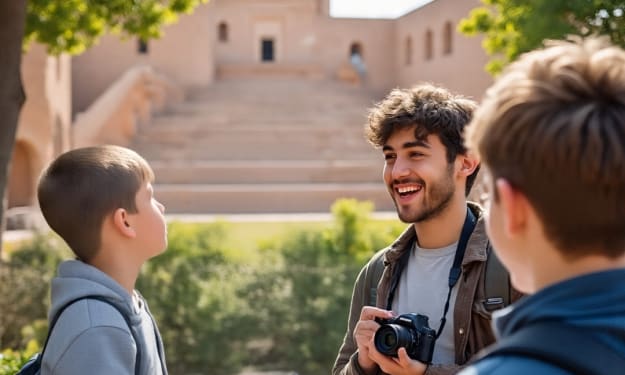
It was a bright morning filled with excitement and anticipation. The air buzzed with chatter as students gathered near the school gate, ready to begin their long-awaited study tour. Bags were packed, cameras were charged, and hearts were full of curiosity. For many, it was their first journey away from the familiar walls of the classroom — a chance to learn through experience rather than from books. Our destination was the ancient city of Lahore, a place rich with history, architecture, and culture. The bus ride began with laughter and songs echoing through the air. Teachers smiled as students shared snacks, took pictures, and admired the passing scenery. Slowly, the concrete city faded away, replaced by green fields and distant mountains. It felt as if we were traveling not just through space, but through time itself — leaving behind the routine of school to explore the world beyond. Our first stop was the Lahore Museum, often called the “treasure house of history.” As we stepped inside, we were greeted by rows of artifacts, each telling its own story. The ancient coins, sculptures, and paintings revealed the artistic beauty and cultural depth of our ancestors. Our history teacher guided us through each section, explaining how these relics connected to what we had studied in our textbooks. But this time, the learning was different — it was alive. We could see, touch, and feel the things that once existed only in our imagination. Next, we visited the Badshahi Mosque, one of the grandest architectural wonders of Mughal times. Standing beneath its massive domes, we felt both small and inspired. The fine carvings on the red sandstone walls glowed warmly under the sun, reflecting centuries of craftsmanship. Our teacher spoke softly about the Mughal emperors, their vision, and their love for art and architecture. As the call to prayer echoed through the courtyard, a deep sense of peace and respect filled our hearts. After lunch, we went to the Shalimar Gardens, a masterpiece of symmetry and beauty. The sound of flowing water, the fragrance of blooming flowers, and the sight of ancient fountains created an atmosphere of calm and wonder. Students sketched, took photos, and noted down their observations for later reports. Some of us even sat under the shade of old trees, discussing how nature and history blend together to form such timeless beauty. The next day, our study tour continued with a visit to a science museum. The experience was completely different but equally fascinating. We interacted with models of planets, human anatomy, and machines. There were hands-on exhibits that allowed us to experiment and understand how things worked. For the first time, many of us realized that science is not just about formulas — it’s about discovery. Learning through experience made even the most complex ideas seem simple and exciting. Throughout the trip, our teachers encouraged us to observe, ask questions, and connect what we saw to what we had learned. Every evening, we gathered together for short reflection sessions. Students shared what inspired them most during the day — some spoke about the history, others about the science, and a few about the bonds of friendship that had grown stronger during the journey. On the final day, before returning home, we visited the Wagah Border. The flag-lowering ceremony filled us with pride and emotion. The discipline, energy, and unity of the soldiers reminded us of the strength and spirit of our nation. It was a powerful lesson in patriotism that no classroom could ever teach. As the bus drove back toward our school, silence filled the air. Everyone seemed lost in thought, replaying memories of the trip. We had seen, learned, and felt so much in just a few days. The study tour had not only enriched our knowledge but also transformed the way we looked at learning. We realized that education is not confined to four walls or limited to exams. It’s a lifelong journey — one that involves seeing, questioning, and understanding the world around us. The laughter we shared, the lessons we learned, and the experiences we gained became treasures we would carry forever. When we finally reached our school, the same gates that once symbolized our starting point now felt like a return from a meaningful adventure. The study tour had ended, but its impact would continue for years to come — inspiring us to keep exploring, keep learning, and keep growing beyond the classroom.
By Muhammad Saad 2 months ago in Education
MAN AND EMBRIOLOGY;A DEVINE INSIGHT VERIFIED BY MODERN SCIENCE
Introduction The relationship between science and religion has often been one of debate and curiosity. One of the most fascinating intersections between the two lies in the field of embryology—the study of human development in the womb—and its correlation with verses found in the Holy Quran, revealed over 1,400 years ago. What makes this subject even more remarkable is that several renowned scientists, particularly in the field of embryology, have acknowledged the accuracy of these Quranic statements long before the invention of modern imaging tools.
By Muhammad Yaseen2 months ago in Education
“The King Whose Throne Touched the Heavens — The Story of Prophet Sulaiman (AS)”
Long ago, in the golden age of prophets, there lived a man whose wisdom was unmatched and whose kingdom stretched beyond human imagination — Prophet Sulaiman (AS), the son of Prophet Dawood (AS).
By Anees Khan2 months ago in Education
🦁 The Lion and the Cat: The Fall of Pride
🌳 Once Upon a Time in a Dense Forest Long ago, in the heart of a deep green forest, lived a mighty lion. He was known as the king of the jungle. Every animal feared him, for his roar could make even the ground tremble. The lion was proud of his strength, power, and royal status.
By Anees Khan3 months ago in Education
Rich Dad Poor Dad: Summary
Rich Dad Poor Dad: Summary By Robert T. Kiyosaki Rich Dad Poor Dad is one of the most influential books on personal finance and wealth mindset ever written. It isn’t just about money—it’s about how people think about money. The author, Robert Kiyosaki, shares the lessons he learned growing up with two father figures: his biological father (the Poor Dad) and his best friend’s father (the Rich Dad). Through their contrasting beliefs, Kiyosaki reveals how attitudes toward money shape people’s futures.
By Yaseen khan3 months ago in Education