
Neutral Biography of Donald J. Trump
Trump's star on the Hollywood Walk of Fame


Neutral Biography of Donald J. Trump
Donald John Trump was born on June 14, 1946, in Queens, New York City, to real estate developer Fred Trump and Mary Anne MacLeod Trump. He was the fourth of five children and grew up in a financially successful household that introduced him early to the world of real estate and business operations. Trump attended the Kew-Forest School before being enrolled at the New York Military Academy, where he completed eighth grade through high school. He later attended Fordham University for two years before transferring to the Wharton School of the University of Pennsylvania, earning a Bachelor of Science in economics in 1968.
After college, Trump joined his father’s company, which focused on middle‑class rental housing in the New York City boroughs. Over time, he assumed greater leadership and shifted development efforts toward Manhattan, eventually rebranding the business as The Trump Organization. He gained prominence through significant real estate ventures—including the Grand Hyatt Hotel and Trump Tower—as well as through expansions into casinos, entertainment properties, and branding deals. Though some projects succeeded, others faced financial challenges that led to multiple corporate bankruptcies during the 1980s and 1990s.
Trump later broadened his public visibility through media ventures, particularly as the host of the long-running reality television show *The Apprentice*. In 2015, he entered the political arena by announcing his candidacy for the U.S. presidency. Running as a Republican, he won the 2016 election and served as the 45th president of the United States from 2017 to 2021. Trump won a second, nonconsecutive term in 2024, becoming both the 45th and 47th president. His political career has been marked by major policy initiatives, legal challenges, investigations, and two impeachments, each of which made his presidency historically notable and widely discussed across media and academic analysis.
Trump’s Atlantic City Casinos
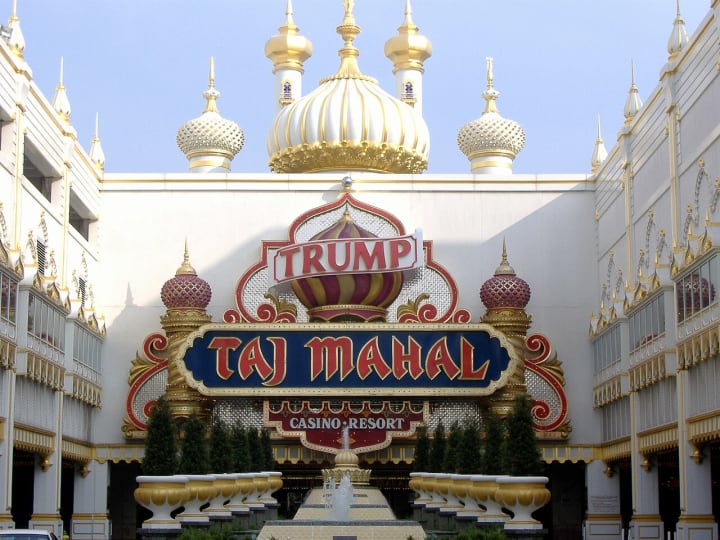
Donald Trump entered the Atlantic City casino market in the 1980s. His first major venture was Harrah’s at Trump Plaza, opened in 1984 with support from Holiday Corporation. The casino struggled financially, and Trump bought out Holiday’s stake in 1986. In 1985, he also purchased the unopened Atlantic City Hilton, renaming it Trump’s Castle; both Trump Plaza and Trump’s Castle later filed for Chapter 11 bankruptcy in 1992.
Trump expanded further by acquiring the Trump Taj Mahal in 1988, a project heavily financed with high‑interest junk bonds. The casino opened in 1990 but entered bankruptcy the following year, forcing Trump to give up a large portion of his ownership and sell assets—including his airline and yacht—to reduce personal debt. In 1995, he formed Trump Hotels & Casino Resorts (THCR), which took over his casinos. THCR later purchased the Taj Mahal and Trump’s Castle but ultimately declared bankruptcy in 2004 and 2009, reducing Trump’s ownership to about 10 percent. He remained chairman until 2009.
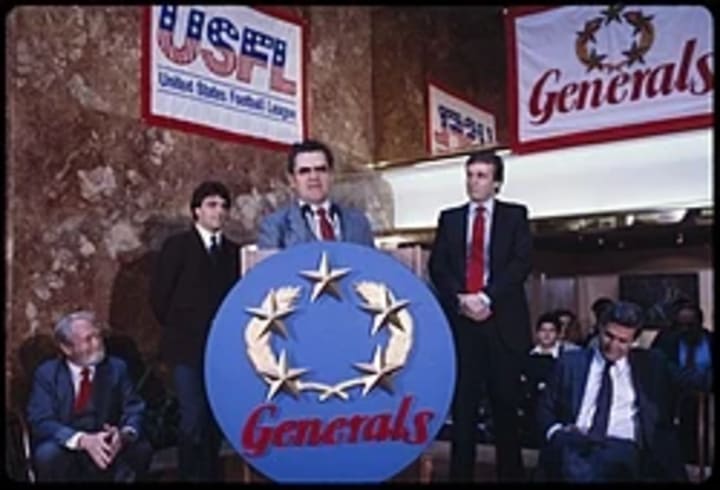
In 1970, Trump invested $70,000 of his father's wealth to receive billing as coproducer of a Broadway comedy—and lost the money. After making low-ball bids for the New York Mets and the Cleveland Indians baseball teams, in 1983 for about $6 million, he purchased the New Jersey Generals, a team in the United States Football League. The league folded after the 1985 season, largely due to his attempt to move to a fall schedule (when it would have competed with the National Football League for audience) and his attempt to force a merger with the NFL by bringing an antitrust suit. Trump and his Plaza Hotel hosted several boxing matches at the Atlantic City Convention Hall. In 1989 and 1990, he lent his name to the Tour de Trump cycling stage race, an attempt to create an American equivalent of European races such as the Tour de France or the Giro d'Italia.
From 1986 to 1988, he purchased significant blocks of shares in various public companies while suggesting that he intended to take over the company and then sold his shares for a profit, leading some observers to think he was engaged in greenmail. The New York Times found that he initially made millions of dollars in such stock transactions, but "lost most, if not all, of those gains after investors stopped taking his takeover talk seriously".
A red star with a bronze outline and "Donald Trump" and a TV icon written on it in bronze, embedded in a black terrazzo sidewalk
Trump's star on the Hollywood Walk of Fame
In 1970, Trump invested $70,000 of his father's wealth to receive billing as coproducer of a Broadway comedy—and lost the money. After making low-ball bids for the New York Mets and the Cleveland Indians baseball teams, in 1983 for about $6 million, he purchased the New Jersey Generals, a team in the United States Football League. The league folded after the 1985 season, largely due to his attempt to move to a fall schedule (when it would have competed with the National Football League for audience) and his attempt to force a merger with the NFL by bringing an antitrust suit. Trump and his Plaza Hotel hosted several boxing matches at the Atlantic City Convention Hall. In 1989 and 1990, he lent his name to the Tour de Trump cycling stage race, an attempt to create an American equivalent of European races such as the Tour de France or the Giro d'Italia.
From 1986 to 1988, he purchased significant blocks of shares in various public companies while suggesting that he intended to take over the company and then sold his shares for a profit, leading some observers to think he was engaged in greenmail. The New York Times found that he initially made millions of dollars in such stock transactions, but "lost most, if not all, of those gains after investors stopped taking his takeover talk seriously".
A red star with a bronze outline and "Donald Trump" and a TV icon written on it in bronze, embedded in a black terrazzo sidewalk
Trump's star on the Hollywood Walk of Fame
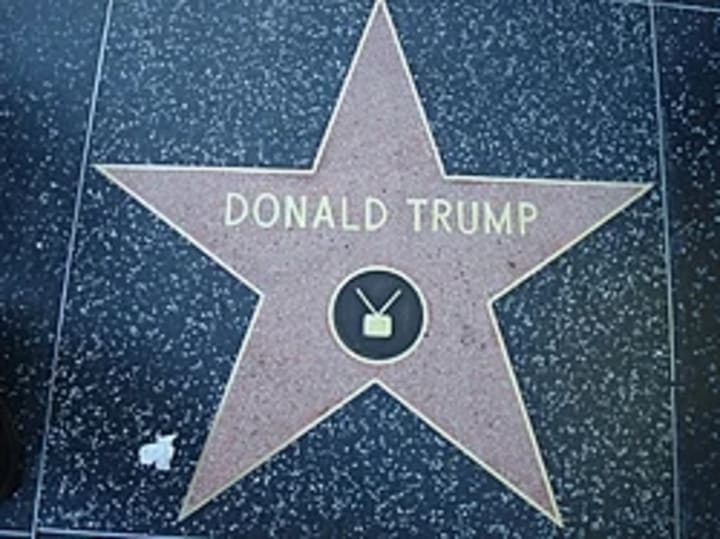
In 1988, Trump purchased the Eastern Air Lines Shuttle, financing the purchase with $380 million (equivalent to $1.01 billion in 2024) in loans from a syndicate of 22 banks. He renamed the airline Trump Shuttle and operated it until 1992. He defaulted on his loans in 1991, and ownership passed to the banks. In 1996, he purchased the Miss Universe pageants, including Miss USA and Miss Teen USA. Due to disagreements with CBS about scheduling, he took both pageants to NBC in 2002. In 2007, he received a star on the Hollywood Walk of Fame for his work as producer of Miss Universe. NBC and Univision dropped the pageants in June 2015 in reaction to his comments about Mexican immigrants.
In 2005, Trump cofounded Trump University, a company that sold real estate seminars for up to $35,000. After New York State authorities notified the company that its use of "university" violated state law because it was not an academic institution, its name was changed to the Trump Entrepreneur Initiative in 2010. In 2013, the State of New York filed a $40 million civil suit against Trump University, alleging that the company made false statements and defrauded consumers. Additionally, two class actions were filed in federal court against Trump and his companies. Internal documents revealed that employees were instructed to use a hard-sell approach, and former employees testified that Trump University had defrauded or lied to its students. Shortly after he won the 2016 presidential election, he agreed to pay a total of $25 million to settle the three cases.
In 1988, Trump purchased the Eastern Air Lines Shuttle, financing the purchase with $380 million (equivalent to $1.01 billion in 2024) in loans from a syndicate of 22 banks. He renamed the airline Trump Shuttle and operated it until 1992. He defaulted on his loans in 1991, and ownership passed to the banks. In 1996, he purchased the Miss Universe pageants, including Miss USA and Miss Teen USA. Due to disagreements with CBS about scheduling, he took both pageants to NBC in 2002. In 2007, he received a star on the Hollywood Walk of Fame for his work as producer of Miss Universe. NBC and Univision dropped the pageants in June 2015 in reaction to his comments about Mexican immigrants.
In 2005, Trump cofounded Trump University, a company that sold real estate seminars for up to $35,000. After New York State authorities notified the company that its use of "university" violated state law because it was not an academic institution, its name was changed to the Trump Entrepreneur Initiative in 2010. In 2013, the State of New York filed a $40 million civil suit against Trump University, alleging that the company made false statements and defrauded consumers. Additionally, two class actions were filed in federal court against Trump and his companies. Internal documents revealed that employees were instructed to use a hard-sell approach, and former employees testified that Trump University had defrauded or lied to its students. Shortly after he won the 2016 presidential election, he agreed to pay a total of $25 million to settle the three cases.
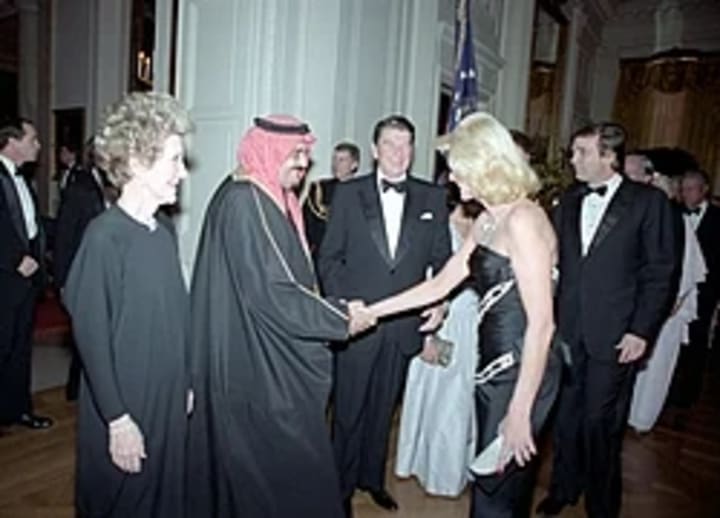
Donald Trump has often described his business beginnings as starting with “a small loan of a million dollars” from his father, Fred Trump. In reality, he received far more substantial financial support from his father’s businesses, including at least $60 million in loans—much of which he did not repay—and a total of about $413 million (inflation‑adjusted to 2018) over the course of his early career. Throughout the 1980s, Trump also attempted to influence public perceptions of his wealth; in 1984, he called a journalist while posing as a Trump Organization spokesperson named “John Barron,” attempting to secure a higher placement on the Forbes 400 list.
Trump’s self‑reported net worth has varied widely, ranging from –$900 million in 1990 to claims of $10 billion in 2015. Independent estimates have differed: Forbes valued his net worth at $4.5 billion in 2015 and later $5.1 billion in 2025, ranking him as the 700th wealthiest person in the world that year.
Trump’s Immigration Policies (2017–2021)
During his first term, Donald Trump significantly increased immigration enforcement, describing illegal immigration as an “invasion” and sending thousands of troops to the U.S.–Mexico border. His administration reduced refugee admissions to historically low levels and tightened rules for immigrants who relied on public benefits. A major campaign promise was the border wall: by the end of his term, the U.S. built 73 miles of new wall in previously unbarriered areas and replaced 365 miles of older fencing. A dispute with Congress over wall funding led to a 35‑day government shutdown, after which Trump declared a national emergency to redirect additional funds toward wall construction.
Trump also issued a 2017 executive order restricting entry for citizens of several Muslim‑majority countries, prompting widespread protests and multiple legal challenges. After revisions and continued litigation, the Supreme Court ultimately upheld a later version of the travel ban in 2019. Additional restrictions extended to nationals of North Korea, Chad, and certain Venezuelan officials.
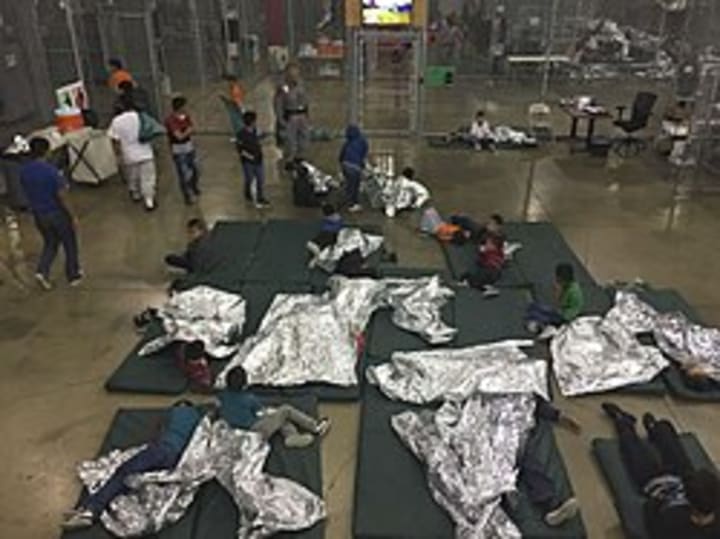
From 2017 to 2018, the administration implemented a family‑separation policy that removed over 4,400 children from parents at the border. Public backlash prompted Trump to sign an order in June 2018 directing families to be detained together unless safety concerns existed. A federal court later required reunifications and limited further separations, though more than 1,000 additional children were still separated afterward. As of April 2024, over 1,300 children were not confirmed as reunited.
Trump’s First Presidency (2017–2021)
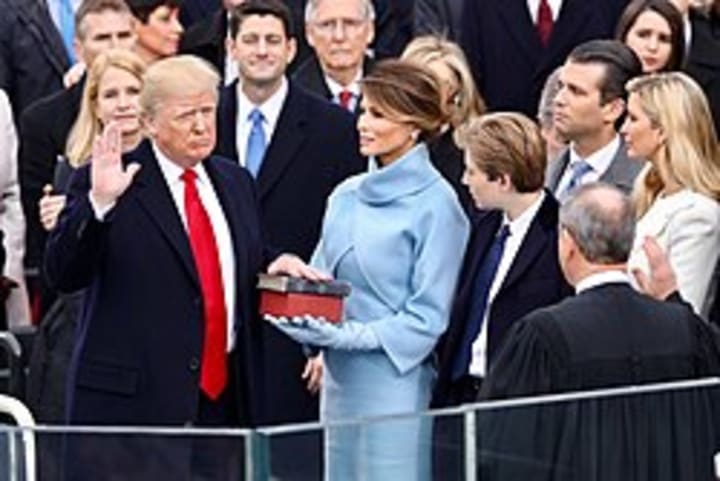
Donald Trump was inaugurated as the 45th president of the United States on January 20, 2017. The following day, large demonstrations known as the Women’s Marches took place worldwide, with an estimated 2.6 million participants, including about 500,000 in Washington, D.C. During his first week in office, Trump signed several major executive orders. These included measures to begin repealing the Affordable Care Act, withdrawing the United States from the Trans‑Pacific Partnership negotiations, advancing the Keystone XL and Dakota Access pipelines, and initiating plans for constructing a wall along the U.S.–Mexico border

January 6, 2021 Capitol Events
On January 6, 2021, as Congress met to certify the results of the presidential election, Donald Trump held a rally where he repeated claims that the election should be overturned and urged supporters to “fight like hell” and march to the U.S. Capitol. Following the rally, a crowd of his supporters forced their way into the Capitol building, interrupting the certification process and prompting the evacuation of lawmakers. More than 140 police officers were injured, and five people died during or shortly after the events. The attack has been described by various observers as an attempted self‑coup. Later that night, Congress reconvened and certified Joe Biden’s victory in the early hours of January 7.
Neutral Overview of Scholarly Discussions on Political Rhetoric, Race, and Gender
Political scientists and sociologists frequently analyze how public figures’ rhetoric influences voter attitudes, social dynamics, and political polarization. Research in these areas often examines how statements made by political leaders can shape public perceptions about race, religion, immigration, and national identity. Scholars commonly investigate how political messaging may appeal to specific demographic groups, how supporters interpret such messaging, and how these patterns contribute to broader electoral trends.
In addition to rhetoric, academic studies also examine how public controversies—such as disputes over political statements, media coverage, or public accusations—affect political behavior. These analyses focus not on the personal guilt or innocence of specific individuals but on how public reactions to such controversies influence voter alignment, political mobilization, and public opinion. Researchers also explore the role of misinformation, conspiracy claims, and online discourse in shaping how citizens understand political events.
Gender-related political communication is another area of study, including how public figures address topics involving women, media portrayals of gender issues, and how allegations or controversies influence public trust. Scholars often evaluate how gender dynamics in politics can shape electoral outcomes, partisan identity, and the broader political climate. By studying these patterns, researchers aim to understand how rhetoric and public reactions contribute to long-term shifts in political culture.
How Public Figure Associations Are Analyzed in Political Science
Political scientists and sociologists often examine how associations between public figures and controversial individuals influence public perception, political legitimacy, and media narratives. These analyses do not focus on assigning guilt or innocence but instead explore the political effects of such relationships. Researchers generally study how personal, business, or social ties can become politically significant when the associated individual becomes involved in legal issues, scandals, or public controversy. The focus tends to be on how these connections shape public trust, voter attitudes, and the overall narrative surrounding a political leader.
A key area of study is media framing, where scholars explore how news outlets portray such relationships and how coverage can amplify or diminish their political impact. Media attention often intensifies when the public demands transparency, such as access to government documents or investigations involving disputed or sensitive matters. Researchers analyze how administrations respond to document‑release requests, how redactions influence public interpretation, and how transparency—or the lack of it—affects institutional credibility. This includes studying how public expectations of openness can collide with legal, security, or political constraints.
Another common research focus is how controversial associations shape political polarization. Scholars examine how supporters and opponents interpret the same information differently, often reinforcing preexisting beliefs. This includes analyzing how political campaigns navigate sensitive topics, how opponents use associations to frame narratives, and how leaders respond to public pressure. By studying these patterns, researchers aim to understand the broader implications of political reputations, public discourse, and accountability in democratic systems.
About the Creator
Organic Products
I was born and raised in Chicago but lived all over the Midwest. I am health, safety, and Environmental personnel at the shipyard. Please subscribe to my page and support me and share my stories to the world. Thank you for your time!
Keep reading
More stories from Organic Products and writers in Education and other communities.
The Pet Owner's Safety Net
Why Pet Insurance is a Lifesaver for Your Furry Friend Pets are more than just animals; they are cherished members of our families. They bring joy, companionship, and unconditional love into our lives. However, just like humans, pets can experience unexpected illnesses or accidents that require medical attention. The cost of veterinary care has risen significantly over the years, and without financial protection, many pet owners find themselves facing heartbreaking decisions. Pet insurance is a vital investment that ensures your furry friend receives the best possible care without causing financial strain.
By Organic Products 11 months ago in Education
The Comfort of Arrival: Why Certain Destinations Instantly Feel Familiar
There are moments in travel that defy logic. You arrive in a place you have never visited before, step onto its streets, breathe in its air, and suddenly feel at ease. There is no adjustment period, no sense of being out of place. Instead, there is a quiet recognition, as if the destination has been waiting for you. This feeling of instant belonging is not accidental, nor is it purely romantic imagination. It is the result of emotional, cultural, psychological, and environmental factors working together to create a sense of home far from home.
By Producer James Simon4 days ago in Education
The Proven Natural Skincare Secret with Healthy Skin
Healthy skin does not come from harsh products or complicated routines. It comes from working with nature, not against it. The natural skincare secret that many people overlook is the power of raw honey as a daily skin ally. This simple ingredient has been used for generations, yet many still do not understand its effectiveness. When used correctly, raw honey can change how your skin looks and feels.
By Kelln Small4 days ago in Education


Comments
There are no comments for this story
Be the first to respond and start the conversation.