
How Import Export Data Drives Agricultural Export Growth In Latin America
Import Export Data drives Agricultural Export

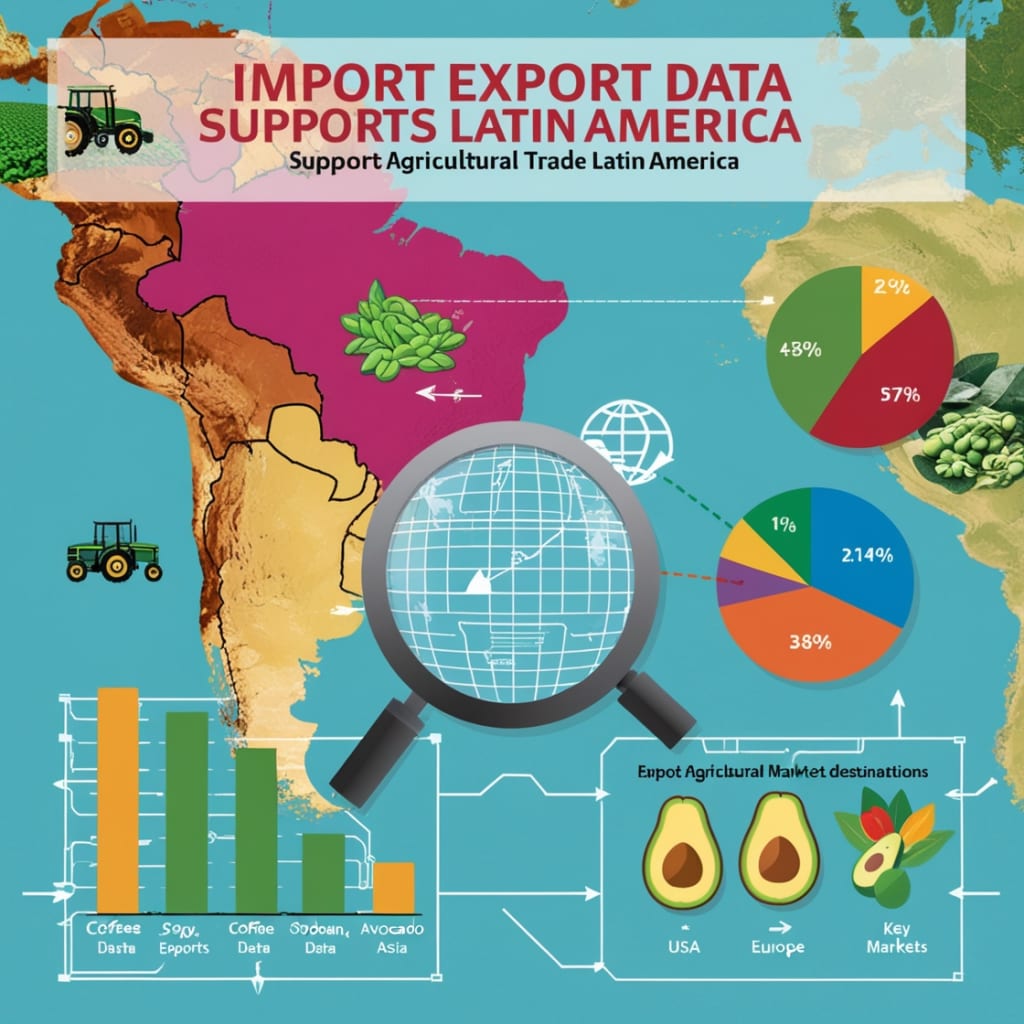
Agriculture forms the backbone of Latin America’s economy, with the region being a significant global supplier of crops, livestock, and processed foods. Leveraging import export data is proving to be a game-changer for agricultural exporters in Latin America, helping them penetrate new markets, optimize supply chains, and increase profitability.
This article explores how trade data empowers agricultural businesses in the region, offering actionable insights and strategies for sustainable growth.
Why Import Export Data Matters in Agriculture
1. Understanding Market Demand Trends
Import export data provides an in-depth view of market demands globally. For instance, tracking the import records of grains in Asia can help Latin American exporters identify opportunities to cater to rising demand for soybeans or corn.
2. Identifying Emerging Markets
Exporters can use this data to find emerging markets with increasing demand for agricultural products such as avocados, coffee, or bananas, staples of Latin American exports. Countries with growing middle classes and urbanization, like India or China, present excellent opportunities.
3. Competitor Analysis
By analyzing trade data, businesses can study their competitors’ activities, including pricing strategies, market share, and the top importing regions. This allows exporters to refine their strategies to stay ahead in competitive markets.
Role of Import Export Data in Optimizing Agricultural Exports
1. Improving Supply Chain Efficiency
Import export data reveals bottlenecks in logistics, such as delays at ports or high shipping costs to certain destinations. By analyzing this data, exporters can streamline operations and reduce costs.
2. Customizing Product Offerings
Different regions have unique preferences for agricultural products. For example:
- European markets demand high-quality organic produce.
- Asian markets prefer specific fruit varieties such as dragon fruit or tropical mangoes.
Trade data helps exporters tailor their offerings to meet these regional preferences, increasing customer satisfaction and market share.
3. Ensuring Compliance with Trade Regulations
Latin America faces various international trade agreements, such as MERCOSUR and the USMCA. By studying customs data, exporters can ensure compliance with tariffs, quotas, and documentation requirements, minimizing the risk of penalties.
Top Agricultural Exports from Latin America
1. Soybeans and Grains
Latin America, particularly Brazil and Argentina, is a leading exporter of soybeans. Import export data highlights the growing demand in China, helping exporters plan production and logistics accordingly.
2. Coffee and Cocoa
Countries like Colombia and Ecuador leverage trade data to understand market trends in premium coffee and cocoa products, capitalizing on their reputation for quality.
3. Fresh Fruits and Vegetables
Latin America is a key supplier of bananas, avocados, and berries. Import data from Europe and the US indicates consistent demand for these products, making it easier for exporters to target high-growth regions.
Case Study: Boosting Avocado Exports Using Trade Data
Latin America, led by Mexico, dominates the global avocado market. Import export data revealed rising demand in the US and European markets for Hass avocados. Exporters:
- Adjusted production schedules to meet seasonal demand peaks.
- Diversified shipping routes to avoid bottlenecks.
- Invested in sustainable farming practices to meet international standards.
This data-driven approach resulted in a 15% growth in avocado exports in just two years.
Challenges in Using Import Export Data
While the benefits are significant, exporters may face challenges:
- Data Accuracy: Inconsistent or outdated data can lead to poor decision-making.
- Complexity: Understanding and analyzing raw data requires expertise.
- Regulatory Hurdles: Exporters need to interpret data in the context of ever-changing trade regulations.
How to Access Reliable Import Export Data
Exporters in Latin America can access high-quality trade data from platforms like TradeImeX, government databases, and private service providers. Look for the following features:
- Real-time updates.
- Detailed shipment records, including HS codes and buyer information.
- Insights into market trends and competitor activities.
Future Outlook: Driving Agricultural Growth with Data
Import export data is set to play an even greater role in Latin America’s agricultural sector. With increasing digitization, data accuracy and accessibility will improve, empowering exporters to make informed decisions, explore new markets, and enhance profitability.
By investing in data-driven strategies, Latin America can continue to strengthen its position as a global agricultural powerhouse.
Also Read About: Argentina Food Exports 2023
About the Creator
TradeImex Info Solution
Leverage global trade data with TradeImeX - the best import-export data provider for 100+ countries. Find best buyers and suppliers with our importers exporters data, get live shipment data and port data reports.
Keep reading
More stories from TradeImex Info Solution and writers in Education and other communities.
Global Olive Oil:Top Suppliers and Market Trends
Olive oil is a key commodity in the global food industry, known for its numerous health benefits and culinary applications. The demand for high-quality olive oil has been increasing, driving international trade and prompting major producing nations to expand their exports. In this blog, we explore the global olive oil export market, identify the top olive oil exporters, and analyze key trends shaping the industry.
By TradeImex Info Solution 12 months ago in Education
Active Bodies, Brave Minds: How Exercise Helps Children Grow Strong From the Inside Out
Raising children who are confident, adaptable, and emotionally strong is a goal shared by parents, educators, and communities alike. While many factors contribute to healthy development, regular exercise stands out as one of the most effective and natural ways to shape resilient, confident kids. Physical activity influences not only how children grow but also how they think, feel, and respond to the world around them.
By Marissa Haugh3 days ago in Education
Morgan Silver Dollars: A Beginner's Guide to Identifying Key Dates and Mint Marks
For over eight years as a Senior Numismatic Analyst, I've seen the glint in a new collector's eye when they hold their first Morgan Silver Dollar. It's a powerful feeling—the weight of 90% pure silver, the history in Lady Liberty's profile, the sheer size of America's most iconic coin. Yet, with hundreds of millions minted across 27 years and five mints, it's easy to feel overwhelmed. A common 1921 Morgan might be worth $50, while a pristine 1895 Proof commands over $100,000. The difference lies in the tiny details of dates and mint marks. This guide will give you the foundational map to navigate this classic series, turning confusion into confident identification.
By Laura Bennett3 days ago in Education



Comments
There are no comments for this story
Be the first to respond and start the conversation.