
Morgan Silver Dollars: A Beginner's Guide to Identifying Key Dates and Mint Marks
Let's check the key dates and mint marks


For over eight years as a Senior Numismatic Analyst, I've seen the glint in a new collector's eye when they hold their first Morgan Silver Dollar. It's a powerful feeling—the weight of 90% pure silver, the history in Lady Liberty's profile, the sheer size of America's most iconic coin. Yet, with hundreds of millions minted across 27 years and five mints, it's easy to feel overwhelmed. A common 1921 Morgan might be worth $50, while a pristine 1895 Proof commands over $100,000. The difference lies in the tiny details of dates and mint marks. This guide will give you the foundational map to navigate this classic series, turning confusion into confident identification.
Understanding the Morgan Dollar's Blueprint: What You're Looking At
Before hunting for rarities, you must know the standard features. Every Morgan Dollar follows the same basic design, established by George T. Morgan in 1878.
The obverse (front) features a left-facing profile of Lady Liberty wearing a Phrygian cap with the word "LIBERTY" on a ribbon. The motto "E PLURIBUS UNUM" arcs above her head, and stars encircle the design—13 for the original colonies along the left and right edges, with the date centered at the bottom.
The reverse (back) displays a majestic eagle with outstretched wings, clutching an olive branch and arrows. "UNITED STATES OF AMERICA" and "ONE DOLLAR" form the outer ring. The key detail for identification is at the very bottom, between the eagle's tail feathers and the "D" in "DOLLAR." This is where you will find the mint mark, if one exists.
Expert Insight from Laura: The first habit every new collector must build is this: Check the mint mark first, then the date. A common date from a rare mint can be more valuable than a rare date from Philadelphia. Develop a systematic routine: Obverse for date, reverse for mint mark, then assess condition.
The Mint Marks: Your Guide to Origin and Rarity
The mint mark tells you where the coin was struck. Its presence or absence dramatically affects scarcity. There are five possibilities:
1. No Mint Mark: Struck at the Philadelphia Mint, the main U.S. Mint. Coins from Philadelphia typically had the highest mintages and are often the most common.
2. "CC" (Carson City): The legendary mint. Operating from 1878 to 1893, "CC" Morgans have a wild western aura and are highly sought-after. They are generally scarcer and carry a premium, even in lower grades.
3. "S" (San Francisco): A major mint that produced Morgan Dollars for the entire series. While many "S" mint coins are common, several key dates (like 1893-S) are major rarities.
4. "O" (New Orleans): Another mint that operated for most of the series. "O" mint coins are plentiful for some years but include important conditional rarities.
5. "D" (Denver): The Denver Mint only produced Morgan Dollars in 1921, the final year of the series. The 1921-D is common but is the sole "D" mint issue to look for.
The Key to Value: An Overview of Major Key Dates
While condition is always paramount, certain dates and mint combinations are famous for their low original mintages or survival rates. These are the "key dates" that form the backbone of a valuable collection.
The "King" of Circulation Strikes: The 1893-S
This is the undisputed major key date for circulated coins. With a tiny mintage of just 100,000 coins (compared to millions for other years), and heavy melting in the early 20th century, finding any 1893-S in any condition is a significant event for a collector. Even in well-worn grades, it commands a four- or five-figure price.
The Philadelphia Rarities: 1895 and 1889-CC
· 1895 (No Mint Mark): Often called the "King of Morgan Dollars." While 12,880 Proof coins were struck for collectors, no business-strike circulation examples are known to exist. Any 1895 Morgan without a mint mark offered as a business strike is almost certainly a counterfeit or an altered date. This is the series' greatest mystery and its most famous rarity.
· 1889-CC: Carson City's key date. It has the lowest mintage of any CC Morgan (just 350,000) and is exceedingly difficult to find in any grade above very fine. It is the cornerstone of a complete "CC" mint set.
Other Notable Key Dates to Memorize:
· 1892-S: Low mintage, very scarce in mint state.
· 1894: Scarce across all mints, with the 1894-O and 1894-S being particularly tough finds.
· 1903-O: An enormous mintage, but almost all were melted, making surviving examples very rare, especially in high grades.
A Practical Starter Table: Where to Begin Your Search
As a beginner, you will most likely encounter common-date Morgan Dollars. This table helps you understand the basic landscape of the series for the first and last years of production.
Date & Mint Mark Mintage Rarity Level for Beginners Why It Matters
1878 (Philadelphia, No Mint Mark) 10.5 million Common The first year of issue. Look for different "tail feather" varieties (8 Tail Feathers, 7/8 Tail Feathers, 7 Tail Feathers) which are fun for new collectors to identify.
1878-CC 2.2 million Scarce An early Carson City issue. While not a major key, it's the first "CC" mint and always carries a premium over a common Philadelphia coin.
1921 (Philadelphia, No Mint Mark) 44.7 million Very Common The final Philadelphia issue. High mintage means it's affordable and a perfect coin to practice grading on.
1921-D 20.3 million Common The only Denver Mint Morgan Dollar. Easy to find and identify.
1921-S 21.7 million Common The final San Francisco issue. Like the 1921 and 1921-D, it's a high-mintage, affordable coin to start with.
Strategic Integration: Once you've identified the date and mint mark of your Morgan, the next critical step is determining its grade (condition). This is where value is decided. An online coin value checker that incorporates both date/mint mark data and professional grading standards is an indispensable tool. It allows you to move from simple identification to understanding potential market value, helping you make informed decisions whether you're buying, selling, or just cataloging your find.
The Next Step: Grading and Authentication
Identifying the date and mint mark is only half the battle. A Morgan Dollar's value is a direct product of its condition, or grade. A worn, heavily circulated ("Good" or "Fine") coin shows flat details and little original luster. An uncirculated ("Mint State") coin retains its full, frosty or satiny luster as it left the mint, with no wear on the highest points of Liberty's cheek or the eagle's feathers.
For key dates or any coin you believe may be valuable, consider professional grading by services like PCGS or NGC. They authenticate the coin, assign a definitive grade, and seal it in a tamper-proof holder. This removes all doubt about authenticity and condition, protecting your investment. Before that step, using a comprehensive Coin ID Scanner resource can compare coin's features to verified examples.
Conclusion: Your Journey into History Begins
The world of Morgan Silver Dollars is deep and rewarding. Start by mastering the simple act of finding the date and the mint mark on every coin you handle. Build your knowledge of the key dates, but begin your collection with the abundant later issues to learn about silver quality, strike, and wear patterns. Remember the words of noted numismatist Q. David Bowers: "Buy the book before the coin." In the digital age, that means arming yourself with knowledge from reputable online catalogs, auction archives, and tools. With this guide as your starting point, you're ready to begin the hunt with confidence.
FAQ: Your Morgan Dollar Questions Answered
What is the most valuable Morgan Silver Dollar?
The 1895 Proof (Philadelphia, no mint mark) is the undisputed king in terms of value for authentic specimens, routinely selling for over $100,000. For circulation-strike coins, the 1893-S in mint condition holds the record, with superb examples selling for well into the six figures.
Are all "CC" mint marks valuable?
They are all desirable and carry a premium over Philadelphia coins of the same date and grade, but not all are prohibitively rare. Common-date "CC" coins in circulated condition, like the 1882-CC or 1884-CC, are accessible to beginners and make excellent collection starters.
How can I tell if my Morgan Dollar is a counterfeit?
Common warning signs include: incorrect weight (should be 26.73 grams), wrong metallic "ring" when lightly tapped, mushy or blurred details (especially on the eagle's breast feathers and Liberty's hair), and a date or mint mark that looks altered or out of place. When in serious doubt, comparison with a trusted online coin identification database or consultation with a professional is essential.
What does "VAM" mean?
"VAM" refers to specialized die varieties within the Morgan series, cataloged by researchers Leroy Van Allen and A. George Mallis. These are variations in die cracks, doubling, or other minor features that occurred during the minting process. While most add modest value, some "Hot 50" VAMs are major rarities. This is an advanced area of collecting to explore after mastering dates and mint marks.
Where is the best place to buy my first Morgan Dollar?
Start with reputable coin dealers at shows or established online marketplaces that offer a return policy. For your first purchases, consider certified, slabbed coins from PCGS or NGC. This guarantees authenticity and grade, providing a secure learning experience. Always use a reliable coin value checker to research fair market prices before you buy.
About the Creator
Laura Bennett
Numismatist and data science expert passionate about uncovering the stories behind historical coins through analytics. Bachelor’s degree in Archaeology and a Master’s in Data Science from Harvard University. https://coin-identifier.com/
Keep reading
More stories from Laura Bennett and writers in Education and other communities.
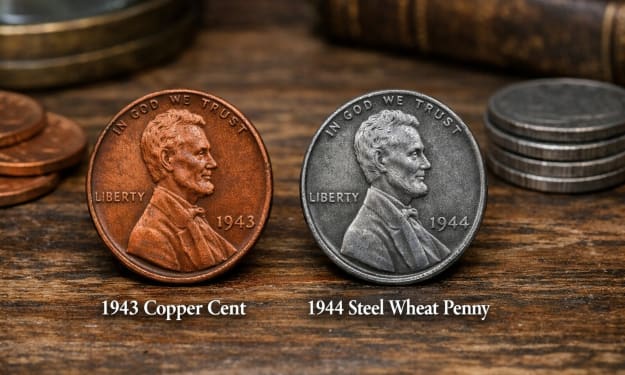
The 1943 Copper Cent vs. The 1944 Steel Penny: How to Spot the Legendary Mistakes
For over eight years as a Senior Numismatic Analyst, few questions ignite the passion of a collector like the legends of the 1943 Copper Cent and the 1944 Steel Penny. These coins represent the most famous mint errors in American history, born from the unprecedented material shifts of World War II. I've examined countless coins brought to me with hope, only to find they were clever counterfeits. The truth is, genuine examples of these errors are extraordinarily rare, but knowing exactly what to look for is the first step from fantasy to fact. This guide will cut through the myths and give you the concrete, professional methods to understand and identify these numismatic legends.
By Laura Bennetta day ago in Education
Why Every Volunteer Should Play a Team Sport to Serve Better and Last Longer
Volunteering takes heart, time, and steady effort. Many volunteers give their energy freely, but they can also feel tired or overwhelmed over time. One strong way to stay balanced and effective is to play a team sport. When people ask why every volunteer should play a team sport, the answer is simple. Team sports build skills, habits, and strength that directly support meaningful volunteer work.
By Paul Wiedmaier4 days ago in Education
Observability, Telemetry, and Incident Recovery in Forex Trading Software
Forex trading software works in a very fast, non-stop environment. Prices change every second, trades happen automatically, and the system must run smoothly at all times. To stay reliable and accurate, modern forex platforms use three important ideas: observability, telemetry, and incident recovery. These help trading systems stay clear, stable, and strong. This blog shows what these ideas mean and why they are important for professional forex trading software.
By james halla day ago in Education



Comments
There are no comments for this story
Be the first to respond and start the conversation.