
How George W. McLaurin Fought With The State of Oklahoma and Won.
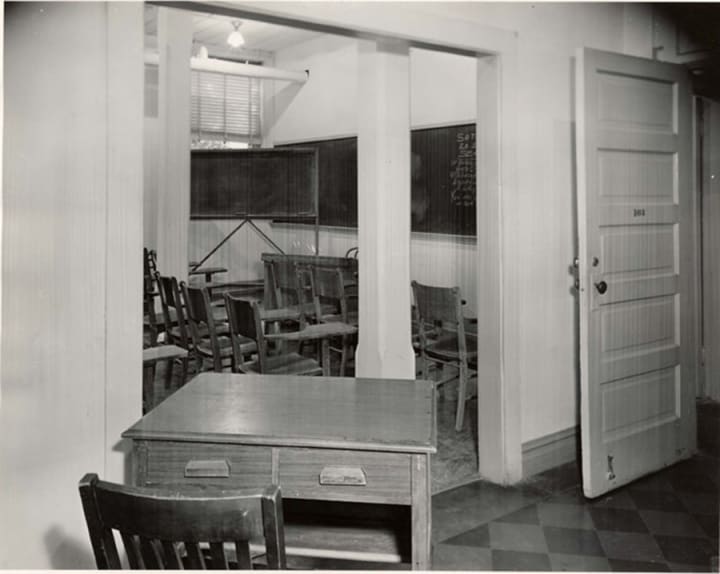
For two years George W. McLaurin took his classes from that closet at University of Oklahoma, the only African American student on a campus of 12,174.

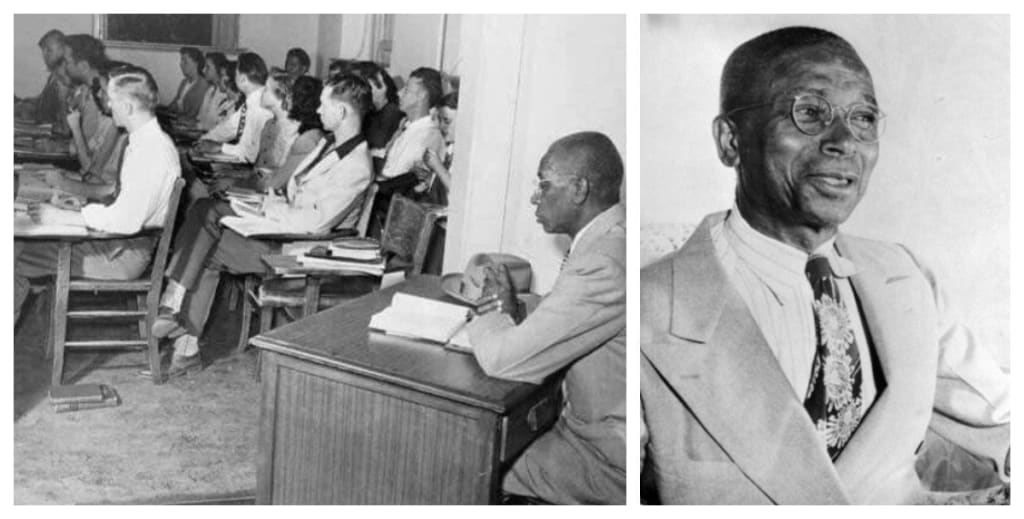
American professor George W. McLaurin, who was born on September 16, 1887, was the first African-American student to enroll at the University of Oklahoma.
The Court Case Between George Mclaurin and the State of Oklahoma State
George McLaurin applied to the University of Oklahoma in 1948, but like many other African American applicants, his application was rejected because of his color. He obtained admission to OU by taking his case to federal court.
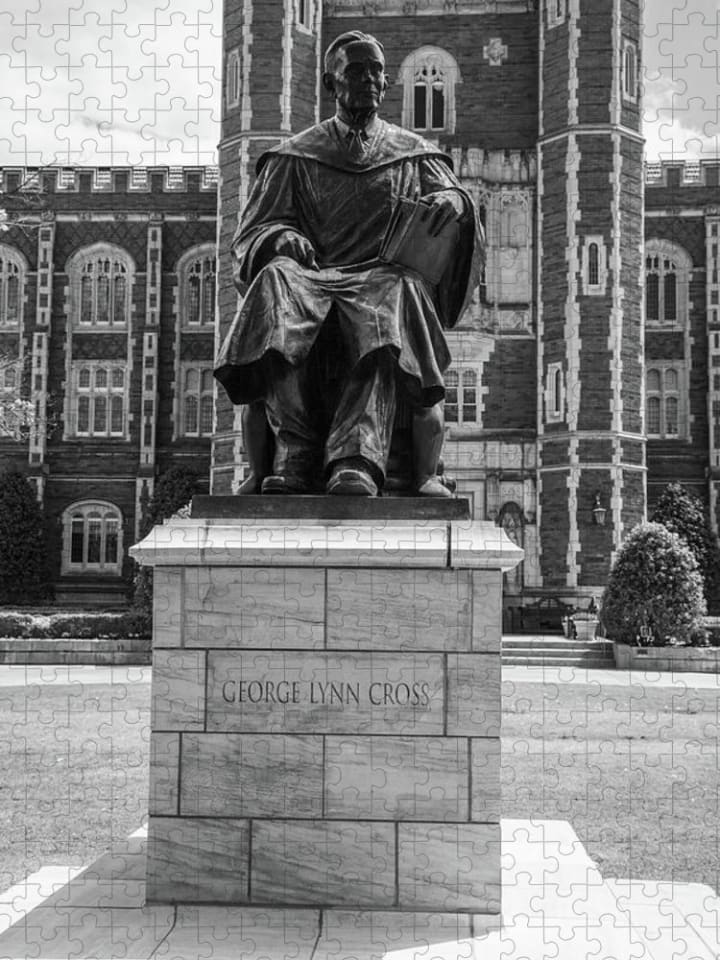
A federal court determined on September 29, 1948, that the University of Oklahoma's denial of McLaurin's admission was unlawful. George Lynn Cross, the university president, arranged for McLaurin's classes to be housed in classrooms with an anteroom so that he could sit apart from the white students while still attending all of his lessons.
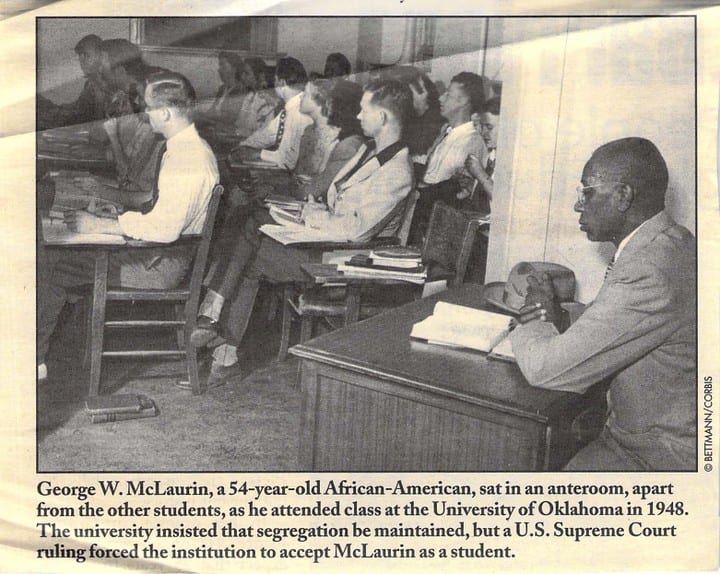
This was done to comply with segregation rules. To hear the lectures while maintaining his distance from the white pupils, he was initially made to sit with his desk and chair outside the classroom, next to the entrance.
The University was required by law to allow McLaurin into the school, but he was entirely segregated from other students. Later when other African-American students were admitted into the school, they went through similar conditions such as different classrooms, libraries, cafeterias, and restrooms.
Special seating sections at sporting events and cafeterias as well as separate restroom facilities are other unique concessions made to maintain segregation.
McLaurin launched a lawsuit in reprisal for these circumstances, claiming that they denied him equality. Because racial segregation is a deeply ingrained social policy of the State of Oklahoma, the District Court rejected his claim and refused his motion. After that, McLaurin brought up his case once more, but this time he made an appeal to the US Supreme Court. The McLaurin against Oklahoma State Regents lawsuit would thus began.
In McLaurin v. Oklahoma State Regents, McLaurin claimed that the way they were handled was in violation of the Fourteenth Amendment.
The Fourteenth Amendment:
"No State shall make or enforce any law which shall abridge the privileges or immunities of citizens of the United States; nor shall any State deprive any person of life, liberty, or property, without due process of law; nor deny to any person within its jurisdiction the equal protection of the laws."
The Supreme Court did not determine that White and African American pupils must be treated equally until 1950.
The "separate but equal" clause in the Plessy v. Ferguson ruling was one of the first to be challenged in Mclaurin v. Oklahoma State Regents, making it a significant case in American history. The case of Mclaurin v. Oklahoma demonstrated how the "separate but equal" clause can still be used to discriminate against people based on their race.
Plessy v. Ferguson:
The historic case Plessy v. Ferguson, 163 U.S. 537 (1896), by the U.S. Supreme Court established the "separate but equal" principle, which stated that racial segregation laws were constitutional as long as they provided equal access to facilities.
The case had a significant impact in history since its verdict paved the path for Plessy v. Ferguson's eventual overturning.
The Mclaurin case against Oklahoma State had a significant impact in history since its verdict paved the path for overturning the Plessy v. Ferguson's ruling.
Mclaurin initially had a desk in the library that was hidden under a stack of newspapers and a solo seat in the cafeteria so that the white students wouldn't see him. The separate but equal provision served as cover for all of these discriminatory actions. A unanimous Supreme Court decision in 1950 found that McLaurin had not been treated equally as required by the Constitution.
Mclaurin excelled exceedingly in his studies. He said;
'Some colleagues looked at me like I was an anima, no one spoke to me, for teachers I didn't even exist, they rarely answered my questions. I dedicated so much to myself, that after my teammates started looking for me and teachers started taking me into consideration. I stopped being invisible to them."
George Mclaurin later became a professor.
About the Creator
Rare Stories
Our goal is to give you stories that will have you hooked.
This is an extension of the Quora space: Rare Stories
X(formerly Twitter): Scarce Stories
Writers:
....xoxo
Reader insights
Nice work
Very well written. Keep up the good work!
Top insights
Compelling and original writing
Creative use of language & vocab
Easy to read and follow
Well-structured & engaging content
Expert insights and opinions
Arguments were carefully researched and presented
Eye opening
Niche topic & fresh perspectives
Heartfelt and relatable
The story invoked strong personal emotions
On-point and relevant
Writing reflected the title & theme
Keep reading
More stories from Rare Stories and writers in Education and other communities.
How Biddy Mason Won Her Freedom and Became A Real Estate Tycoon
Biddy Mason, born into slavery and uneducated her whole life, was a wise woman who recognized her rights. Mason filed a petition for her release after the man who enslaved her forced her to trek 1,700 miles behind a wagon train while carrying her child.
By Rare Stories3 years ago in Education
How Business Coaching Helps Founders Scale With Clarity and Control
Business coaching assists founders to scale since hustle and reactivity are substituted with structure, systems and strategic leadership. Strategic coaching provides clarity in the marketing, operations, leadership, and decision-making roles of the business, eliminating the need to use the owner as the bottleneck, instead enabling the business to expand without havoc, burnout, or firefighting.
By Alice Adams3 days ago in Education
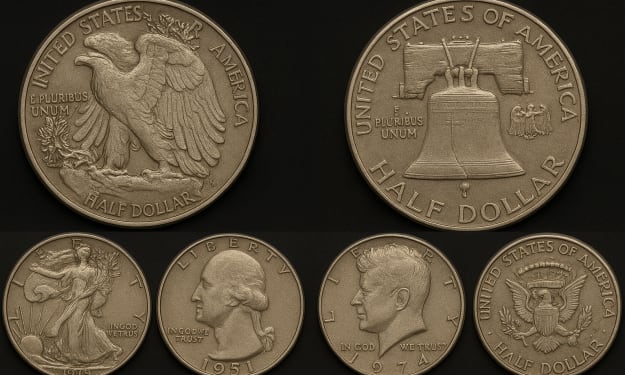
Half Dollars That Defied Time: Kennedy, Franklin & Walking Liberty
If you’ve found yourself holding an old half dollar, you’ve probably wondered: is this just pocket change, or could it be something more? I’ve had that same conversation with countless collectors in my eight years as a numismatist. The answer often hinges on three legendary names: Walking Liberty, Franklin, and Kennedy. More than just silver, these coins are tangible pieces of 20th-century America. This guide will help you understand their stories, values, and which one might be the perfect fit for your goals, whether you're building a collection or an investment.
By Laura Bennett4 days ago in Education
Silver Screen Magic with Mae West
American actress and singer Mae West became a popular film actress during the Great Depression. She started entertaining in vaudeville, then performed on Broadway, and finally went to Hollywood. She signed up with Paramount Pictures and made her debut in the 1932 film “Night After Night.” She also starred in musicals, comedies, and crime dramas. The American Film Institute named her one of the best classic Hollywood actresses.
By Rasma Raisters5 days ago in Geeks


Comments
There are no comments for this story
Be the first to respond and start the conversation.