
How do VRLA batteries work?
The valve-regulated lead-acid battery is designed to provide this channel, allowing the valve-regulated battery to operate at the voltage range required for float charging without loss of water.


There is a water-splitting reaction during the battery charging process. When the positive electrode is charged to 70%, oxygen begins to evolve, and when the negative electrode is charged to 90%, hydrogen begins to evolve. The valve-regulated lead-acid battery can re-use oxygen inside the battery while suppressing the precipitation of hydrogen, which overcomes the main shortcomings of the traditional lead-acid battery.
The valve-regulated lead-acid battery is designed with excess negative active material. The oxygen generated by the positive electrode in the later stage of charging diffuses to the negative electrode through the gap, and reacts with the negative electrode spongy lead, so that the negative electrode is in a depolarized state or insufficiently charged state, and hydrogen evolution cannot be achieved. Over potential, so the negative electrode will not release hydrogen due to charging, and the water loss of the battery is very small, so there is no need to add acid and water for maintenance during use.
In valve-regulated lead-acid batteries, the negative electrode plays a dual role, that is, at the end of charging or overcharging, on the one hand, the spongy lead in the electrode plate reacts with O2 generated by the positive electrode to consume oxygen, and on the other hand, in the electrode plate The lead sulfate has to accept the electrons transmitted from the external circuit to carry out the reduction reaction, and the lead sulfate reacts into the spongy lead. Inside the battery, in order for the oxygen recombination reaction to proceed, the oxygen must be smoothly diffused from the positive electrode to the negative electrode. The easier the oxygen movement process, the easier the oxygen cycle can be established.
Inside the VRB, oxygen is transported in two ways: one is by dissolving in the electrolyte, that is, by diffusion in the liquid phase, reaching the surface of the negative electrode; the other is by diffusing to the surface of the negative electrode in the form of a gas phase. In traditional flooded batteries, the transport of oxygen can only rely on the dissolution of oxygen in the H2SO4 solution in the positive region, and then by diffusion in the liquid phase to the negative electrode. If oxygen moves directly between electrodes in the gas phase through open channels, the rate of oxygen transport is much greater than by diffusion in the liquid phase alone. At the end of charging, the positive electrode releases oxygen, and there is a slight over pressure near the positive electrode, while the negative electrode combines oxygen to generate a slight vacuum, so the pressure difference between the positive and negative will push the gas-phase oxygen to move to the negative electrode through the gas channel between the electrodes. The valve-regulated lead-acid battery is designed to provide this channel, allowing the valve-regulated battery to operate at the voltage range required for float charging without loss of water.
About the Creator
Keep reading
More stories from writers in Education and other communities.
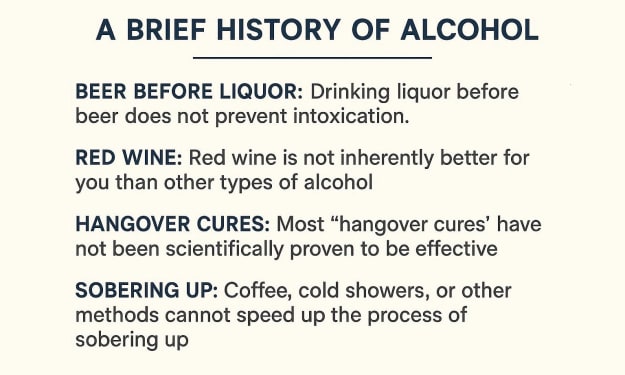
A brief history of alcohol
This chimpanzee stumbles across a windfall of overripe plums. Many of them have split open, drawing him to their intoxicating fruity odor. He gorges himself and begins to experience some… strange effects. This unwitting ape has stumbled on a process that humans will eventually harness to create beer, wine, and other alcoholic drinks. The sugars in overripe fruit attract microscopic organisms known as yeasts. As the yeasts feed on the fruit sugars they produce a compound called ethanol— the type of alcohol in alcoholic beverages.
By Munesh Yadav29 minutes ago in Education
Autonomy Is The Real Privilege
Good morning, freedom-seekers! Today we’re gonna be looking at autonomy. A strange word, I know; one many would probably look at blankly and run away from on sight. We’re gonna figure out what it actually means, consider how it’s achieved, and decipher just how deeply most of us are tangled up in dependence without realising it.
By That ‘Freedom’ Guy4 days ago in Humans



Comments
There are no comments for this story
Be the first to respond and start the conversation.