

Child labor is a grave problem that affects millions of children worldwide. Defined as any work that deprives children of their childhood, education, and potential, it is a practice that must be abolished to ensure the well-being of the children involved. Despite the existence of laws and regulations prohibiting child labor, it remains rampant in many countries, particularly in developing nations where poverty and lack of education are widespread.
Child labor is a multifaceted issue that involves various forms of exploitation. Children are forced to work in hazardous conditions, exposed to physical and emotional abuse, and denied their right to education. Some are forced to work in factories and sweatshops, while others are forced to work in domestic service, agriculture, and mining. Regardless of the industry, child laborers work long hours for low wages and are often subjected to dangerous working conditions that can result in serious injury or death.
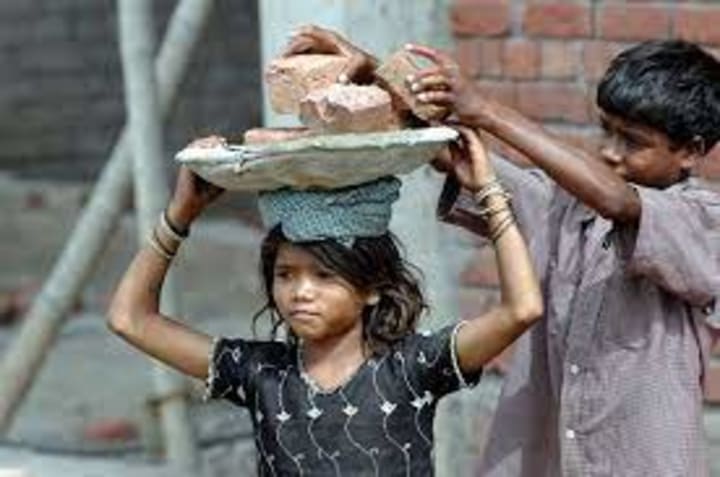
One of the main reasons why child labor persists is poverty. Families who live in poverty often rely on the income their children can generate to survive. They may send their children to work to supplement their income or to pay off debts. These children may be forced to drop out of school to work, which limits their opportunities for education and future employment. The cycle of poverty and child labor continues, perpetuating the problem for generations to come.
Another factor that contributes to child labor is the lack of enforcement of laws and regulations. In some countries, child labor laws are poorly enforced, and the penalties for violating these laws are weak. As a result, employers who exploit children may continue to do so with impunity, knowing that they are unlikely to face legal consequences. This lack of enforcement perpetuates the problem and makes it difficult to eradicate child labor.
There are several solutions to the problem of child labor. First, governments must prioritize the enforcement of child labor laws and regulations. Employers who violate these laws must be held accountable and punished accordingly. Second, poverty must be addressed through programs that provide families with the resources they need to support themselves without relying on child labor. This can include access to education, healthcare, and job training programs that enable parents to find sustainable employment.
Third, businesses must take responsibility for ensuring that their supply chains are free from child labor. Many products, particularly those in the textile and apparel industry, are made using child labor. Companies must conduct regular audits of their suppliers to ensure that they are not using child labor, and must take action when violations are discovered.
Finally, education is key to eradicating child labor. Children who are educated are less likely to be forced into child labor, and are more likely to find sustainable employment as adults. Education programs must be accessible and affordable, particularly in developing countries where access to education is limited.
In conclusion, child labor is a complex problem that requires a multifaceted approach. Governments, businesses, and individuals all have a role to play in eradicating child labor. Poverty, lack of education, and weak enforcement of laws all contribute to the problem, but with concerted effort, it can be addressed. Children have a right to their childhood, education, and potential, and it is our responsibility as a society to ensure that these rights are protected.
Best Regards,
Keshav
About the Creator
Keep reading
More stories from Keshav Maheshwari and writers in Education and other communities.
MOBILE PHONE
The world of mobile phones is rapidly evolving, and there's always something new to look out for. One of the latest phones to hit the market is the Xiaomi Redmi Note 11, and it's creating quite a buzz. Here's what you need to know about this phone.
By Keshav Maheshwari3 years ago in Journal
Active Bodies, Brave Minds: How Exercise Helps Children Grow Strong From the Inside Out
Raising children who are confident, adaptable, and emotionally strong is a goal shared by parents, educators, and communities alike. While many factors contribute to healthy development, regular exercise stands out as one of the most effective and natural ways to shape resilient, confident kids. Physical activity influences not only how children grow but also how they think, feel, and respond to the world around them.
By Marissa Haugh4 days ago in Education
Morgan Silver Dollars: A Beginner's Guide to Identifying Key Dates and Mint Marks
For over eight years as a Senior Numismatic Analyst, I've seen the glint in a new collector's eye when they hold their first Morgan Silver Dollar. It's a powerful feeling—the weight of 90% pure silver, the history in Lady Liberty's profile, the sheer size of America's most iconic coin. Yet, with hundreds of millions minted across 27 years and five mints, it's easy to feel overwhelmed. A common 1921 Morgan might be worth $50, while a pristine 1895 Proof commands over $100,000. The difference lies in the tiny details of dates and mint marks. This guide will give you the foundational map to navigate this classic series, turning confusion into confident identification.
By Laura Bennett4 days ago in Education




Comments
There are no comments for this story
Be the first to respond and start the conversation.