
Can You Trust AI with Your Financial Future?
The Risks of Relying on Robo-Advisors

Introduction
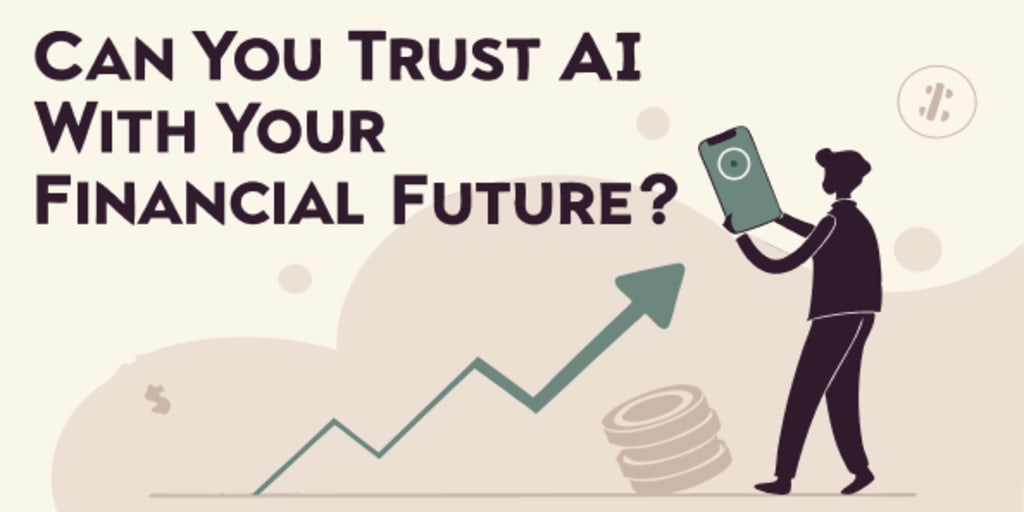
The integration of artificial intelligence (AI) into financial advisory services has transformed how investors manage their wealth. Robo-advisors, powered by advanced algorithms, promise efficiency, accessibility, and cost-effectiveness. However, their reliability and suitability for complex financial decisions remain under scrutiny. This article explores the risks and benefits of relying on AI for financial planning, particularly during market volatility.
AI's Benefits in Financial Planning
Efficiency and Accessibility
AI-driven robo-advisors offer significant advantages in terms of speed and accessibility. They can process vast amounts of data in real-time, providing personalized investment strategies tailored to individual risk profiles and financial goals. For example, platforms like DeepSeek can generate detailed investment plans within minutes, leveraging historical data and market trends to optimize asset allocation.
Cost-Effectiveness
Robo-advisors typically charge lower fees compared to traditional financial advisors, making wealth management more accessible to a broader range of investors. This democratization of financial services allows even small investors to benefit from sophisticated portfolio management tools.
Data-Driven Decisions
AI excels at analyzing historical data and identifying patterns, enabling it to make objective, data-driven investment decisions. This reduces the impact of emotional biases that often affect human decision-making, potentially leading to more consistent and profitable outcomes.
Risks and Limitations of Robo-Advisors
Data Quality and Model Limitations
AI systems rely heavily on the quality and completeness of the data they process. If the data is outdated, biased, or incomplete, the resulting recommendations may be unreliable. For instance, AI models trained on data from 2024 or earlier may fail to account for recent market changes, leading to suboptimal or even harmful advice.
Lack of Emotional Intelligence
Robo-advisors lack the emotional intelligence to understand investors' unique circumstances and psychological needs. During market volatility, human advisors can provide reassurance and context, helping clients stay committed to their long-term strategies. AI, however, may struggle to address the emotional aspects of financial decision-making, potentially causing investors to panic and make impulsive decisions.
Algorithmic "Hallucinations"
AI systems can generate seemingly logical but entirely incorrect recommendations, especially when faced with unprecedented market conditions or data gaps. This phenomenon, often referred to as "AI hallucinations," can lead to significant financial losses if investors blindly follow AI advice without critical evaluation.
Market Volatility and Flexibility
While AI can automate portfolio adjustments based on predefined rules, it may lack the flexibility to respond effectively to sudden market shifts. Human advisors can adapt strategies dynamically based on emerging trends and client feedback, whereas AI may struggle to keep pace with rapidly changing conditions.
Privacy and Security Concerns
Robo-advisors require access to sensitive personal and financial data, raising concerns about privacy and security. Data breaches or unauthorized access could expose investors to identity theft or financial fraud, underscoring the need for robust cybersecurity measures.
Conclusion
AI-driven robo-advisors offer valuable tools for efficient and accessible financial planning but are not without risks. Their reliance on data quality, lack of emotional intelligence, and susceptibility to algorithmic errors necessitate a cautious approach. Investors should view AI as a complementary tool rather than a replacement for human expertise. By combining the strengths of AI with the judgment and empathy of human advisors, investors can navigate financial markets more effectively and achieve better long-term outcomes. The future of wealth management lies in a balanced approach where technology and human insight work together to empower financial decisions.
Recommended books
Genesis: Artificial Intelligence, Hope, and the Human Spirit
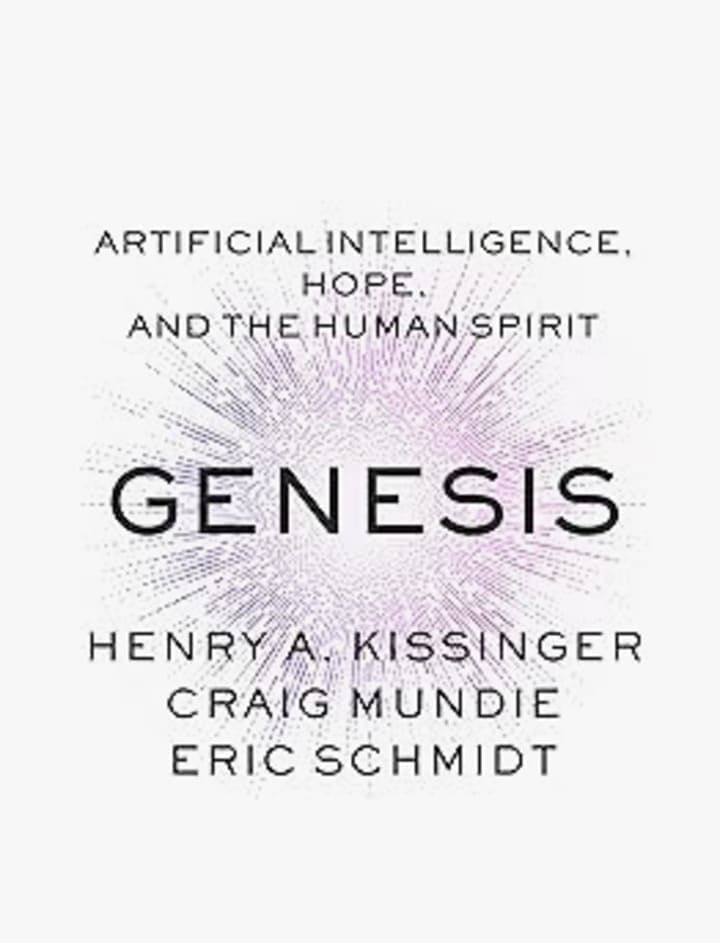
As Artificial Intelligence (AI) becomes more dynamic and ubiquitous, it is dramatically empowering people in all walks of life while also giving rise to urgent questions about the future of humanity—a historic challenge whose contours and consequences are revealed by three eminent thinkers in Genesis.
About the Author: With over a decade of experience as an internet product architect, I’ve spent my career crafting innovative application solutions that bridge technology and real-world needs. Now, as a passionate advocate for artificial intelligence, I focus on exploring its transformative applications. I’m committed to pushing the boundaries of AI to empower lives and shape a smarter future. Join me on this exciting journey as we uncover the endless possibilities of intelligent technology.
About the Creator
roc chiang
I'm a tech enthusiast and entrepreneur based in Vancouver. I share original articles on technology, business and other related topics on social media to showcase my passion and insights.
Editor-in-Chief:fengtou.ca
Keep reading
More stories from roc chiang and writers in Education and other communities.
AI in Finance: Empowering Wealth or Widening Gaps?
Introduction The integration of artificial intelligence (AI) into finance has sparked intense debate about its impact on wealth distribution. While AI offers unprecedented opportunities for efficiency and innovation, it also raises critical questions about whether these benefits are accessible to all or concentrated among the wealthy. This article explores the dual nature of AI in finance, examining both its potential to democratize access and its risks of exacerbating wealth inequality.
By roc chiang9 months ago in Education
5 Practical Ways an LCD Monitor Improves Daily Productivity at Work
Modern work depends on clarity, comfort, and steady focus throughout the day. Employees move between emails, documents, meetings, and data without pause. In this environment, the screen becomes more than a tool. It becomes a daily partner in how work flows and how decisions take shape.
By Olivia Barna day ago in Education



Comments
There are no comments for this story
Be the first to respond and start the conversation.