
Buffalo Nickels: How to Decipher Worn Dates and Identify Valuable Full Horn Specimens
Buffalo Nickels, let's dive into it

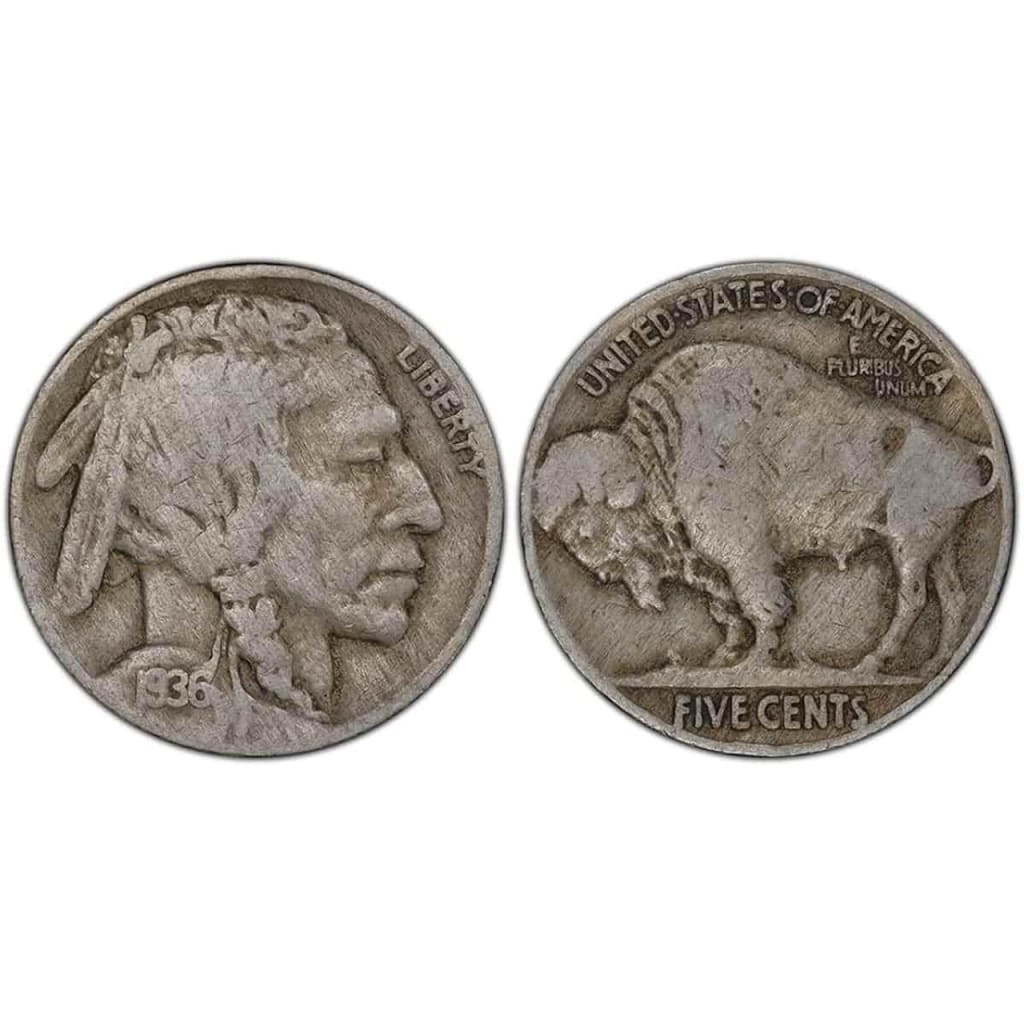
For over eight years as a Senior Numismatic Analyst, I have seen no coin humble a new collector quite like the Buffalo Nickel. Minted from 1913 to 1938, its design by James Earle Fraser is a masterpiece of American art—but also one of the most notoriously problematic for identification. The date, positioned on a raised area of the design, wears away with astonishing speed in circulation. This has created a vast sea of "dateless" Buffalo Nickels, hiding a few key-date treasures within. Furthermore, the high points of the design, particularly the bison's horn, serve as the ultimate test of a coin's condition and value. This guide will give you the techniques to read those worn dates and teach you why finding a "Full Horn" specimen is a collector's triumph.
The Anatomy of a Challenge: Why Buffalo Nickel Dates Vanish
To solve the problem, you must first understand it. Fraser's design placed the date on a raised plane, just below the Indian's shoulder and above the bison's back. In circulation, this high point made constant contact with other coins, pockets, and surfaces. Unlike the deeply recessed dates on later coins, the Buffalo's date had no protected area. On a heavily worn coin, the entire obverse field—the Indian's cheek, feather detail, and the date—can become a smooth, featureless plane. This isn't a mint error; it's the inevitable result of a beautiful but impractical design. Your goal is to look for the faintest remnants of numerals in this worn field.
Techniques for Deciphering a Worn Date
Before you resign a coin to the "dateless" pile, try these professional techniques in sequence. Patience and good lighting are your best tools.
1. The Oblique Light Method: This is the most important technique. Do not shine a light directly down on the coin. Instead, hold the coin at a low angle to a strong, focused light source (a desk lamp or bright flashlight). Tilt and rotate the coin slowly so the light rakes across the surface at a shallow angle. This creates shadows in the micro-impressions of the remaining date, making faint grooves visible. You are looking for the trenches where the numbers were, not the raised numbers themselves.
2. The Pencil Rubbing Trick: Place the coin on a flat, stable surface. Take a soft graphite pencil (number 2 is ideal) and a thin, smooth piece of paper. Hold the paper firmly over the date area and gently shade with the pencil's side (not the tip) over the spot. A very gentle, broad stroke works best. The graphite may pick up a subtle impression of the date's outline. This is a classic method for revealing heavily worn details.
3. Magnification and Angle: Use a 10x loupe or a microscope. Combine magnification with the oblique light method. Systematically examine the area, looking for any straight lines, curves, or interruptions in the metal's flow that could correspond to a "1," "3," or "9."
4. Know the Silhouette: Familiarize yourself with the profiles of key dates. For instance, a 1913-S has a different rarity than a 1920-S. Sometimes, identifying just the first digit ("1" for 1910s, "2" for 1920s) or the last digit can narrow it down significantly when combined with mint mark visibility.
The "Full Horn" Benchmark: The Key to Condition and Value
Once you have a date, the next critical assessment is grade, and nothing is more important than the bison's horn on the reverse. On a fully struck, unworn coin, the horn has a clear, rounded, and complete contour. It stands distinctly apart from the bison's rounded shoulder.
As a coin circulates, the highest point of the horn wears down first. The progression is key:
· Full Horn (FH): The entire length of the horn is fully rounded and separated from the leg by a clear gap. This is the hallmark of an Extremely Fine (XF) or higher grade coin.
· 3/4 Horn: The horn is mostly visible but shows flatness on its highest point.
· 1/2 Horn or Less: Significant wear has merged the horn into the leg, leaving only a stump. This indicates a lower grade (Fine or below).
For collectors, a "Full Horn" designation is a major value driver. Two coins with the same date and mint mark can have a price difference of 300% or more based solely on the horn's completeness. On rare key dates like the 1916 Doubled Die or the 1918/7-D overdate, the difference between a "horn detail" coin and a "full horn" coin can be thousands of dollars.
A Collector's Roadmap: Key Dates and Mint Marks
Knowing what to look for is half the battle. This table highlights the major rarities where deciphering a date and confirming a full horn pays the highest dividends.
Key Date/Mintmark Why It's Important What to Look For (Beyond Date)
1913-S Type 2 The first-year San Francisco issue with the bison on a mound (Type 2). Very low mintage, highly sought-after. The mintmark "S" is on the reverse, below "FIVE CENTS." Look for a clear, bold "S."
1916 Doubled Die Obverse Dramatic doubling visible on "LIBERTY" and the date. A famous variety. Under magnification, look for clear doubling (a distinct second image) on the numerals of the date and the word LIBERTY.
1918/7-D Overdate The rarest regular-issue Buffalo Nickel. The Denver Mint overpunched a 7 over an 8 to create 1918 dies. Under high magnification, look for the curved base of the underlying "7" protruding from the bottom of the "8."
1921-S Extremely low mintage. One of the classic keys of the series in any condition. A clear "S" mintmark is vital. This date is rare even in low grades.
1926-S The lowest mintage of the entire series (970,000). A major condition rarity. Again, the "S" mintmark is critical. Finding any 1926-S with detail is an accomplishment.
1937-D "3-Legged" Not a key date by mintage, but a famous die variety. A damaged die removed the bison's front leg. On the reverse, the bison appears to have only three legs; its right front leg is missing. Do not confuse with a worn coin.
Strategic Integration: After identifying a Buffalo Nickel's date, mint mark, and assessing its horn detail, the natural next step is understanding its market value. This is where digital tools are indispensable. Using a reputable Coin ID Scanner that allows you to input the specific date, mint, and grade (which the horn detail directly determines) will give you a realistic picture of its worth. It transforms your identification work into financial understanding, which is crucial whether you're collecting, selling, or buying.
Conclusion: The Reward of Patience
Working with Buffalo Nickels teaches a collector patience, observation, and respect for condition. The pursuit of a clear date on a worn coin is a puzzle. The hunt for a "Full Horn" specimen is a lesson in precision. As the designer James Earle Fraser himself noted, the coin was meant to be "truly American." That character includes its rugged durability and its tendency to wear with history. By mastering these identification techniques, you do more than assign a value—you learn to read the story written by circulation on a piece of American art. The most valuable find isn't always the rarest date; sometimes, it's the common date with a miraculously sharp, Full Horn, preserved against all odds.
FAQ: Your Buffalo Nickel Questions Answered
Is it worth paying to have a dateless Buffalo Nickel restored?
No. Electrolytic or chemical "date restoration" is considered a destructive process that severely damages the coin's surface. It is easily detected by experts and will render the coin worthless to serious collectors. A coin with an artificially restored date is worth less than a plainly dateless one.
What is the difference between Type 1 and Type 2 1913 nickels?
In 1913, the design was modified shortly after production began. Type 1 (or "Raised Ground") shows the bison standing on a mound, with "FIVE CENTS" deeply recessed and prone to wear. Type 2 (or "Flat Ground") lowered the ground line to a flat plane, protecting the denomination. The Type 2, especially from Denver (1913-D Type 2) and San Francisco (1913-S Type 2), is much scarcer.
I found a Buffalo Nickel with no mint mark. Where was it made?
Coins without a mint mark were struck at the Philadelphia Mint. This is standard for all U.S. coin series of the era.
How much more valuable is a "Full Horn" coin?
The premium is substantial. For a common date in Extremely Fine condition with full horn, expect a value 3 to 5 times higher than the same date in Fine condition (with a partial horn). For key dates, the multiplier can be even greater, turning a $500 coin into a $2,000+ coin.
Are all "3-Legged" Buffalo Nickels from 1937-D?
The famous "3-Legged" variety is specific to the 1937-D (Denver) mint. However, there are other, less dramatic "leg" varieties from other years caused by die polishing or damage (like the 1936-D "3½ Leg"). The 1937-D remains the most valuable and recognized.
About the Creator
Laura Bennett
Numismatist and data science expert passionate about uncovering the stories behind historical coins through analytics. Bachelor’s degree in Archaeology and a Master’s in Data Science from Harvard University. https://coin-identifier.com/
Keep reading
More stories from Laura Bennett and writers in Education and other communities.
The Fascinating Story of the 1955 Doubled Die Lincoln Cent and How to Authenticate It
Over eight years as a Senior Numismatic Analyst, I have handled thousands of error coins, but few generate the instant recognition and awe of the 1955 Doubled Die Lincoln Cent. It's not just a coin; it's a cultural icon, a symbol of minting fallibility that captivated a nation. While many dream of finding one in circulation, its story is one of limited creation, public discovery, and a legacy of counterfeits. This guide will take you through the remarkable history of this coin and arm you with the precise knowledge needed to separate a genuine piece of history from the endless stream of fakes.
By Laura Bennetta day ago in Education
The Blue Frontier How Norway Aquaculture Revolution is Feeding the World in 2026
Norway, a nation defined by its jagged fjords and deep, icy waters, has long been the global benchmark for seafood. However, as we stand in 2026, the Norwegian aquaculture industry has moved far beyond traditional fish farming. It has transformed into a high-tech, data-driven "Blue Frontier" that combines marine biology with aerospace-grade engineering and advanced Artificial Intelligence. Facing the dual challenges of climate change and a growing global population, Norway has pivoted toward a "Sustainable Sovereignty" model. This isn't just about producing millions of tons of salmon; it’s about creating a circular, ethical, and technologically superior food system that can survive the pressures of the 21st century.
By Neeraj kumar6 days ago in Education
Mum Says University “Failed” Son Who Took His Own Life After Grade Error
The day the email arrived was supposed to be a turning point. For months, the family had been waiting for it the final confirmation that years of late nights, student loans, and quiet sacrifice had been worth it. Instead, the message contained a mistake that would unravel a young man’s confidence and, according to his mother, expose a system that failed him when he needed it most.
By Omoogun oluwaseun mercy6 days ago in Education
The Devil's Triangle
The sails ruffled in the breeze as we cruised along. The Sea Breeze was a mid-size catamaran that sailed out of Royal Naval Dockyard in Bermuda. We had booked this trip weeks in advance and were now looking at our Captain, Spike and two boat hands. Paddy and Wilson seemed like nice guys, joking around with the passengers and telling us some stories about Bermuda that only locals would know. Their island accents sounded almost British but they were pleasant to listen to.
By Barbara Gode Wilesa day ago in Fiction




Comments
There are no comments for this story
Be the first to respond and start the conversation.