
The Blue Frontier How Norway Aquaculture Revolution is Feeding the World in 2026
Norway Aquaculture
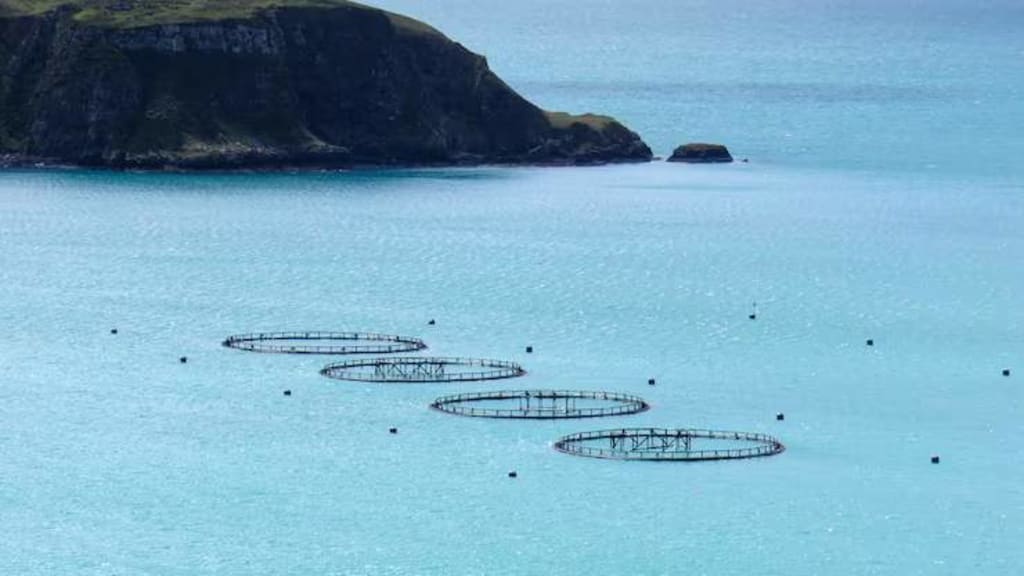
Norway, a nation defined by its jagged fjords and deep, icy waters, has long been the global benchmark for seafood. However, as we stand in 2026, the Norwegian aquaculture industry has moved far beyond traditional fish farming. It has transformed into a high-tech, data-driven "Blue Frontier" that combines marine biology with aerospace-grade engineering and advanced Artificial Intelligence. Facing the dual challenges of climate change and a growing global population, Norway has pivoted toward a "Sustainable Sovereignty" model. This isn't just about producing millions of tons of salmon; it’s about creating a circular, ethical, and technologically superior food system that can survive the pressures of the 21st century.
The Record-Breaking Economy and the "Traffic Light" Strategy
The economic weight of Norway aquaculture in 2026 is staggering. Following a record-breaking 2025 where export values hit an all-time high despite global inflation, the industry has become Norway’s second-largest export sector after oil and gas. By volume, Norway is now exporting over 1.4 million metric tons of salmon annually, but the focus has shifted from volume to value and health. The "Traffic Light System," which the government has refined through 2025 and 2026, remains the backbone of this strategy. This regulatory framework color-codes production areas based on environmental indicators specifically sea lice levels. A "Green" zone allows for expansion, while "Red" zones mandate a reduction in production. This system has forced companies to stop thinking about short-term gains and start investing in long-term environmental health, leading to a surge in "Closed-Cage" systems that isolate farmed fish from the wild environment.
This regulatory pressure has sparked a massive wave of innovation. In 2026, the market is no longer dominated solely by traditional net-pens. Instead, we are seeing the rise of "Offshore Farming" massive, ship-like structures anchored far out in the Norwegian Sea where stronger currents and colder waters naturally inhibit parasite growth. These offshore rigs, some the size of several football fields, are controlled by land-based operators using satellite links and real-time sensor data. By moving away from the sensitive fjords, Norway is expanding its production capacity without increasing its ecological footprint in coastal areas. This shift has not only boosted the economy but has also created a new export market: Norwegian "Blue Tech" engineering services, which are now being sold to aquaculture firms from Chile to Canada.
The AI Revolution: Digital Twins and Robotic Caretakers
Perhaps the most significant leap forward in 2026 is the total integration of Artificial Intelligence (AI) and robotics into the daily life of the farm. Traditional methods of manual feeding and visual inspection are becoming relics of the past. Today, Norwegian farms utilize "Digital Twins" virtual replicas of their underwater pens that are updated in real-time with data from millions of sensors. These AI models can predict potential disease outbreaks or mortality events days before they occur by analyzing subtle changes in fish behavior or water chemistry. AI-powered "Sorting Systems" have also been successfully deployed, which can identify and sort individual fish based on health, size, and readiness for harvest without ever stressing the animal. This level of precision ensures that only the healthiest fish reach the market, significantly reducing waste and improving the overall feed conversion ratio (FCR).
The use of autonomous underwater robots has also revolutionized pen maintenance. In 2026, AI-driven "cleaner robots" navigate the nets, removing biofouling and inspecting for tears or escapes without human intervention. This has drastically reduced the need for chemical treatments and high-pressure water jets, which were historically stressful for the fish and harmful to the surrounding seabed. Furthermore, precision feeding—driven by AI algorithms that can detect when fish are "full"—has eliminated feed waste, which was previously a major source of nitrogen pollution in the fjords. This "Efficiency-First" approach, similar to the logic used in high-end computing, has made Norwegian aquaculture the most energy-efficient protein production system on the planet, with a carbon footprint significantly lower than beef or pork.
Confronting the Lice Challenge and the Ethical Shift
Despite the technological marvels, 2026 has not been without its hurdles. The battle against sea lice remains a central theme, but the tactics have shifted from chemical to biological and mechanical. The industry has largely moved away from medicinal treatments, which faced increasing resistance from the parasites. Instead, Norway has invested in "Laser-Lice" technology underwater cameras that identify lice on a swimming salmon and neutralize them with a low-powered laser pulse in milliseconds. Additionally, the use of "Cleaner Fish" (wrasse) has become more ethical and controlled, with specialized breeding programs ensuring that these helper fish are treated with the same welfare standards as the salmon themselves. This shift toward "Welfare-Driven Productivity" is not just for show; it is a direct response to a global consumer base that demands transparent, ethical sourcing.
The human element of aquaculture has also been redefined. As the industry becomes more automated, the demand for traditional labor is being replaced by a need for "Marine Data Scientists" and "Robotics Engineers." This has led to a revitalization of coastal towns that were once losing their youth to the cities. New educational hubs in places like Tromsø and Stavanger are churning out graduates who are as comfortable with Python code as they are with maritime navigation. This cultural shift has turned aquaculture into a "cool," high-tech career path, attracting a diverse generation of innovators who see the ocean as the key to solving the global food crisis. The "Norwegian Model" of 2026 proves that tradition and technology are not enemies; they are the two fins that propel the industry forward.
Conclusion: A Blueprint for the Global Blue Economy
As we look toward the future, Norway’s aquaculture industry stands as a global lighthouse. It has successfully navigated the transition from a resource-extraction mindset to a circular-economy philosophy. By 2026, the industry is not just producing food; it is producing knowledge, technology, and environmental standards that the rest of the world is eager to adopt. The fusion of the "Traffic Light" regulatory discipline with AI-driven operational excellence has created a resilient system that balances profit with the planet. For the global community, the message from the Norwegian fjords is clear: the future of food is blue, it is digital, and it is deeply rooted in the respect for the natural world.
About the Creator
Keep reading
More stories from Neeraj kumar and writers in Education and other communities.
The Logistics of Flavor Chile Food Delivery Revolution in 2026
Chile, a country of extremes and culinary delights, has experienced a deep digital transformation in the past few years. As we move through the world of 2026, the classic view of dining out in the bustling streets of Santiago or the colourful alleys of Valparaíso is being supplemented and, in many cases, replaced by a high-tech, high-speed food delivery system. What began as a convenience-driven niche has grown into a multi-billion-dollar backbone of the Chilean economy. With a tech-savvy middle class, an unprecedented explosion in mobile penetration, and an urban population that prizes time above almost everything else, the food delivery market in Chile is no longer simply about delivering a pizza to your doorstep; it is about a complex system of AI-powered logistics, cloud kitchens, and a new "On-Demand" lifestyle that is redefining the very fabric of Chilean society.
By Neeraj kumarabout 2 hours ago in Education
Is transcription work suitable for stay-at-home mothers
For many stay-at-home mothers, the idea of earning an income sounds appealing—until reality steps in. Fixed schedules, long hours, childcare costs, and constant interruptions can make traditional jobs feel impossible. That’s where transcription work often enters the conversation. But is it actually a good fit, or just another work-from-home promise that doesn’t hold up in real life?
By Mahesh Kumar2 days ago in Education




Comments
There are no comments for this story
Be the first to respond and start the conversation.