
The Fascinating Story of the 1955 Doubled Die Lincoln Cent and How to Authenticate It
Let's dive into world of coins

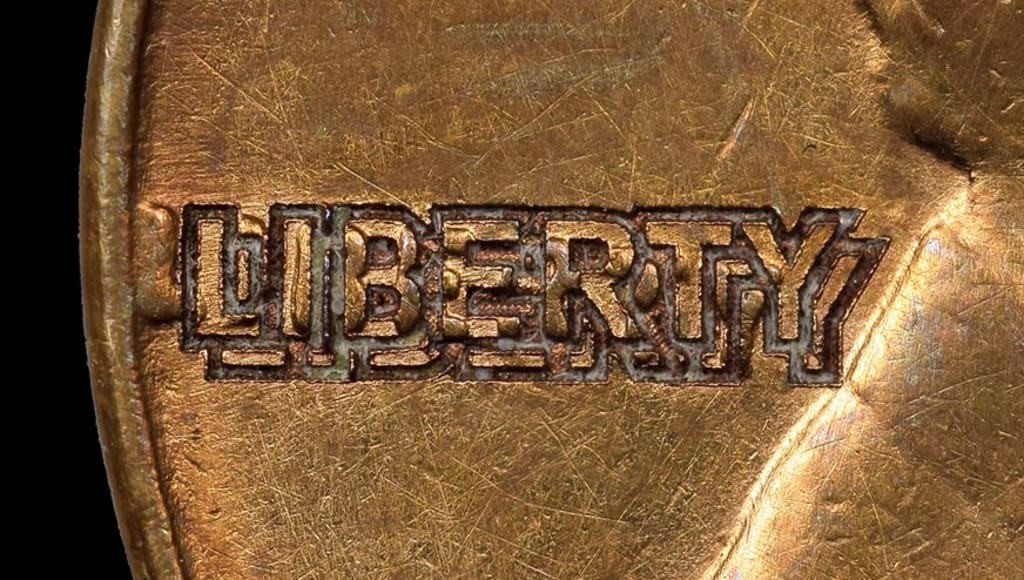
Over eight years as a Senior Numismatic Analyst, I have handled thousands of error coins, but few generate the instant recognition and awe of the 1955 Doubled Die Lincoln Cent. It's not just a coin; it's a cultural icon, a symbol of minting fallibility that captivated a nation. While many dream of finding one in circulation, its story is one of limited creation, public discovery, and a legacy of counterfeits. This guide will take you through the remarkable history of this coin and arm you with the precise knowledge needed to separate a genuine piece of history from the endless stream of fakes.
A Mistake on a Monumental Scale: How It Happened
The story begins not with a striking error, but with a die error. In the mid-1950s, the process of creating a working die involved impressing a master hub into a softened steel die blank. This was done multiple times under tremendous pressure to ensure a deep, crisp image. For the 1955 cent dies at the Philadelphia Mint, something went critically wrong.
During one of these impressions, the hub and the die shifted slightly between strikes. This misalignment was then permanently locked into the die itself. When this flawed die was placed into a press, every single coin it struck—estimated at between 20,000 to 24,000 pieces—bore the same dramatic, doubled image. Unlike a "double strike," where a coin is hit twice, this was a single strike from a defective die, making every coin from that die a matched set of errors. The coins entered circulation mixed with millions of normal 1955 cents, and the legend began.
The Hallmarks of Authenticity: What to Look For
Authenticating a 1955 Doubled Die requires a methodical examination of specific, known features. The doubling is most prominent on the obverse (heads side) and is easily visible to the naked eye, which is why it became so famous.
The Key Doubling Areas:
1. LIBERTY: The word "LIBERTY" on the right shows extreme, shelf-like doubling, particularly on the "L," "I," and "B." It looks like a strong shadow to the lower right of each letter.
2. "IN GOD WE TRUST": The motto is dramatically doubled, appearing blurred and thick. This is often the first thing a trained eye checks.
3. The Date: The digits "1955" show clear doubling, especially the second "5," which can appear to have a full duplicate ghost image.
4. Liberty's Shoulder and Ear: Less dramatic but still present is doubling on the drapery of Liberty's gown at the shoulder and on the contour of her ear.
The reverse (tails side) of the genuine 1955 Doubled Die coin shows no appreciable doubling. This is a critical diagnostic point. Any coin that shows strong doubling on the wheat ears or lettering on the back is almost certainly a different—and much less valuable—type of error or an outright fake.
Expert Insight from Laura: The most dangerous fakes are not crude copies, but genuine 1955 cents that have been artificially doubled using a mechanical process like "die sinking" or with lasers. These "1955 Added Doubling" fakes can fool the naked eye. The key is in the flow of the metal. On a genuine doubled die, the doubling is integral to the strike; the metal flows smoothly into the doubled areas. On an altered coin, you will often see tool marks, flatness in the fields, or a "shelved" look that lacks the rounded, struck quality of authentic doubling. Magnification is non-negotiable.
A Side-by-Side Analysis: Genuine vs. The Common Imposters
To correctly identify this coin, you must also know what it is not. This table clarifies the critical differences.
Feature Genuine 1955 Doubled Die Cent "Poor Man's Double Die" (1955 D/D Repunched Mintmark) Machine Doubling or Strike Doubling
Cause Hub Doubling: Misalignment during the die creation process. Punched Mintmark: The "D" mintmark was punched into the die twice, slightly offset. Mechanical Bounce: The die or planchet shifted minutely during the strike.
Location of Doubling Obverse Only: "LIBERTY," date, motto. Reverse is normal. Mintmark Only: Only the small "D" on the obverse shows doubling. Can appear anywhere, often on raised design elements like letters or rims.
Character of Doubling Strong, distinct, extra design elements. Looks like a true second image. Isolated to the tiny mintmark. Rest of coin is normal. Flat, shelf-like, or "split" appearance. Looks smeared, not a separate image.
Collectible Status Major rarity and key date. Worth thousands to tens of thousands. A minor variety. Worth a modest premium over a normal 1955-D cent. Very common, no extra value. Considered a minting artifact, not a true error.
The Step-by-Step Authentication Process
If you encounter a potential 1955 Doubled Die, follow this professional sequence:
1. Initial Visual Scan: Does the coin show obvious, strong doubling on "LIBERTY" and "IN GOD WE TRUST" without magnification? If not, it is not the classic doubled die.
2. Mint Mark Check: Is there a "D" (Denver) mintmark below the date? If yes, you have a different coin—likely the valuable but less famous 1955 D/D Repunched Mintmark. The classic doubled die has no mintmark (Philadelphia issue).
3. Reverse Inspection: Turn the coin over. The reverse must be completely normal, with sharp, undoubled wheat ears. Any doubling here is a red flag for a fake.
4. Magnified Examination: Under a 10x loupe or microscope, examine the doubled areas. Look for the natural, rounded metal flow of a genuine strike. Reject any coin with tool marks, abrasions in the fields around the letters, or a flat, "stamped" appearance to the doubling.
5. Weight and Metal Test: A genuine coin should weigh 3.11 grams (pre-1982 bronze composition) and be non-magnetic. This weeds out plated counterfeits or coins on wrong planchets.
6. Seek Expert Verification: For any coin that passes the above tests, the only final step is submission to a top-tier grading service: PCGS or NGC. Their experts have handled more genuine specimens than anyone and use advanced comparative analysis. A coin encapsulated by them is authenticated for the global market.
Strategic Integration: Before investing in a raw (unauthenticated) coin or getting your hopes up about a find, use every digital tool at your disposal. A high-resolution image uploaded to a reputable coin identification platform can allow for preliminary comparison. Furthermore, checking the verified auction records for PCGS- or NGC-graded 1955 Doubled Die cents on a coin value checker will show you the precise market value based on condition, grounding you in the financial reality of this rare coin.
Conclusion: A Legend Built on a Flaw
The 1955 Doubled Die Lincoln Cent endures because it is a perfect storm of numismatic factors: a dramatic, visible error produced in large enough quantities to be found by the public, yet scarce enough to remain coveted. Its story is a cornerstone of modern error collecting. As renowned numismatist David W. Lange wrote, "The 1955 doubled die cent... demonstrated that even in the modern era, spectacular errors could and did occur." By understanding its history and the rigorous process of authentication, you appreciate not just a coin, but a chapter in the ongoing story of the U.S. Mint, where a fleeting mistake became a permanent legend.
FAQ: Your Questions on the 1955 Doubled Die
How many 1955 Doubled Die cents were made?
The accepted estimate is between 20,000 and 24,000 coins. Many entered circulation and were spent, lost, or damaged. Several thousand are believed to survive in collectible condition.
What is 1955 Doubled Die cent worth?
Value is entirely dependent on grade (condition). A heavily worn (Good/VG) example can be worth $1,000 to $2,000. A coin in sharp Extra Fine condition can reach $5,000 to $10,000. Mint State examples, with full original luster and no wear, regularly sell for $15,000 to over $30,000.
What is the "Poor Man's Double Die"?
This refers to the 1955-D (Denver) cent with a repunched mintmark ("D/D"). Only the tiny "D" is doubled. It is a distinct and collectible variety, but its value (typically $50 to $500) is a fraction of the Philadelphia doubled die's, hence its nickname.
I have a 1955 cent with a little doubling. Could it be valuable?
If the doubling is only on the mintmark ("D"), you have the "Poor Man's" variety. If the doubling is faint, flat, and shelf-like on the letters (machine doubling), it has no extra value. Only coins with the strong, distinct doubling on LIBERTY and the motto match the classic error.
Where is the safest place to buy one?
Only purchase examples that have been independently authenticated and encapsulated by PCGS or NGC. This guarantees authenticity and grade. Reputable coin dealers and major auction houses are the primary venues for such coins. Avoid raw (unslabbed) coins from unknown sellers, regardless of the story.
About the Creator
Laura Bennett
Numismatist and data science expert passionate about uncovering the stories behind historical coins through analytics. Bachelor’s degree in Archaeology and a Master’s in Data Science from Harvard University. https://coin-identifier.com/
Keep reading
More stories from Laura Bennett and writers in Education and other communities.
Morgan Silver Dollars: A Beginner's Guide to Identifying Key Dates and Mint Marks
For over eight years as a Senior Numismatic Analyst, I've seen the glint in a new collector's eye when they hold their first Morgan Silver Dollar. It's a powerful feeling—the weight of 90% pure silver, the history in Lady Liberty's profile, the sheer size of America's most iconic coin. Yet, with hundreds of millions minted across 27 years and five mints, it's easy to feel overwhelmed. A common 1921 Morgan might be worth $50, while a pristine 1895 Proof commands over $100,000. The difference lies in the tiny details of dates and mint marks. This guide will give you the foundational map to navigate this classic series, turning confusion into confident identification.
By Laura Bennett5 days ago in Education
Career Growth Paths After Completing a Network Technician Program
Embarking on an Information Technology career can be very thrilling and fulfilling, especially when you choose a high-demand field that offers a clear path for career advancement. A computer network technician training gives a very good foundation for those who are new to the field of networking to learn and get acquainted with the very basics of networking, hardware, software, and troubleshooting. Getting through a computer network technician program would not only make you technically competent to enter the IT field but would also open multiple pathways for your career growth.
By Meaghan Howe4 days ago in Education



Comments
There are no comments for this story
Be the first to respond and start the conversation.