
Mum Says University “Failed” Son Who Took His Own Life After Grade Error
Mum Says University “Failed” Son Who Took His Own Life After Grade Error
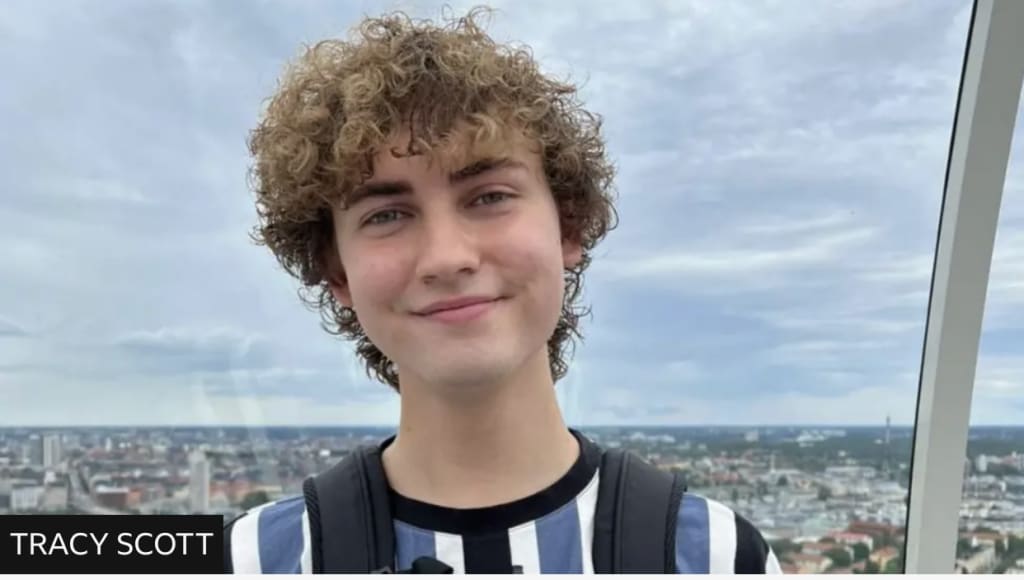
The day the email arrived was supposed to be a turning point. For months, the family had been waiting for it the final confirmation that years of late nights, student loans, and quiet sacrifice had been worth it. Instead, the message contained a mistake that would unravel a young man’s confidence and, according to his mother, expose a system that failed him when he needed it most.
James (name changed) was a final-year university student, known among friends as gentle, diligent, and quietly ambitious. He was not the loudest in the room, but he was reliable the type who met deadlines early and worried about details others brushed aside. His mother remembers him as a child who triple-checked his homework and felt deeply responsible for doing things “the right way.”
“He believed in the system,” she said, her voice steady but strained. “He believed that if you worked hard and followed the rules, things would be fair.”
James had struggled with anxiety throughout his studies, something his family says the university was aware of. Like many students, he felt immense pressure to perform. Tuition fees, accommodation costs, and the unspoken expectation to succeed weighed heavily on him. Still, he pushed forward, determined to graduate with a grade that would open doors to employment and postgraduate opportunities.
When the results were released, James discovered an error in one of his final marks. The grade recorded did not reflect his submitted work or the feedback he had received earlier in the term. The discrepancy pushed his overall classification below the threshold he needed. To James, it felt like the ground had given way beneath his feet.
His mother recalls the panic that followed. “He kept saying, ‘This isn’t right. They’ve made a mistake.’ He wasn’t angry he was terrified.”
James immediately contacted the university, submitting emails, screenshots, and documentation to support his claim. Days passed, then weeks. Automated responses arrived, but clear answers did not. Each delay deepened his distress. According to his family, he felt trapped in a bureaucratic maze where no one seemed to grasp the urgency of what was at stake.
“He wasn’t asking for special treatment,” his mother said. “He was asking them to look at the evidence.”
Friends noticed changes. James withdrew from group chats and stopped answering calls. He spoke repeatedly about feeling like a failure, despite reassurances that a single grade did not define his worth. The error, and the slow response to correcting it, became all consuming. It wasn’t just about the mark it was about what it represented: years of effort, hopes for the future, and a sense of personal value.
The family says they reached out for support, encouraging James to use university wellbeing services. Appointments were offered, but often weeks away. In moments of crisis, that wait felt unbearable.
“Universities talk about mental health,” his mother said. “But when my son needed immediate help real, human reassurancehe was left waiting.”
Before the grade dispute was formally resolved, James took his own life.
The news shattered his family. In the days that followed, the university acknowledged that an administrative error had indeed occurred. The grade was corrected. On paper, James had achieved what he had worked for all along. But the correction came too late.
“To know they got it wrong and that they admitted it will haunt me forever,” his mother said. “My son died believing he had failed, when in truth, the system failed him.”
Her grief has since turned into a campaign for change. She is calling for universities to introduce faster, clearer processes for resolving grade disputes, particularly when students flag mental health concerns. She wants mandatory wellbeing check-ins during appeals and better training for staff to recognize when academic stress becomes a mental health emergency.
Experts say James’s story is not an isolated case. Student mental health charities report rising levels of anxiety, depression, and distress linked to academic pressure and uncertainty. While universities have expanded wellbeing services in recent years, critics argue that support is often overstretched and reactive rather than preventative.
“Grades matter, but lives matter more,” said one mental health advocate. “When students tie their entire sense of worth to academic outcomes, even a small administrative error can feel catastrophic.”
James’s friends remember him not for the grade dispute, but for his kindness. He tutored classmates who were struggling, volunteered when he could, and always checked in on others often hiding his own worries behind a polite smile.
His mother keeps his room as it was, books neatly stacked, notes carefully highlighted. She says the quiet there is the hardest part. Yet she speaks out because she does not want another family to sit in that silence.
“If telling James’s story saves even one life, then his death won’t be in vain,” she said. “Universities must understand the power they hold. A delayed email, an unanswered appeal it’s not just paperwork. It’s someone’s child.”
She wants students to hear one message above all others: a grade does not define you, and asking for help is not weakness. And she wants institutions to listen really listen when students say they are struggling.
James’s corrected grade now sits on an official transcript, a stark reminder of what might have been. For his family, it is a painful symbol: proof that he was right all along, and that timely compassion could have made a difference.
If you or someone you know is struggling or feeling overwhelmed, help is available. In the UK, you can contact Samaritans free, 24/7, on 116 123. If you are elsewhere, local crisis lines and mental health services can provide immediate support. You are not alone, and your life matters.
About the Creator
Keep reading
More stories from Omoogun oluwaseun mercy and writers in Education and other communities.
Scientists Turn Undersea Cables into Microphones to Track Orcas
For more than a century, undersea fiber-optic cables have quietly crisscrossed the world’s oceans, carrying phone calls, internet data, and financial transactions between continents. Lying on the seafloor, these cables form the invisible backbone of global communication. Recently, however, scientists have discovered an unexpected second life for this infrastructure: turning undersea cables into vast networks of microphones capable of listening to the ocean itself. Using this innovative technique, researchers are now able to detect and track marine life including orcas, also known as killer whales over enormous distances. This breakthrough is transforming marine biology, oceanography, and conservation science.
By Omoogun oluwaseun mercyabout 22 hours ago in Earth
How Interest Rates Impact Real Estate Investments and Investor Decision Making
Interest rates impact real estate investments at every stage of the buying and owning process. From the first loan application to long term holding strategies, interest rates influence costs, demand, and overall returns. Many investors focus only on property price, but interest rates often play a larger role in success or failure. This article explains how interest rates affect real estate investments in a clear and simple way, using practical examples that are easy to understand.
By Manny Khoshbina day ago in Education
Businesses Where AI Does Most of the Work
The idea of a side business used to mean late nights, endless hustle, and doing everything yourself. Today, artificial intelligence has changed the rules. With the right setup, you can start a side business where AI handles most of the heavy lifting—content creation, analysis, customer interaction, and even basic decision-making—while you focus on strategy and growth.
By Anthony Bahamonde3 days ago in Education


Comments
There are no comments for this story
Be the first to respond and start the conversation.