
Words of war: What is Surface to Air Missile system?
From defending borders to deterring aerial threats, Surface-to-Air Missile (SAM) systems are critical in modern warfare. Here's how these high-tech weapons work to intercept enemy aircraft and missiles before they strike.

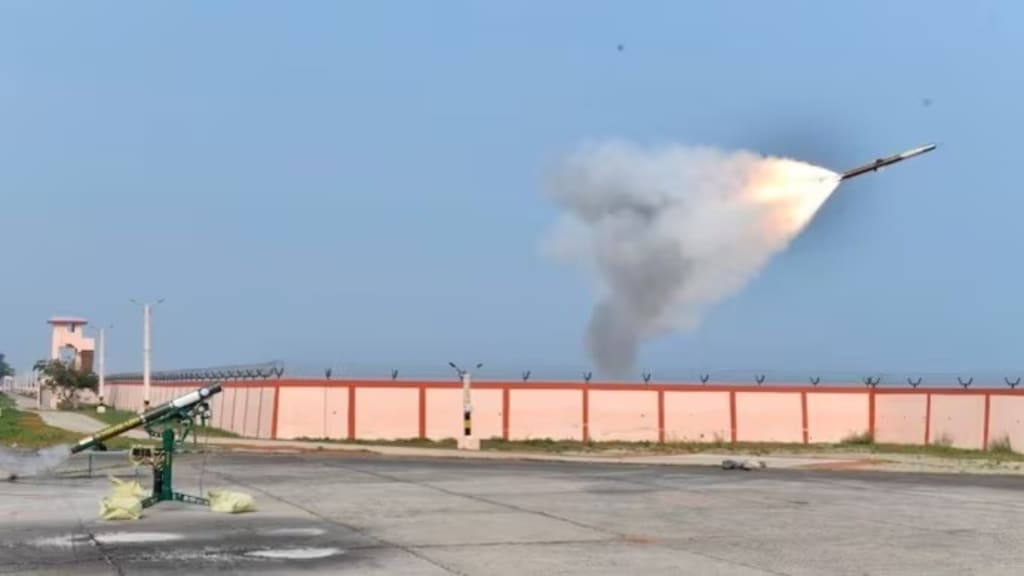
Words of War: Understanding the Surface-to-Air Missile (SAM) System
In the modern theatre of war, dominance in the skies can dictate the outcome of a conflict. As air forces grow more advanced and lethal, so too do the defenses developed to counter them. One of the most crucial elements of any nation's air defense network is the Surface-to-Air Missile (SAM) system. These systems are designed to detect, track, and destroy airborne threats such as fighter jets, bombers, drones, and even ballistic missiles. From the Cold War era to today's high-tech battlefields, SAM systems have evolved into a sophisticated shield that forms the backbone of military defense for many nations.
What is a Surface-to-Air Missile System?
A Surface-to-Air Missile (SAM) system is a ground-based defense mechanism that launches missiles aimed at aerial targets. The term encompasses a wide range of systems, from man-portable air defense systems (MANPADS) like the American FIM-92 Stinger, to high-altitude, long-range systems like Russia’s S-400 or the U.S.-made Patriot system.
SAM systems are usually part of a layered air defense strategy, which includes a combination of short, medium, and long-range defenses. These systems may be deployed to protect strategic locations such as military bases, cities, industrial infrastructure, or critical government sites. Some are mobile and can be deployed quickly to the battlefield, while others are fixed installations with long-range radar and interceptor capabilities.
Core Components of a SAM System
A modern SAM system is not just a missile launcher. It is a complex integration of several subsystems that work in concert to ensure rapid detection, tracking, targeting, and interception of aerial threats. The main components include:
Radar Systems: These are the eyes of the SAM system. They detect incoming threats, track their movements, and provide guidance for the interceptor missiles. There are often multiple radar types involved—search radars, tracking radars, and engagement radars.
Command and Control Unit: This is the brain of the operation. It processes information from radar, prioritizes threats, and coordinates missile launches. It may also be linked to wider national or allied defense networks.
Missile Launchers: These carry the interceptor missiles and are responsible for launching them upon command. Launchers may be stationary or mounted on mobile platforms like trucks or armored vehicles.
Interceptor Missiles: These are the weapons themselves, designed to strike aerial targets with either direct impact or proximity-triggered explosions.
Types of SAM Systems
SAM systems are categorized based on their operational range:
Short-Range SAMs (SHORAD): Typically cover ranges under 20 km and are used for point defense. Examples include the U.S. Avenger system and Russia's Pantsir-S1.
Medium-Range SAMs: Effective up to around 100 km, these systems provide area defense and often work in conjunction with other systems. The American NASAMS and India’s Akash fall into this category.
Long-Range SAMs: These have ranges over 100 km and are designed to engage high-value targets like bombers or surveillance aircraft at altitude. The S-400 Triumf and the U.S. Patriot PAC-3 are among the most advanced in this category.
Strategic Role in Modern Warfare
SAM systems are vital in establishing air superiority or at least denying it to an enemy. During conflicts, a well-coordinated SAM network can prevent enemy aircraft from operating freely, forcing them to either fly at lower altitudes—where they are vulnerable to other threats—or avoid the airspace altogether.
One notable example was during the Gulf War and the subsequent Iraq War, where U.S. Patriot systems were used to intercept incoming Scud missiles. In more recent years, the use of SAMs in the Russia-Ukraine conflict has underscored their importance in contested airspace, with both sides deploying a variety of systems to protect assets and deny air advantage.
Challenges and Countermeasures
Despite their effectiveness, SAM systems are not invincible. Modern air forces employ tactics and technologies designed to defeat them, such as:
Stealth technology to reduce radar visibility.
Electronic warfare to jam or spoof radar systems.
Decoys and cruise missiles to overwhelm and confuse defenses.
Suppression of Enemy Air Defenses (SEAD) missions to destroy SAM sites.
To counter these, modern SAM systems are incorporating advanced radars, networked sensors, AI for threat analysis, and integration with other defense platforms.
Conclusion
Surface-to-Air Missile systems are a critical line of defense in modern warfare. Their evolution continues as threats from the sky grow more sophisticated. Whether deployed in defense of national borders, protecting critical infrastructure, or supporting combat operations, SAM systems remain at the forefront of air defense strategy—an invisible yet formidable guardian against aerial attack. As warfare becomes increasingly multi-domain and high-tech, the importance of effective, integrated SAM systems will only grow.
About the Creator
Keep reading
More stories from Abjol Hussain Laskar and writers in Earth and other communities.
Flower Moon 2025: How and When to See May’s Full Moon
On Monday, May 12, 2025, skywatchers around the world will be treated to the Flower Moon, May’s full moon, which will reach its peak illumination at 12:56 p.m. EDT (10:26 p.m. IST) . Although the peak occurs during daylight hours in India, the moon will appear full and bright on the nights of May 11 through May 13, offering ample opportunity for observation.
By Abjol Hussain Laskar10 months ago in Earth
A Planet the Size of Earth with an Atmosphere Like Our Own
For centuries, humans have looked up at the night sky and wondered whether Earth is the only world capable of supporting life. Advances in modern astronomy have brought us closer than ever to answering that question. Recently, astronomers announced the discovery of a planet roughly the size of Earth with an atmosphere that appears surprisingly similar to our own. This finding has sparked excitement among scientists and renewed hope that life might exist elsewhere in the universe.
By Irshad Abbasi 8 days ago in Earth
A Transparent Look at Vocal Challenges and Top Stories
Almost three years ago, we shared a resource article that served as a place for people to suggest new challenge prompts. We thought it would be a good idea to refresh that thread, and take the opportunity to answer a few common questions about top stories, how challenges are judged and how submissions are reviewed.
By Vocal Curation Team3 days ago in Resources




Comments
There are no comments for this story
Be the first to respond and start the conversation.