
Flower Moon 2025: How and When to See May’s Full Moon
The full moon in May is called the Flower Moon because flowers bloom around this time. In 2025, it will shine bright in the night sky and be easy to see with the naked eye.

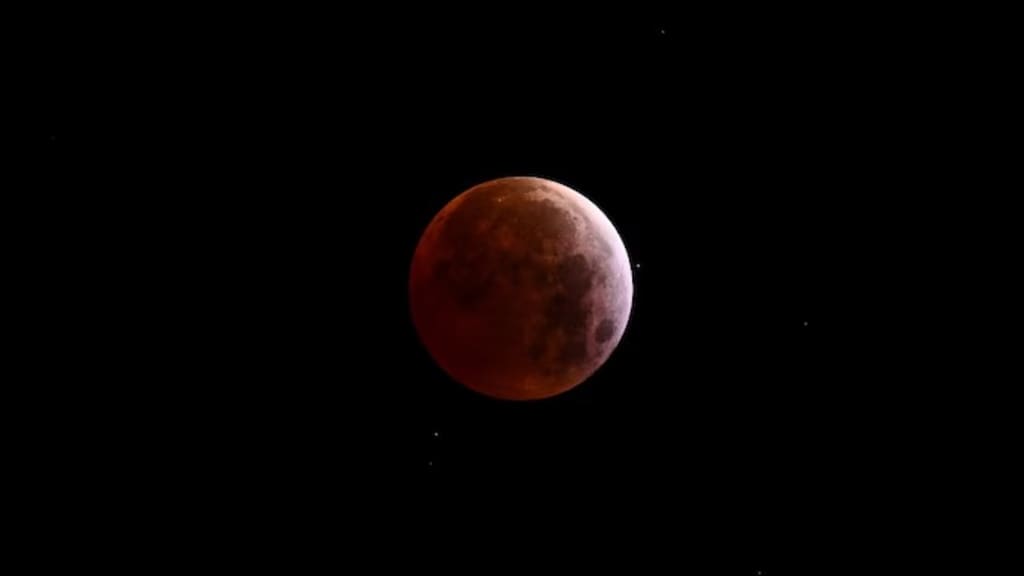
On Monday, May 12, 2025, skywatchers around the world will be treated to the Flower Moon, May’s full moon, which will reach its peak illumination at 12:56 p.m. EDT (10:26 p.m. IST) . Although the peak occurs during daylight hours in India, the moon will appear full and bright on the nights of May 11 through May 13, offering ample opportunity for observation.
Why Is It Called the Flower Moon?
The term "Flower Moon" originates from Native American and European traditions, reflecting the abundance of blooming flowers during May in the Northern Hemisphere. Other historical names for this moon include the Budding Moon, Egg Laying Moon, and Planting Moon, all signifying the season's natural renewal and agricultural significance .
What Is a Micromoon?
This year's Flower Moon is classified as a "micromoon," occurring when the moon is near its apogee—the farthest point from Earth in its elliptical orbit. At this time, the moon will be approximately 405,278 kilometers (251,828 miles) away, making it appear about 14% smaller and 30% dimmer than a typical full moon . Despite this, the moon will still present a captivating sight in the night sky.
Best Viewing Times and Tips
In Guwahati, Assam, the Flower Moon will rise in the eastern sky shortly after sunset on May 12. For the best viewing experience, find a location with an unobstructed view of the horizon, away from city lights. The moon will appear full and luminous on the nights of May 11 through May 13, providing multiple opportunities for observation.
During moonrise, the moon may take on a golden or orange hue due to Rayleigh scattering, where shorter blue wavelengths are scattered, allowing longer red wavelengths to dominate . This effect, combined with the "moon illusion"—where the moon appears larger near the horizon—can make for a particularly striking visual.
Astrological Significance
Astrologically, the May 2025 Flower Moon occurs in the sign of Scorpio, known for its associations with transformation, intensity, and emotional depth. This lunation emphasizes themes of personal growth, shedding old patterns, and embracing change. It is considered a potent time for introspection and releasing what no longer serves one's well-being .
Rituals and Practices
To harness the introspective energy of the Flower Moon, consider engaging in practices such as journaling, meditation, or setting intentions for personal growth. These activities can help in acknowledging and releasing emotional baggage, fostering a sense of renewal and clarity.
Other Celestial Events
In addition to the Flower Moon, the night sky in May offers other celestial sights. Venus and Saturn will be visible in the eastern sky during the early morning hours, while Mars and Jupiter can be seen in the western sky shortly after sunset . These planetary alignments provide additional opportunities for stargazing enthusiasts.
Looking Ahead
The next full moon, known as the Strawberry Moon, is set to occur on June 11, 2025. This lunar event will continue the tradition of naming full moons based on seasonal changes and will offer another chance for skywatchers to connect with the rhythms of nature.
Whether you're an avid astronomer or simply enjoy the beauty of the night sky, the Flower Moon of May 2025 presents a perfect opportunity to pause, reflect, and appreciate the wonders above.
WHAT ELSE CAN YOU OBSERVE DURING THE FLOWER MOON?
Mars and Jupiter, besides the Flower Moon, are visible soon after sunset in the west. The two stars, Arcturus and Spica, will also appear brighter in the vicinity of the moon.
On May 13, also rising early will be able to witness the moon setting close to the southern horizon while the planetary trio of Saturn, Venus, and Neptune rise on the eastern horizon.
FLOWER MOON TRADITION
The full moon is derived from Native American cultures, which are named after flowers that bloom during May. This represents the coming of spring.
About the Creator
Keep reading
More stories from Abjol Hussain Laskar and writers in Earth and other communities.
Syria Needs Security – Can Al-Sharaa Build a United Army to Provide It?
Syria Needs Security – Can Al-Sharaa Build a United Army to Provide It? As Syria enters a new chapter in its protracted and painful history, the question of national security looms larger than ever. The once-thriving country, now fractured by civil war, foreign interference, and ideological divides, is in desperate need of stability. With various factions vying for power and influence, the prospect of unifying these elements under a single, credible military force seems far-fetched. Yet some believe that one man might be capable of attempting the near impossible—Farouk Al-Sharaa.
By Abjol Hussain Laskar11 months ago in Earth
The Sky Adorned with Stars: Nature’s Most Beautiful Crown
On a clear night, when the lights of cities fade and the air grows still, the sky reveals one of nature’s most breathtaking sights — a vast canvas filled with shining stars. The phrase “the sky adorned with stars” perfectly captures the beauty of this moment, as if the heavens themselves are wearing a glittering crown. For thousands of years, humans have gazed upward in awe, wondering about the countless lights scattered across the darkness.
By Irshad Abbasi 5 days ago in Earth



Comments
There are no comments for this story
Be the first to respond and start the conversation.